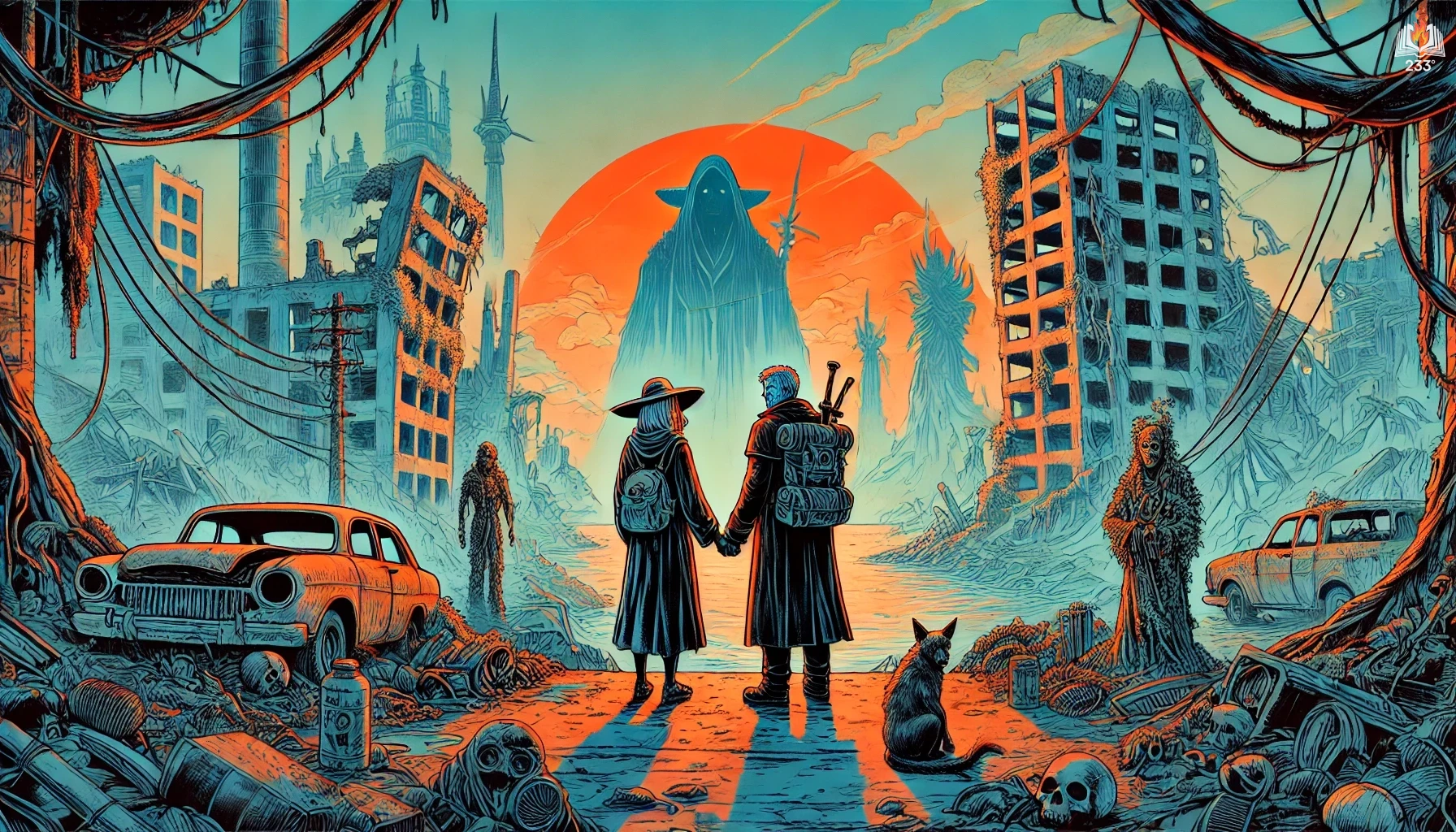


Ruy Blas, written by Victor Hugo and first performed in 1838, is a Romantic drama that explores themes of social injustice, power, identity, and forbidden love. Set in Madrid at the end of the 17th century, during the decline of the Spanish monarchy, the play delves into the corruption of the aristocracy and the aspirations of the common people. This powerful theatrical work is part of Hugo’s larger body of Romantic drama and serves as a political allegory cloaked in courtly intrigue and emotional turmoil.
Plot Summary
In the golden twilight of Spain’s monarchy, when royal shadows stretched long and decadent across the marble corridors of Madrid’s palace, a plot was seeded in vengeance and ambition. Don Salluste de Bazan, a fallen nobleman, had been disgraced at court and cast aside by the Queen of Spain for seducing a maid of honor. With his honor in tatters and his pride inflamed, he plotted his return – not through redemption, but through ruin. His target: the Queen herself. His weapon: a lowly man, unremarkable in lineage but rich in spirit.
That man was Ruy Blas, his valet, a soul bound in livery but alight with the fire of poetry and intellect. Orphaned and hungry for purpose, Ruy Blas had once wandered the streets with a dreamer’s gaze, the fire of idealism burning in his chest. The court was a world above him, the Queen an untouchable star. Yet he adored her from afar with the faith of a saint and the madness of a poet.
Don Salluste, seeing the raw brilliance in his servant, devised a cruel masquerade. Ruy Blas would impersonate Don César, Salluste’s flamboyant cousin, and be thrust into the heart of court life. By pushing this commoner into noble garb, he would infiltrate the Queen’s circle, win her trust, perhaps her love – and then, at the perfect moment, the mask would fall, and the Queen would be ruined for her fall from propriety. This was Salluste’s scheme – refined and venomous.
At first, Ruy Blas recoiled. To be a puppet, a deceiver, a tool in the hands of malice – it struck his soul with agony. But when he stood within the palace, saw the Queen pass with sorrow in her eyes and dignity in her silence, his resistance withered. For him, to breathe the same air as her, to live where she lived, to serve her even in falsehood, was both bliss and torment.
The court was a crumbling monument of opulence. The nobles drank, gambled, plotted and lounged while Spain groaned beneath their boots. Ministers siphoned gold, soldiers were unpaid, provinces starved. Amid this decay, Ruy Blas – now the supposed Count of Garofa – shone like a comet. He denounced corruption with fervor. He proposed reforms with clarity. He dazzled with eloquence and integrity. The court, starved for sincerity, hailed him as a savior. The Queen took notice. Behind veils and protocols, her heart stirred.
She had been alone, caught in a lifeless marriage to King Charles II, a monarch more shadow than man. With Ruy Blas, she saw passion unchained by rank, devotion untainted by politics. Their love grew in stolen glances, guarded words, and the silent understanding of two noble hearts encased in a world too narrow to hold them. Ruy Blas, with every heartbeat, wished to confess his truth, to cast off the borrowed name. But the love was too sacred to risk – and Don Salluste still watched from the wings.
Don César, the real cousin, had no part in this deceit. A vagabond noble, he had chosen liberty over courtly decay. Salluste had tried to recruit him for his vengeance, but César’s honor stood tall. He vanished from Madrid – until fate called him back. When the noose began to tighten around Ruy Blas, it was Don César who would return to cut the knot.
Ruy Blas’s brilliance had earned him the Prime Minister’s mantle. In chambers once dark with greed, he lit fires of reform. The Queen’s admiration deepened. But the clock ticked louder in Don Salluste’s mind. His plot, long nurtured, was ready to flower. He returned, revealing the truth to the Queen. Her noble lover was no count, no cousin of high blood – but a servant, a lackey, an imposter born in rags.
The Queen, shattered, retreated into silence. Her heart, split by betrayal and love, could not bear the weight of public disgrace. Ruy Blas, hearing of her agony, was undone. He stormed the palace chambers, confronting Salluste, eyes blazing with the fury of a man who loved too deeply and suffered too long. Their final reckoning ended in death. Ruy Blas, in a surge of honor, slew Salluste – but not before drinking poison. His fate had been sealed with his first step into borrowed robes.
When the Queen arrived, it was too late. He knelt before her, not as a minister, not as a count, but as himself – Ruy Blas, the man, the poet, the lover. He asked no forgiveness. He gave no excuses. He only spoke her name with reverence, and with his final breath, laid his love bare beneath the silence of the stars.
And she, the Queen of Spain, wept not as a monarch, but as a woman who had touched something true, and watched it slip away.
Main Characters
Ruy Blas – A poetic, idealistic valet who becomes entangled in the schemes of his master, Don Salluste. Elevated to the nobility under false pretenses, Ruy Blas falls deeply in love with the Queen of Spain. He embodies the aspirations and genius of the common man suppressed by societal structures, and his arc traces a path from humility and love to tragic heroism.
Don Salluste de Bazan – A disgraced nobleman who engineers a complex revenge against the Queen by manipulating Ruy Blas into impersonating nobility. He is a symbol of ruthless ambition and political scheming, coldly exploiting others to regain power and pride.
The Queen (Maria de Neubourg) – A virtuous and lonely monarch trapped in a joyless court and marriage. Her dignity and compassion make her sympathetic, and her growing affection for Ruy Blas adds emotional weight and moral complexity to the narrative.
Don César de Bazan – Don Salluste’s cousin, a rakish nobleman living in poverty. He is bold, charming, and morally upright despite his circumstances. He refuses to participate in Don Salluste’s vindictive schemes, serving as a foil to his cousin’s corruption.
Don Guritan – The Queen’s aging suitor and courtier, portrayed with comic pathos. His exaggerated devotion and absurd posturing provide moments of levity in an otherwise intense drama.
Theme
Social Class and Injustice – The tension between nobility and commoners is central. Ruy Blas, a brilliant man from the lower class, is capable of governing Spain better than its decadent aristocracy, exposing the hypocrisy and decay of inherited privilege.
Revenge and Manipulation – Don Salluste’s plot is a dark exploration of manipulation and revenge. His cold-blooded use of Ruy Blas as a pawn exemplifies how personal vendettas corrupt politics and destroy innocent lives.
Love and Sacrifice – Ruy Blas’s forbidden love for the Queen is both his greatest joy and his undoing. Their mutual affection is genuine, yet doomed, revealing the tragic limits of love across societal boundaries.
Identity and Disguise – Disguise, both literal and figurative, plays a critical role. Ruy Blas’s rise to power under a false identity questions the authenticity of social roles and reveals the performative nature of class and politics.
Corruption and Decay of Power – Hugo paints the Spanish court as morally and politically bankrupt. Through this depiction, he critiques the broader European monarchies and their resistance to reform.
Writing Style and Tone
Victor Hugo’s writing in Ruy Blas is a masterclass in Romantic drama. His language is elevated, lyrical, and emotionally charged, filled with poetic imagery and rhetorical flourishes. He blends verse with vivid theatricality, capturing both the grandeur of the court and the intense personal emotions of his characters. The use of formal poetic diction elevates the stakes of the drama, while allowing the characters—especially Ruy Blas—to express their internal struggles with philosophical depth.
The tone shifts deftly between impassioned romance, political satire, and tragic despair. Hugo infuses the play with his signature blend of idealism and critique. Through monologues and impassioned dialogues, he conveys the suffering of the oppressed, the cynicism of the powerful, and the bittersweet nature of unattainable dreams. The play is both a personal tragedy and a grand political allegory, and Hugo’s dramatic tone ensures the audience feels the weight of both dimensions simultaneously.
We hope this summary has sparked your interest and would appreciate you following Celsius 233 on social media:
There’s a treasure trove of other fascinating book summaries waiting for you. Check out our collection of stories that inspire, thrill, and provoke thought, just like this one by checking out the Book Shelf or the Library
Remember, while our summaries capture the essence, they can never replace the full experience of reading the book. If this summary intrigued you, consider diving into the complete story – buy the book and immerse yourself in the author’s original work.
If you want to request a book summary, click here.
When Saurabh is not working/watching football/reading books/traveling, you can reach him via Twitter/X, LinkedIn, or Threads
Restart reading!