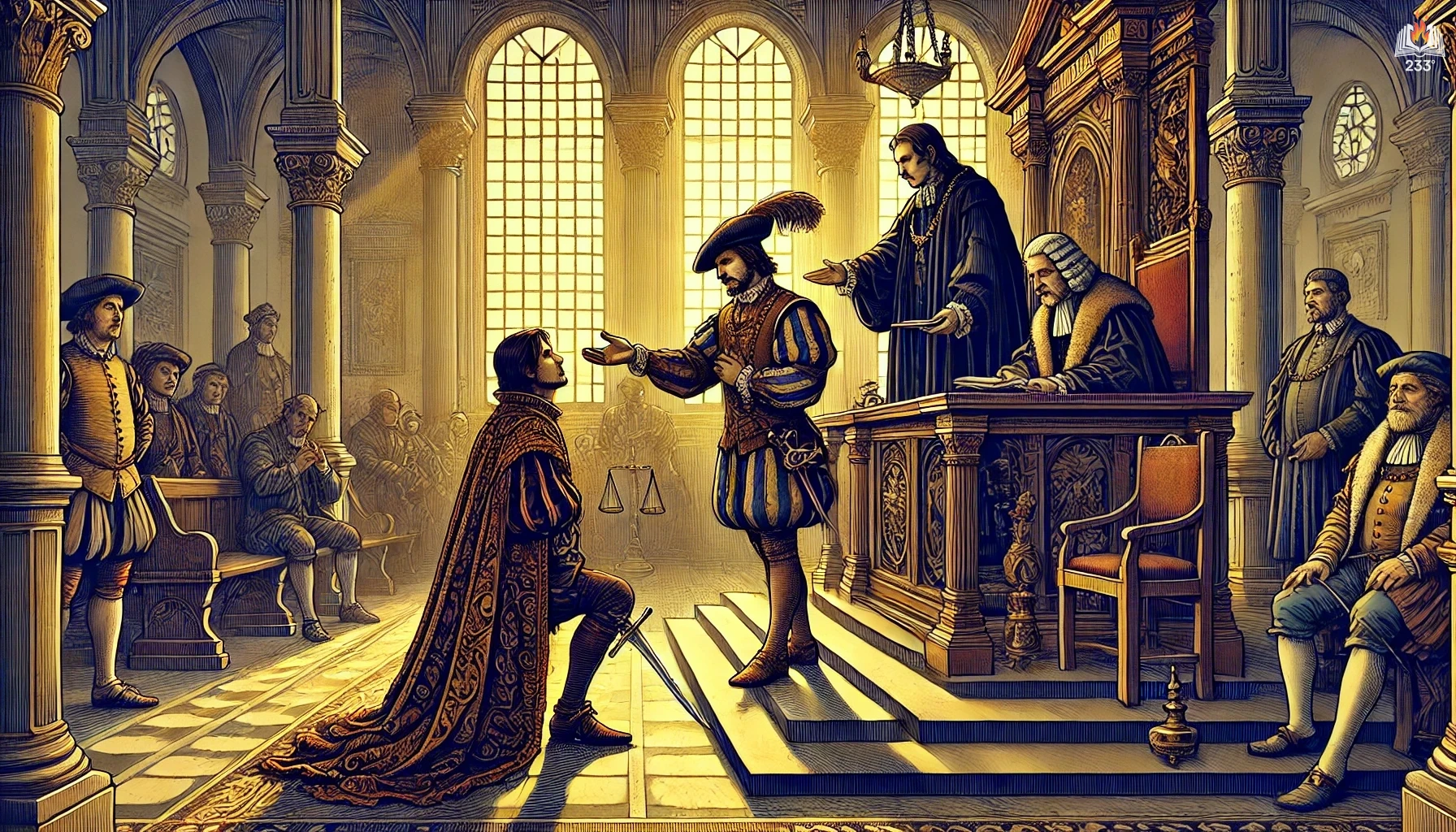
Hart’s Hope by Orson Scott Card, first published in 1983, is a dark, intricately woven fantasy novel that explores the brutal rise and fall of kingdoms, the complexities of power, sacrifice, and revenge, all set within a richly imagined world of gods, magic, and deeply flawed mortals. It is not part of a series, but stands as one of Card’s most challenging and provocative works.
Plot Summary
In a world where gods stir in the shadows and mortals are their trembling instruments, the kingdom of Burland shudders beneath the reign of King Nasilee, a man whose cruelty carves sorrow into the hearts of his people. His daughter, Asineth, grows within the marble halls of Hart’s Hope, a child swaddled in silk and dread. From her earliest years, Asineth learns that the daughter of a king stands above punishment, but not above sacrifice. While she watches the punishments dealt to servants and lovers alike, her heart becomes a vessel of lessons she does not yet understand.
Across the sea, a stranger arrives – Palicrovol, a man with the glimmer of kingship in his eye and rebellion humming in his veins. Exiled from his homeland, he finds refuge in a sacred garden where he meets the Flower Princess, a child of eleven with a vow of truth sealed upon her tongue. Their brief encounter is stitched with destiny, and Palicrovol, entranced, promises to return for her when she comes of age, whether as king or as a man condemned to die.
In the north, Zymas, the general whose name drips with the blood of conquered villages, dreams a dream that shatters his allegiance. In the dream, the kingdom is a wounded stag, and the king a rat gnawing at its belly. Zymas turns from Nasilee, leading five hundred soldiers to Palicrovol’s side, and with him walks prophecy, whispered by the Godsman, a figure bearing words sharper than blades. Sleeve, the pale wizard, joins them – a man of arcane power, his pink eyes reflecting mysteries even the gods refuse to answer.
Burland trembles as Palicrovol’s banner rises. Village by village, city by city, the people abandon Nasilee, drawn to the promise of a better ruler. Within the marble walls, Asineth watches her father pace, his hands trembling, his heart heavier with each tolling bell. Yet her prayers to the Sweet Sisters bring no salvation. The gates of Hart’s Hope fall, and Palicrovol strides into the throne room. Nasilee meets his end with the cold dignity of a man who has slaughtered without regret, but Asineth, still only twelve, faces a fate even darker.
Bound and gagged, adorned in the garments of a child bride, Asineth becomes the kingdom’s prize. On the back of the sacred Hart, beneath the jeers of a thousand citizens, Palicrovol claims his kingdom with her blood, marrying power to cruelty, strength to humiliation. The people cheer, the gods turn their faces, and Asineth, once a princess above all law, learns the cost of her father’s sins. But even in the depths of her ruin, Asineth watches and learns. She studies Palicrovol as Berry, her father’s mistress, once taught her to study men. In the moment of her defeat, she marks the path toward vengeance.
Palicrovol, now crowned with the Antler Crown, shows a flicker of mercy. Sleeve, sensing the girl’s dangerous heart, warns that leaving Asineth alive is to plant the seed of future ruin. But Palicrovol, swayed by weariness and the hope that one act of clemency might redeem his bloody rise, spares her. Into exile she goes, hidden away in the care of Sleeve, who carries her southward to the quiet fishing village of Brack.
Time passes. Asineth, cloaked in bitterness, gives birth to a child – a girl conceived in conquest. Sleeve, wary yet intrigued, watches mother and daughter, his pale hands casting nets into the sea while his mind treads the darker waters of prophecy. The villagers whisper, their eyes drawn to the strange family on the shore, their hearts uneasy. They sense the storm brewing in the little girl, a child born beneath the rule of the moon, destined to wield power neither gods nor men can tame.
Asineth feeds her hate on memory and magic. She learns from Sleeve’s books what no woman should know, gathering the secrets of living blood, piecing together the language of power. Sleeve, careless in his comfort, fails to see the transformation unfolding beneath his roof. His thoughts are on fish and tides, while Asineth’s are on blood and vengeance.
The years ripple onward. Far away, Palicrovol’s kingdom swells with glory, but peace eludes his grasp. The Flower Princess returns to his life, her childhood vow now a chain of fate. Their union, once a promise, becomes a snare. Asineth’s child, a girl of uncanny wisdom, grows into her gifts, her heart beating to rhythms older than the gods. The past gathers like a storm above Burland, and the lines of old betrayal crack open.
Asineth’s vengeance ripens in silence. The lessons she learned as a child – that mercy is cruelty in disguise, that power lies in naming, and that love is a blade sharper than hate – become the map of her return. She reaches back into the heart of the kingdom, into the chambers where her father’s blood was spilled, into the throne room where she was stripped of everything but her rage.
Palicrovol, once the eagle of prophecy, now trembles on the precipice of ruin. His acts of mercy, his faltering heart, his longing for redemption all unravel before Asineth’s shadow. She becomes the storm no one foresaw, the queen no one crowned, the vengeance no god dares claim. The gods watch, the kingdom shudders, and the circle closes where it began – in a hall of blood, a throne of bone, and the echo of a child’s cry swallowed by centuries.
In the end, it is not the might of swords or the cunning of men that seals Burland’s fate, but the slow, inevitable tide of a woman’s wrath – a queen shaped in humiliation, sharpened in exile, and unleashed upon a world too blind to fear her.
Main Characters
Palicrovol: A courageous and cunning leader who rises from exile to seize the throne of Burland. Initially wise and pragmatic, his ambition ultimately consumes him, transforming him into a tyrant haunted by his past decisions, especially his cruelty toward Asineth and his betrayal of former ideals.
Asineth: The daughter of King Nasilee, whose life transforms from privileged royalty to a tragic figure of revenge and dark power. Initially a child marked by innocence, Asineth endures humiliation and violation, eventually becoming a vessel of divine wrath, embodying the themes of justice, vengeance, and corrupted mercy.
Zymas: Once the king’s general, Zymas becomes a disillusioned rebel and crucial ally to Palicrovol. He embodies loyalty and pragmatism, torn between justice and the harsh realities of rebellion, ultimately driven by the desire to bring peace through violent means.
Sleeve: A brilliant and enigmatic wizard, Sleeve wields immense power drawn from blood magic. While often appearing detached or sardonic, Sleeve becomes a pivotal figure, both guiding and manipulating events. His relationship with Asineth and Palicrovol reflects the tension between magic, morality, and politics.
Orem Scanthips (Little King): A figure foreshadowed to play a crucial role in the future of the kingdom. While his arc unfolds more fully later, Orem symbolizes hope, innocence, and the possibility of redemption in a world steeped in blood and betrayal.
Theme
Power and Corruption: The novel explores how power corrupts those who wield it, transforming heroes into tyrants. Palicrovol’s rise and fall exemplify how noble intentions decay when absolute power is at stake.
Sacrifice and Consequences: Acts of sacrifice—whether noble or selfish—reverberate through generations. The sacrifices characters make often come at devastating costs, reshaping the kingdom and the lives of all involved.
Justice and Vengeance: The blurred line between justice and revenge is central, particularly through Asineth’s arc. Her transformation from victim to vengeful force raises questions about the cost of retribution.
Mercy and Cruelty: The narrative repeatedly questions whether acts of mercy are truly kind or merely forms of cruelty deferred. Palicrovol’s sparing of Asineth, for example, unleashes greater ruin later, illustrating the paradoxical nature of mercy.
The Influence of the Divine: Gods and prophecy loom over the characters, shaping their destinies and reflecting on the inescapable pull of fate. The tension between mortal agency and divine intervention is a constant undercurrent.
Writing Style and Tone
Orson Scott Card’s writing in Hart’s Hope is both lyrical and brutal, blending fairy-tale elegance with grim, often shocking realism. The prose is richly textured, with mythic overtones and moments of stark emotional intensity. Card employs formal, almost poetic dialogue and narration, evoking the feel of an epic saga, while simultaneously delivering intimate psychological portraits of his characters. The interplay between the grand and the personal gives the novel a powerful, immersive quality.
The tone is dark, unsettling, and morally complex. Card does not shy away from depicting human cruelty, betrayal, and the cost of ambition, creating an atmosphere thick with tension and foreboding. Yet amidst the bleakness, glimmers of beauty and redemption occasionally break through, offering moments of poignancy and hope. The moral ambiguity and raw emotional landscape make Hart’s Hope a profound and challenging read
Quotes
Hart’s Hope – Orson Scott Card (1983) Quotes
“Home is anywhere that you know all your friends and all your enemies.”
“Asking a man if he could be trusted was like asking an unwed girl if she was a virgin. The question mattered, but the asking of it was gross insult.”
“A weak King must be what other Kings have been; a strong King is himself, and from then on the meaning of the name of King is changed.”
We hope this summary has sparked your interest and would appreciate you following Celsius 233 on social media:
There’s a treasure trove of other fascinating book summaries waiting for you. Check out our collection of stories that inspire, thrill, and provoke thought, just like this one by checking out the Book Shelf or the Library
Remember, while our summaries capture the essence, they can never replace the full experience of reading the book. If this summary intrigued you, consider diving into the complete story – buy the book and immerse yourself in the author’s original work.
If you want to request a book summary, click here.
When Saurabh is not working/watching football/reading books/traveling, you can reach him via Twitter/X, LinkedIn, or Threads
Restart reading!