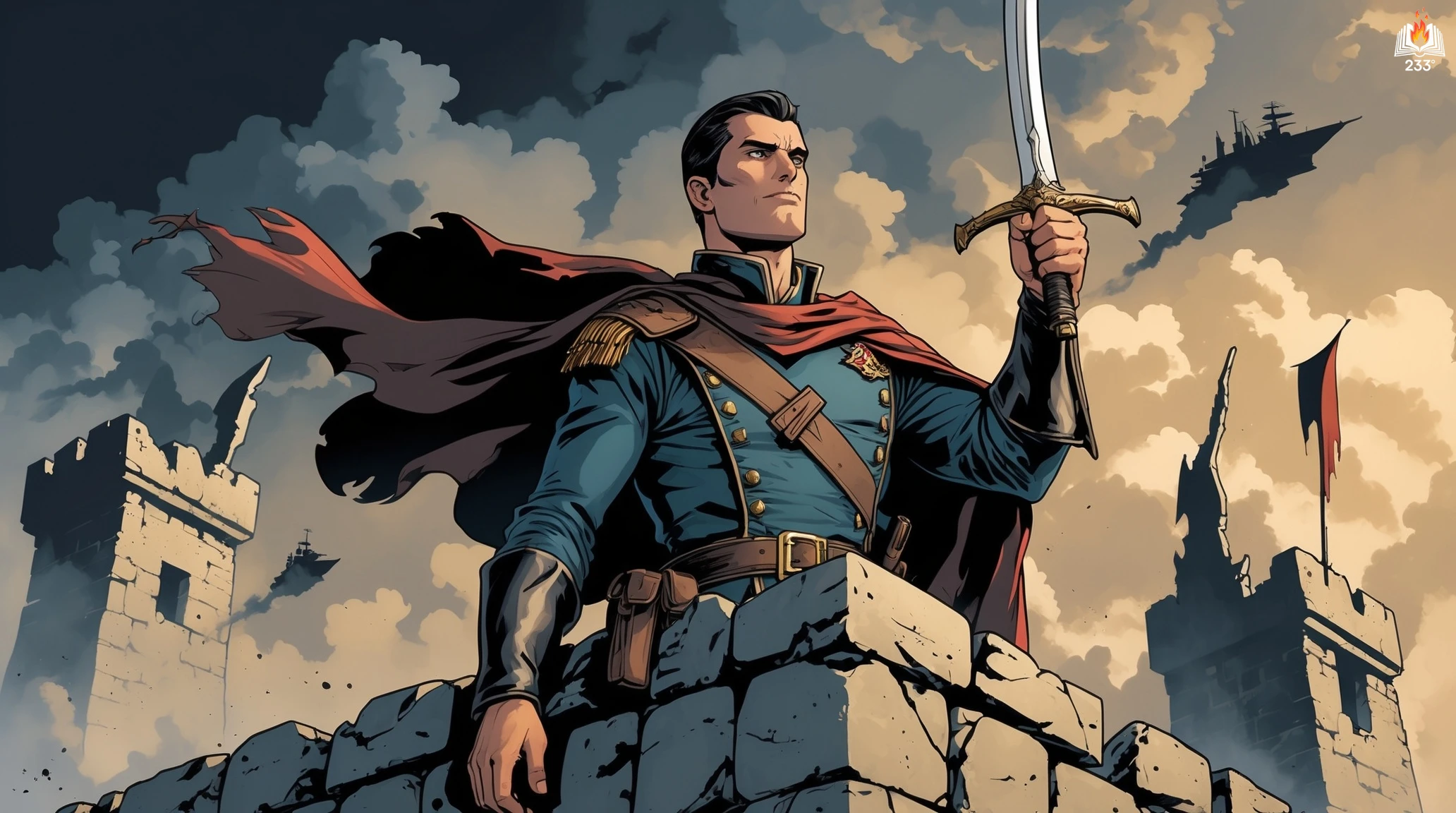
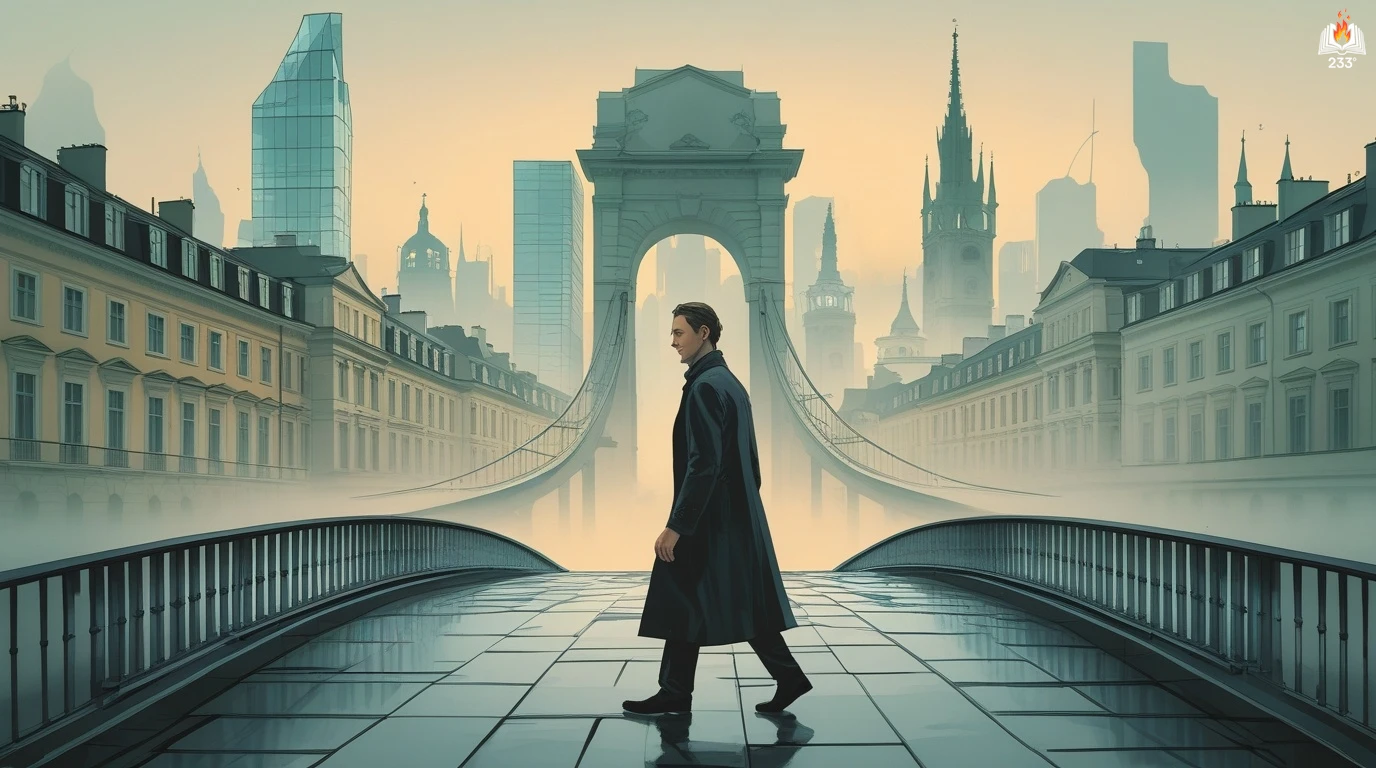
Pyramids by Terry Pratchett, published in 1989, is the seventh installment in the Discworld series, a satirical fantasy universe set on a flat world supported by four elephants standing on a giant turtle. This novel stands out in the series as a sharply witty exploration of tradition, religion, and identity, following the story of a young prince turned assassin navigating the spiritual and political chaos of his homeland, Djelibeybi, a parody of ancient Egypt.
Plot Summary
t began in Ankh-Morpork, where the air was thick with the smell of warm stone and older things best left unnamed. Teppic, cloaked in shadows and tailored silk, stood atop the rooftops of the Assassin’s Guild, his breath tight, his nerves singing. It was the night of his final examination – a ritual that separated the living from the merely hopeful. Raised among the tombs and rituals of Djelibeybi, he had trained to kill with elegance and precision in the bustling heart of Discworld’s most chaotic city. He was more comfortable on rooftops than thrones.
As Teppic balanced his life and future on the tip of a knife, far away in the desert, his father, Teppicymon XXVII, King and God of Djelibeybi, lay dying. He was a weary monarch, tired of rituals and priests, who’d long stopped pretending to understand what any of it meant. His death, as scripted by tradition, triggered the ancient rites that bound the kingdom tighter than the wrappings on a mummy.
News of the king’s death reached Teppic on the same day he passed his exam and received his Guild certificate – a slip of paper that said he was qualified to take lives professionally. It also meant he had to return home and claim his godhood. Not an appealing prospect for someone used to grappling hooks and silent blades, but even assassins cannot outrun blood.
Djelibeybi was a strip of desert squeezed between greater powers, kept alive only by the sluggish River Djel and the even slower weight of its past. It had once been mighty, when gods walked the sand and pyramids scraped the sky. Now, it was a country held together by the will of one man: Dios, the high priest. Dios had always been there. No one remembered a time when he wasn’t. He held the kingdom in the iron clasp of tradition, ensuring every rite was observed, every star aligned, every goat properly sacrificed.
When Teppic arrived, fresh from the modernity of Ankh-Morpork, his instinct was to reform. He wanted schools and plumbing and to stop building pyramids for people already dead. But Dios, eternal and unchanging, saw no room for such notions. The kingdom, in his view, existed to serve the past. That past, wrapped in linen and sand, demanded tribute in the form of colossal pyramids that bent time and strained space.
The new pharaoh’s first duty was to oversee the construction of his father’s tomb. Dios insisted it be the greatest pyramid yet – a towering monument that drained the economy, enslaved the people, and twisted time itself. As the stones rose, so did a tension in the air, like static before a lightning strike. The pyramid, a monument to death, began to hum with impossible energy, warping reality in the ancient valley.
While the kingdom bent under this burden, Teppic began to understand the strange nature of power in Djelibeybi. He met his ancestors, not in dusty tomes, but face to face. The pyramids, it seemed, did more than honor the dead – they trapped them. His father, now a confused ghost, wandered the afterlife corridors beneath the tomb, seeking meaning in the ceremonial madness.
Teppic’s unease deepened when he discovered that Djelibeybi was vanishing – not metaphorically, but literally. The sheer metaphysical weight of the new pyramid was pushing the kingdom out of the Discworld’s fabric of space and time. The sun itself seemed to rise and set only for Djelibeybi. Time looped, history folded, and reality bent like a reed in the desert wind.
With the help of Ptraci, a sharp-tongued handmaiden with ambitions far greater than most would permit a servant, Teppic fled the suffocating embrace of Dios’ rituals. Ptraci had been scheduled to die in a ritual sacrifice but decided, quite firmly, not to. Together, they crossed the desert, riding You Bastard, a camel of unprecedented intelligence and the greatest living mathematician on the Disc.
They returned to Djelibeybi through a backdoor in reality, slipping through the thin membrane between existence and somewhere else. What they found was not the kingdom they had left. The pyramid’s power had reached its peak, creating a loop in time that echoed the oldest rituals, calling gods and monsters into the streets. The past had taken root in the present, and the kingdom teetered on the edge of being lost forever.
Teppic confronted Dios, and in that moment, the truth unwound like linen. Dios was not just old – he had never died. Bound by the power of tradition and the pyramids, he had relived the same cycle for thousands of years, always the high priest, always guiding the kingdom back into the same rut. Every pharaoh who tried to change anything had found their will broken by Dios’ iron memory. He could not imagine a world that moved forward.
The breaking point came with fire and stone. Teppic, refusing to be another puppet in the procession of eternity, demolished the great pyramid. Its collapse shattered the loop, releasing the kingdom from its temporal prison. Time resumed its flow, the gods returned to their own realms, and Djelibeybi took its place once more in the world.
But Teppic did not stay to rule. He abdicated, leaving the throne to Ptraci, who possessed both the wit and the will to guide the kingdom through the wreckage of its past. She had the blood of royalty, after all, thanks to a long-forgotten dalliance, and none of the reverence for pointless ceremony. Teppic returned to Ankh-Morpork, to rooftops and black silk, more at home among shadows than thrones.
And so Djelibeybi began again – not in the image of the past, but under the sun of a new day. Somewhere, far beneath the sand, the ancestors stirred in their pyramids, and for the first time in a thousand years, were silent.
Main Characters
Teppic (Pteppicymon XXVIII) – The central protagonist, Teppic is the heir to the throne of Djelibeybi who trains as an assassin in Ankh-Morpork. Intelligent, introspective, and sarcastic, he struggles to reconcile his modern education with the archaic customs of his homeland when he is suddenly forced to rule after his father’s death. Teppic’s journey is one of self-discovery, as he attempts to reform a society clinging rigidly to the past.
King Teppicymon XXVII – Teppic’s father, a gentle but largely symbolic ruler. He is bound by tradition and ritual, even after death, becoming a ghost stuck in the pyramid due to the kingdom’s deep-rooted superstitions. His posthumous reflections add humor and poignancy to the story.
Dios – The high priest of Djelibeybi and the true power behind the throne. Ancient, unyielding, and obsessed with tradition, Dios represents institutional rigidity. His belief in the infallibility of ritual keeps the kingdom stagnant, making him both antagonist and symbol of systemic inertia.
Chidder – Teppic’s friend and fellow student at the Assassin’s Guild. Witty, pragmatic, and street-smart, Chidder provides companionship and a contrast to Teppic’s idealism, representing the more adaptable, commercial aspect of Discworld society.
You Bastard – The world’s greatest mathematician, who happens to be a camel. A comedic yet surprisingly important character, You Bastard embodies the absurdity and brilliance of Pratchett’s world.
Theme
Tradition vs. Progress – The novel sharply critiques blind adherence to tradition. Through Teppic’s conflict with Dios and the rituals of Djelibeybi, Pratchett explores how cultural inertia can hinder growth and understanding. The pyramids themselves become literal symbols of this destructive stasis.
Death and the Afterlife – Echoing Egyptian mythology, the book uses its unique take on the afterlife to satirize religious dogma. The persistence of the dead in the physical world highlights how past values can dominate the present.
Identity and Role-Playing – Teppic’s dual identity as a trained assassin and a pharaoh underscores the theme of personal versus societal expectations. The novel questions whether identity is a matter of choice or destiny.
Time and Reality – Time manipulation through the pyramids serves as a metaphor for how obsession with the past can distort the present. Pratchett uses this motif to blend science fiction elements with social commentary.
Writing Style and Tone
Terry Pratchett’s writing style in Pyramids is characterized by sharp wit, layered irony, and intelligent parody. His prose is richly descriptive, weaving absurdity and philosophical insight with equal dexterity. Pratchett frequently employs footnotes, parenthetical asides, and metafictional commentary, inviting readers to reflect critically while laughing.
The tone is deeply satirical yet compassionate. Pratchett never mocks without purpose; his humor unveils the follies of institutional thinking, outdated ideologies, and human contradictions. In Pyramids, this tone serves both to entertain and to provoke thoughtful examination of real-world parallels, especially regarding organized religion, tradition, and governance.
Quotes
Pyramids – Terry Pratchett (1989) Quotes
“The trouble with life was that you didn’t get a chance to practice before doing it for real.”
“Mere animals couldn’t possibly manage to act like this. You need to be a human being to be really stupid.”
“All assassins had a full-length mirror in their rooms, because it would be a terrible insult to anyone to kill them when you were badly dressed.”
“Never trust a species that grins all the time. It’s up to something.”
“People needed to believe in gods, if only because it was so hard to believe in people.”
“Her singing always cheered him up. Life seemed so much brighter when she stopped.”
“It was said that life was cheap in Ankh-Morpork. This was of course, completely wrong. Life was often very expensive; you could get death for free.”
“When you die, the first thing you lose is your life. The next thing is your illusions.”
“Seeing, contrary to popular wisdom, isn’t believing. It’s where belief stops, because it isn’t needed anymore.”
“That’s how we survive infinity - we kill it by breaking it up into small bits.”
“All things are defined by names. Change the name, and you change the thing.”
“The trouble with gods is that after enough people start believing in them, they begin to exist. And what begins to exist isn't what was originally intended.”
“He'd wanted changes. It was just that he'd wanted things to stay the same, as well.”
“Broadly, therefore, the three even now lurching across the deserted planks of the Brass Bridge were dead drunk assassins and the men behind them were bent on inserting the significant comma.”
“Teppic hadn’t been educated. Education had just settled on him, like dandruff.”
“Priests were metal-reinforced overshoes. They saved your soles. This is an Assassin joke.”
“The conversation of human beings seldom interested him, but it crossed his mind that the males and females always got along best when neither actually listened fully to what the other one was saying.”
“Tomorrow here is just like yesterday, warmed over.”
“Camels have a very democratic approach to the human race. They hate every member of it, without making any distinctions for rank or creed.”
“It was usually a case of heir today, gone tomorrow.”
“We're really good at it, Teppic thought. Mere animals couldn't possibly manage to act like this. You need to be a human being to be really stupid.”
“Seven thousand years is just one day at a time”
We hope this summary has sparked your interest and would appreciate you following Celsius 233 on social media:
There’s a treasure trove of other fascinating book summaries waiting for you. Check out our collection of stories that inspire, thrill, and provoke thought, just like this one by checking out the Book Shelf or the Library
Remember, while our summaries capture the essence, they can never replace the full experience of reading the book. If this summary intrigued you, consider diving into the complete story – buy the book and immerse yourself in the author’s original work.
If you want to request a book summary, click here.
When Saurabh is not working/watching football/reading books/traveling, you can reach him via Twitter/X, LinkedIn, or Threads
Restart reading!