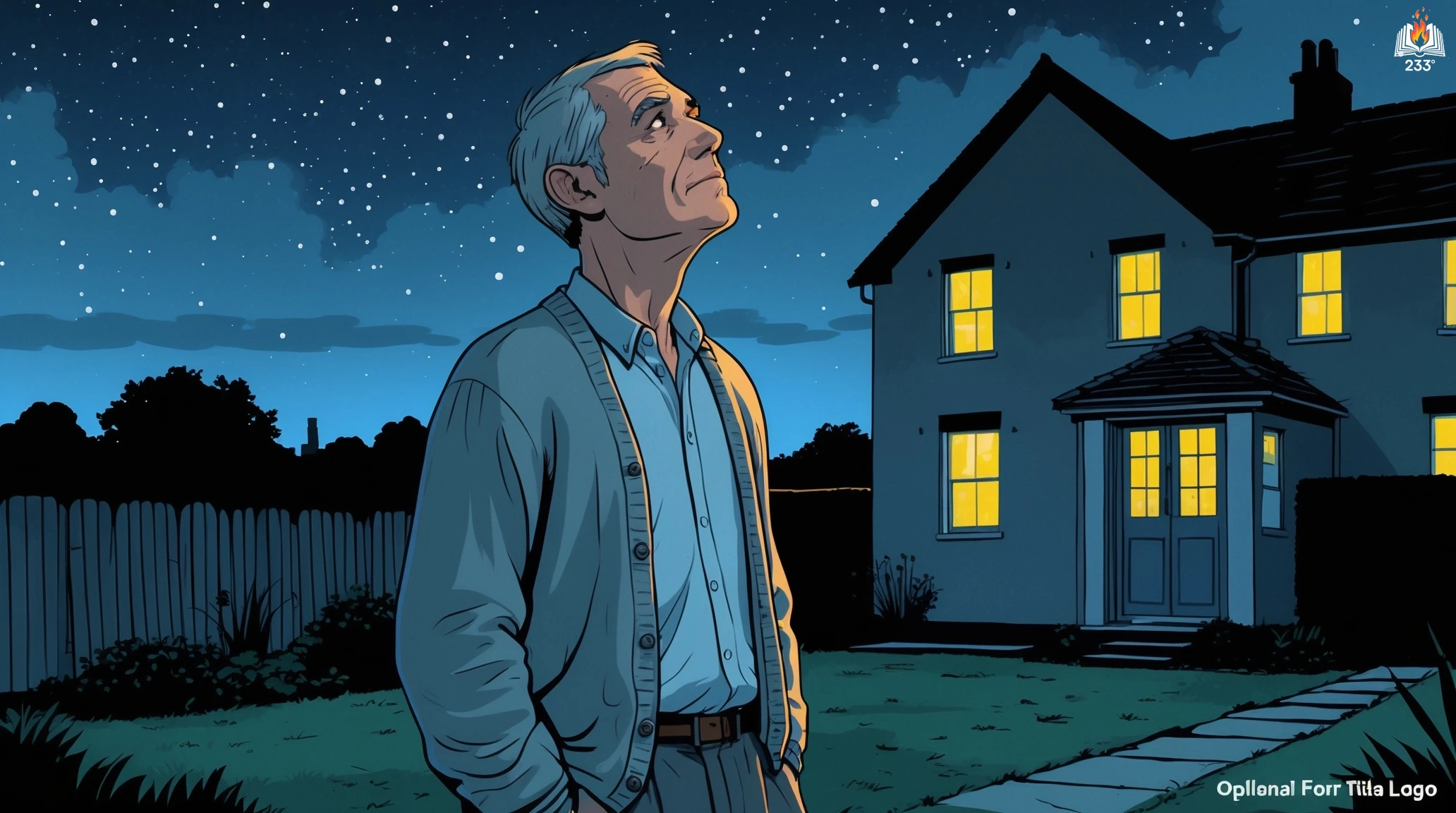
“The Idiot,” written by Fyodor Dostoyevsky and first published in 1868, is a profound exploration of the human condition through the story of Prince Lev Nikolayevich Myshkin, a young man whose pure-hearted innocence and integrity stand in stark contrast to the society around him. Set in 19th-century Russia, the novel delves into themes of morality, love, and the nature of goodness, all while critiquing the social mores of Dostoyevsky’s time. The novel opens with Myshkin returning to Russia after years of treatment in a Swiss sanatorium for his epilepsy and supposed idiocy.
Plot Summary
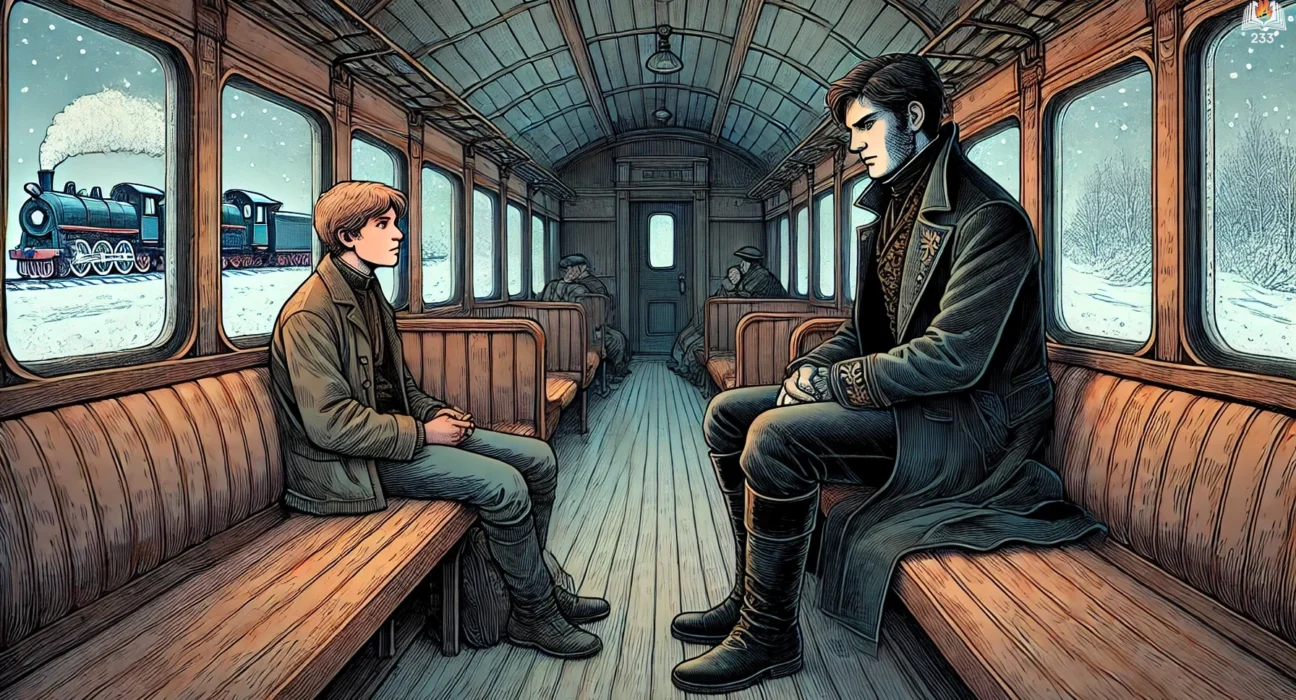
In the cold dawn of a Petersburg morning, a train carried into the city a strange passenger – Prince Lev Nikolaevich Myshkin, pale, disheveled, wrapped in an ill-suited cloak, and burdened with little more than a threadbare bundle. He had returned from a Swiss sanatorium where he had spent years in treatment for epilepsy, a man cleansed by suffering and untouched by the vanity and calculations that marked the world he reentered. In the carriage opposite him sat Parfyon Rogozhin, dark-eyed, feverish, possessed by passion and newly enriched by his father’s death. Rogozhin spoke with wild excitement about a woman named Nastassya Filippovna, a woman of fierce beauty and tragic disgrace. At once, an inexplicable connection bloomed between the two men, so unlike in spirit but fated to be entangled by the same woman.
Arriving in Petersburg, Myshkin sought out distant relatives – the Epanchin family – and was received with confusion and amusement. General Epanchin, an ambitious man of bureaucratic influence, and his proud wife Elizabetha Prokofyevna, had three daughters. The youngest, Aglaya, striking in beauty and sharp of tongue, soon caught the prince’s attention. The household regarded Myshkin with curiosity, for he spoke with startling honesty, treated all with the same gentle respect, and seemed untouched by pride or self-interest. His innocence unsettled them, for in his gaze lay a mirror that exposed vanity, deceit, and the hollow rituals of society.
Meanwhile, Rogozhin pursued Nastassya with a fervor bordering on madness. She had been the ward and mistress of the wealthy Totsky, used and discarded, her reputation forever tainted in the eyes of the world. Yet her allure remained undiminished, her defiance smoldering beneath layers of self-loathing. Rogozhin, driven by desire and obsession, offered her marriage and riches, while society whispered and leered, ready to witness her fall or redemption.
At a gathering in her honor, on the occasion of her name day, Nastassya tested the limits of propriety, flinging provocations and derision like daggers. Myshkin, present among the crowd, watched with sorrow, seeing not a fallen woman but a soul trapped in suffering. When she mockingly offered herself to Ganya Ivolgin, a man torn between ambition and contempt, Myshkin stepped forward and asked her to be his wife – not out of pity, but from a recognition of her humanity. For a moment, the crowd was stunned into silence.
Nastassya laughed. Then she wept. Torn between the prince’s quiet compassion and Rogozhin’s consuming fire, she fled with Rogozhin, abandoning the prospect of peace for the thrill of self-destruction.
Myshkin, left behind, was drawn further into the Epanchin family circle. Aglaya, intrigued by his strangeness, alternated between mocking and admiring him. In him she saw something otherworldly, perhaps even holy, yet she could not comprehend the depth of his love – a love that asked for nothing, that sought to heal rather than possess. The social elite, meanwhile, watched with amusement and suspicion, branding him an idiot, unable to grasp his uncalculated decency.
Time passed, and fate turned once more. Nastassya, restless and guilt-ridden, returned to Petersburg, tormented by dreams of redemption. She still burned for Myshkin, but believed herself unworthy. Rogozhin, consumed by jealousy, trailed her every move like a shadow. The prince found himself caught between two women – one who could not accept his love, the other who could not understand it.
At a moment of reconciliation, Aglaya and the prince were nearly engaged. The Epanchins dared to hope that their daughter might be tamed by the presence of this saintly fool. But Aglaya, proud and spirited, soon discovered that her rival still held a sacred place in Myshkin’s heart. In a bitter confrontation between the two women, Aglaya demanded that he choose. Myshkin, shaken and sorrowful, spoke not with passion but with truth – he could not abandon Nastassya. Aglaya, humiliated and furious, severed all ties.
Myshkin prepared once more to marry Nastassya. She had begged him to take her away, to save her from herself. He agreed. Guests assembled for the wedding. She appeared in a white dress, trembling, radiant. But as the moment drew near, she faltered. In the eyes of the crowd she saw judgment and condemnation. In Rogozhin’s presence she saw madness, but also the reflection of her own guilt. And so, in a final act of defiance and despair, she ran from the altar and into Rogozhin’s arms once more.
The prince followed them to Rogozhin’s darkened house. He knew, as if through prophecy, that death awaited him there. He entered in silence and found Nastassya dead, her body laid out like a bride’s. Rogozhin sat beside her, his eyes hollow, his soul extinguished. He had killed her, not in rage but in a twisted act of possession. Myshkin, instead of recoiling, sat beside him, took his hand, and stayed through the night. They spoke little, only stared at her face and waited for dawn.
What followed was silence. Rogozhin was imprisoned. Aglaya fled abroad, married a foreigner, and was lost to the world that once speculated upon her future. The Epanchins buried their pride and sorrow. Myshkin, gentle and broken, returned to the sanatorium in Switzerland, his mind unravelled, his soul still clinging to a vision of grace in a world that had no place for it.
And thus, the prince who brought light into the hearts of the damned vanished quietly into shadow, leaving behind only the memory of a man who loved without desire, forgave without condition, and bore the cruelty of life with the serenity of one touched by divinity.
Main Characters
- Prince Lev Nikolayevich Myshkin: The protagonist, often perceived as an “idiot” due to his epilepsy and naivety. His genuine kindness and moral integrity set him apart in a corrupt society.
- Parfyon Semyonovich Rogozhin: A passionate and volatile man, obsessed with Nastassya Filippovna. His intense emotions and jealousy lead to tragic outcomes.
- Nastassya Filippovna Barashkova: A beautiful woman scarred by her past. Her self-destructive tendencies and complex relationship with Myshkin and Rogozhin drive much of the novel’s conflict.
- Aglaya Ivanovna Epanchin: The youngest Epanchin daughter, who becomes romantically interested in Myshkin. Her struggle between societal expectations and genuine affection for Myshkin creates internal and external conflicts.
- Gavril Ardalionovich Ivolgin (Ganya): A young man caught between ambition and morality. His involvement with Nastassya and aspirations of wealth illustrate the societal pressures and moral dilemmas faced by many characters.
Theme
- The Nature of Goodness: Myshkin embodies the ideal of Christ-like goodness, challenging the other characters’ perceptions of morality and integrity.
- Society and Hypocrisy: The novel critiques the superficiality and corruption of Russian high society, exposing the gap between appearance and reality.
- Love and Sacrifice: The destructive power of love is a central theme, with characters like Rogozhin and Myshkin willing to sacrifice everything for their beloveds.
- Madness and Sanity: The fine line between sanity and insanity is explored through Myshkin’s epilepsy, Rogozhin’s obsession, and the societal judgment of what constitutes “normal” behavior.
Writing Style and Tone
Dostoyevsky’s writing in “The Idiot” is characterized by its psychological depth and exploration of existential themes. His narrative technique often delves into the inner thoughts and emotions of characters, creating a rich tapestry of human experience. The tone shifts from compassionate and contemplative to intense and tragic, reflecting the novel’s complex moral and philosophical questions. Dostoyevsky’s use of dialogue is particularly effective in revealing character motivations and societal critiques, making “The Idiot” a profound study of the human soul and its struggles.
Quotes
The Idiot – Fyodor Dostoevsky (1869) Quotes
“Beauty will save the world.”
“It is better to be unhappy and know the worst, than to be happy in a fool's paradise.”
“Don’t let us forget that the causes of human actions are usually immeasurably more complex and varied than our subsequent explanations of them.”
“I am a fool with a heart but no brains, and you are a fool with brains but no heart; and we’re both unhappy, and we both suffer.”
“Lack of originality, everywhere, all over the world, from time immemorial, has always been considered the foremost quality and the recommendation of the active, efficient and practical man.”
“Grown-up people do not know that a child can give exceedingly good advice even in the most difficult case.”
“A fool with a heart and no sense is just as unhappy as a fool with sense and no heart.”
“It's life that matters, nothing but life—the process of discovering, the everlasting and perpetual process, not the discovery itself, at all.”
“I want to talk about everything with at least one person as I talk about things with myself.”
“One can't understand everything at once, we can't begin with perfection all at once! In order to reach perfection one must begin by being ignorant of a great deal. And if we understand things too quickly, perhaps we shan't understand them thoroughly.”
“I almost do not exist now and I know it; God knows what lives in me in place of me.”
“One man doesn't believe in god at all, while the other believes in him so thoroughly that he prays as he murders men!”
“It wasn't the New World that mattered... Columbus died almost without seeing it; and not really knowing what he had discovered. It's life that matters, nothing but life
“In every idea of genius or in every new human idea, or, more simply still, in every serious human idea born in anyone's brain, there is something that cannot possibly be conveyed to others.”
“Compassion was the most important, perhaps the sole law of human existence.”
“The Russian soul is a dark place.”
“Pass us by, and forgive us our happiness”
“Oh I've plenty of time, my time is entirely my own.”
“The prince says that the world will be saved by beauty! And I maintain that the reason he has such playful ideas is that he is in love.”
“We must never forget that human motives are generally far more complicated than we are apt to suppose, and that we can very rarely accurately describe the motives of another.”
“God knows what is in me in place of me.”
“God has such gladness every time he sees from heaven that a sinner is praying to Him with all his heart, as a mother has when she sees the first smile on her baby's face.”
“I think that if one is faced by inevitable destruction -- if a house is falling upon you, for instance -- one must feel a great longing to sit down, close one's eyes and wait, come what may...”
“If he's alive he has everything in his power! Whose fault is it he doesn't understand that”
We hope this summary has sparked your interest and would appreciate you following Celsius 233 on social media:
There’s a treasure trove of other fascinating book summaries waiting for you. Check out our collection of stories that inspire, thrill, and provoke thought, just like this one by checking out the Book Shelf or the Library
Remember, while our summaries capture the essence, they can never replace the full experience of reading the book. If this summary intrigued you, consider diving into the complete story – buy the book and immerse yourself in the author’s original work.
If you want to request a book summary, click here.
When Saurabh is not working/watching football/reading books/traveling, you can reach him via Twitter/X, LinkedIn, or Threads
Restart reading!