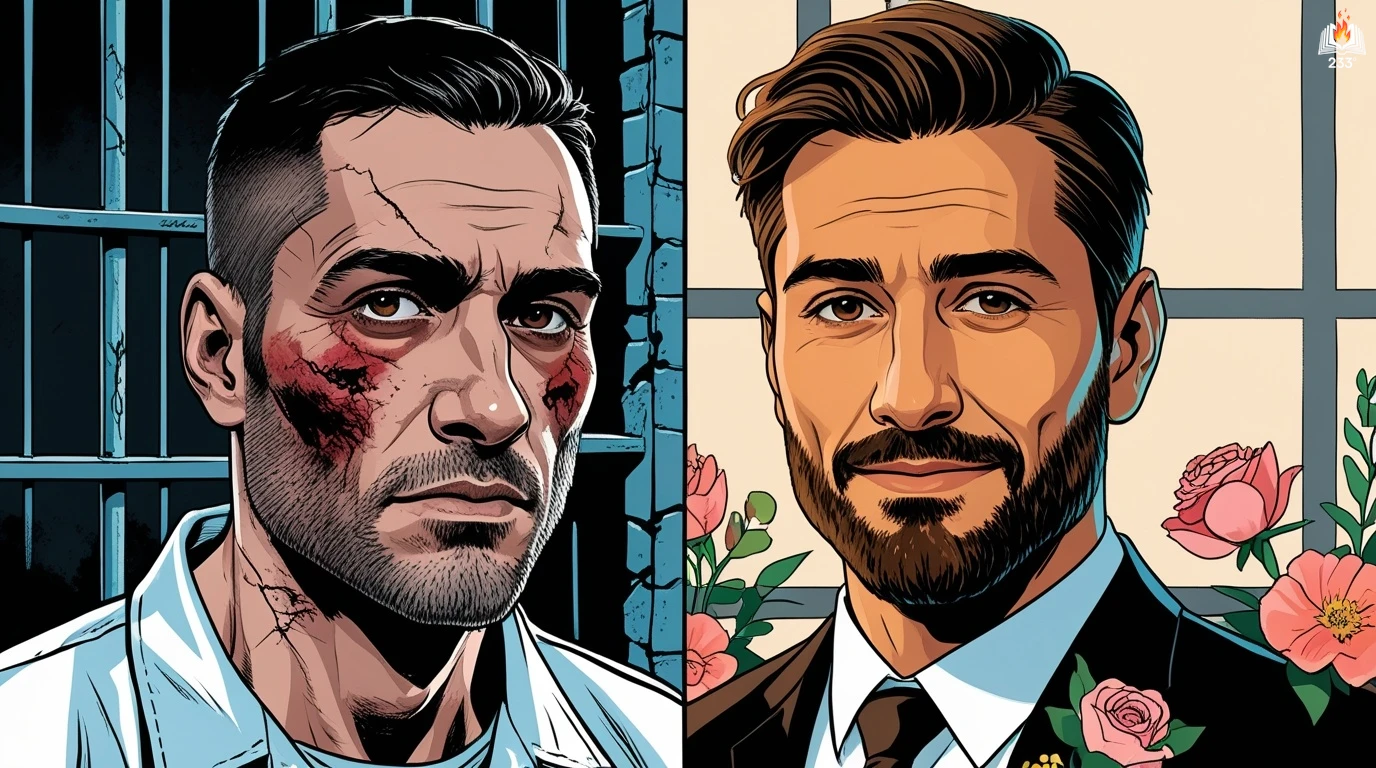
Jingo by Terry Pratchett, published in 1997, is the 21st installment in the renowned Discworld series, a satirical fantasy saga that brilliantly parodies real-world issues through the whimsical yet sharply intelligent lens of its unique universe. Set in the fantastical city of Ankh-Morpork and its neighboring region, the novel uses the sudden emergence of a sunken island to trigger an international conflict, weaving themes of nationalism, diplomacy, and the absurdity of war into a tale rich with humor and insight.
Plot Summary
The sea does not like to give up its secrets, but when an island emerges from beneath the waves between Ankh-Morpork and Klatch, diplomacy drowns before it even has the chance to paddle. The slab of sand and rock is claimed almost instantly by both nations, igniting an ancient rivalry long simmering beneath politeness and trade. With national pride swelling faster than common sense, Ankh-Morpork teeters on the brink of war.
Lord Vetinari, Ankh-Morpork’s cold-blooded chessmaster of politics, is quick to see the folly, but even he is swept aside by the swelling tide of patriotism. When an assassination attempt on a visiting Klatchian prince disrupts a public ceremony, the city’s Watch is drawn into international intrigue. Commander Sam Vimes, a man whose boots know every cracked stone of the city, is pulled away from his law and order to serve diplomacy – a game for which he has little patience and less talent.
Captain Carrot, ever the embodiment of idealism in a uniform, is placed in charge of the Watch in Vimes’s absence. With a heart as straight as a ruler and an unwavering sense of justice, he begins investigating the assassination with a tactless honesty that yields unexpected results. His inquiries lead to the discovery that the attack might not have been the act of political extremists but the work of conspirators seeking to fan the flames of war.
War, unfortunately, is precisely what many want. Lord Rust, self-appointed commander of Ankh-Morpork’s makeshift army, leads his ragtag noble volunteers to the front, believing that honor and rifles will conquer deserts and diplomacy alike. As patriotism turns to jingoism, Ankh-Morpork’s sense of irony is quietly packed away.
Vimes, reinstated but not truly in control, begins to suspect that the war is not only foolish but orchestrated. He is soon sailing toward Klatch himself, along with a handful of Watchmen including Sergeant Detritus – a troll with a brain made of cooling lava – and the perennially nervous Sergeant Colon. Their mission is unclear, their orders contradictory, and their destination a land as politically explosive as the Ankh-Morporkian public after a tax increase.
Meanwhile, the Klatchians are not idle. Prince Cadram, full of fire and ambition, seeks war as a means to power, while others, such as his brother Prince Khufurah, seek peace in a land known for its hospitality and vendettas. The Watch finds itself caught in a web of double-crosses, cultural confusion, and desert bandits with excellent hats. Along the way, they discover that the emerging island is not a valuable strategic outpost but a rocky heap unfit for habitation – an object lesson in the absurdity of what men will die for.
Carrot, forging unlikely alliances, uses his unique charisma to win over the Klatchian authorities. He reveals that the true enemy is neither Ankh-Morpork nor Klatch, but those who profit from fear and chaos. His sense of justice bridges cultural gaps wider than the Circle Sea, drawing together allies where bullets and bombs would have pushed them apart.
As both armies march toward confrontation under the blazing desert sun, Vimes arrives in the nick of time – not with reinforcements, but with a badge and a warrant. Standing alone between two massive forces, he announces his intent to arrest both commanders for breach of the peace. The absurdity halts the battle in its tracks. War, it seems, does not know what to do when faced with a policeman and a clipboard.
In the chaos, Vetinari returns with a coup of his own: he has purchased the island, not for Ankh-Morpork or Klatch, but for himself. As a private citizen, he owns the disputed land outright, rendering the war legally meaningless. With war annulled by a quill stroke and pride bruised rather than bloodied, both sides reluctantly agree to parley. The island, it turns out, is already sinking back into the sea.
In the aftermath, the Watch returns to Ankh-Morpork, bruised, sandblasted, and wiser. Vimes reclaims his badge, Carrot his quiet leadership, and Vetinari his seat atop the city’s game board. No parades await them – only paperwork, street crime, and the next foolish bit of human business to patrol.
In a world balanced on the edge of a joke and a truth, the Watch remains what it always was – a thin blue line not between order and chaos, but between people and their worst impulses.
Main Characters
Commander Sir Samuel Vimes – The head of the Ankh-Morpork City Watch, Vimes is a seasoned lawman whose gruff demeanor and unrelenting moral compass drive much of the narrative. He is skeptical of authority, deeply cynical about war, and committed to justice, often finding himself the voice of reason amidst chaos.
Captain Carrot Ironfoundersson – A tall, idealistic young watchman who believes in the inherent goodness of people. Carrot’s literal-mindedness and guileless nature conceal a profound ability to inspire loyalty and effect change through sheer decency and common sense.
Lord Havelock Vetinari – The Patrician of Ankh-Morpork, Vetinari is a master of political manipulation. Calm, calculating, and always several steps ahead, he steers the city through crises with a blend of ruthless pragmatism and dry wit.
Sergeant Detritus – A troll in the Watch whose loyalty and surprising insight contrast with his massive physicality. Detritus provides comic relief but also moments of unexpected wisdom, especially regarding the folly of war.
Prince Cadram and Prince Khufurah – Representatives of Klatch, the fictional Middle Eastern-like nation, embodying different political ideals. Cadram is aggressive and nationalistic, while Khufurah, sent as a diplomatic envoy, is more measured and symbolic of hope for peace.
Theme
The Absurdity of War – Pratchett skewers the irrationality of war through farcical declarations, bureaucratic blunders, and the jingoistic fervor of politicians. The conflict over a previously submerged island exposes how wars can start over trivial disputes and inflated egos.
Nationalism and Xenophobia – The novel explores how fear and ignorance fuel hostility. Characters express casual racism and baseless grievances against Klatchians, mirroring real-world tensions and how propaganda inflames division.
Diplomacy vs. Militarism – Jingo presents a contrast between the manipulative finesse of Lord Vetinari’s diplomacy and the blustering calls for military action by aristocratic factions. The narrative champions clever negotiation over brute force.
Identity and Allegiance – Through diverse members of the Watch, especially those of Klatchian descent, the book challenges the notion of loyalty being tied to ethnicity or birthplace. It suggests that identity is more complex and nuanced than political lines.
Writing Style and Tone
Terry Pratchett’s writing in Jingo is characterized by his signature wit, clever wordplay, and an effortlessly engaging narrative voice. He utilizes satirical dialogue and internal monologue to reveal character and critique social structures. The prose is dense with allusions, puns, and layered jokes, demanding an attentive reader but rewarding with deep, incisive humor.
The tone oscillates between farce and gravitas. While the book often revels in comedic absurdity, especially through characters like Detritus and Colon, it never loses sight of its serious undercurrents. Pratchett balances levity with sharp commentary on human folly, particularly the ease with which societies slip into conflict. The omniscient narration allows a wide-angle view of Discworld’s politics, yet zooms in intimately when probing characters’ inner dilemmas and quiet courage.
Quotes
Jingo – Terry Pratchett (1997) Quotes
“Give a man a fire and he's warm for a day, but set fire to him and he's warm for the rest of his life.”
“Always be wary of any helpful item that weighs less than its operating manual.”
“The intelligence of that creature known as a crowd is the square root of the number of people in it.”
“Build a man a fire, and he'll be warm for a day. Set a man on fire, and he'll be warm for the rest of his life.”
“It is always useful to face an enemy who is prepared to die for his country," he read. "This means that both you and he have exactly the same aim in mind.”
“Oh, my dear Vimes, history changes all the time. It is constantly being re-examined and re-evaluated, otherwise how would we be able to keep historians occupied? We can't possibly allow people with their sort of minds to walk around with time on their hands.”
“After all, when you seek advice from someone it's certainly not because you want them to give it. You just want them to be there while you talk to yourself.”
“Were you proposing to shoot these people in cold blood, sergeant?" "Nossir. Just a warning shot inna head, sir.”
“Odd thing, ain't it... you meet people one at a time, they seem decent, they got brains that work, and then they get together and you hear the voice of the people. And it snarls.”
“Look, sir, I know Angua. She's not the useless type. She doesn't stand there and scream helplessly. She makes other people do that.”
“It is a long-cherished tradition among a certain type of military thinker that huge casualties are the main thing. If they are on the other side then this is a valuable bonus.”
“History was full of the bones of good men who'd followed bad orders in the hope that they could soften the blow. Oh, yes, there were worse things they could do, but most of them began right where they started following bad orders.”
“Taxation, gentlemen, is very much like dairy farming. The task is to extract the maximum amount of milk with the minimum amount of moo.”
“Sergeant Colon had had a broad education. He’d been to the School of My Dad Always Said, the College of It Stands to Reason, and was now a postgraduate student at the University of What Some Bloke In the Pub Told Me.”
“I'm not a natural killer ! See this? See what it says? I'm supposed to keep the peace, I am! If I kill people to do it, I'm reading the wrong manual! ”
“We need to borrow your boat," said Vimes. "Bugger off!" "I'm choosing to believe that was a salty nautical expression meaning 'Why, certainly,'" said Vimes.”
“Men marched away, Vimes. And men marched back. How glorious the battles would have been that they never had to fight!”
“Sometimes I dream that we could deal with the big crimes, that we could make a law for countries and not just for people,”
“They represented what people called the "international community." And like all uses of the word "community," you were never quite sure what or who it was.”
“My strength is as the strength of ten because my heart is pure," said Carrot. "Really? Well, there's eleven of them.”
We hope this summary has sparked your interest and would appreciate you following Celsius 233 on social media:
There’s a treasure trove of other fascinating book summaries waiting for you. Check out our collection of stories that inspire, thrill, and provoke thought, just like this one by checking out the Book Shelf or the Library
Remember, while our summaries capture the essence, they can never replace the full experience of reading the book. If this summary intrigued you, consider diving into the complete story – buy the book and immerse yourself in the author’s original work.
If you want to request a book summary, click here.
When Saurabh is not working/watching football/reading books/traveling, you can reach him via Twitter/X, LinkedIn, or Threads
Restart reading!