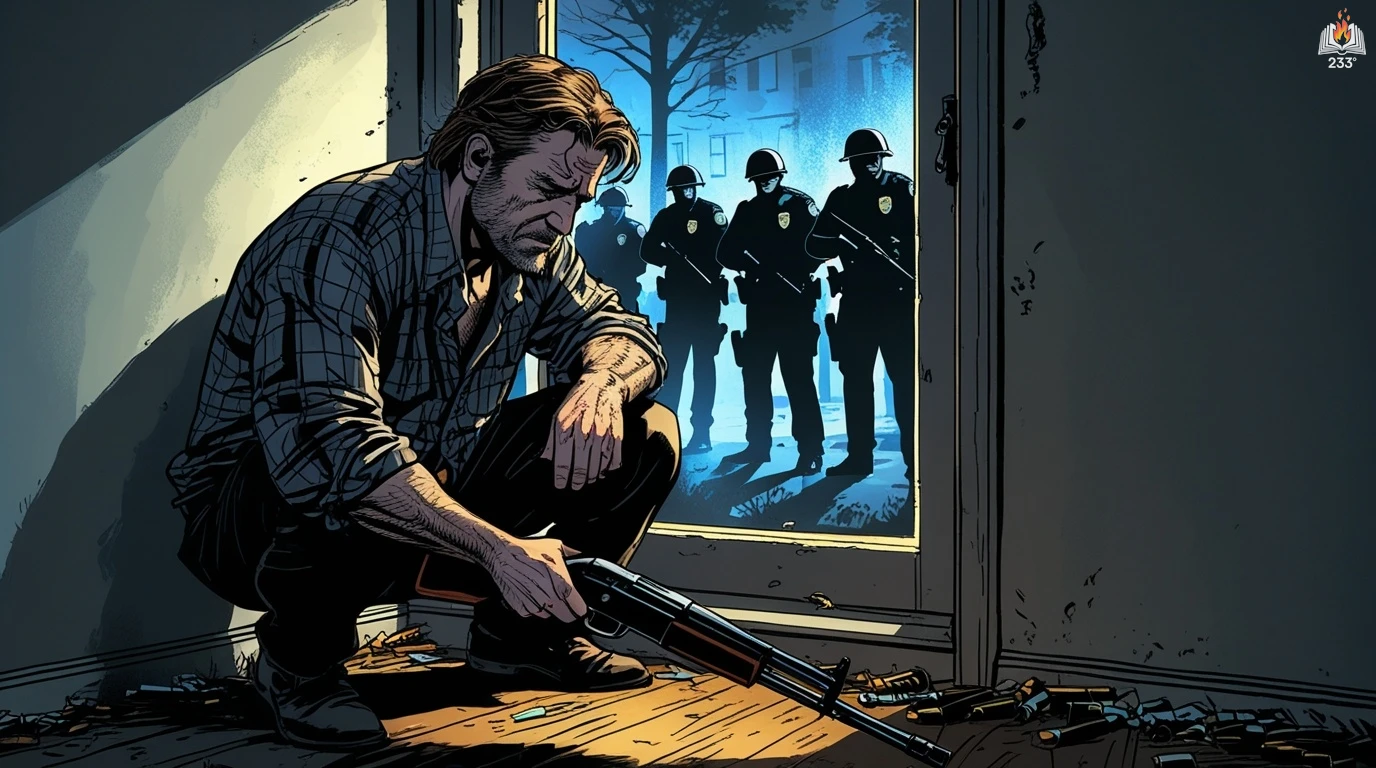
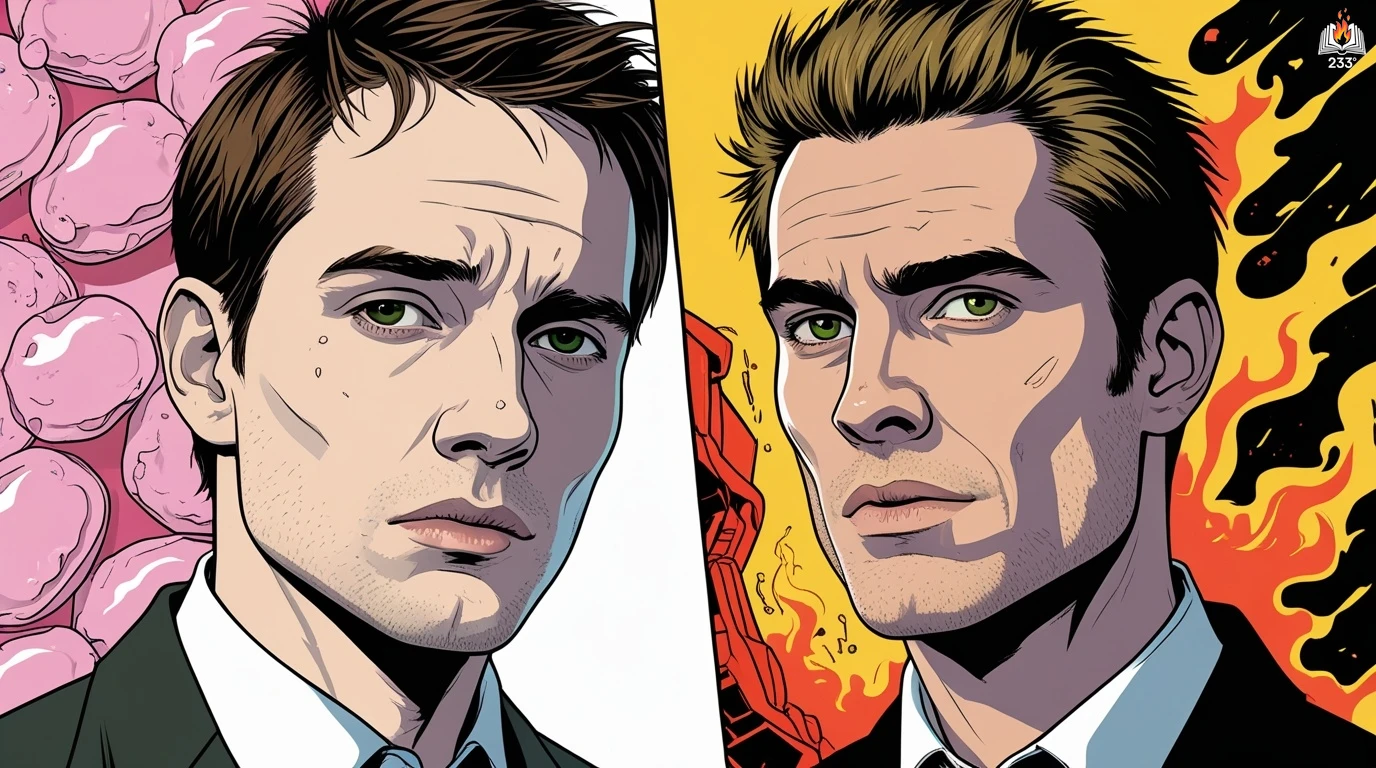
The Cuckoo’s Calling by Robert Galbraith (a pseudonym for J.K. Rowling) was published in 2013 and marks the debut of the Cormoran Strike detective series. This classic whodunit opens with the mysterious death of supermodel Lula Landry, which the police quickly rule as suicide. However, her brother, John Bristow, hires down-on-his-luck private detective Cormoran Strike to investigate further. The case leads Strike deep into the glittering but hollow world of celebrity, fashion, and wealth, unearthing long-buried secrets and hidden motives.
Plot Summary
In the freezing hush of a London winter, supermodel Lula Landry fell to her death from the balcony of her Mayfair flat. Cameras flashed as the news broke – the beautiful, troubled girl had ended her life, so the world believed. Police closed the case quickly. She was young, famous, and bipolar. The tabloids mourned her, glorified her flaws, and moved on. But three months later, her adoptive brother John Bristow stepped into a crumbling detective agency tucked above Denmark Street and asked the man behind the glass door to look again.
Cormoran Strike, once a soldier and now a near-bankrupt private investigator with a prosthetic leg and no fixed home, had just parted ways with his long-term fiancée and was living out of his office. He had little patience, no clients, and a temporary secretary he neither expected nor wanted. But Robin Ellacott, newly engaged and newly arrived in London, brought with her a spark of order and curiosity that quickly proved invaluable. And Bristow, with his polished suit and haunted eyes, brought a case that shimmered with celebrity and unease. He didn’t believe Lula jumped. He believed she was murdered.
Strike wasn’t eager. Suicide seemed plausible. The case had been chewed over by press and police alike. But Bristow, persistent and oddly vulnerable, offered a generous fee – and a connection to Strike’s childhood. Years ago, Strike had been best friends with Bristow’s brother Charlie, a boy who had died in a fall eerily similar to Lula’s. It felt, somehow, like the echo of something unfinished.
As Strike began to trace Lula’s final days, he stepped into a world of shadowed wealth, where fame wore a gilded mask and truth slipped easily through manicured fingers. He found that Lula had been surrounded by people who adored, envied, or needed her – and sometimes all three at once.
There was Tony Landry, the slick and sneering uncle with secrets of his own. Lady Yvette Bristow, Lula’s ailing adoptive mother, clung to life while her children dissolved around her. Rochelle Onifade, Lula’s childhood friend from her foster care days, emerged briefly from the past, a quiet figure tethered to Lula’s earliest identity. And then there was Evan Duffield, the drug-addled actor boyfriend, whose volatility was matched only by the media’s appetite for his downfall.
Strike wandered between fashion houses and nightclubs, through exclusive boutiques and dingy backstreets, questioning designers, drivers, makeup artists, and family retainers. He listened carefully. He asked questions no one else had thought to ask. Robin, increasingly drawn to the work, helped him connect names and times, filtered through notes and recordings, her quiet diligence pulling patterns from the chaos.
Tansy Bestigui, a socialite and neighbor who claimed to have heard a man’s voice in Lula’s flat just before the fall, had been dismissed by police as unreliable, her testimony lost in a fog of cocaine and marital dysfunction. But Strike took her seriously. He traced her movements, reconstructed the night of the fall. He listened again to the doorman, the housekeeper, the chauffeur. Slowly, Lula’s final day took shape – not as a prelude to despair, but as a day of plans, of arguments, of decisions.
Something Lula had learned had frightened her. She’d visited her mother, met with friends, finalized a lucrative contract, fought with Duffield, and returned home alone. She had sent her driver away. She had locked the door behind her. What happened in the hours that followed was no longer a blur of speculation. It was a matter of minutes and motives.
Strike began to suspect that the heart of the mystery lay not in Lula’s glittering present, but in her obscured beginnings. The fact of her adoption, her mixed race, her search for identity – these were not mere backstory. They were fuel. She had been looking for her biological roots. She had met someone. She had begun to ask questions that made others uncomfortable.
Rochelle became a key. The two had reconnected recently, and Lula had given her money – a lot of it. Rochelle had been silent since the death, elusive. But Strike tracked her down. In a tense, sad encounter, he learned just enough to know that Rochelle was frightened. She knew something. She disappeared soon after. Her body was found floating in the Thames. Drowned. Silence, it seemed, had become deadly.
Strike’s own life frayed as the investigation tightened. His debts grew heavier, his sleeping arrangements more precarious. But he pressed on, driven now not just by the promise of payment, but by the need to see things clearly. Lula had not been unhinged. She had been closing in on a truth.
That truth finally snapped into focus when Strike reexamined the family itself. John Bristow, the grieving brother, the one who had insisted on reopening the case, the one who had brought Strike into the mystery, was not what he seemed. He had known Rochelle. He had been at Lula’s flat the night she died. He had motives both financial and deeply psychological. Years ago, it was Bristow who had quarreled with Charlie before the boy’s fatal fall. And now, Bristow had seen his adoptive sister, beautiful and bold, reaching for the past – and for an inheritance that would not be his.
It was Bristow who killed Lula, pushing her from the balcony in cold calculation. It was Bristow who silenced Rochelle when she got too close. And it was Bristow who, in a final, desperate act of control, had hired Strike in the hope that the detective would fail – or be satisfied with the lie.
But Strike did not fail. He saw Bristow for what he was – not a grieving brother, but a man driven by envy, resentment, and fear. The confrontation was quiet but final. The truth, once revealed, settled over the sordid glamour of the case like a cold wind.
Robin remained at the office, her ring still glittering, her place beside Strike more certain than ever. The agency endured, a little less broken, its name on the glass door a little brighter in the morning light.
Main Characters
Cormoran Strike – A grizzled, war-wounded private investigator whose military background in the Special Investigation Branch sharpens his keen deductive instincts. Recently dumped by his fiancée and financially ruined, Strike lives out of his office. Despite his gruff exterior, he is perceptive, principled, and resolute, making him a compelling force in peeling back the facade of glamour surrounding the case.
Robin Ellacott – A bright and resourceful temporary secretary who stumbles into the job of a lifetime. Initially underestimated, Robin proves herself to be intelligent, inquisitive, and surprisingly adept at investigative work. Her unspoken fascination with detective work and a strong moral compass make her an indispensable partner to Strike.
Lula Landry (The Cuckoo) – A troubled yet iconic supermodel whose apparent suicide ignites the novel’s mystery. Lula’s tragic past, complex personal relationships, and inner vulnerabilities are slowly revealed through the investigation, painting a stark contrast to her glamorous public persona.
John Bristow – Lula’s adoptive brother and the client who brings the case to Strike. Polite, nervous, and emotionally fraught, Bristow appears driven by grief and a desire for justice. However, his motives grow increasingly ambiguous as the investigation progresses.
Tony Landry and Lady Yvette Bristow – Members of Lula’s adoptive family, they add tension and complexity, revealing deep fractures within the family dynamic and longstanding emotional rifts that shadow Lula’s life.
Theme
Fame and Identity – The novel explores the disparity between public personas and private realities. Lula Landry, idolized by the media, hides deep insecurities and emotional scars, underscoring the destructive pressure of celebrity.
Grief and Loss – Grieving figures prominently throughout the story, not only through the literal death of Lula but also through emotional ruptures, lost relationships, and the emptiness that often follows loss. Each character’s way of mourning reveals deeper truths about their psyche.
Justice vs. Truth – Strike’s dogged pursuit of truth stands in stark contrast to the institutional indifference of the police and media. The novel questions whether justice is truly served through official means or if it takes a personal, relentless effort to uncover the real story.
Class and Privilege – Galbraith weaves in critiques of the British class system, highlighting disparities in power, wealth, and opportunity. The divide between Lula’s past in foster care and her life among the elite shows how privilege can both protect and corrupt.
Writing Style and Tone
Robert Galbraith’s writing is richly descriptive and tightly controlled, drawing from classic detective fiction while embedding it in a thoroughly modern setting. The prose is crisp yet atmospheric, immersing readers in the grimy streets of London just as easily as the glittering fashion houses. Dialogue is sharply written, revealing character depth and emotional subtext without melodrama. Galbraith employs a third-person limited perspective, primarily through Strike, which allows for nuanced interiority and a carefully unfolding mystery.
The tone is somber, intelligent, and observant, with flashes of dry wit and understated irony. Rowling’s characteristic mastery of character and structure is evident under the pseudonym: clues are planted with subtlety, red herrings are skillfully used, and the unraveling of the mystery is both surprising and plausible. There’s a moral seriousness to the book – it doesn’t sensationalize the death at its center but rather explores its emotional ripples and the human motivations around it with empathy and complexity.
Quotes
The Cuckoo’s Calling – Robert Galbraith (2013) Quotes
“How could the death of someone you had never met affect you so?”
“The dead could only speak through the mouths of those left behind, and through the signs they left scattered behind them.”
“How easy it was to capitalize on a person’s own bent for self-destruction; how simple to nudge them into non-being, then to stand back and shrug and agree that it had been the inevitable result of a chaotic, catastrophic life.”
“When you are young, and beautiful, you can be very cruel.”
“Humans often assumed symmetry and equality where none existed.”
“A lie would have no sense unless the truth were felt as dangerous.”
“It's that wounded-poet crap, that soul-pain shit, that too-much-of-a-tortured-genius-to-wash bollocks. Brush your teeth, you little bastard. You're not fucking Byron.”
“He had never been able to understand the assumption of intimacy fans felt with those they had never met.”
“Strike was used to playing archaeologist among the ruins of people’s traumatised memories;”
“Seven and a half million hearts were beating in close proximity in this heaving old city, and many, after all, would be aching far worse than his.”
“There’s people who’d expect you to take a bullet for them and they don’t bother rememb’ring yuh name.”
“In the inverted food chain of fame, it was the big beasts who were stalked and hunted”
“Ridiculous," he said breathlessly. "You ought to give up detecting and try fantasy writing.”
“Couples tended to be of roughly equivalent personal attractiveness, though of course factors such as money often seemed to secure a partner of significantly better looks than oneself.”
“In spite of her plainness that would have made wallflowers of other women, she radiated a great sense of self-importance.”
“But the lies she told were woven into the fabric of her being, her life; so that to live with her and love her was to become slowly enmeshed by them, to wrestle her for the truth, to struggle to maintain foothold on reality.”
“Other people his age had houses and washing machines, cars and television sets, furniture and gardens and mountain bikes and lawnmowers: he had four boxes of crap, and a set of matchless memories.”
“Suicides, in his experience, were perfectly capable of feigning an interest in a future they had no intention of inhabiting.”
“it was weird. Would you believe it if some supermodel called you up and told you she was your sister?’ Strike thought of his own bizarre family history. ‘Probably,’ he said.”
“Sense entered into a short, violent skirmish with instinct and inclination, and was overwhelmed.”
“But they had already tried, again and again and again, and always, when the first crashing wave of mutual longing subsided, the ugly wreck of the past lay revealed again, its shadow lying darkly over everything they tried to rebuild.”
“He had hoped to spot the flickering shadow of a murderer as he turned the file's pages, but instead it was the ghost of Lula herself who emerged, gazing up at him, as victims of violent crimes sometimes did, through the detritus of their interrupted lives.”
“Who was more conscious than the soldier of capricious fortune, of the random roll of the dice?”
“For this to happen today, of all days! It felt like a wink from God.”
“Robin was disposed to feel desperately sorry for anyone with a less fortunate love life than her own – if desperate pity could describe the exquisite pleasure she actually felt at the thought of her own comparative paradise.”
We hope this summary has sparked your interest and would appreciate you following Celsius 233 on social media:
There’s a treasure trove of other fascinating book summaries waiting for you. Check out our collection of stories that inspire, thrill, and provoke thought, just like this one by checking out the Book Shelf or the Library
Remember, while our summaries capture the essence, they can never replace the full experience of reading the book. If this summary intrigued you, consider diving into the complete story – buy the book and immerse yourself in the author’s original work.
If you want to request a book summary, click here.
When Saurabh is not working/watching football/reading books/traveling, you can reach him via Twitter/X, LinkedIn, or Threads
Restart reading!