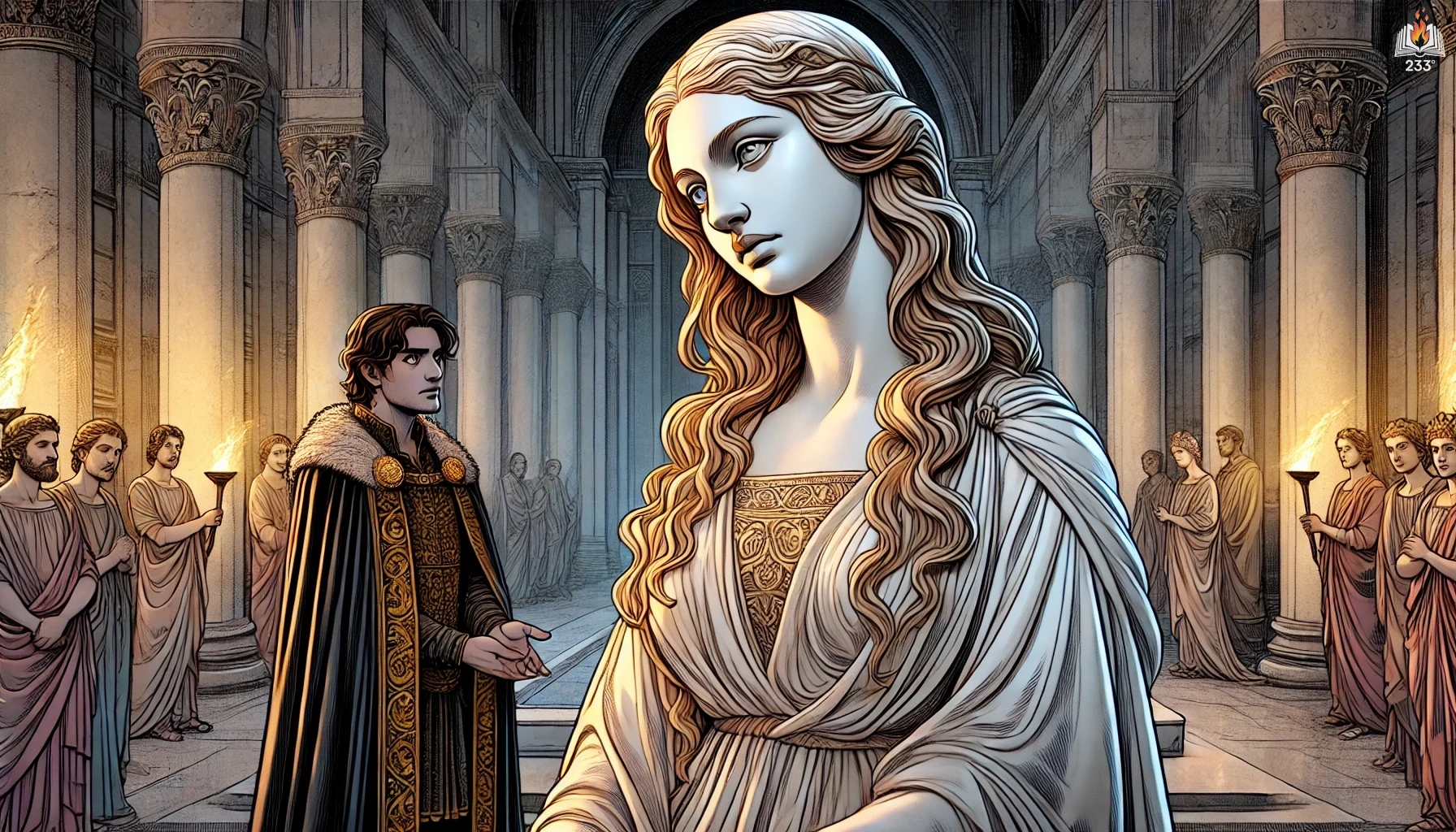
The Joy Luck Club by Amy Tan, published in 1989, is a seminal novel exploring the interwoven lives of four Chinese immigrant women and their American-born daughters. Structured in sixteen vignettes divided into four parts, the novel presents intimate, often painful reflections on generational and cultural divides. Tan draws heavily from her own heritage and family history, grounding the story in both personal truth and collective experience. Revered for its nuanced portrayal of Chinese-American identity, the book is widely recognized as a classic in modern American literature.
Plot Summary
Across the vast Pacific, between the soft moss of old China and the jagged rhythms of new America, four women gather to play mahjong in San Francisco. They call themselves the Joy Luck Club, a name born of wartime despair and fragile hope. Their laughter, their steaming bowls of red bean soup, and their ivory tiles clicking on polished wood hide stories buried deep in memory. Each carries a past that is knotted like fine silk, stories of daughters left behind, of vows kept and broken, of survival in a land that promised everything and forgot what it asked in return.
Suyuan Woo is the soul who once dreamed the club into being, first in the ruins of Kweilin, then again in California, where she sought to outrun ghosts and feed hope. Her death leaves a quiet emptiness, and her American-born daughter, Jing-mei – called June – is summoned to take her place at the table. June is unsure. She has never known the depths of her mother’s life, only the surface of misunderstandings and mismatched expectations. But when the aunties reveal that Suyuan had twin daughters lost in the war, girls June never knew existed, a journey begins – one that threads the present back to the beginning.
In fragments that shimmer like memory, the mothers’ pasts unfold. Suyuan once fled a city crumbling under bombs, pushing a wheelbarrow with her baby daughters wrapped in her arms. When the wheel broke, her arms bleeding and her soul stripped bare, she left them beneath a tree with precious items pinned to them, praying they would be found. She walked on to live, carrying guilt and sorrow through time. In America, she remade herself with laughter, mahjong, and the promise of happiness – the kind that must be chosen, not waited for.
An-mei Hsu remembers being told her mother was a ghost. Her mother had defied tradition, had been cast out, and returned only when An-mei’s grandmother was dying. In a house where silence ruled, her mother sliced flesh from her own arm to make healing soup for her mother, showing An-mei that honor could grow from pain. Years later, An-mei would hold her own daughter, Rose, close – only to watch her nearly drown in the sea and later drown again in a failing marriage. But from the depths, Rose learns to speak, to stand, and to claim her voice, echoing her mother’s long-ago strength.
Lindo Jong’s life began with a promise made before she understood its weight. Betrothed as a child, she was sent to a house that saw her as property. But cleverness grew in her like a hidden fire. She spun a tale so convincing it gave her freedom and preserved her family’s honor. In America, she worked and waited, carrying her lessons into her daughter, Waverly, who rose to fame as a chess prodigy. Yet Waverly, sharp-tongued and independent, feels crushed by the pressure of being her mother’s trophy. Between them lie walls built from pride and misunderstood love, but even in their harshest quarrels, the bond never severs.
Ying-ying St. Clair once believed in destiny. As a girl, she was wild and beautiful, but a cruel marriage and lost child silenced her spirit. She wandered through years, hidden behind veils of obedience, her pain as quiet as snow. In America, she married a kind man she never truly loved and bore Lena, a daughter who grew up seeing her mother’s stillness as weakness. Lena builds a life that mirrors her mother’s mistakes – a marriage balanced like scales but empty of warmth. Only when Ying-ying begins to reclaim her tiger spirit does Lena start to see the reflection between them and grasp the strength in what was once mistaken for fragility.
The daughters, each shaped by American streets and schoolyards, by the clash of fortune cookies and whispered traditions, do not always understand the language of their mothers. To them, the past often feels like fiction, the warnings like riddles, the values like burdens. They mistake criticism for disappointment, duty for control, love for silence. But in time, their mothers’ voices rise – not as commands, but as songs carried by wind from the East.
June, hesitant and unsure, agrees to travel to China to meet her half-sisters, carrying with her a letter, a swan feather, and the wishes of all the aunties. Her mother had saved her mahjong winnings to fund this trip, believing that someday June would need to finish the story she could not. At first, June fears she has nothing to give – no deep knowledge, no poetry of her mother’s youth. She only knows fragments, memories softened by time, blurred by translation.
But standing on Chinese soil, her sisters waiting with open arms and matching faces, June begins to see. In their smiles, she sees her mother’s unspoken sorrow and her quiet joy. In their embrace, the scattered pieces of her identity click into place like mahjong tiles forming a perfect hand. She does not need to explain everything. Her presence is enough. She is the bridge – the thread that ties a mother’s broken past to a future whole and bright.
Back in San Francisco, the mahjong table waits, its four corners steady. The women laugh and argue, remember and forget, pass down dumplings and sayings that carry more than taste. They are the lucky ones – not for what they have, but for what they endured and chose to remember. In them live the stories of lost daughters and recovered names, of mothers who loved so fiercely that even silence spoke volumes.
And in that space where East meets West, between the falling of tiles and the lifting of teacups, where sorrow swirls with laughter and memory dances like incense smoke, something sacred remains – the bond between mothers and daughters, enduring and reborn.
Main Characters
Jing-mei “June” Woo – Taking her deceased mother’s place at the mahjong table, June becomes the bridge between two generations. Doubtful of her identity and haunted by the legacy of her mother, Suyuan, she embarks on a transformative journey to understand her mother’s past and reclaim the fragmented pieces of her heritage.
Suyuan Woo – A woman of immense resilience and quiet strength, Suyuan is the founder of the Joy Luck Club. Her haunting past – including the daughters she left behind during the war in China – casts a long shadow over her life in America. Her belief in hope, despite trauma, defines the emotional heart of the novel.
An-mei Hsu – Marked by a traumatic childhood and a complicated relationship with her mother, An-mei learns strength through suffering. Her life is shaped by the painful sacrifices of her mother, who cut a piece of her own flesh to save her own dying mother, embodying deep Chinese values of filial piety and love.
Rose Hsu Jordan – An-mei’s daughter, Rose, is passive and indecisive, especially within her crumbling marriage. Her journey is one of self-realization – learning to assert her voice and identity after years of internalized fear and familial pressure.
Lindo Jong – A clever and determined woman, Lindo escapes an oppressive arranged marriage and rebuilds her life in America. Her story demonstrates how self-worth and cunning can survive even in oppressive systems.
Waverly Jong – Lindo’s daughter and a childhood chess prodigy, Waverly struggles with the weight of her mother’s expectations. Her story reflects the tension between individual ambition and cultural duty.
Ying-ying St. Clair – Once proud and full of spirit, Ying-ying becomes emotionally numb after years of grief and repression. Her haunting past in China echoes in her silence and instability in America.
Lena St. Clair – Ying-ying’s daughter, Lena, lives a life of subtle misery, trapped in a marriage where she is invisible. Her story mirrors her mother’s passivity, until she begins to confront their shared ghosts.
Theme
Mother-Daughter Relationships – At the core of the novel are complex, often strained mother-daughter relationships. Each mother attempts to impart wisdom drawn from her past, while the daughters, shaped by a different culture, often misinterpret or reject it. This dissonance and eventual reconciliation form the emotional core of the novel.
Cultural Identity and Assimilation – The clash between Chinese traditions and American individualism highlights the struggles of bicultural identity. The daughters often feel disconnected from their mothers’ pasts, while the mothers fear their heritage is being lost.
Language and Communication – Miscommunication – both linguistic and emotional – is a recurring motif. The generational divide is widened by language barriers, symbolic of deeper gaps in understanding, as seen in characters like June and her struggle to “translate” her mother’s wishes.
Memory and Storytelling – The novel emphasizes the power of memory and storytelling to bridge generational and cultural gaps. The mothers’ stories, once disregarded by the daughters, become essential keys to identity and reconciliation.
Sacrifice and Resilience – The mothers’ pasts are steeped in sacrifice – from fleeing war to enduring emotional wounds – yet their strength sustains them. This theme underscores the resilience required to preserve hope in a new world.
Writing Style and Tone
Amy Tan employs a lyrical and evocative writing style, rich with imagery and metaphor. Her prose seamlessly blends English with Chinese idioms and structures, capturing the cadences of bilingual thought. The alternating first-person narratives deepen intimacy, allowing the reader to dwell inside each woman’s emotional world. Symbolism abounds – from mahjong tiles to swan feathers – grounding abstract emotional struggles in tangible motifs.
Tan’s tone oscillates between melancholy and tenderness, often imbued with a quiet sense of loss. Yet beneath the sadness lies deep reverence – for motherhood, for heritage, for memory. The shifting perspectives allow the reader to see the same experiences through generational lenses, creating a mosaic of voices that are distinct yet harmoniously interwoven. The result is a textured, emotionally resonant narrative that speaks to the immigrant experience with grace and clarity.
Quotes
The Joy Luck Club – Amy Tan (1989) Quotes
“Then you must teach my daughter this same lesson. How to lose your innocence but not your hope. How to laugh forever.”
“Isn't hate merely the result of wounded love?”
“Now you see,' said the turtle, drifting back into the pond, 'why it is useless to cry. Your tears do not wash away your sorrows. They feed someone else's joy. And that is why you must learn to swallow your own tears.”
“That is the way it is with a wound. The wound begins to close in on itself, to protect what is hurting so much. And once it is closed, you no longer see what is underneath, what started the pain.”
“We all had our miseries. But to despair was to wish back for something already lost. Or to prolong what was already unbearable. -Suyuan”
“Because sometimes that is the only way to remember what is in your bones. You must peel off your skin, and that of your mother, and her mother. Until there is nothing. No scar, no skin, no flesh. -An-mei”
“I had on a beautiful red dress, but what I saw was even more valuable. I was strong. I was pure. I had genuine thoughts inside that no one could see, that no one could ever take away from me. I was like the wind. -Lindo”
“And I think now that fate is shaped half by expectation, half by inattention. But somehow, when you lose something you love, faith takes over. -Rose”
“But she never looked back with regret. There were so many ways for things to get better. -Jing-mei”
“You must think for yourself, what you must do. If someone tells you, then you are not trying. -An-mei”
“I won't be what I'm not. -Jing-mei”
“For unlike my mother, I did not believe I could be anything I wanted to be. I could only be me. ”
“Fate is shaped half by expectation, half by inattention.”
“Your life is what you see in front of you. -An-mei”
“All these years I kept my true nature hidden, running along like a small shadow so nobody could catch me. -Ying Ying”
“Too many good things all seem the same after a while. ”
“If she doesn't speak, she is making a choice. If she doesn't try, she can lose her chance forever. -An-mei”
“I think now that fate is half shaped by expectation, half by inattention. But somehow, when you lose something you love, faith takes over. You have to pay attention to what you lost. You have to undo the expectation.”
“To come so far, to lose so much and to find nothing. -Jing-mei”
“If I look upon my whole life, I cannot think of another time when I felt more comfortable: when I had no worries, fears, or desires, when my life seemed as soft and lovely as lying inside a cocoon of rose silk.”
“There's no hope. There's no reason to keep trying. Because you must. This is not hope. Not reason. This is your fate. This is your life, what you must do.”
“But I was no longer sacared. I could see what was inside me. -Lindo”
We hope this summary has sparked your interest and would appreciate you following Celsius 233 on social media:
There’s a treasure trove of other fascinating book summaries waiting for you. Check out our collection of stories that inspire, thrill, and provoke thought, just like this one by checking out the Book Shelf or the Library
Remember, while our summaries capture the essence, they can never replace the full experience of reading the book. If this summary intrigued you, consider diving into the complete story – buy the book and immerse yourself in the author’s original work.
If you want to request a book summary, click here.
When Saurabh is not working/watching football/reading books/traveling, you can reach him via Twitter/X, LinkedIn, or Threads
Restart reading!