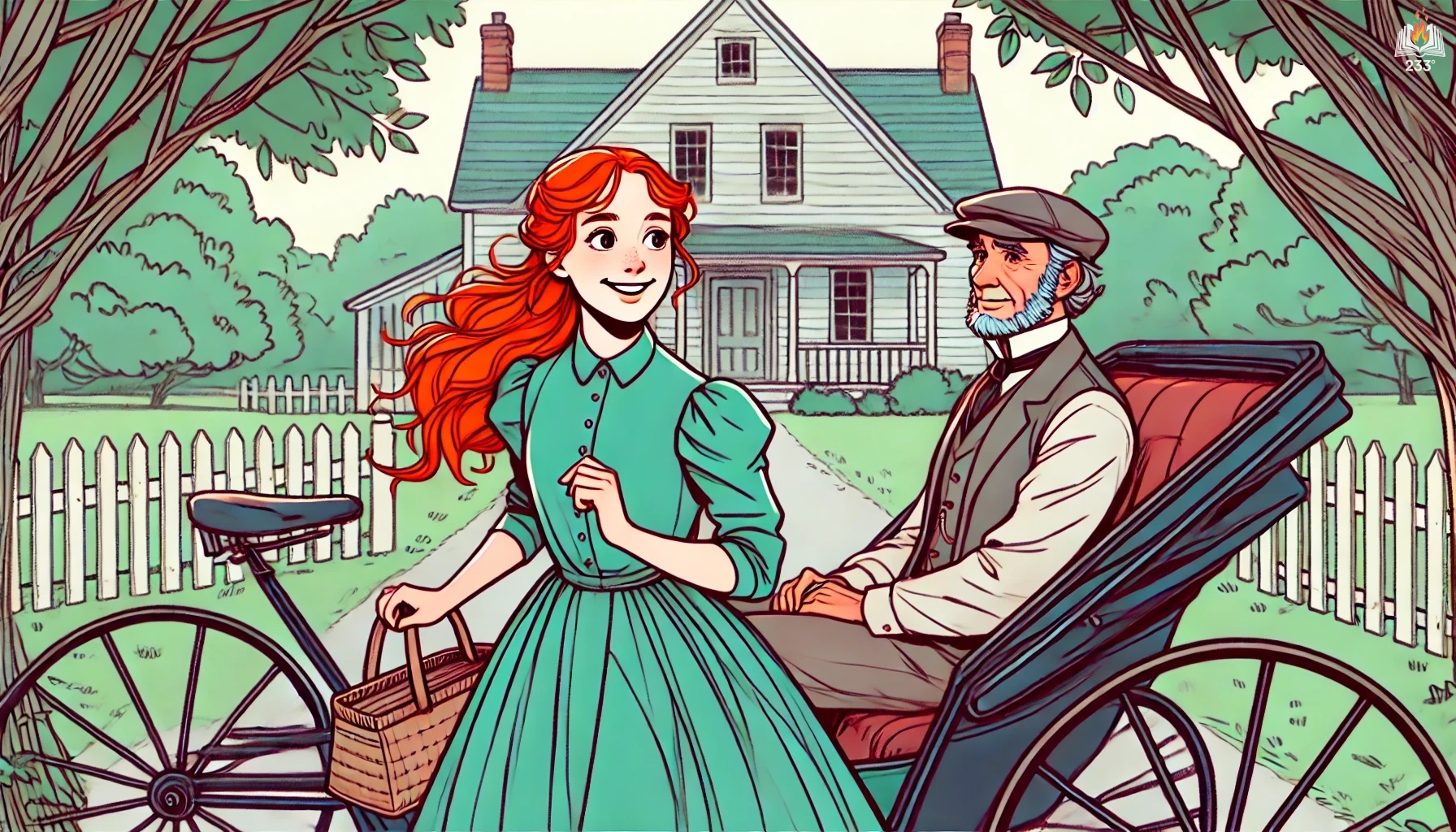
The Golden Road by Lucy Maud Montgomery, published in 1913, is the enchanting sequel to The Story Girl, continuing the adventures of a group of imaginative and spirited children growing up in rural Prince Edward Island. Narrated by Beverly King, the book follows a memorable winter and spring in the lives of cousins, siblings, and friends who publish their own magazine, share fantastical stories, and navigate the joys and trials of childhood. With her signature blend of humor, nostalgia, and emotional depth, Montgomery captures a golden moment in youth before the inevitable transition into adulthood.
Plot Summary
One bright November day, with the orchard rimmed in gold and the wind weaving its wild songs through the trees, a group of children gathered around the hearth of Uncle Alec’s farmhouse. It was the beginning of a plan – an idea sparked by the cold wind outside and the hunger for amusement that winter always stirred in young hearts. They decided to create a newspaper, hand-written and brimming with their thoughts, tales, and imaginations. Thus was born “Our Magazine,” and with it came a season of dreams, quarrels, games, and revelations, played out against the backdrop of Prince Edward Island’s snow-silvered fields and whispering woods.
At the heart of the group was the Story Girl, Sara Stanley, whose tales danced with wonder and held even the most skeptical children spellbound. Her stories became the soul of their gatherings, painting their little world with ancient legends, romantic escapes, and otherworldly marvels. She had a way of making the ordinary shimmer with unseen magic, whether spinning a yarn about an elopement thwarted by a ball of yarn or reciting the sad tale of a harp that played the angels’ song.
Felicity, beautiful and proud, possessed a mind as sharp as her tongue. Her domestic talents were unmatched, and she took great pride in her culinary skills and neatness. Yet beneath her prim demeanor flickered the uncertain light of a girl torn between admiration and rivalry – especially when it came to Sara Stanley. Cecily, quiet and gentle, held the group together with her kindness and patience. Though often overlooked, her steady heart beat at the center of their shared joys and sorrows. Dan, ever mischievous, brought daring and humor, while Felix, round-cheeked and easily flustered, wore his heart plainly and added warmth and laughter. Peter, brave and awkward, bore a rough past with surprising gentleness, and Sara Ray, delicate and often tearful, longed for inclusion in a world that always seemed just out of her reach.
As winter deepened, so did the bonds among the children. They filled their magazine with etiquette columns, household advice, fiction, fashion, and personal notes, each child taking up a department. Sara Ray was given charge of advertising, though she never quite knew what to do with it. Their first issue, read aloud on New Year’s Day, brought both laughter and blushes, and the cold outside seemed warmer for their efforts.
Between issues, they lived richly. Christmas arrived on the heels of a storm, cloaking the world in white. The farmhouse was lit with cheer and mystery, each child hoarding secrets and gifts. Even Peter, often at odds with the gentler ways of the Kings, was invited to stay and celebrated with a heart full of joy, especially when he found himself walking home from a holiday party with none other than Felicity. They attended that party at Kitty Marr’s house, dressed in their finest, and came home beneath a red moon and stars that seemed to echo the music of a fir grove where the wind itself might be a harp of heaven.
The months passed with stories told and new experiences unfolding. One day, the children discovered a strange figure in the woods – Peg Bowen, the village witch. Despite fear and superstition, they visited her cottage, discovering a woman far different from the whispers. She was wild and free, full of riddles and fierce affection, and gifted them a wishbone that promised to grant one heart’s desire. Each child tucked away a secret wish, and though they doubted its power, they never quite forgot it.
They visited old relatives, saw a glimpse of lives lived beyond the orchard, and watched as Aunt Olivia – beloved and graceful – prepared to marry and leave for a new home. The children, especially Cecily and Sara Stanley, were caught between happiness and aching loss. Olivia’s wedding was a vision of soft beauty and change, and when she left with Uncle Roger, the world felt quieter, lonelier.
Their magazine continued, issue after issue, as the children grew bolder in their writing and more honest in their hearts. They wrote stories of lost love, tragic beauty, and comic misunderstandings. They argued, made up, and made resolutions for the New Year – to be better, kinder, more polite, to stop using slang, to study their grammar and keep their tempers. Each resolution was a fragile promise tucked between winter snow and spring’s distant breath.
When Uncle Blair, the Story Girl’s long-absent father, returned, he brought not just gifts from far-off lands, but the weight of a future yet unknown. He came to take her away. The news settled like snow on a blooming branch. The children, especially Beverley and Felix, felt the ground shift beneath them. The Story Girl, though bright and brave, struggled with the idea of leaving the world she knew, the world where stories lived like petals on the wind.
Spring came quietly. The snow melted into the soft green of April, and birds returned with songs that sounded almost like old tales remembered. The children’s magazine, once a flurry of excitement, published its last edition. Their final evening together was filled with laughter that tried not to break, stories that held too much truth, and eyes that avoided goodbyes.
Then the Story Girl went away.
The golden road they had walked together faded into the hush of memory. The path through the orchard no longer rang with the same delight. But the tales she had told, the friendships they had formed, the dreams they had dared to share – these remained, etched into the hearts of those who had walked that road. And though summer came and the orchard bloomed again, something had changed, softened, become more precious for its passing.
In the end, the golden road was not just a place. It was the time they had spent together – a time of magic, laughter, and light, now folded gently into memory, where it would always remain.
Main Characters
Beverley King (Bev) – The narrator and a thoughtful, observant boy who provides a steady voice amidst the whirlwind of youthful antics. Bev is earnest and loyal, often acting as the grounding force among his cousins and friends, and serves as the editor of their homegrown magazine.
Sara Stanley (The Story Girl) – A captivating and imaginative storyteller whose vivid tales and charisma enchant the group. She’s sensitive, poetic, and deeply expressive, often weaving beauty and mystery into even the most mundane moments of life.
Felicity King – Bev’s cousin, known for her beauty, domestic skills, and occasional pride. Felicity is practical and tradition-bound but has a sharp tongue and often clashes with the Story Girl over attention and ideals.
Cecily King – The gentle and kind-hearted cousin, often serving as a peacemaker within the group. Cecily’s character is marked by patience and a quietly enduring strength, especially in the face of subtle health concerns hinted at throughout the story.
Dan King – Felicity and Cecily’s mischievous and witty brother who brings humor and rebellious energy to the group. Dan often challenges authority and tradition but is loyal at heart.
Felix King – Bev’s brother, slightly plump and self-conscious, Felix often provides comic relief. Though less outspoken, his observations are insightful and add a grounded charm to the narrative.
Peter Craig – A spirited boy from a poorer background, determined to rise above his circumstances. Peter is enthusiastic, fiercely loyal, and harbors a tender affection for Felicity, whom he courts in his own awkward, endearing way.
Sara Ray – A timid and emotional girl who is constantly repressed by her overbearing mother. She is often anxious but craves inclusion and friendship, symbolizing innocence and vulnerability within the group.
Theme
The Transience of Childhood – A prevailing theme throughout the book is the fleeting nature of childhood. The children’s adventures, laughter, and games occur under the shadow of approaching maturity, making every shared experience on “the golden road” a poignant treasure.
Imagination and Storytelling – Through Sara Stanley’s tales and the creation of “Our Magazine,” storytelling becomes a vessel for creativity, emotional expression, and communal bonding. It is not just a form of entertainment but a way to process and give shape to their experiences.
Friendship and Community – The novel richly explores the dynamics of friendships, the tensions between characters, and the quiet, enduring support they offer each other. Together, they create a warm microcosm of rural community life filled with shared traditions and seasonal celebrations.
Class and Social Expectation – Subtle explorations of class emerge, especially through Peter Craig’s background and his struggle to be accepted. The children’s attitudes and judgments often reflect the adult world, revealing the embedded hierarchies of their society.
Coming of Age – Each character, in small and often unspoken ways, moves toward the brink of adolescence. Romantic inklings, emerging responsibilities, and personal growth hint at a world just beyond their youthful grasp.
Writing Style and Tone
Montgomery’s writing in The Golden Road is richly descriptive, lyrical, and filled with emotional resonance. She masterfully captures the cadence and nuance of children’s speech and thought, allowing readers to step into a world where small events are imbued with wonder and importance. Her prose is gentle yet profound, offering moments of poetic beauty without becoming overly sentimental. The voices of the children, especially through Bev’s narration, are rendered with clarity and authenticity, lending the story a nostalgic charm.
The tone of the book is warm, wistful, and occasionally tinged with melancholy. While the mood is often playful and full of light-hearted adventures, there’s a constant awareness that this period of life is ephemeral. Montgomery balances humor and sorrow, crafting a tone that is both comforting and emotionally rich. Her gift for evoking the magic of ordinary moments makes The Golden Road a celebration of youth, memory, and the enduring power of imagination.
Quotes
The Golden Road – Lucy Maud Montgomery (1913) Quotes
“Nature seemed to have folded satisfied hands to rest, knowing that her long wintry slumber was coming upon her.”
“There's something very solemn about the idea of a new year, isn't there? Just think of three hundred and sixty-five whole days with not a thing happened in them yet.”
“He who accepts human love must bind it to his soul with pain, and she is not lost to me. Nothing is ever really lost to us as long as we remember it.”
“But Cecily's maiden feet were never to leave the golden road.”
“Remember it is harder still To have no work to do,”
“Multiplication is vexation, Division is as bad, The rule of three perplexes me, And fractions drive me mad,”
“But Cecily's maiden were never to leave the golden road.”
We hope this summary has sparked your interest and would appreciate you following Celsius 233 on social media:
There’s a treasure trove of other fascinating book summaries waiting for you. Check out our collection of stories that inspire, thrill, and provoke thought, just like this one by checking out the Book Shelf or the Library
Remember, while our summaries capture the essence, they can never replace the full experience of reading the book. If this summary intrigued you, consider diving into the complete story – buy the book and immerse yourself in the author’s original work.
If you want to request a book summary, click here.
When Saurabh is not working/watching football/reading books/traveling, you can reach him via Twitter/X, LinkedIn, or Threads
Restart reading!