Kafka on the Shore, written by Haruki Murakami and published in 2002, is a mesmerizing novel that fuses magical realism, metaphysical mystery, and psychological depth into a complex yet lyrical narrative. It is one of Murakami’s most celebrated works, often compared to his earlier classic The Wind-Up Bird Chronicle, and exemplifies his fascination with parallel worlds, mythic undercurrents, and the labyrinthine nature of memory and identity. The story alternates between two distinct narrative threads – a 15-year-old runaway’s surreal odyssey and an elderly man’s uncanny journey – both converging toward a shared metaphysical core.
Plot Summary
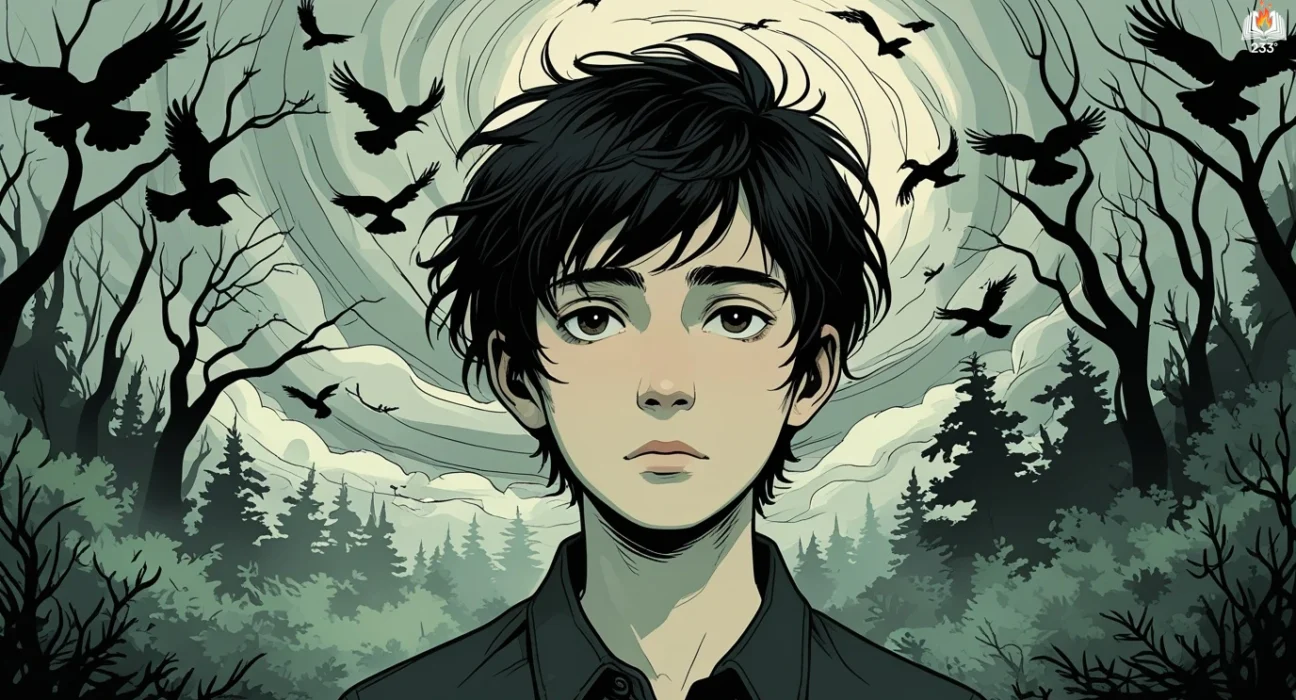
On the morning of his fifteenth birthday, a boy named Kafka Tamura boards a bus to Takamatsu, leaving behind a life shadowed by silence, prophecy, and an absent mother. He carries only essentials – money, a photograph, a knife, and a hardened will. His mind is clouded by an Oedipal curse whispered long ago by his father: that he will murder him and sleep with both his mother and sister. With the imagined voice of a mysterious companion, Crow, urging him toward resilience, Kafka begins a journey into a world where boundaries dissolve – between past and present, life and death, dream and waking.
In a quiet town far from Tokyo, Kafka finds sanctuary in the Komura Memorial Library, a serene building filled with books, Western music, and the stillness of unspoken sorrow. There, he meets Oshima, a refined, perceptive assistant with a razor intellect and gentle reserve, and Miss Saeki, the elegant, reclusive head of the library, whose past pulses beneath her calm like an old wound. Kafka is drawn to her not just by her beauty but by something inexplicably familiar, as though her presence is woven into the very fabric of his fate. He settles into the library’s guest room, devouring books by day and wandering his mind by night, haunted by dreams he cannot place and blood he cannot scrub from memory.
At the same time, far from the library, an old man named Nakata lives in a modest Tokyo apartment, incapable of reading or writing after a mysterious childhood affliction during the war. He speaks with cats, lives on a modest subsidy, and exists without questions – until one day, something changes. He loses a favorite cat, goes looking, and encounters a man named Johnnie Walker who wears a top hat, collects cat souls, and drips with cruelty. What transpires in that strange room leaves Nakata altered. He kills the man, leaves the scene, and with an inner sense of direction that transcends logic, he heads west.
As Kafka explores his new refuge, he learns more about Miss Saeki’s past – the boy she once loved, his tragic death, the song she wrote and recorded when she was young. The song shares his name – Kafka on the Shore – and its lyrics seem to carry messages only he can decipher. At night, her ghost visits him, or perhaps it is her younger self. In the dark quiet of her room, Kafka is taken by something that resembles love or fate or a memory long buried. He doesn’t know if she is his mother. She will not say.
Meanwhile, Nakata’s journey leads him to a truck driver named Hoshino, a man whose life has until then been ordinary and forgettable. Something about the gentle old man moves Hoshino, and he agrees to drive him across the country. As Nakata sleepwalks through his mission – following unseen signs, opening something called the entrance stone, and waiting for something he cannot name – Hoshino becomes his guardian, his disciple, his friend. Through Nakata’s silence and innocence, Hoshino discovers a world that had always been around him but never visible – one where rain can fall as leeches and spirits can step through narrow openings between worlds.
Kafka flees the library after a boy named Sakura – a stranger he meets on the bus, who may be his sister – helps him after a blackout. He wakes one day in a cabin in the forest, tended by two ghost-like soldiers from a war long over. There, in the silence of trees and the language of crows, Kafka faces the storm within him – the prophecy, the blood on his hands, the possibility that what was foretold has already happened. Time bends around him. He enters and exits places not governed by clocks. In that strange space between the living and the dead, he grows into himself.
Back in Takamatsu, Miss Saeki entrusts Oshima with her manuscript and prepares to leave. She asks Kafka to take part of her with him – not her body, but something less defined and more enduring. Her death arrives softly. Not long after, Nakata dies too, lying in bed peacefully, his task complete though never named. Hoshino is left behind, confused but devoted. He guards Nakata’s final resting place, learns how to speak to stones, and protects the sealed entrance Nakata once opened. The world does not acknowledge what they have done, but something beneath it shifts.
Kafka returns to the library, where Oshima welcomes him back without questions. The library is quieter now, touched by absence. Kafka understands that he has survived the storm not by escaping it but by stepping into it. The prophecy no longer holds him. Whether it came true or was only ever a shadow cast by fear no longer matters. He is no longer the boy who ran away.
As he boards the train back to Tokyo, his heart carries pieces of the people he met – the girl who may be his sister, the librarian who might have been his mother, the man who could talk to cats, and the truck driver who chose kindness. They remain with him like the words of a forgotten book, like a song hummed under breath, half-remembered but never lost.
Main Characters
Kafka Tamura: A determined and introspective 15-year-old boy who runs away from home to escape a disturbing Oedipal prophecy laid upon him by his father. Kafka is intelligent, emotionally withdrawn, and constantly battling internal voices and metaphysical omens. His journey is not just physical but deeply symbolic, as he seeks both his identity and a place of belonging.
Satoru Nakata: An elderly, mentally impaired man who lost his ability to read and write after a childhood incident during WWII. Despite his childlike demeanor, Nakata can communicate with cats and becomes a key player in a cosmic narrative he only dimly understands. His intuitive sense of duty propels him toward actions of mythic weight.
Oshima: A refined, cerebral library assistant at the Komura Memorial Library who becomes Kafka’s closest ally. A transgender intellectual with a sharp tongue and a vast knowledge of literature, Oshima provides Kafka with refuge and wisdom, acting as both protector and philosophical guide.
Miss Saeki: The enigmatic head librarian at the Komura Library, she harbors profound grief tied to a tragic past. Her story intertwines mysteriously with Kafka’s, blurring the boundaries between memory, identity, and time. She serves as both a spectral muse and a puzzle within Kafka’s odyssey.
Hoshino: A truck driver who starts off as an indifferent everyman but undergoes a spiritual transformation under Nakata’s influence. He transitions from skepticism to a role of compassionate companion and guardian, eventually taking up Nakata’s metaphysical mission after his death.
Theme
Fate and Free Will: The novel intricately explores the tension between predestined fate and the autonomy of choice. Kafka’s actions, influenced by a dark prophecy, raise the question of whether he is shaping his destiny or merely playing out an inevitable script. Nakata, too, follows an inner compulsion that seems guided by forces beyond comprehension.
Identity and Transformation: Kafka seeks to define himself beyond the shadow of his father and the prophecy, while Nakata grapples with a fragmented self following a wartime trauma. Both characters undergo significant transformations – physical, emotional, and spiritual – as they venture deeper into their respective paths.
Dreams, Memory, and the Subconscious: The novel blurs the boundary between reality and dream states. Characters often experience surreal episodes, parallel timelines, or metaphysical crossings, where memory and subconscious desires drive the plot as much as external events.
The Power of Literature and Music: Books, poetry, and music play pivotal roles, not merely as references but as portals into characters’ souls and catalysts for spiritual insight. Miss Saeki’s song “Kafka on the Shore” haunts the narrative, while Oshima’s literary acumen infuses Kafka’s quest with philosophical depth.
Loneliness and Connection: Every major character grapples with loneliness, alienation, and the desire for meaningful connection. Murakami probes the spaces between people – the silence, misunderstandings, and symbolic gestures that define relationships.
Writing Style and Tone
Haruki Murakami’s prose in Kafka on the Shore is lucid, rhythmic, and deceptively simple, often veiling philosophical inquiries within seemingly casual dialogue and dreamlike description. He employs a dual narrative structure with alternating chapters, allowing the mystical and the mundane to coexist harmoniously. Murakami’s signature use of magical realism is deeply embedded into the narrative fabric – supernatural occurrences are treated with the same narrative tone as daily minutiae, creating an eerie sense of normalcy within the extraordinary.
The tone of the novel oscillates between contemplative, melancholic, and surreal. Kafka’s storyline evokes a brooding, poetic atmosphere, steeped in teenage angst and metaphysical dread. Nakata’s chapters, on the other hand, introduce moments of whimsical absurdity that offer tonal contrast while still carrying symbolic weight. Despite the presence of grotesque violence, sexual tension, and metaphysical perplexity, Murakami’s narration remains calm, neutral, and strangely comforting – as if to reassure the reader that every mystery, no matter how unfathomable, is worth sitting with.
Quotes
Kafka on the Shore – Haruki Murakami (2002) Quotes
“Memories warm you up from the inside. But they also tear you apart.”
“If you remember me, then I don't care if everyone else forgets.”
“It's like Tolstoy said. Happiness is an allegory, unhappiness a story .”
“Silence, I discover, is something you can actually hear.”
“Listen up - there's no war that will end all wars.”
“Every one of us is losing something precious to us. Lost opportunities, lost possibilities, feelings we can never get back again. That’s part of what it means to be alive.”
“In everybody’s life there’s a point of no return. And in a very few cases, a point where you can’t go forward anymore. And when we reach that point, all we can do is quietly accept the fact. That’s how we survive.”
“Taking crazy things seriously is a serious waste of time.”
“Not just beautiful, though--the stars are like the trees in the forest, alive and breathing. And they're watching me.”
“Narrow minds devoid of imagination. Intolerance, theories cut off from reality, empty terminology, usurped ideals, inflexible systems. Those are the things that really frighten me. What I absolutely fear and loathe.”
“A certain type of perfection can only be realized through a limitless accumulation of the imperfect.”
“Chance encounters are what keep us going.”
“What do you think? I'm not a starfish or a pepper tree. I'm a living, breathing human being. Of course I've been in love.”
“When you come out of the storm, you won’t be the same person who walked in. That’s what this storm’s all about.”
“Being with her I feel a pain, like a frozen knife stuck in my chest. An awful pain, but the funny thing is I'm thankful for it. It's like that frozen pain and my very existence are one. The pain is an anchor, mooring me here. ”
“It's hard to tell the difference between sea and sky, between voyager and sea. Between reality and the workings of the heart.”
“If you think God’s there, He is. If you don’t, He isn’t. And if that’s what God’s like, I wouldn’t worry about it.”
“Even chance meetings are the result of karma... Things in life are fated by our previous lives. That even in the smallest events there’s no such thing as coincidence.”
“Each person feels pain in his own way, each has his own scars.”
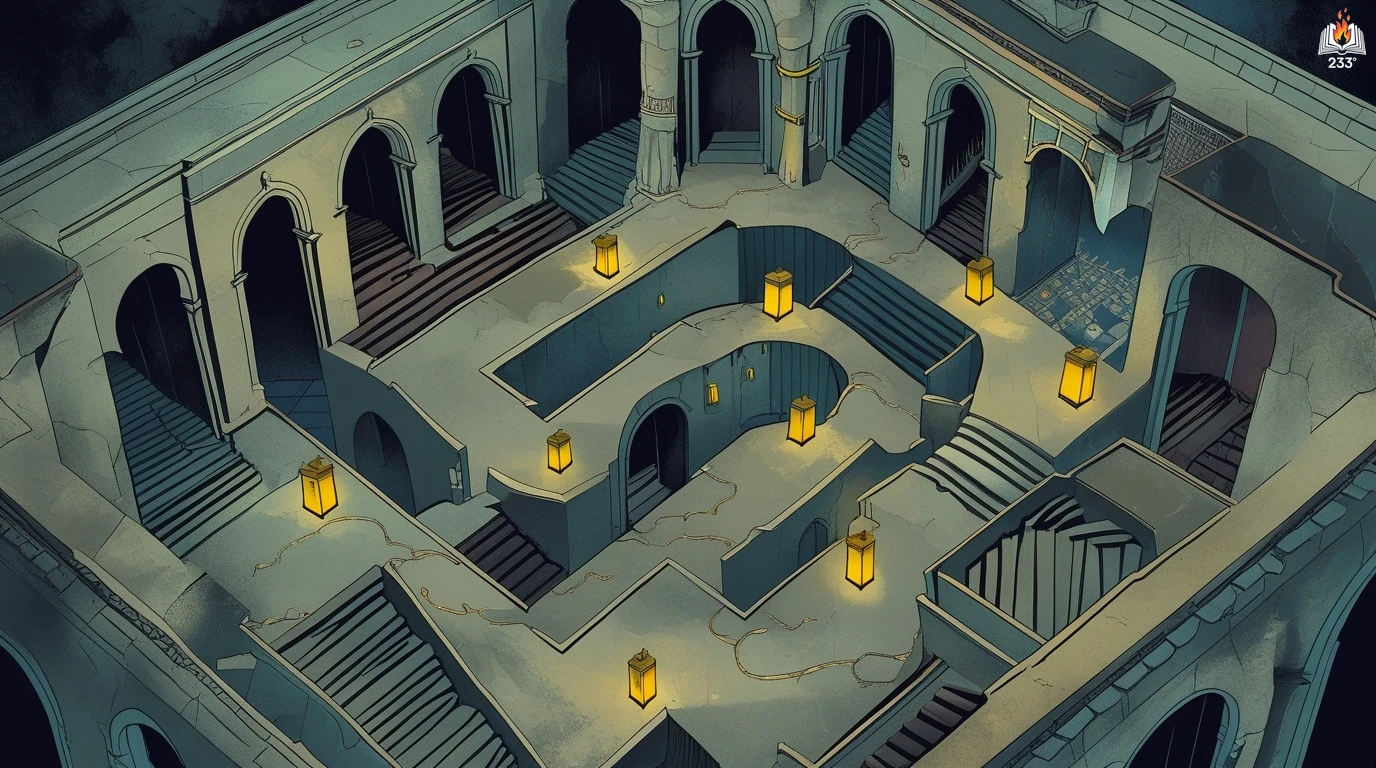
“Things outside you are projections of what's inside you, and what's inside you is a projection of what's outside. So when you step into the labyrinth outside you, at the same time you're stepping into the labyrinth inside.”
We hope this summary has sparked your interest and would appreciate you following Celsius 233 on social media:
There’s a treasure trove of other fascinating book summaries waiting for you. Check out our collection of stories that inspire, thrill, and provoke thought, just like this one by checking out the Book Shelf or the Library
Remember, while our summaries capture the essence, they can never replace the full experience of reading the book. If this summary intrigued you, consider diving into the complete story – buy the book and immerse yourself in the author’s original work.
If you want to request a book summary, click here.
When Saurabh is not working/watching football/reading books/traveling, you can reach him via Twitter/X, LinkedIn, or Threads
Restart reading!