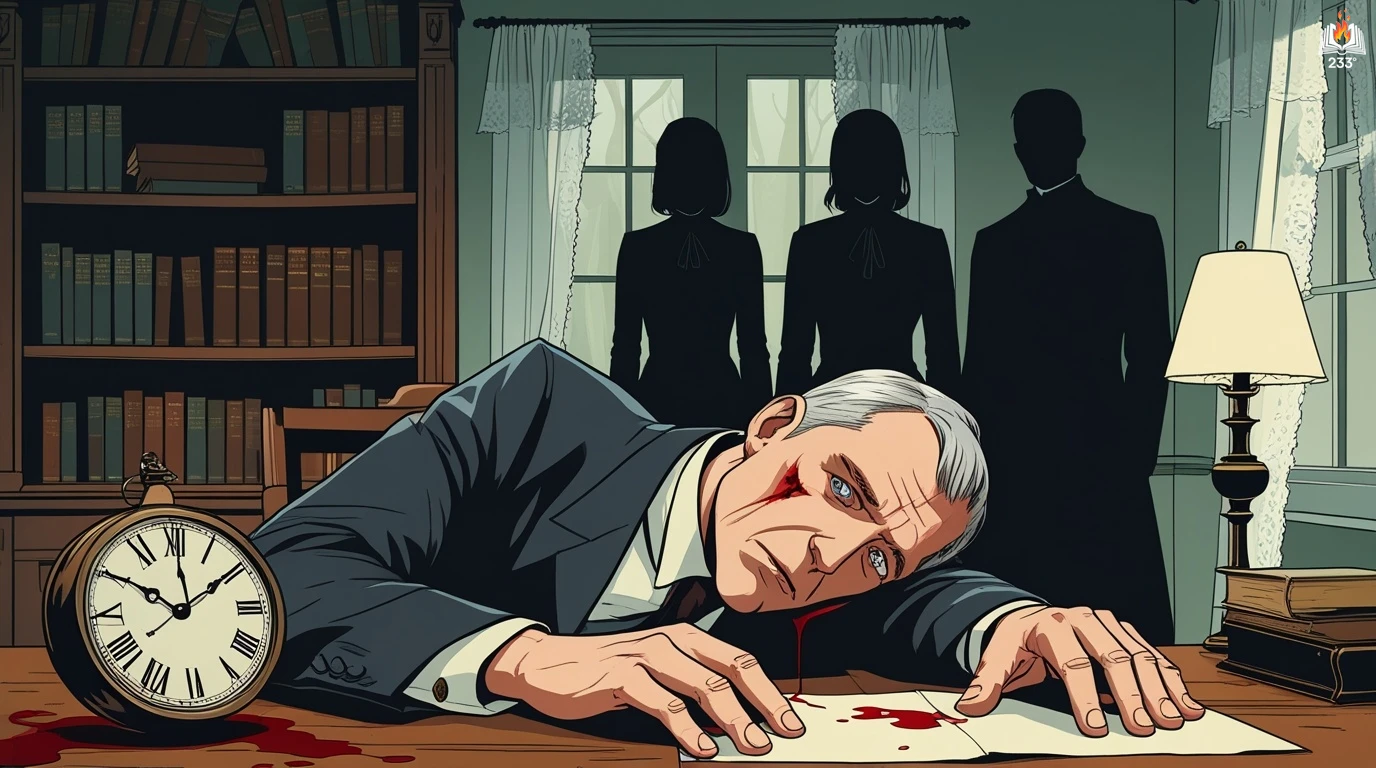
If I Stay by Gayle Forman, published in 2009, is a deeply emotional and introspective young adult novel that blends contemporary fiction with speculative elements. Set in Oregon, the novel explores a teenage girl’s out-of-body experience after a devastating car accident leaves her in a coma and claims the lives of her immediate family. As she hovers between life and death, she must decide whether to stay or to let go. This book is the first in a well-known duology, followed by its sequel Where She Went.
Plot Summary
On a quiet winter morning in Oregon, a light dusting of snow is enough to bring life to a pause. School is canceled, and the Hall family – music-loving and tightly bonded – decides to make the most of the unexpected holiday. Mia, seventeen, a talented cellist with a scholarship audition at Juilliard already behind her, joins her younger brother Teddy and their parents for a spontaneous drive to visit old friends in the countryside.
Their home is warm with laughter and the smell of pancakes. Her father, once a punk drummer and now a bow-tie-wearing English teacher, teases her mom who can barely cook, while Teddy bounds through the house with youthful energy. The morning brims with love, music, and soft teasing – a family comfortable in its rhythms. Then, on a stretch of wet road slick with melting snow, a pickup truck collides with their car, and everything changes.
The impact shatters the world. The car is destroyed. Her parents die instantly. Teddy is critically injured. And Mia – her body broken, her consciousness somehow untethered – finds herself observing it all. She sees the wreckage, her own bloodied body, the panicked medics trying to save what they can. She hears the Beethoven still playing from the ruined radio. She doesn’t understand how she can be both there and not there. But she is.
Rushed to the hospital, her body is kept alive by machines and doctors, while her awareness hovers unseen. She watches as nurses tend to her with gentle hands and clipped efficiency. She sees her grandparents arrive, grief carved into every line of their faces. Her grandfather sits silently with a Styrofoam cup of coffee, unraveling its edges in quiet despair. Her grandmother, practical and composed, speaks constantly, fighting back tears with words. There are no answers, only a waiting game. The girl in the bed must decide whether to stay or slip away.
Mia remembers. Her life plays out in memories that rise up unbidden. The first time she held a cello and felt it speak to her. Her father’s unwavering support when she was terrified before her first recital. The secret joy of discovering a shared love of classical music and old vinyl records. Her complicated romance with Adam, the charismatic guitarist from a local punk band, so different from her but drawn to her passion like gravity.
Adam, who had quietly watched her practice at school before finally asking her to a concert in Portland. Who saved for weeks delivering pizzas to buy tickets to see Yo-Yo Ma perform. Who kissed her for the first time while a cello wept in the background. Who took her hand without words as music filled the concert hall, both of them lost in the same moment.
But falling in love wasn’t enough to make the differences between their worlds disappear. While Adam’s band began to soar in the local music scene, Mia’s own path to Juilliard pulled her further into a world he couldn’t always reach. The more they tried to make it work, the more cracks showed between them – at his shows, in their silences, in her fear that loving him might mean giving up part of herself.
Now, Mia lies still in the hospital bed while her soul roams the halls, eavesdropping on grief. She finds her best friend Kim pacing furiously in the waiting room, trying to pull strings and push rules to get Adam to see her. She finds Willow, a family friend and nurse, who finally realizes that the broken girl is Mia and breaks down in a supply closet. She sees Teddy arrive on another stretcher, and then sees the hospital go quiet when the doctors can do no more.
Her family is gone.
The stillness inside her grows. The absence weighs more than the presence ever did. Mia begins to drift further, and she wonders if it would be easier to let go. She doesn’t know where she will go, only that it would stop the ache. Then, Adam comes.
He crashes into the ICU, desperate and disheveled, his presence cutting through the antiseptic quiet like a song. Hospital staff try to keep him out, but Kim, fierce as ever, buys him just enough time. He reaches her, sits beside her, and speaks. Not with grand gestures, but with the truth of someone breaking open.
He begs her to stay. He reminds her of the music, of their laughter, of their dreams. He promises not to hold her back, promises to let her go if that’s what she needs, even though it will destroy him. He pleads without expectation, lays his heart bare. In those moments, Mia remembers what it felt like to be fully alive – not just surrounded by love, but connected by it.
And so she chooses. Not because of guilt or duty. Not even for him. She chooses because of the thread that runs through every note she has ever played and every hug she has ever received. That invisible music of connection, still trembling like a string not quite stilled.
Her eyes open. The machines beep in rhythm. The room does not erupt in joy. There are no fireworks. Only breath, faint and real.
She stays.
Main Characters
Mia Hall: A quiet, introspective seventeen-year-old cellist with a deep passion for classical music. Mia is torn between her love for music and the pull of her close-knit family and boyfriend. After the car crash, she experiences an out-of-body state and observes the events surrounding her unconscious body. Her struggle is not just physical but existential – choosing between life and death.
Adam Wilde: Mia’s boyfriend, a passionate, charismatic rock musician in the rising band Shooting Star. Though they come from different musical worlds, Adam’s love for Mia is sincere and profound. His emotional vulnerability and desperate efforts to reach Mia at the hospital are key to the story’s emotional core.
Teddy Hall: Mia’s eight-year-old brother, lively and affectionate. His joyful nature contrasts with the heavy themes of the story. Teddy represents Mia’s deep familial love, and his fate adds a critical emotional weight to her decision.
Mia’s Mom and Dad: Her parents are unconventional, loving, and deeply supportive of her musical ambitions. Her father, a former punk rocker turned teacher, and her sarcastic, loving mother offer a grounded and vibrant family life that Mia cherishes. Their sudden loss is a major factor in Mia’s emotional crisis.
Kim Schein: Mia’s best friend, fiercely loyal and practical. Kim provides emotional grounding for Mia and later becomes a vital presence during her hospitalization, offering love and strength from the outside world.
Gramps and Gran: Mia’s grandparents, who become her only remaining family after the accident. Their quiet presence in the hospital reflects generational love and resilience. Gramps’ heartfelt visit to Mia’s bedside is a poignant turning point.
Theme
Life and Death: The central theme revolves around Mia’s liminal state – neither fully alive nor dead. Her choice of whether to stay in the world or pass on is the emotional and philosophical axis of the novel.
Choice and Free Will: Mia’s ability to decide her fate, even when physically incapacitated, reflects the novel’s exploration of autonomy and the significance of personal choice. The power of that choice, and the weight it carries, underscores her journey.
Love and Connection: Whether romantic, familial, or platonic, love is portrayed as a life-affirming force. Adam’s devotion, her parents’ nurturing, Kim’s friendship, and Gramps’ silent grief all converge to offer reasons to live.
Music as Identity and Healing: Music defines the characters and their relationships. For Mia, classical cello isn’t just a talent – it’s her soul’s voice. Her connection with Adam is partly built through their shared but distinct musical passions, which offer solace and understanding.
Loss and Grief: The novel doesn’t shy away from sorrow. Mia’s gradual realization of her family’s death is agonizing. Yet, it’s within grief that she contemplates the value of memory, love, and the future.
Writing Style and Tone
Gayle Forman’s writing is intimate and lyrical, characterized by a fluid first-person narrative that immerses the reader in Mia’s internal world. Her prose gracefully oscillates between the present and flashbacks, painting a vivid picture of Mia’s life before the accident. The juxtaposition of warmth and tragedy in these sections creates a powerful emotional rhythm, enriching the reader’s understanding of Mia’s dilemma.
The tone of If I Stay is contemplative and melancholic, yet tender and hopeful. Forman masterfully balances the fragility of life with the resilience of the human spirit. Despite the tragic premise, the narrative never becomes bleak. Instead, it offers moments of humor, nostalgia, and affection, ensuring that the novel remains grounded in humanity. Her ability to convey the enormity of loss while still offering a glimmer of hope is what gives the story its lasting resonance.
Quotes
If I Stay – Gayle Forman (2009) Quotes
“Sometimes you make choices in life and sometimes choices make you.”
“I realize now that dying is easy. Living is hard.”
“Love, it never dies. It never goes away, it never fades, so long as you hang on to it. Love can make you immortal”
“And that's just it, isn't it? That's how we manage to survive the loss. Because love, it never dies, it never goes away, it never fades, so long as you hang on to it.”
“I'm not sure this is a world I belong in anymore. I'm not sure that I want to wake up.”
“Losing me will hurt; it will be the kind of pain that won't feel real at first, and when it does, it will take her breath away.”
“Please Mia," he implores. "Don't make me write a song.”
“Don't be scared...Women can handle the worst kind of pain. You'll find out one day.”
“I just wanted to tell you that I understand if you go. It’s okay if you have to leave us. It’s okay if you want to stop fighting.”
“I'm not choosing, but I'm running out of fight.”
“Girlfriend is such a stupid word. I couldn't stand calling her that. So, we had to get married, so I could call her 'wife.”
“People believe what they want to believe.”
“Adam is crying and somewhere inside of me I am crying, too, because I'm feeling things at last. I'm feeling not just the physical pain, but all that I have lost, and it is profound and catastrophic and will leave a crater in me that nothing will ever fill.”
“She didn't care that people called her a bitch. 'It's just another word for feminist,' she told me with pride.”
“This is the you I like. You definitely dressed sexier and are, you know, blond, and that's different. But the you who are tonight is the same you I was in love with yesterday, the same you I'll be in love with tomorrow. I love that you're fragile and tough, quiet and kick-ass. ”
“But I'd understand if you chose love, Adam love, over music love. Either way you win. And either way you lose. What can I tell you? Love's a bitch.”
“It's quiet now. So quiet that can almost hear other people's dreams.”
“I have a feeling that once you live through something like this, you become a little bit invincible.”
“But the you who you are tonight is the same you I was in love with yesterday, the same you I’ll be in love with tomorrow.”
“I don't really care. I shouldn't have to care. I shouldn't have to work this hard. I realize now that dying is easy. Living is hard.”
“You can have your wishes, your plans, but at the end of the day, it's out of your control.”
“You just work through it. You just hang in there.”
“We are like Humpty Dumpty and all these king's horses and all these king's men cannot put us back together again”
“Bribes are the glue that's kept teenagers and parents connected for generations”
We hope this summary has sparked your interest and would appreciate you following Celsius 233 on social media:
There’s a treasure trove of other fascinating book summaries waiting for you. Check out our collection of stories that inspire, thrill, and provoke thought, just like this one by checking out the Book Shelf or the Library
Remember, while our summaries capture the essence, they can never replace the full experience of reading the book. If this summary intrigued you, consider diving into the complete story – buy the book and immerse yourself in the author’s original work.
If you want to request a book summary, click here.
When Saurabh is not working/watching football/reading books/traveling, you can reach him via Twitter/X, LinkedIn, or Threads
Restart reading!