Will Grayson, Will Grayson is a groundbreaking contemporary YA novel told from the alternating perspectives of two teenagers, both named Will Grayson. The story is a collaboration between John Green and David Levithan, blending their unique narrative voices to explore themes of friendship, identity, love, and self-acceptance. Set primarily in Chicago, the novel follows the intertwining lives of the two Wills and their connection to the larger-than-life character Tiny Cooper, whose charisma and audaciousness drive much of the narrative’s humor and poignancy.
Plot Summary
Will Grayson leads a structured life, guided by two steadfast rules: “shut up” and “don’t care too much.” His best friend, Tiny Cooper, is the antithesis of this philosophy—flamboyant, loud, and relentlessly enthusiastic about love, friendship, and his latest endeavor, a semi-autobiographical musical titled Tiny Dancer. Tiny’s passion and larger-than-life personality often overshadow Will, creating tension in their friendship. As Will navigates high school in Evanston, Illinois, he reluctantly finds himself drawn to Jane, a member of the Gay-Straight Alliance. Jane’s intelligence and wit challenge Will’s aversion to vulnerability, forcing him to confront feelings he would rather suppress.
Elsewhere in the Chicago suburbs, another Will Grayson battles his own demons. Cynical and deeply depressed, he often feels invisible and disconnected from the world around him. His only solace lies in the virtual companionship of Isaac, a boy he has met online and formed a close, emotional bond with. Will’s tenuous connection with Isaac becomes the only bright spot in an otherwise bleak existence, but he is hesitant to share this secret with anyone, even his manipulative friend Maura.
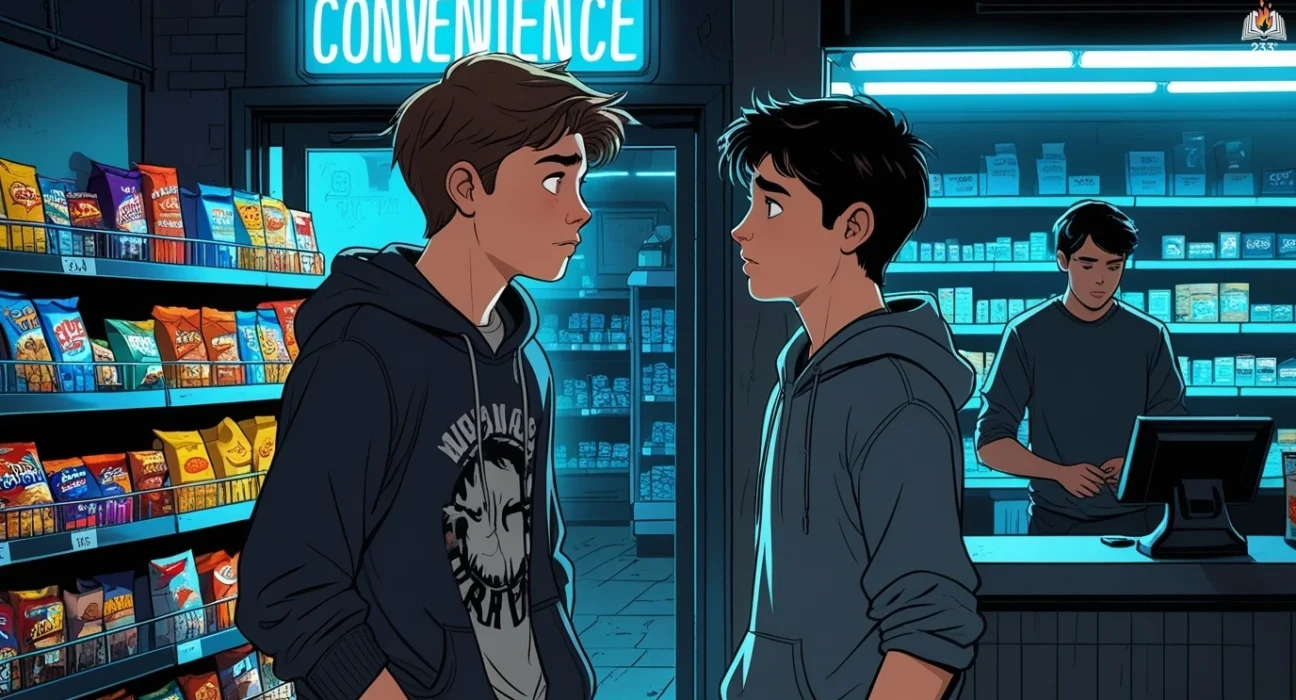
One evening, Tiny convinces his Will to join him on a night out in Chicago, promising an unforgettable experience. Though reluctant, Will agrees, spurred by a chance to bond with Jane. Meanwhile, the other Will embarks on his own journey into the city to finally meet Isaac. The paths of the two Wills converge at a seedy convenience store when a shocking twist unravels the life of the suburban Will—Isaac does not exist. Maura, in an act of cruel desperation, has been pretending to be Isaac, shattering Will’s trust and plunging him into deeper despair.
Amid the chaos of this revelation, the two Wills meet for the first time. Tiny, ever perceptive and compassionate, takes an immediate interest in the heartbroken suburban Will. As the evening unfolds, Tiny’s warmth begins to chip away at the walls this Will has built around himself. Drawn into Tiny’s orbit, the suburban Will finds himself invited into a world of acceptance and possibility, though he remains hesitant and guarded.
The days that follow are transformative for both Wills. Tiny, with his unyielding optimism and zest for life, becomes a bridge between the two. The Evanston Will, initially reluctant to support Tiny’s musical, begins to see its importance as a celebration of identity and resilience. Tiny’s unapologetic authenticity inspires him to take tentative steps toward his own emotional honesty, particularly with Jane. At the same time, the suburban Will’s interactions with Tiny force him to confront his own insecurities and fears, leading him to question his cynicism and self-imposed isolation.
As rehearsals for Tiny Dancer progress, the bonds between the characters deepen. Tiny’s romantic entanglements continue to add complexity to his relationships, as his larger-than-life personality often masks his own vulnerabilities. Yet, his unwavering belief in love and his ability to forgive—both himself and others—become a central force that propels everyone forward. The Evanston Will, initially resistant to the notion of love and connection, begins to embrace the possibility of a relationship with Jane. Their shared moments, filled with humor and earnestness, reflect the delicate balance between fear and hope that defines young love.
For the suburban Will, Tiny’s influence is transformative. Tiny’s unrelenting optimism and relentless inclusivity challenge Will’s deeply ingrained belief that vulnerability leads to pain. Slowly, he begins to open himself up, not only to the idea of friendship but also to the possibility of healing. He finds solace in the camaraderie of the Gay-Straight Alliance and begins to rebuild his fractured sense of self.
The climax arrives on the night of Tiny Dancer’s debut. The musical, a riotous and deeply personal celebration of Tiny’s life, becomes a symbol of resilience and self-expression. The Evanston Will finally acknowledges the depth of his feelings for Jane, breaking free from the rules that have governed his life. Their connection, forged through shared vulnerability, signifies a turning point in his journey toward self-acceptance.
Meanwhile, the suburban Will takes a courageous step by expressing his gratitude to Tiny, recognizing the profound impact Tiny has had on his life. In a moment of raw honesty, he acknowledges the power of love and friendship, even in the face of past pain. The two Wills, though vastly different in temperament and outlook, find themselves united by the transformative force of Tiny’s unwavering belief in the beauty of human connection.
As the final notes of Tiny Dancer echo through the auditorium, the audience’s applause reverberates like a shared acknowledgment of the characters’ growth. Tiny stands at the center of it all, his triumphant smile a testament to the courage it takes to embrace one’s true self. For both Wills, the evening marks not just the end of a performance but the beginning of a new chapter—one defined by authenticity, vulnerability, and the profound connections that make life meaningful.
Main Characters
Will Grayson (Narrated by John Green): A quiet, pragmatic teenager who lives by two personal rules: “shut up” and “don’t care too much.” He is best friends with Tiny Cooper, an outgoing and flamboyant force of nature. Will struggles with navigating social circles, defining his own identity, and dealing with the complexities of loyalty and love.
Will Grayson (Narrated by David Levithan): A deeply cynical and depressed teen living in the Chicago suburbs. He has a sharp wit and feels disconnected from most people, except for his online confidant, Isaac. As his storyline unfolds, his vulnerability and emotional growth become central to the narrative.
Tiny Cooper: The unifying character between the two Wills. Tiny is Will Grayson’s best friend and a proud, openly gay teenager with grand dreams of producing a musical based on his life called Tiny Dancer. His charisma, sensitivity, and zest for life make him a standout, though he occasionally struggles with being self-absorbed.
Jane Turner: A member of the Gay-Straight Alliance (GSA) and a love interest for Will Grayson (Green’s). Smart, witty, and genuine, Jane represents emotional depth and growth, especially in how Will navigates his feelings for her.
Maura: A manipulative and emotionally distant friend of Levithan’s Will Grayson. She plays a pivotal role in a major plot twist involving the online persona of Isaac, complicating Will’s emotional journey.
Theme
Friendship and Loyalty: The novel delves into the complexities of friendship, particularly through the relationship between Tiny and Green’s Will. It examines the ways loyalty is tested and how true friendships can endure misunderstandings and conflicts.
Identity and Self-Acceptance: Both Wills grapple with understanding who they are and how they relate to others. For Levithan’s Will, this includes his struggle with depression and coming out, while for Green’s Will, it involves stepping out of Tiny’s shadow and owning his feelings.
Love and Vulnerability: Romantic relationships play a key role in the story, with Jane and Will’s burgeoning romance contrasting sharply with the fallout from Levithan’s Will and Isaac/Maura. The novel highlights how love, both romantic and platonic, requires openness and vulnerability.
Performance and Identity: Through Tiny’s musical, the novel emphasizes the idea that life itself is a kind of performance. It explores how people present themselves and the courage it takes to be authentic.
Mental Health: Levithan’s Will provides a raw and honest portrayal of depression, giving voice to the challenges of navigating relationships and self-worth amidst emotional turmoil.
Writing Style and Tone
The novel utilizes dual narratives, alternating between the perspectives of two characters named Will, to create a rich and layered thematic exploration. John Green’s Will is presented with an introspective and witty voice, while David Levithan’s Will offers a raw and candid perspective that captures his struggles with mental health. This interplay between the two voices generates a dynamic narrative rhythm, allowing the reader to experience the story from contrasting viewpoints and gain a deeper understanding of the characters’ individual journeys.
Furthermore, the authors skillfully employ humor to address serious themes, often through the exuberant personality of Tiny Cooper. This results in a tone that is both heartfelt and irreverent, effectively balancing the emotional weight of the characters’ experiences with moments of levity. The dialogue is sharp and authentic, further contributing to the characters’ vivid portrayal. From the sardonic remarks of Levithan’s Will to Tiny’s flamboyant declarations, the conversations feel grounded and relatable. Finally, the novel’s unapologetic focus on LGBTQ+ themes, especially through Tiny Cooper, is both celebratory and insightful, capturing the nuances of being a gay teenager in an honest and affirming way.
Quotes
Will Grayson, Will Grayson – John Green (2010) Quotes
“Some people have lives; some people have music.”
“Maybe there's something you're afraid to say, or someone you're afraid to love, or somewhere you're afraid to go. It's gonna hurt. It's gonna hurt because it matters.”
“I am constantly torn between killing myself and killing everyone around me.”
“You like someone who can't like you back because unrequited love can be survived in a way that once-requited love cannot. ”
“When things break, it's not the actual breaking that prevents them from getting back together again. It's because a little piece gets lost - the two remaining ends couldn't fit together even if they wanted to. The whole shape has changed.”
“Caring doesn't sometimes lead to misery. It always does.”
“That's what the voices in your head are for, to get you through the silent parts.”
“this is why we call people exes, I guess - because the paths that cross in the middle end up separating at the end. it's too easy to see an X as a cross-out. it's not, because there's no way to cross out something like that. the X is a diagram of two paths.”
“It's hard to believe in coincidence, but it's even harder to believe in anything else.”
“i will admit there's a certain degree of giving a fuck that goes into not giving a fuck. by saying you don't care if the world falls apart, in some small way you're saying you want it to stay together, on your terms.”
“when things break, it's not the actual breaking that prevents them from getting back together again. it's because a little piece gets lost -- the two remaining ends couldn't fit together even if they wanted to. the whole shape has changed.”
“Being in a relationship, that's something you choose. Being friends, that's just something you are. [But] I do pick you. We've been friends too long to pick, but if we could pick, I'd pick you.”
“I'm so proud of you that it makes me proud of me. I hope you know that.”
“Nothing's wrong. Everything's right. Things couldn't be righter. Things could be less tired. They could be less busy. They could be less caffeinated. But they couldn't be righter. ”
“I close my eyes. And i scream. If my whole world is crashing down around me, then I am going to make the sound of the crashing. I want to scream until all my bones break.”
“Anything that happens all at once is just as likely to unhappen all at once, you know?”
“I've never known before what it feels like to want someone - not to want to hook up with them or whatever, but to want them, to want them. And now I do. So maybe I do believe in epiphanies.”
“All sorts of yayness floods my brain. Love is such a drug.”
“Dear Jane, Just so you know: e. e. cummings cheated on both of his wives. With prostitutes. Yours, Will Grayson”
“I don't want to fall. All I want to do is stand on solid ground.”
“need is never a good basis for any relationship. it has to be much more than that.”
“I do not say goodbye. I believe that's one of the bullshitiest words ever invented. It's not like you're given the choice to say bad-bye, or awful-bye, or couldn't-care-less-about-you-bye. Everytime you leave, it's supposed to be a good one.”
We hope this summary has sparked your interest and would appreciate you following Celsius 233 on social media:
There’s a treasure trove of other fascinating book summaries waiting for you. Check out our collection of stories that inspire, thrill, and provoke thought, just like this one by checking out the Book Shelf or the Library
Remember, while our summaries capture the essence, they can never replace the full experience of reading the book. If this summary intrigued you, consider diving into the complete story – buy the book and immerse yourself in the author’s original work.
If you want to request a book summary, click here.
When Saurabh is not working/watching football/reading books/traveling, you can reach him via Twitter/X, LinkedIn, or Threads
Restart reading!