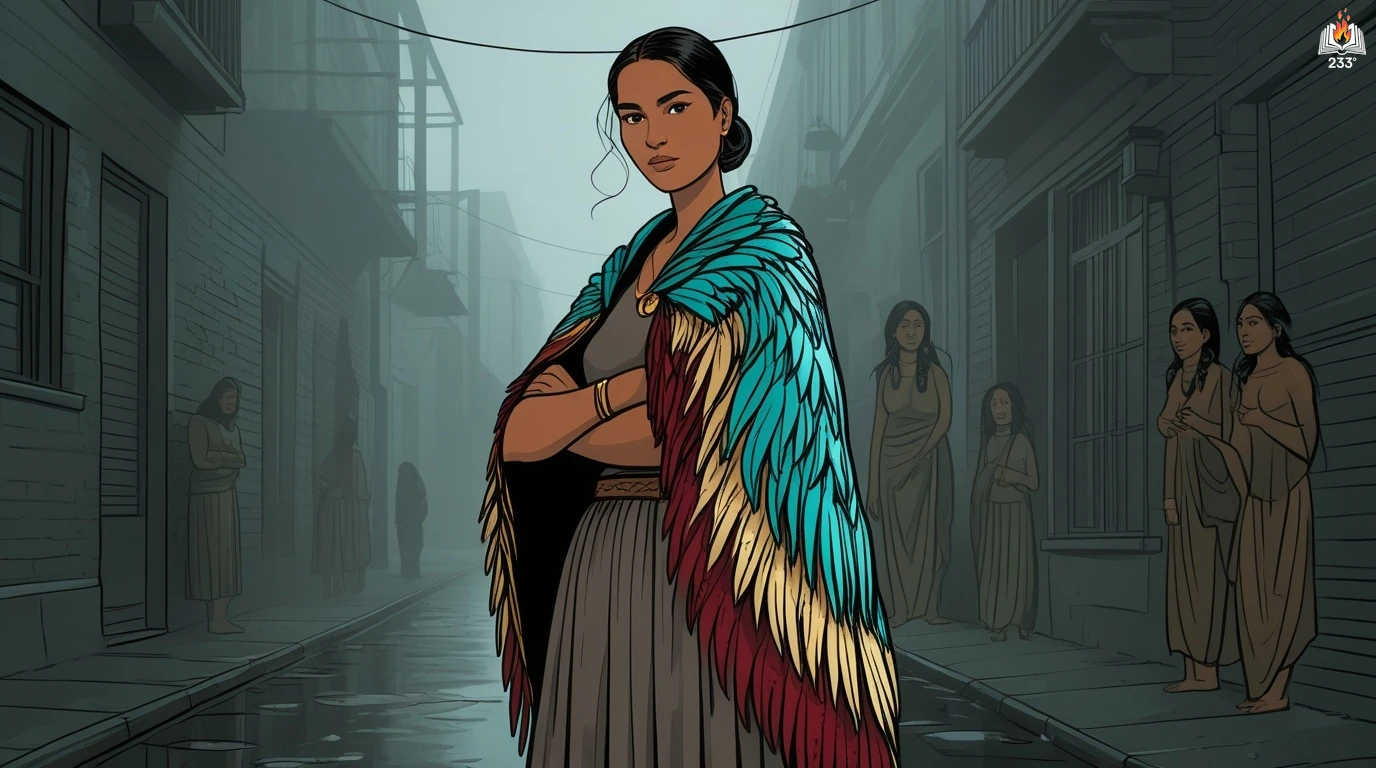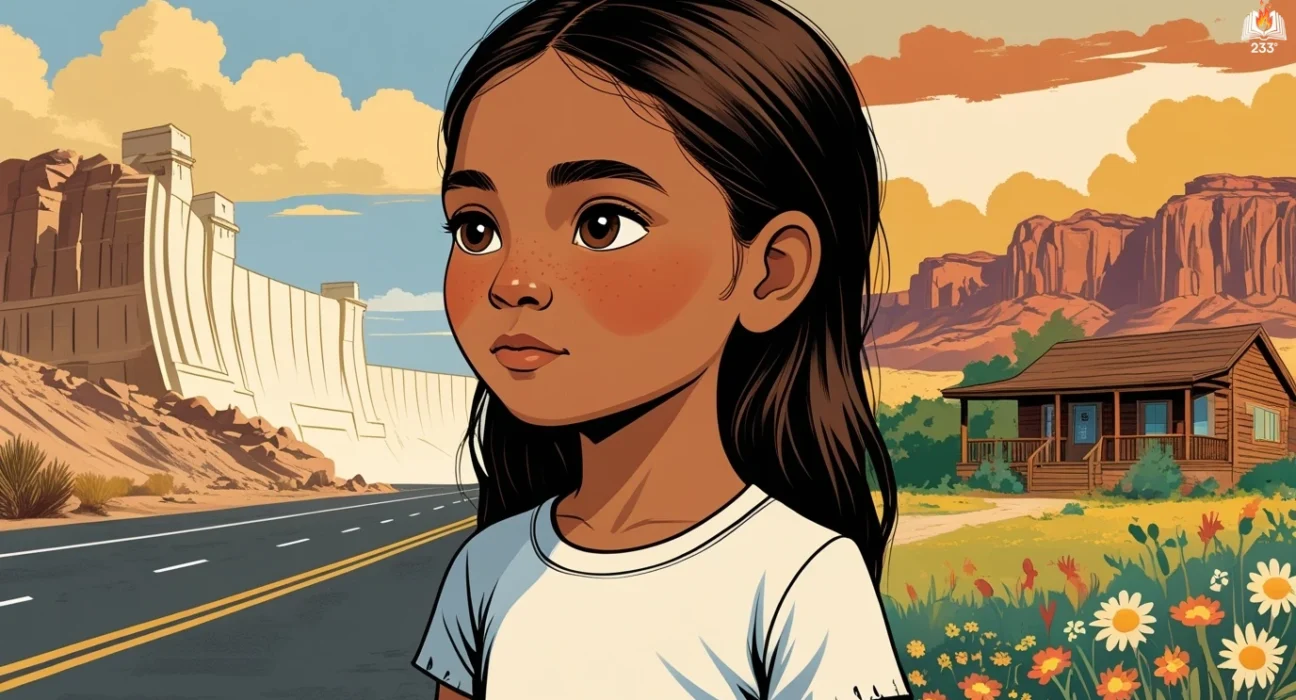
Pigs in Heaven by Barbara Kingsolver, published in 1993, is the sequel to her acclaimed novel The Bean Trees. Blending poignant social issues with rich storytelling, this novel continues the journey of Taylor Greer and her adopted Cherokee daughter, Turtle, as their unconventional family faces legal, cultural, and emotional reckonings. Set against a backdrop of modern American landscapes and Native American identity, Kingsolver crafts a narrative that explores motherhood, belonging, and the meaning of home.
Plot Summary
The quiet of an April dawn settles over Alice Greer’s Kentucky house like dust on a long-forgotten keepsake. She lies awake beside her second husband, Harland, whose snores fill the room with a silence-breaking noise, yet say nothing. Years into a loveless marriage, Alice feels herself disappearing beneath the weight of appliances, antiques, and the gnawing loneliness passed down through the women in her family like flat feet or diabetes. As pigs root through her flower beds and the mockingbird calls claim to her porch, Alice leans into the idea of leaving, of rediscovering something lost, maybe even someone named Sugar Boss, a cousin who once graced the cover of a Life magazine ad with daisies in her hair and a soda bottle in her hand.
Far west in Arizona, Taylor Greer and her daughter Turtle stand before the Hoover Dam, under the shadow of granite angels whose WPA-era muscles suggest they could hoist the heavens. Turtle, now six and curious as ever, captures photos and misreads warning signs. Taylor, half-wondering how she ended up with this fierce little girl, lets her mind drift between maternal instincts and the man back home, Jax, who plays in a band and tries to love her more than she can return. As the sun falls into the Nevada hills and Lake Mead stretches like green fingers across the desert, Turtle watches a man pick up a pop can and fall silently into the dam’s dark spillway.
Her quiet voice and certainty stir Taylor from road-trip fatigue to panic. They drive back through the night, shouting into the wind at the edge of the dam, waking up guards and facing disbelief. But Turtle insists on what she saw, and finally, the wheels of rescue turn. A spelunking crew descends the concrete throat of the spillway, and out comes Lucky Buster – blinking and broken but alive, saved by a child who never lets go of her mother’s hand.
Taylor, grateful and dazed, agrees to drive Lucky home to Sand Dune, Arizona, where his mother Angie runs a diner with yellow streamers and plastic tulips and a bulldog dozing in the air conditioning. Angie greets her son like he’s returned from the grave and feeds Taylor and Turtle until they’re full of mashed potatoes and praise. Reporters snap photos of Turtle beside the salad bar. Lucky, with the mind of a boy and the gentleness of someone who never learned anger, strokes Turtle’s shoulder with thanks. Everyone calls it a miracle, even if it feels more like persistence.
Back in Tucson, Taylor returns to Jax and the small, chaotic life they’ve stitched together. But peace doesn’t last. A Cherokee lawyer named Annawake Fourkiller appears, asking questions about Turtle’s adoption. There’s no anger in her voice, only the weight of history. Children taken from tribes, heritage unraveled by good intentions, laws bent by love. Taylor, who thought she had given Turtle a better life, now feels like a thief in her own home. She panics and flees, taking Turtle on the road again without telling Jax, leaving behind work, friends, and whatever future they were building.
Their journey winds into Oklahoma, to a place called Heaven where the map runs out and Sugar Boss still lives, vibrant and defiant. Alice, having left Harland and cleaned out her cupboards, reunites with Sugar and begins to believe again in her own stubborn magic. The cousins share memories of the Great Depression, childhoods sewn with mattress feathers, and the sense that no matter how much they had, it could all vanish like smoke. Their reunion becomes an anchor just as Taylor and Turtle arrive, tired and hunted, looking for something that feels like sanctuary.
In Heaven, Turtle blends easily into the lives of her distant Cherokee relatives, baking cookies and telling jokes, her brown eyes absorbing everything without speaking too much. Taylor watches from the edges, wondering if she belongs here at all. She loves Turtle fiercely, but the land pulls at her daughter like gravity. The tribe considers legal action, pushing for custody, and Taylor feels her hands slipping from the only thing she’s ever held on to.
Alice steps in like only a mother can, firm and knowing, talking to Annawake, to Taylor, and to the past itself. She reminds everyone that family isn’t about possession but devotion. Annawake listens, and so does Cash Stillwater – a quiet, widowed man who has lived many lives and once gave up his own daughter for adoption. He speaks to Turtle in slow, careful words and feels something shift inside.
While the adults circle decisions, Turtle finds her own way. During a tribal gathering, she stands in front of a panel of elders and sings a song – not quite in tune, but filled with something true. No one taught her this song. It came from the inside. The council listens, sees her, and decides that sometimes blood is only part of the story.
The compromise is simple and extraordinary. Turtle will stay with Taylor, but she will belong to the tribe. They will raise her together, from near and far, through letters and visits and stories that root her in more than one place. Taylor returns to Tucson with her daughter, not empty-handed, but hand in hand with a culture that once seemed ready to take everything away.
Back home, Jax is still there. Not angry. Just waiting, as he always does, knowing Taylor runs when things get hard. But she returns this time not because she has nowhere else to go, but because she has chosen to come back. Turtle sleeps with her flashlight named Mary. Alice writes postcards from Oklahoma, where Sugar has insisted on a permanent poker night and Cash Stillwater shows up every now and then with ripe tomatoes and quiet smiles.
And so it settles – not perfectly, but like dust on a windowsill – in homes that smell like frying onions, with girls who see too much and mothers who try too hard, and a dog asleep in the corner of a diner that never quite closes.
Main Characters
Taylor Greer – A fiercely independent and compassionate woman who adopted Turtle, a young Native American girl, in The Bean Trees. Taylor’s resilience and protective nature are tested as she navigates the legality of Turtle’s adoption while reckoning with her responsibilities as a mother.
Turtle – Taylor’s adopted daughter, a bright, reserved Cherokee girl whose past is shrouded in trauma. Turtle’s quiet strength and deep bond with Taylor drive much of the emotional core of the novel. Her inadvertent witness to a life-threatening accident sets off a series of events that challenge her future.
Alice Greer – Taylor’s mother, a sixty-one-year-old Kentucky woman caught in a discontented second marriage. Her mid-life awakening and rekindled familial connections, particularly with her cousin Sugar Boss in Heaven, Oklahoma, parallel Taylor’s own journey of reconnection and belonging.
Jax Thibodeaux – Taylor’s boyfriend, a witty, laid-back musician with a deep affection for both Taylor and Turtle. His devotion is tested when Taylor’s maternal instincts and decisions place strain on their relationship.
Annawake Fourkiller – A Cherokee lawyer who challenges the legality and ethics of Turtle’s adoption, advocating for her return to Cherokee Nation. Her presence brings complex questions of cultural identity and justice to the forefront.
Cash Stillwater – An older Cherokee man from Heaven, Oklahoma, who has lost touch with his family and culture. His late-life search for reconnection and redemption intertwines with Turtle’s story in a moving, understated way.
Theme
Motherhood and Kinship: The novel centers on the fierce, often complicated bonds between mothers and children, particularly the tension between biological, adoptive, and communal parenting. Taylor and Alice’s maternal instincts are mirrored and challenged by the Cherokee understanding of kinship and collective child-rearing.
Cultural Identity and Belonging: Turtle’s Cherokee heritage and the tribe’s legal and ethical claims over her adoption explore themes of cultural preservation and the rights of indigenous peoples. The novel addresses the tension between personal love and communal responsibility.
Justice and Moral Responsibility: Legal and emotional battles unfold as characters grapple with what is right versus what is lawful. The novel questions the nature of justice when personal choices come into conflict with cultural sovereignty and historical injustices.
Freedom vs. Commitment: Characters like Taylor and Alice wrestle with the desire for autonomy against the pull of familial obligation. The road trip motif underscores this tension between escape and rootedness, reflecting a deeper search for identity and purpose.
Home and Displacement: From the concrete vastness of the Hoover Dam to the dusty reservation towns of Oklahoma, settings highlight physical and emotional displacement. Kingsolver draws a nuanced map of what it means to find or lose “home.”
Writing Style and Tone
Barbara Kingsolver’s prose is rich with metaphor, warmth, and humor. She writes with a tender lyricism that captures both the internal landscapes of her characters and the American Southwest’s vivid, sometimes harsh, external world. Her language often blends the everyday with the poetic – a reflection of characters grounded in reality yet constantly reaching for hope, connection, or reinvention.
Her use of multiple perspectives deepens the narrative, allowing the reader to witness the story unfold through the eyes of Taylor, Alice, and others. The third-person omniscient narration alternates between introspective and observational, offering a compassionate yet unflinching view into each character’s private struggles.
The tone of Pigs in Heaven oscillates between gentle satire and heartfelt sincerity. Kingsolver does not shy away from tough topics—child custody battles, cultural erasure, emotional loneliness—but approaches them with empathy and a belief in redemption. Even at its most confrontational, the novel maintains an undercurrent of grace, never villainizing its characters but illuminating the gray areas of human morality and love.
Quotes
Pigs in Heaven – Barbara Kingsolver (1993) Quotes
“But kids don't stay with you if you do it right. It's the one job where, the better you are, the more surely you won't be needed in the long run.”
“Last time I talked to her she didn't sound like herself. She's depressed. It's awful what happens when people run out of money. They start thinking they're no good.”
“No matter what kind of night you're having, morning always wins.”
“Anybody can get worked up, if they have the intention. It's peacefulness that is hard to come by on purpose.”
“The thing is, it's my own fault. I just can't put up with a person that won't go out of his way for me. And that's what a man is. Somebody that won't go out of his way for you. I bet it says that in the dictionary.”
“It occurs to her that there is one thing about people you can never understand well enough: how entirely inside themselves they are.”
“She has changed in this way that motherhood changes you, so that you forget you ever had time for small things like despising the color pink.”
“If men only knew, modesty makes women fall in love faster than all the cock-a-doodling in the world.”
“Sympathizing over the behavior of men is the baking soda of women's friendships, it seems,the thing that makes them bubble and rise.”
“Do you think its possible to live without wanting to put your name on your paintings? To belong to a group so securely you don't need to rise above it?”
“You could love your crazy people, even admire them, instead of resenting that they're not self-sufficient.”
“It's monstrous, what one person will do to another.”
“A woman knows she can walk away from a pot to tend something else and the pot will go on boiling; if she couldn't, this world would end at once.”
“The obstinate practicality of old women pierces and fortifies these families like the steel rods buried in walls of powdery concrete.”
“She understands all at once, with a small shock, exactly what it is she always needed to tell Harland: being there in person is not the same as watching. You might see things better on television, but you'll never know if you were alive or dead while you watched.”
“You talk about her as if she is the Notre Dame Cathedral!" "She is. And the Statue of Liberty and Abbey Road and the best burrito of your life. Didn't you know?”
“Alice hands Annawake a handkerchief. Young people never carry them, she's noticed. They haven't yet learned that heartbreak can catch up to you on any given day.”
“I was so depressed I stopped using hair spray for three weeks.”
“She married him two years ago for love, or so she thought, and he's a good enough man but a devotee of household silence. His idea of marriage is to spray WD-40 on anything that squeaks. ... The quiet only subsides when Harland sleeps and his tonsils make up for lost time. ”
“I’m always looking at the dialectic between the truth we believe exists outside ourselves and the truth we invent for ourselves.”
“I've just fallen on some bad luck and landed jelly side down.”
“The clock gulps softly, eating second whole while she waits...”
“Sex will get you through times with no money better than money will get you through times with no sex.”
“They rock against each other, holding on, and the birds in the forest raise their voices to drown out the secret of creation.”
“Let's go take a walk down to the blue hole. You need to look at some water.”
“She told him television was a bad influence. Probably she was right. Like those white birds he's been seeing outside the window, it flashes its wings and promises whatever you want, even before you knew you wanted it.”
“The backs of his hands remind him of paper burning in the fireplace, the moment the taut membrane goes slack into a thousand wrinkles, just before it withers to ash and air.”
“That's what home means, Turtle," she says. "Even if they get mad, they always have to take you back.”
We hope this summary has sparked your interest and would appreciate you following Celsius 233 on social media:
There’s a treasure trove of other fascinating book summaries waiting for you. Check out our collection of stories that inspire, thrill, and provoke thought, just like this one by checking out the Book Shelf or the Library
Remember, while our summaries capture the essence, they can never replace the full experience of reading the book. If this summary intrigued you, consider diving into the complete story – buy the book and immerse yourself in the author’s original work.
If you want to request a book summary, click here.
When Saurabh is not working/watching football/reading books/traveling, you can reach him via Twitter/X, LinkedIn, or Threads
Restart reading!