In The Swiss Family Robinson, Johann David Wyss crafts a tale of adventure and survival. The story follows a family stranded on a deserted island after a shipwreck. As they work together to build a new life, they explore the island, facing dangers and discovering its secrets. The narrative is a testament to resourcefulness, family unity, and the triumph of human spirit over adversity.
Plot Summary
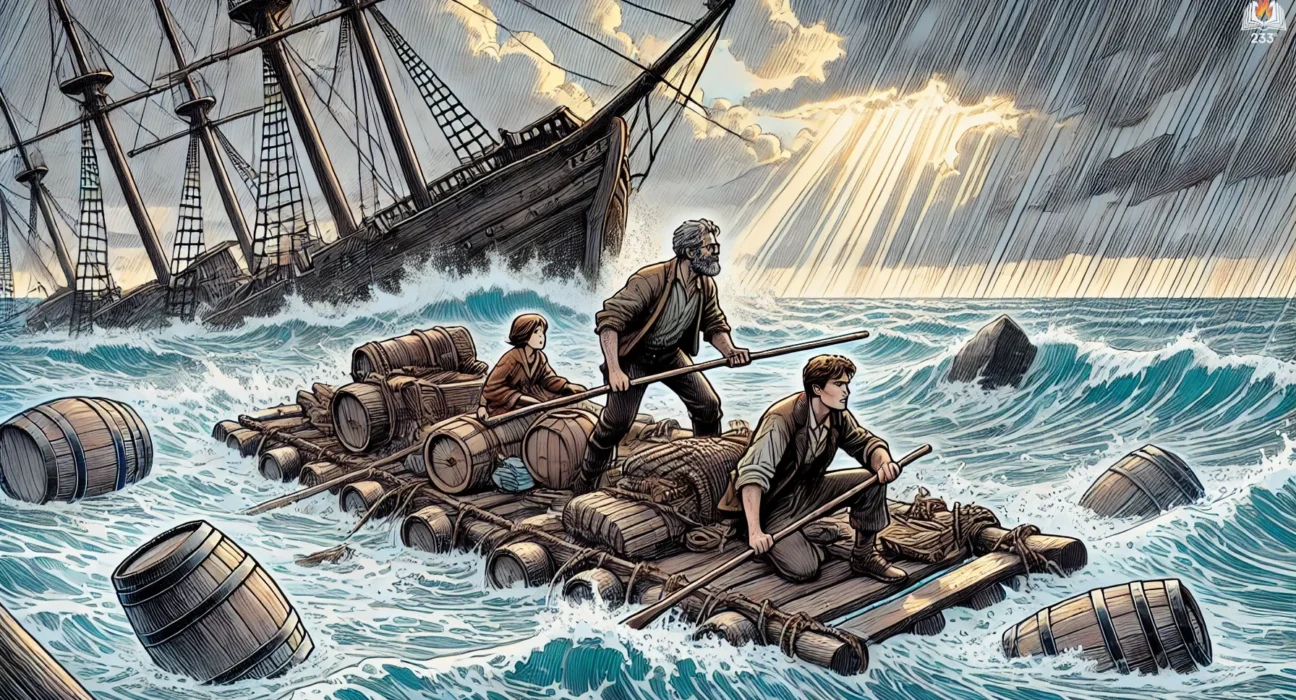
The tempest had raged for six days when the ship, carrying a family seeking a new life, struck a reef near an uncharted island. The family—Father, Mother, and four sons, Fritz, Ernest, Jack, and Francis—found themselves abandoned as the crew fled in lifeboats, leaving them to their fate. As the ship began to break apart, Father and Fritz secured provisions, crafting a makeshift raft from barrels. With hope and prayer, they launched their crude vessel, navigating the treacherous waters to reach the unknown shore.
Landing on the deserted island, they immediately faced the challenge of survival. They set up a temporary camp, using the sailcloth from the ship to create a shelter. Each day brought new obstacles and opportunities as they explored their surroundings, gradually transforming the desolate island into a livable haven. Together, they gathered supplies from the wrecked ship, salvaging tools, weapons, and livestock. Their resourcefulness shone through as they constructed a raft to transport these essentials, ensuring their survival in this strange land.
The family quickly learned to adapt to their new environment. They established a routine, dividing tasks according to each member’s skills and strengths. Father led with wisdom and practical knowledge, guiding his sons in various tasks. Fritz, the eldest, often took on the more dangerous duties, hunting and exploring the island’s wild terrain. Ernest, though more reserved, contributed with his keen observations and understanding of nature. Jack, always full of energy and enthusiasm, tackled every challenge with a bold spirit, while little Francis, though young, showed an eagerness to learn and help.
In their explorations, they encountered a variety of animals, some friendly and others threatening. They tamed livestock brought from the wreck, such as sheep, goats, and poultry, ensuring a steady supply of food. Not all encounters were as benign, though; jackals prowled the island, forcing the family to build defenses. One night, a pack of these predators descended upon their camp. The family, armed and ready, managed to fend them off with their guns and the help of their loyal dogs, Turk and Flora. It was a hard-fought battle, but it reinforced the need for a more secure and permanent dwelling.
Determined to create a safer home, they set about constructing “Falconhurst,” a treehouse built high in the branches of a massive tree. Using their ingenuity, they built ladders and a sturdy platform, transforming the tree into a fortress that would protect them from wild animals and the elements. This elevated sanctuary became the family’s refuge, a symbol of their resilience and unity in the face of adversity. From their vantage point, they could survey the surrounding land and sea, feeling both protected and in tune with their environment.
Days turned into weeks, and weeks into months, as the family continued to explore the island. They discovered an abundance of resources: fruit trees, edible plants, and fresh water sources. Their island, though initially forbidding, revealed itself to be a land of plenty. They built a forge for metalworking, a loom for weaving, and even managed to make soap from the island’s natural materials. Each new discovery and invention was a triumph, bringing them closer to self-sufficiency and comfort.
In their wanderings, they also found evidence of former human inhabitants. The ruins of a small hut and the remnants of an old fire pit suggested that others had once called this island home. This discovery filled the family with a mix of hope and unease. Could there be other survivors on the island? Or had they stumbled upon the remains of a previous castaway? The mystery added an element of suspense to their daily lives, urging them to explore further and remain vigilant.
The island continued to challenge them. A storm flooded their camp, forcing them to move to higher ground. They had to cross rivers, navigate dense forests, and climb rugged mountains. They faced danger from the wildlife, including an encounter with a giant serpent that threatened their camp. But with each trial, they grew stronger and more adept at using their surroundings to their advantage. They learned to make weapons, traps, and tools from the island’s resources, turning adversity into opportunity.
Their adventures were not without joy. The boys discovered the joy of riding on ostriches they had tamed and trained. They learned to harvest the sap of sugar canes and coconut milk, creating a variety of foods that enriched their diet. They even managed to brew a sort of palm wine, adding a touch of festivity to their meals. The island became a place of learning and growth, where each member of the family found a way to contribute to their collective well-being.
One day, after years of isolation, the family spotted a ship on the horizon. Their hearts leaped with a mix of hope and fear. Would this be their rescue, or another threat? They lit signal fires and waved flags to attract the ship’s attention. As the ship approached, they prepared themselves for what might come. The captain, upon landing, revealed that he had been searching for them for years, having heard of their plight from a passing ship that had caught sight of the wreck.
The family was faced with a choice: to return to the world they had left behind, with its comforts and dangers, or to remain on the island that had become their home. They debated the merits of civilization versus the simple, self-sufficient life they had built. In the end, they decided to stay, at least for a while longer. The island had become a part of them, a place where they had grown, learned, and thrived together as a family. They saw it not as a prison, but as a sanctuary—a land where they could live freely and fully, in harmony with nature and each other.
Main Characters
- Father (Mr. Robinson): The family patriarch, he is wise, resourceful, and knowledgeable about nature and survival. He leads his family with faith and ingenuity.
- Mother (Mrs. Robinson): A nurturing and supportive figure, she manages the household, teaches her children, and helps maintain their spirits.
- Fritz: The eldest son, brave and adventurous, often takes on challenging tasks and is eager to explore and hunt.
- Ernest: The second son, intelligent and thoughtful, with a deep interest in science and nature.
- Jack: The third son, lively and daring, often finds himself in trouble but is also quick to learn and adapt.
- Francis: The youngest son, innocent and curious, learns from his family and grows throughout their journey.
Theme
- Survival and Ingenuity: The family’s journey showcases the power of human ingenuity and the importance of resourcefulness in the face of adversity. They use their skills and knowledge to adapt and thrive in an unknown environment.
- Family and Unity: The story emphasizes the strength that comes from family unity. The Robinsons support and protect each other, demonstrating how love and cooperation are crucial for overcoming challenges.
- Faith and Providence: The family’s faith in God and their belief in divine providence guide them through their trials, providing them with hope and a moral compass.
- Exploration and Adventure: The narrative is filled with a spirit of exploration. The family’s curiosity and desire to understand their surroundings drive them to discover the island’s secrets and resources.
Writing Style and Tone
Johann David Wyss writes in a descriptive and instructive style, aiming to teach as well as entertain. The narrative is detailed, with vivid descriptions of the island, its flora and fauna, and the family’s inventive solutions to their problems. The tone is optimistic and didactic, reflecting the values of self-reliance, hard work, and faith. Wyss uses the story as a vehicle to impart moral lessons and practical knowledge, creating an engaging adventure that also serves as a guide to nature and survival.
Quotes
The Swiss Family Robinson – Johann David Wyss (1812) Quotes
“It was one of those happy days that God grants us sometimes on earth to give us an idea of the bliss of heaven.”
“I shall be satisfied if young people who read this record of our lives and adventures should learn from it how admirably suited is the peaceful, industrious life of a cheerful and united family to the formation of strong, pure, and manly character.”
“The monkeys seized all the cocoanuts within their reach and sent them down upon us”
“If it be the will of God," said my wife, "to leave us alone on this solitary place, let us be content; and rejoice that we are all together in safety.”
“Let us not disdain the ass,”
“A noble mind finds its purest joy in the accomplishment of its duty, and to that willingly sacrifices its inclination.”
“You know God helps those that help themselves!”
“What our limited reason cannot grasp, let us be content to acknowledge as the workings of Almighty power and wisdom, and thankfully trust in that 'Rock,' which, were it not higher than we, would afford no sense of security to the immortal soul.”
“Stop!" I exclaimed, "we have still left something very important undone." "Surely not," said Fritz. "Yes," said I, "we have not yet joined in morning prayer. We are only too ready, amid the cares and pleasures of this life, to forget the God to whom we owe all things.”
“In this way, the labor of learning was very considerably lightened, and everyone came to know a few words of each language. Occasionally we amused ourselves”
“She employed Francis to reel off the thread as she spun it, and would willingly have had the elder boys to take her place when she was called off; but they rebelled at the effeminate work, except Ernest, whose indolent habits made him prefer it to more laborious occupation.”
“who had very properly taught him equally to love and fear him.”
“It was my wish that our sons should cultivate a habit of bold independence, for I well knew that it might easily be the will of God to deprive them of their parents; when, without an enterprising spirit of self reliance, their position would be truly miserable.”
“darkness closed over a wild and terrific scene, and returning light as often brought but renewed distress, for the raging storm increased in fury until on the seventh day all hope was lost. We were”
“The friends of Columbus thought it very easy to make an egg stand upon its end when he had shown them how to do it.”
“I shall be satisfied if young people who read this record of our lives and adventures should learn from it how admirably suited is the peaceful, industrious life of a cheerful and united family to the foundation of strong, pure, and manly character.”
“Mechanics,”
“workmanship. The result of these had produced a science which, under the name of Mechanics,”
“And my great wish is that young people who read this record of our lives and adventures should learn from it how admirably suited is the peaceful, industrious, and pious life of a cheerful, united family to the formation of strong, pure, and manly character.”
We hope this summary has sparked your interest and would appreciate you following Celsius 233 on social media:
There’s a treasure trove of other fascinating book summaries waiting for you. Check out our collection of stories that inspire, thrill, and provoke thought, just like this one by checking out the Book Shelf or the Library
Remember, while our summaries capture the essence, they can never replace the full experience of reading the book. If this summary intrigued you, consider diving into the complete story – buy the book and immerse yourself in the author’s original work.
If you want to request a book summary, click here.
When Saurabh is not working/watching football/reading books/traveling, you can reach him via Twitter/X, LinkedIn, or Threads
Restart reading!