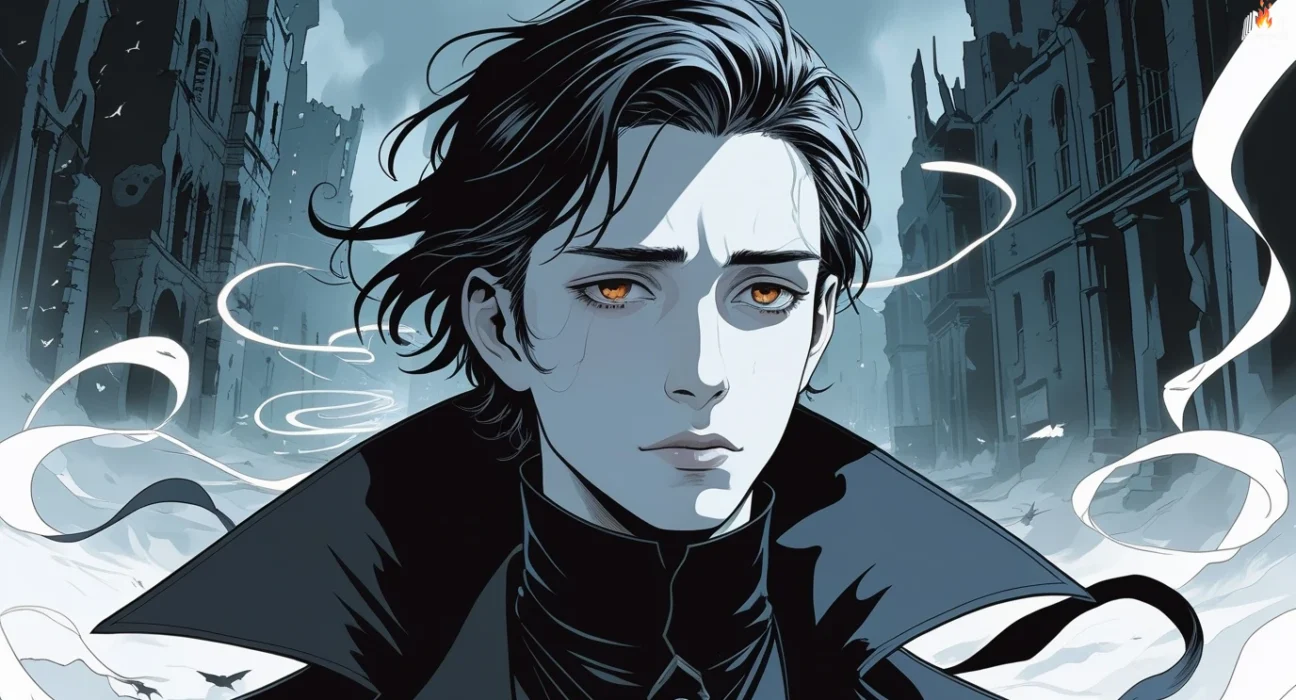
This Savage Song by V.E. Schwab, published in 2016, is the first installment in the Monsters of Verity duology. Set in the fractured and war-torn city of Verity, the novel constructs a dystopian world where acts of violence literally breed monsters, and peace hangs by a thread between two divided factions – one ruled by the ruthless Callum Harker, who controls monsters by making citizens pay for safety, and the other led by the idealistic Henry Flynn, who uses a different kind of monster to fight against the chaos. The story unfolds through the eyes of two young protagonists, Kate Harker and August Flynn, who stand on opposite sides of this uneasy truce yet find their fates intertwined.
Plot Summary
In Verity City, violence has a cost beyond blood. Every act of cruelty births monsters – the Corsai, all tooth and shadow; the Malchai, all charm and fang; and the rarest of all, the Sunai, creatures that feed on the souls of sinners using music. The city, long divided by war, now sits uneasy under a fragile truce, split in two – North ruled by the iron-fisted Callum Harker, who sells safety by controlling monsters, and South guarded by Henry Flynn, who arms his resistance with monsters of his own.
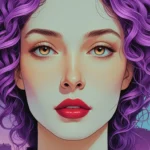
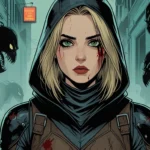
Kate Harker returns to the city she calls home after years of exile, a trail of burned schools and broken rules behind her. She’s sharp, angry, desperate to prove herself worthy of her father’s name. She wears her scars like armor and walks with purpose, though inside her simmers a storm of grief and rage. Callum Harker, her father, commands North City through fear and favors, his protection purchased by medallions marked with his seal – symbols of safety so long as no one crosses him. Kate wants in, wants to stand beside him, prove her loyalty by being as ruthless as he is. But her father has built walls around his trust, and Kate must claw her way in.
On the other side of the Seam, August Flynn listens to the city hum through the walls. A Sunai who doesn’t want to be a monster, August counts the days with black tallies etched onto his skin – one for every soul he’s taken. He feeds not on flesh, but on guilt, drawn to those who’ve committed unforgivable crimes. His song, played on a violin, brings sinners to their knees, their sins rising from them in light before he devours their essence. But August doesn’t want to feed. He wants to be good. To be human. His father, Henry Flynn, treats him like a weapon tempered with compassion, while his sister Ilsa sees stars in chaos, and his brother Leo sees only justice, cold and merciless.
To preserve the peace as tensions rise, Flynn sends August undercover into North City, enrolling him in Colton Academy where Kate has just begun her final term. Posing as a human student named Frederick Gallagher, August watches Kate from across the divide of cafeteria tables and classroom desks. She’s fearless and clever, with eyes that see more than they should. She notices him, not just for his odd silences or his practiced expressions, but for something deeper – a resonance in their loneliness, a shared fracture neither can name.
When a string of attacks breaks the illusion of safety, monsters begin striking in daylight, and the delicate balance between North and South shatters. A Corsai attack leaves Kate and August stranded, wounded and hunted. August reveals what he is when he plays his violin to save her from the beasts in the dark, his music a blade, his body transformed into something glowing and terrible. Kate doesn’t flinch. She doesn’t run. Instead, she listens, and remembers.
Betrayed by her own father, who allowed the attack to test her loyalty, Kate’s faith in blood and legacy crumbles. She sees now that Callum Harker doesn’t protect people – he controls them. She sees the monsters he feeds and fosters, sees her place in his empire of fear. And August, the monster she should fear, is the one who keeps her alive.
Together, they flee across the city – through abandoned subways and burned-out districts, over the line that separates order from chaos. Pursued by Leo, whose vision of justice has turned merciless, and hunted by Sloan, a Malchai born of Kate’s mother’s murder, they learn the truth of what it means to be monstrous. Sloan was made in blood, in one of the earliest acts of violence that birthed monsters in Verity. He walks in Kate’s shadow, knowing her past better than she does, craving not just her death but her unraveling.
As monsters rise on both sides and the truce decays into memory, Kate and August reach the Flynn compound. But the sanctuary is fractured – Leo no longer heeds Henry’s commands, consumed by the righteousness of the Sunai’s purpose. He kills without pause, feeds without hesitation, and sees August’s empathy as weakness. When August refuses to kill an innocent man, Leo turns on him, forcing August to make a choice: to be the monster Verity demands, or the boy he longs to be.
Kate, scarred and betrayed, chooses too. She confronts her father with everything she has learned, but Callum Harker is not a man who yields. He sells her out again, delivering her to Sloan in exchange for stability. But Sloan does not want peace – he wants chaos, and he wants Kate’s pain. She escapes with help from Ilsa, whose fractured mind holds moments of terrifying clarity, and together they reach the edge of war.
When Leo breaks into the compound, Ilsa faces him, her music a balm and a weapon. She plays not to kill, but to remember. Her song draws August back from the brink, giving him strength to resist the monster he fears becoming. With Sloan closing in, and the city unraveling, August steps forward, not as a boy pretending to be human, but as a Sunai who chooses who to be. He plays the violin not to feed, but to save.
In the final reckoning, Callum Harker is dead, Sloan disappears into the dark, and the truce lies shattered. Kate, now a fugitive, walks into exile with the weight of her father’s legacy on her shoulders and the memory of August’s music in her bones. August returns to Flynn’s side, no longer hiding from what he is. The city is broken, the monsters no longer in the shadows, but there is still music in the dark, still fire in the hearts that have not yet turned cold.
In Verity, monsters are born from violence, but what they become – that is a choice.
Main Characters
- Kate Harker – The daughter of North City’s brutal ruler, Callum Harker, Kate is fiercely determined, cunning, and desperate for her father’s approval. She’s hardened by years of exile and emotionally scarred from loss and loneliness. Her arc moves from being a volatile, rebellious figure to someone who gradually uncovers truths about power, monsters, and herself. Beneath her tough exterior lies a complex character yearning for purpose, recognition, and control over her own life.
- August Flynn – A Sunai, one of three rare types of monsters created by mass violence, August struggles with his monstrous nature and deep desire to be human. Adopted by Henry Flynn of South City, he is gentle, introspective, and musically gifted – his violin is both his solace and his weapon. August is burdened by guilt and conflicted by his role in the war. His internal conflict—longing for humanity while being born to consume souls—makes him the novel’s most emotionally resonant character.
- Callum Harker – Kate’s father and the autocratic ruler of North Verity. He enforces control through fear and transactional relationships with monsters. Cold, calculating, and brutal, Harker believes in strength and uses monsters like the Malchai and Corsai to maintain dominance over his territory. His relationship with Kate is distant and utilitarian, shaped more by expectation than affection.
- Henry Flynn – The idealistic leader of South Verity and August’s adoptive father. A former soldier and tactician, Henry believes in resisting tyranny and preserving human morality, even in a city riddled with darkness. He sees the Sunai as a necessary force against evil, but also as children in need of guidance. He represents order and self-restraint in contrast to Harker’s ruthlessness.
- Ilsa and Leo Flynn – August’s siblings and fellow Sunai. Ilsa is poetic, ethereal, and often lost in her own mind, but possesses deep insight and empathy. Leo, on the other hand, is militant, cold, and unwavering in his belief that the Sunai exist to punish sinners. Together, they form a triad that personifies the range of the Sunai’s moral and emotional spectrum.
Theme
- Monstrosity and Humanity – One of the novel’s central themes is the blurred line between monsters and humans. Through August’s internal battle and Kate’s perception of strength, Schwab explores what truly defines a monster – is it birth, behavior, or choice? The human characters often display monstrous tendencies, while the monsters, especially August, grapple with human emotions.
- Violence and Consequence – In Verity, every act of violence spawns literal monsters. This motif literalizes the idea that violence has lasting, destructive consequences. The Corsai, Malchai, and Sunai each symbolize different responses to violent acts—rage, manipulation, and divine retribution, respectively.
- Identity and Acceptance – Both protagonists wrestle with their identities. August seeks to affirm his humanity in the face of his monstrous origin, while Kate attempts to conform to her father’s vision of strength and ruthlessness. Their parallel quests highlight how identity can be shaped by external expectations and internal conflict.
- Power and Control – The novel critiques different models of power. Callum Harker controls through fear and payment, Flynn through belief and order. Meanwhile, the monsters represent both uncontrollable chaos and divine judgment. The characters’ struggles for agency—Kate to be more than her father’s tool, August to define his own morality—reveal the complexities of power dynamics in an unstable world.
Writing Style and Tone
V.E. Schwab employs a lyrical yet cinematic writing style that balances introspection with intense action. Her prose is atmospheric, steeped in moody imagery and emotional depth. She switches perspectives between Kate and August, allowing the reader to experience the world through sharply contrasting lenses—Kate’s cynical realism and August’s poignant introspection. Schwab often uses fragmented thoughts and inner monologues to reveal the psychological fragility of her characters, especially August. Her language is clean, evocative, and often symbolic, using repetition and musical cadence to echo themes of control, identity, and transformation.
The tone of This Savage Song is somber, haunting, and charged with tension. There is a constant sense of unease, as if something terrible is always just beneath the surface. Despite the violence and dystopian setting, the tone avoids becoming bleak through the characters’ moments of vulnerability, fleeting hope, and quiet rebellion. Schwab’s tone reinforces the moral ambiguity of the world she has built—where monsters can show mercy, and humans can be the most dangerous of all.
Quotes
This Savage Song – VE Schwab (2016) Quotes
“I mean, most people want to escape. Get out of their heads. Out of their lives. Stories are the easiest way to do that.”
“The beautiful thing about books was that anyone could open them.”
“It was a cruel trick of the universe, thought August, that he only felt human after doing something monstrous.”
“You wanted to feel alive, right? It doesn't matter if you're monster or human. Living hurts.”
“He wasn't made of flesh and bone, or starlight. He was made of darkness.”
“She cracked a smile. "So what's your poison?" He sighed dramatically, and let the truth tumble off his tongue. "Life." "Ah," she said ruefully. "That'll kill you.”
“We are the darkest acts made light.”
“He could be the monster if it kept others human.”
“Nobody gets to stay the same.”
“I read somewhere," said Kate, "that people are made of stardust." He dragged his eyes from the sky. "Really?" "Maybe that's what you're made of. Just like us." And despite everything, August smiled.”
“People are users. It’s a universal truth. Use them, or they’ll use you.”
“Why did everyone have to ruin the quiet by asking questions? The truth was a disastrous thing.”
“Not with a bang, but with a whimper. In with gunfire and out with smoke.”
“I'd rather be able to see the truth than live a lie.”
“Even if surviving wasn't simple, or easy, or fair. Even if he could never be human. He wanted the chance to matter. He wanted to live.”
“Sing you a song and steal your soul.”
“Don’t tell me you’re afraid of heights,” she said, shimmying along the edge. “Not heights,” he murmured. “Just falling.”
“Why are there so many shadows in the world, Kate? Shouldn’t there be just as much light?”
“Whatever he was made of
“It's a monster's world.”
“I live in a world where shadows have teeth. It's not a particularly relaxing environment.”
“Listen to me,” he said, pulling off his coat. “You need to stay awake.” She almost laughed, a shallow chuckle cut short by pain. He tore the lining from the Colton jacket. “What’s so funny?” “You’re a really shitty monster, August Flynn.”
“It was a cycle of whimpers and bangs, gruesome beginnings and bloody ends.”
“I am Sunai,” he said. “I am holy fire. And if I have to burn the world to cleanse it, so help me, I will.”
“There are no monsters in the dark.”
“Every weakness exposes flesh,” he'd said, “and flesh invites a knife.”
We hope this summary has sparked your interest and would appreciate you following Celsius 233 on social media:
There’s a treasure trove of other fascinating book summaries waiting for you. Check out our collection of stories that inspire, thrill, and provoke thought, just like this one by checking out the Book Shelf or the Library
Remember, while our summaries capture the essence, they can never replace the full experience of reading the book. If this summary intrigued you, consider diving into the complete story – buy the book and immerse yourself in the author’s original work.
If you want to request a book summary, click here.
When Saurabh is not working/watching football/reading books/traveling, you can reach him via Twitter/X, LinkedIn, or Threads
Restart reading!