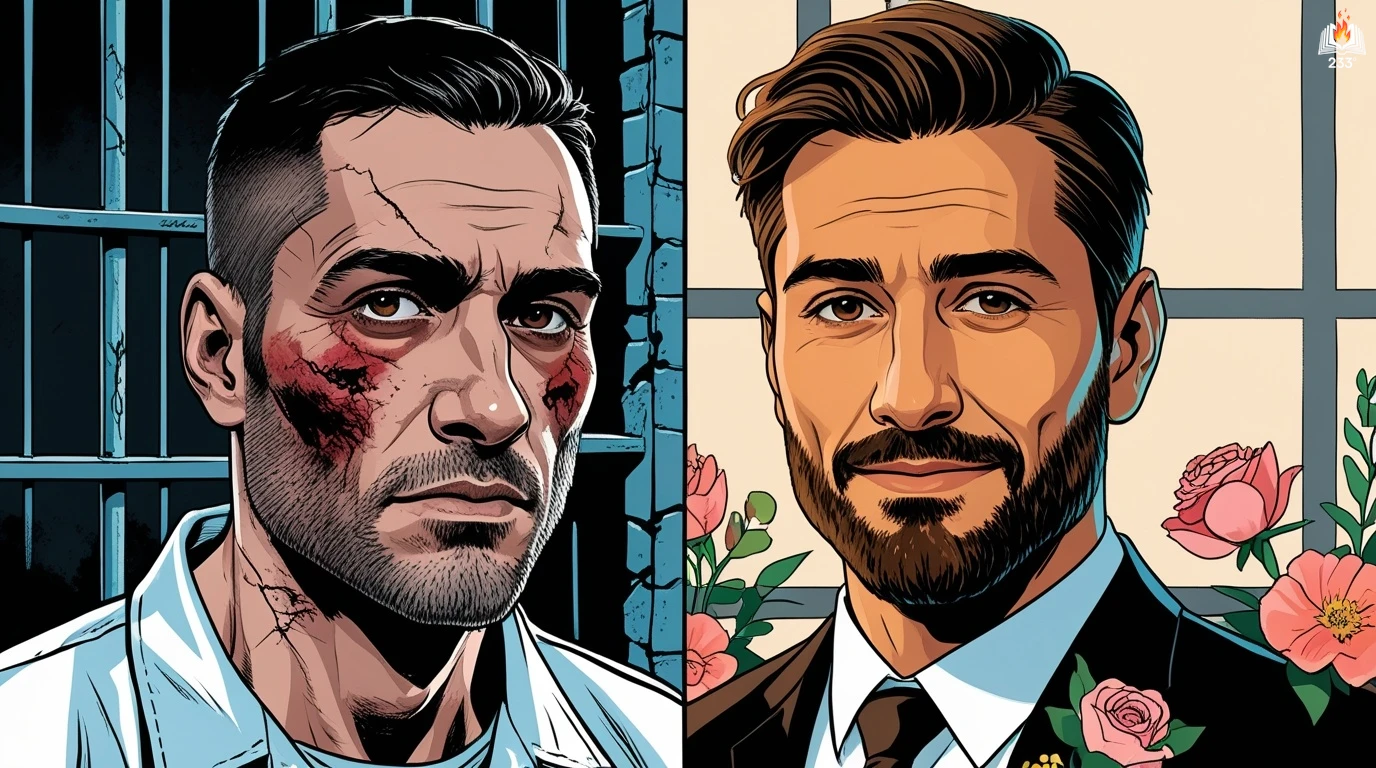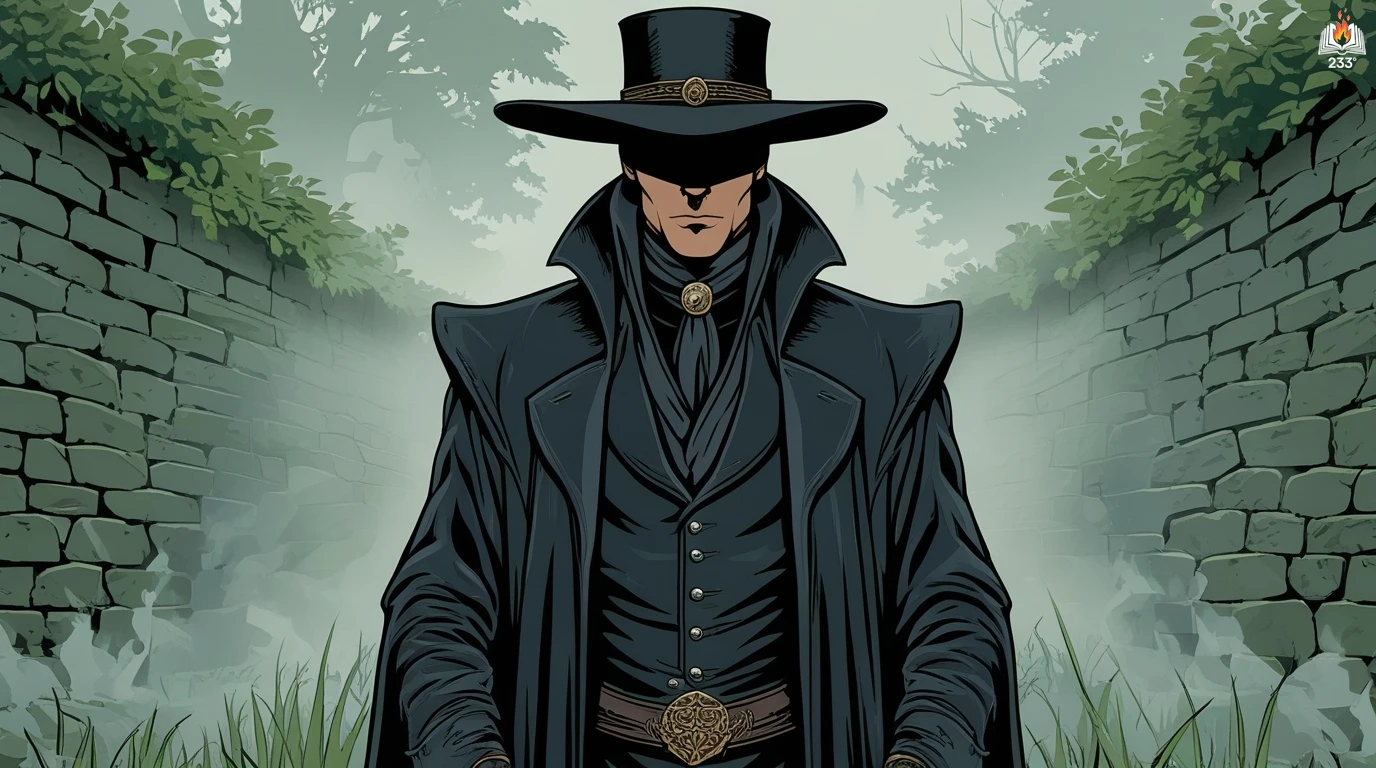

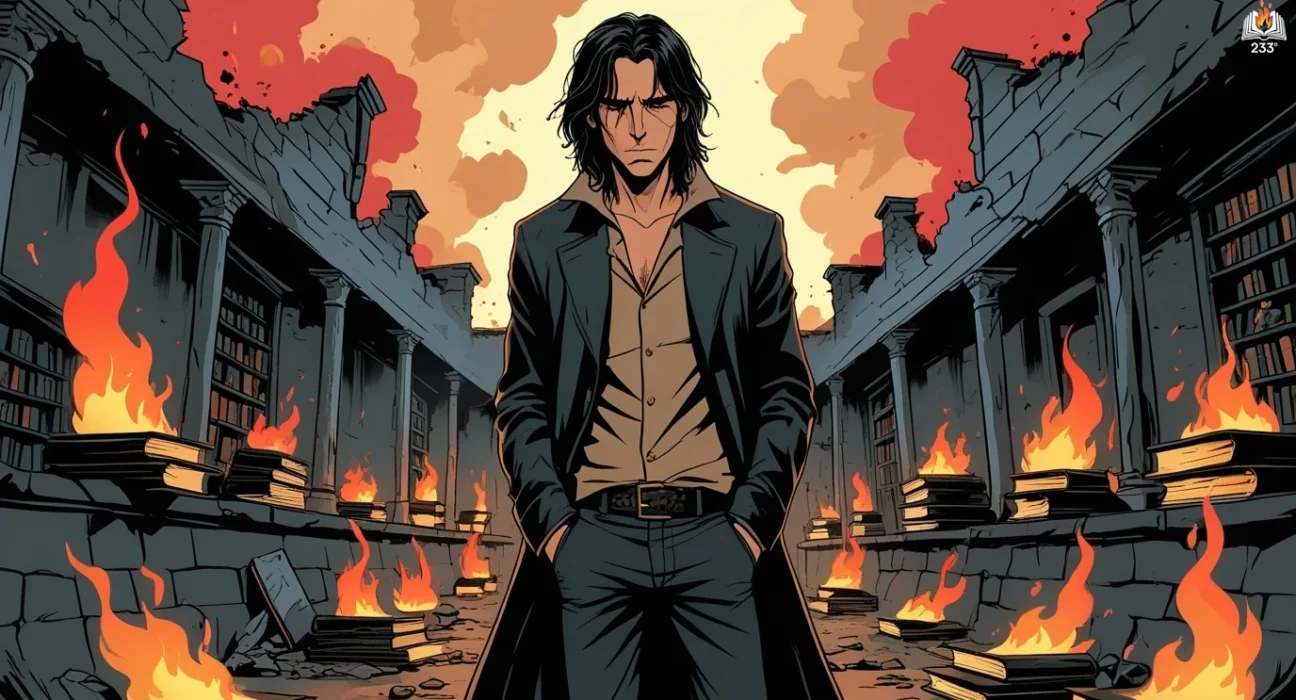
The Shadow of the Wind by Carlos Ruiz Zafón, published in 2001, is the first entry in the acclaimed Cemetery of Forgotten Books series. Set in post–civil war Barcelona, the novel follows young Daniel Sempere after he discovers a mysterious book that leads him into the enigmatic life of its author, Julián Carax. Through a maze of secrets, shadowy figures, and literary obsession, Zafón constructs a sweeping gothic mystery steeped in history, romance, and suspense.
Plot Summary
In the heart of post-war Barcelona, beneath ashen skies and crumbling façades, a boy named Daniel is led by his father through the sleeping streets to a hidden sanctuary known as the Cemetery of Forgotten Books. Within that secret labyrinth of stories, he is asked to choose one book to guard and cherish. His hand finds a dusty volume bound in wine-colored leather – The Shadow of the Wind by Julián Carax – and from that moment, Daniel’s fate is bound to the secrets locked within its pages.
As Daniel devours the book, he becomes consumed by a hunger to know more about its mysterious author. Julián Carax, once a resident of the same city, seems to have vanished into myth, his works erased from memory, and his life buried under layers of silence. Rumors whisper that a sinister figure, known only by the name Lain Coubert – a character from Carax’s own fiction – has been hunting down and burning every copy of Carax’s books. Daniel soon realizes that what began as literary admiration is swiftly becoming a descent into a dark mirror of someone else’s life.
With only fragments of truth and fading names to guide him, Daniel begins his search. Along the way, he finds an unlikely ally in Fermín Romero de Torres, a destitute, sharp-witted ex-spy with a flair for drama and disguise. Together, they navigate the shadowed corridors of the past, piecing together the splinters of a life lived in secrecy and sorrow.
Their inquiries lead them through the hushed rooms of old mansions, dusty archives, and into the confidence of broken souls who once circled Carax’s orbit. One such figure is Nuria Monfort, a woman carrying the weight of guilt and memories too painful to share. Through letters and confessions, Daniel learns of Carax’s tormented youth: born to a hatmaker and a cold-hearted mother, Carax was an outcast even in his own home. At the elite boarding school he attended, he encountered the cruelty of wealth and prejudice, but also formed friendships that would twist into enmities. Chief among them was Francisco Javier Fumero, a boy who delighted in cruelty and would grow into a man of unchecked brutality.
Amid this bleakness, Carax discovered love in Penélope Aldaya, the daughter of a wealthy tycoon. Their love, hidden behind the high gates of the Aldaya mansion, burned bright and pure, but it was doomed from the start. Penélope’s family discovered their bond and, enraged by the disparity of their stations, tore them apart. Carax was exiled to Paris, broken-hearted, where he poured his anguish into his writing, while Penélope remained trapped in a house whose walls grew colder by the day.
Years passed, and the truth of what befell Penélope was buried in silence. Her father, in his cruel resolve, locked her away in a secret chamber of their home, where she died alone, her child dying with her. Carax, unaware of this horror, returned to Barcelona only to find his past scorched and unrecognizable. Betrayal greeted him at every turn – from friends who had turned into strangers, to allies who had become enemies. When he vanished, some claimed he had died in a duel in Paris, others that he had slipped back into Barcelona’s shadows.
Daniel’s own life begins to mirror Carax’s. He falls in love with Beatriz, the sister of his childhood friend, and their relationship faces its own share of secrecy and societal pressure. As the veil over Carax’s life is slowly lifted, Daniel finds himself stalked by a figure in black, a man with a scorched face and burning eyes, moving through the alleys like a ghost reborn from fiction. The past does not merely linger – it returns with claws.
Inspector Fumero, now a powerful and feared enforcer of law, emerges as the embodiment of that returning evil. Tied by history to both Daniel and Carax, his presence grows more menacing as truths come to light. The line between personal vendetta and duty blurs, and soon violence reawakens beneath Barcelona’s tranquil façade.
In unraveling Carax’s story, Daniel discovers that the figure of Lain Coubert – the destroyer of Carax’s legacy – is none other than Carax himself, warped by grief, masked by shadows, burning his own books as if to erase the trail of a life spent chasing a love stolen too soon. The masked stranger is not a villain, but a man punished by memory, seeking to bury his past in flames.
But Daniel, unlike Carax, refuses to be consumed. With Fermín’s help and Nuria’s final, painful testimony, the threads of deception and silence are drawn together. Fumero, the last echo of Carax’s destruction, finally meets the reckoning he eluded for decades. Daniel, standing at the crossroads of past and future, does not allow sorrow to devour what remains. He reclaims his own life, marries Beatriz, and welcomes the birth of his son – whom he names Julián.
In the quiet hours of dawn, the book that once led him through a maze of secrets now rests peacefully on a shelf. The Cemetery of Forgotten Books, ever watchful, keeps its promise: that no story is ever truly lost, and every soul, if remembered, may live again.
Main Characters
Daniel Sempere – A thoughtful and curious boy raised by a widowed bookseller, Daniel grows from a tender, grieving child into a determined young man. His discovery of The Shadow of the Wind by Julián Carax sparks a consuming obsession with the author’s life and works. Daniel’s character is defined by loyalty, a hunger for truth, and a deep sensitivity toward those around him.
Julián Carax – The elusive and tragic author of The Shadow of the Wind, Carax is a man whose past is shrouded in scandal, heartbreak, and secrets. His life mirrors the novel Daniel reads, and his story slowly unravels through fragments shared by those who knew him – revealing a tormented soul crushed by betrayal, love, and war.
Fermín Romero de Torres – A witty, streetwise former spy and beggar whom Daniel and his father rescue and employ at their bookshop. Fermín becomes Daniel’s close confidant and comic foil. His charm, resourcefulness, and fierce loyalty make him an unforgettable character and an unexpected hero.
Beatriz Aguilar – The spirited and intelligent sister of Daniel’s best friend, Bea evolves from a distant, unattainable figure to Daniel’s greatest love. Her internal conflict between passion and societal expectation adds emotional depth to the narrative.
Nuria Monfort – A librarian with a haunted past, Nuria holds vital pieces of Carax’s history and serves as a crucial bridge between Daniel’s present and the buried truth. Her choices, shaped by sacrifice and guilt, play a pivotal role in revealing Carax’s fate.
Inspector Javier Fumero – A ruthless and sadistic police officer whose allegiance shifts with political winds. Fumero embodies corruption and cruelty, and his long-standing vendetta with Carax and those around him anchors the novel’s most violent and oppressive moments.
Theme
The Power and Mystery of Books: At the novel’s heart is the idea that books are living entities, carriers of souls and secrets. The Cemetery of Forgotten Books is a sanctuary for forgotten stories, and Daniel’s journey reflects the power of literature to inspire, illuminate, and even endanger.
Memory and Identity: Both Daniel and Carax are shaped by loss – of parents, lovers, innocence, and truth. Their parallel quests become acts of self-discovery, where uncovering another’s past helps illuminate their own identities.
Love and Obsession: Love in the novel is intense, transformative, and often tragic. From Carax’s doomed affair with Penélope to Daniel’s evolving relationship with Bea, Zafón explores how love can both redeem and destroy. Obsession – with books, people, the past – often blurs the line between devotion and madness.
War and Corruption: Set in the aftermath of the Spanish Civil War, the story unfolds against a backdrop of political repression and moral decay. The shadows of fascism linger over every street, with characters like Fumero personifying the violence and treachery left in its wake.
Fate and Free Will: The novel questions whether lives are bound to repeat cycles of tragedy. Daniel seems fated to relive Carax’s misfortunes, yet his choices challenge the idea that history is doomed to repeat itself.
Writing Style and Tone
Carlos Ruiz Zafón writes with an atmospheric, lyrical style steeped in gothic romanticism. His sentences are rich with sensory detail, evoking a Barcelona drenched in mist, memory, and secrets. Architecture, weather, and shadow become characters in their own right, amplifying the novel’s haunting aura. The prose is elegant yet accessible, weaving mystery and sentiment with literary flair.
The tone throughout is dark and introspective, yet punctuated by humor, especially through Fermín’s irreverent observations. Zafón balances melancholy with hope, and suspense with tenderness. His voice evokes the classic storytelling of 19th-century literature – part Dickens, part Dumas, part Poe – yet remains unmistakably modern in its psychological depth and narrative structure. The novel flows like a labyrinth, with each chapter revealing deeper chambers of mystery and truth.
Quotes
The Shadow of the Wind – Carlos Ruiz Zafn (2001) Quotes
“Books are mirrors: you only see in them what you already have inside you.”
“Every book, every volume you see here, has a soul. The soul of the person who wrote it and of those who read it and lived and dreamed with it. Every time a book changes hands, every time someone runs his eyes down its pages, its spirit grows and strengthens.”
“People tend to complicate their own lives, as if living weren't already complicated enough.”
“The moment you stop to think about whether you love someone, you've already stopped loving that person forever.”
“Memories are worse than bullets.”
“Never trust anyone, Daniel, especially the people you admire. Those are the ones who will make you suffer the worst blows.”
“Destiny is usually just around the corner. Like a thief, a hooker, or a lottery vendor: its three most common personifications. But what destiny does not do is home visits. You have to go for it.”
“Paris is the only city in the world where starving to death is still considered an art.”
“Making money isn't hard in itself... What's hard is to earn it doing something worth devoting one’s life to.”
“A story is a letter that the author writes to himself, to tell himself things that he would be unable to discover otherwise.”
“A secret's worth depends on the people from whom it must be kept.”
“Bea says that the art of reading is slowly dying, that it's an intimate ritual, that a book is a mirror that offers us only what we already carry inside us, that when we read, we do it with all our heart and mind, and great readers are becoming more scarce by the day.”
“People talk too much. Humans aren't descended from monkeys. They come from parrots.”
“There are few reasons for telling the truth, but for lying the number is infinite.”
“. . .sometimes one feels freer speaking to a stranger than to people one knows. Why is that?" “Probably because a stranger sees us the way we are, not as he wishes to think we are.”
“I was raised among books, making invisible friends in pages that seemed cast from dust and whose smell I carry on my hands to this day.”
“The words with which a child’s heart is poisoned, whether through malice or through ignorance, remain branded in his memory, and sooner or later they burn his soul.”
“In the shop we buy and sell them, but in truth books have no owner. Every book you see here has been somebody’s best friend.”
“Presents are made for the pleasure of who gives them, not the merits of who receives them.”
“But in good time you'll see that sometimes what matters isn't what one gives but what one gives up.”
“Sometimes we think people are like lottery tickets, that they're there to make our most absurd dreams come true.”
“I could tell you it's the heart, but what is really killing him is loneliness. Memories are worse than bullets.”
“There's no such thing as dead languages, only dormant minds.”
“One of the pitfalls of childhood is that one doesn't have to understand something to feel it. By the time the mind is able to comprehend what has happened, the wounds of the heart are already too deep.”
“Time goes faster the more hollow it is. Lives with no meaning go straight past you, like trains that don’t stop at your station.”
“To truly hate is an art one learns with time.”
“The nurse knew that those who really love, love in silence, with deeds and not with words.”
“Man...heats up like a lightbulb: red hot in the twinkling of an eye and cold again in a flash. The female, on the other hand...heats up like an iron. Slowly, over a low heat, like tasty stew. But then, once she has heated up, there's no stopping her.”
We hope this summary has sparked your interest and would appreciate you following Celsius 233 on social media:
There’s a treasure trove of other fascinating book summaries waiting for you. Check out our collection of stories that inspire, thrill, and provoke thought, just like this one by checking out the Book Shelf or the Library
Remember, while our summaries capture the essence, they can never replace the full experience of reading the book. If this summary intrigued you, consider diving into the complete story – buy the book and immerse yourself in the author’s original work.
If you want to request a book summary, click here.
When Saurabh is not working/watching football/reading books/traveling, you can reach him via Twitter/X, LinkedIn, or Threads
Restart reading!