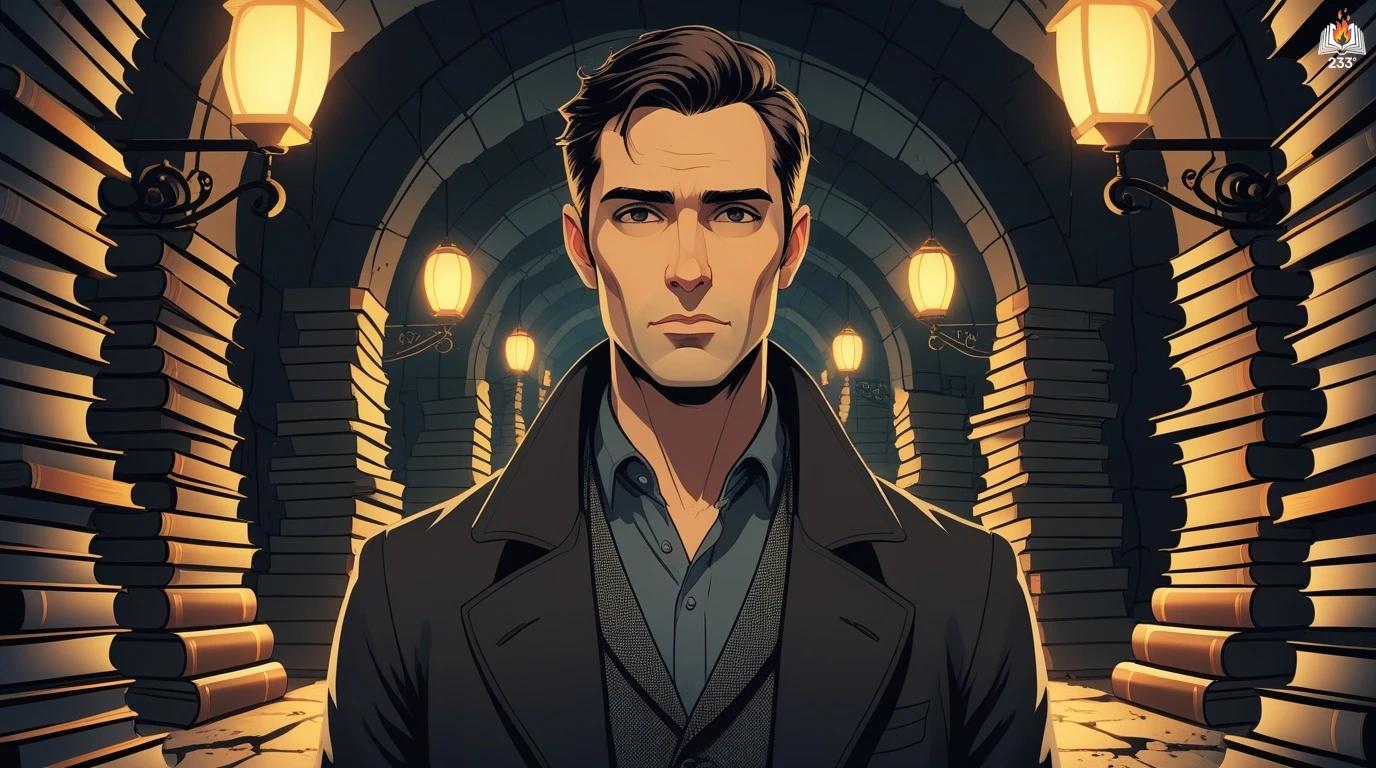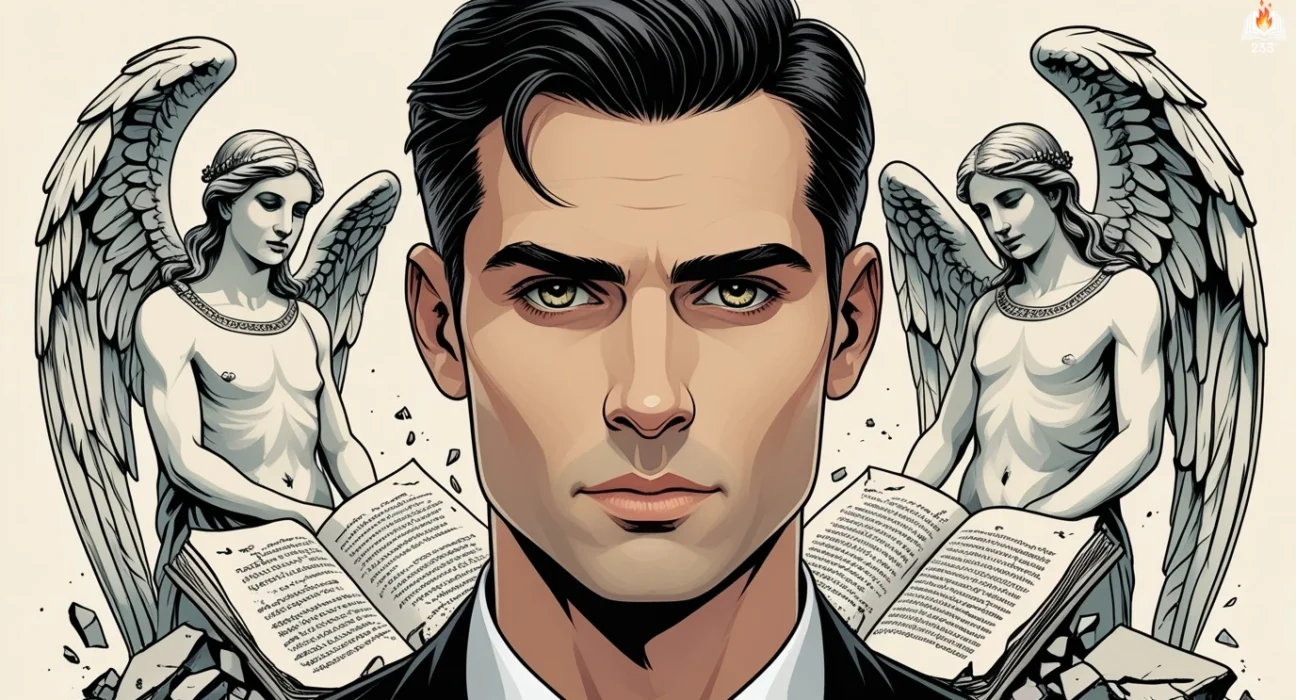
The Angel’s Game by Carlos Ruiz Zafón, published in 2008, is the second installment in the internationally acclaimed Cemetery of Forgotten Books series. Set in the hauntingly atmospheric streets of early 20th-century Barcelona, the novel follows the journey of David Martín, a tormented writer who makes a Faustian pact with a mysterious publisher. Rich in gothic ambiance, literary allusions, and metaphysical intrigue, the story explores the blurred boundaries between fiction and reality, art and obsession.
Plot Summary
In the hushed labyrinths of old Barcelona, beneath soot-darkened skies and crumbling facades, lived a boy who would become a man by chasing ghosts through the ink-stained corridors of forgotten literature. David Martín, raised in shadows and silence, bore the weight of a broken home and a dying city. Abandoned by his mother, scorned by his father, he grew up clutching books like lifelines, words offering the only escape from a world that bruised more than it embraced.
By seventeen, David had found work at The Voice of Industry, a weary newspaper tethered to its own decay. There, Pedro Vidal – a wealthy, polished writer with noble blood and impeccable suits – noticed the raw intensity behind David’s typewritten prose. He carved a path for the boy, pushing him into print with a mentor’s indulgent pride. Beneath Vidal’s watchful eye, David’s words flourished. Gothic serials, bathed in melodrama and Grand Guignol, took root in the city’s imagination, each installment feeding readers’ appetites for the macabre. His tales grew wilder, more audacious, brimming with dark heroines and subterranean kings. But as success crept in, so did envy, and the editorial room that once buzzed with camaraderie turned cold with resentment.
Yet it was not spite or acclaim that changed his fate, but a letter. Elegant, enigmatic, sealed with an angel’s silhouette, it summoned him to El Ensueño – a place of whispered legends, cloaked in velvet and perfume, perched above the debauchery of the Raval quarter. There, in a chamber he had unknowingly imagined years before, he met Chloé – the living echo of his own fictional creation. Her presence was fire and ice, carnal and spectral, and when he awoke, heart pounding and soul seared, she was gone. In her place lay a single calling card – Andreas Corelli, Éditeur.
Corelli was no ordinary publisher. He arrived with quiet elegance and otherworldly certainty, offering David a proposition that shimmered with temptation. In exchange for an enormous sum of money and promises of literary immortality, David would write a sacred book – a scripture for a new faith. The task seemed absurd, even blasphemous, but Corelli’s influence was magnetic. David accepted.
Wealth came swiftly. He abandoned the squalor of his pensión for a grand, crumbling mansion whose very walls whispered secrets. With riches came solitude, and with solitude, haunting. The house seemed alive – rooms rearranged themselves, mirrors turned cold, footsteps echoed with no source. He delved into research for the book, uncovering a lineage of tragedy tied to his new home. Years earlier, another writer named Diego Marlasca had lived there – another recipient of Corelli’s mysterious offer. His fate: madness, disappearance, and the scorched ruin of El Ensueño.
Driven by curiosity and dread, David pursued Marlasca’s trail. He uncovered burned letters, shattered friendships, and whispers of forbidden knowledge. All threads pointed to Corelli, whose promises were not merely seductive but binding. Those who accepted his gift bore the mark of damnation. As David dug deeper, friends began to vanish, and the city he knew turned hostile. Police watched him. Shadows followed him. His confidante Isabella – sharp, loyal, and brave – stood beside him, though she too sensed the gathering storm.
Cristina, whom David had loved from afar, now stood further still. Bound to Vidal through a complex and unspoken chain of favors and expectations, she drifted through David’s life like a figure glimpsed in fog – always just out of reach. In time, he discovered that she had secrets of her own, ones entangled with Vidal’s ambition and Corelli’s web.
As paranoia closed in, David uncovered the truth of the book he was writing. It was not simply a manuscript but a vessel for belief, a text meant to reshape faith and meaning. The previous authors who had attempted such a feat met grisly ends – and the book, half-finished, had consumed them. Corelli, no mere man, seemed the architect of these misfortunes – a fallen angel or something worse, moving through lives with divine purpose or diabolical whim.
David’s health began to wither. Strange marks appeared on his skin. Pages of the manuscript vanished, then reappeared rewritten. Time fractured. He suspected he was being manipulated by unseen hands, that his every step had been orchestrated. Still, he wrote on, desperate to finish the book, if only to escape its hold.
Vidal, once a friend, now revealed himself as rival and betrayer. His polished exterior masked ruthless ambition. He had manipulated David’s ascent and ensured his fall, stealing Cristina’s loyalty and then her very life. When David discovered that Vidal had orchestrated Cristina’s marriage, her flight, and ultimately her demise, rage consumed him. The confrontation between them was not explosive but bitterly quiet – a final unraveling of their poisoned bond.
Isabella, ever faithful, faced her own loss. She loved David with a clarity he never returned, and yet she stood by him even as madness overtook him. With her help, he tried to escape the pact, to undo what had been set in motion. He attempted to burn the manuscript, but fire could not destroy what had already taken root in the minds of others.
In the final days, Corelli returned. Calm, immaculate, untouched by time or pain, he offered David a choice: freedom or fame, silence or eternal voice. But David, now hollowed by grief and revelation, chose neither. He turned away, refusing the page, the past, and the promise.
Barcelona exhaled, as if the city itself had been watching. The mansion stood empty again. Footsteps faded. Stories lingered in the dust.
And far beneath the streets, in a place called the Cemetery of Forgotten Books, a new volume waited – unread, unnamed, perhaps unwritten.
Main Characters
David Martín – A talented but struggling writer haunted by personal demons, David is driven by ambition and an intense hunger for literary success. His past is marked by poverty, betrayal, and the trauma of a neglectful father. Over time, his motivations shift from artistic achievement to uncovering truth and salvation. His descent into obsession with the mysterious publisher who offers him a chance at literary immortality becomes the emotional and thematic core of the novel.
Pedro Vidal – David’s mentor and benefactor, Vidal is a suave, influential writer with aristocratic connections. Though he supports David’s early career, his motivations are shaded by paternalism and hidden envy. His relationship with David evolves from friendly sponsorship to subtle antagonism, underscoring the theme of betrayal.
Andreas Corelli – A mysterious Parisian publisher who commissions David to write a book that will “change hearts and minds.” Charismatic yet sinister, Corelli represents the novel’s metaphysical and possibly diabolical forces. His true nature is ambiguous, embodying temptation, power, and the uncanny.
Cristina Sagnier – The daughter of Vidal’s chauffeur and David’s unrequited love interest. Cristina is emotionally elusive and torn between loyalty to Vidal and sympathy for David. Her fate is deeply entwined with the novel’s revelations about betrayal and sacrifice.
Isabella Gispert – A determined and witty young woman who becomes David’s assistant. Intelligent and fiercely independent, Isabella brings humor and humanity into David’s darkening world. Her unspoken affection for him adds emotional depth and contrast to Cristina’s coldness.
Theme
The Nature of Storytelling and Authorship: At its heart, the novel explores the transformative and destructive power of literature. David’s work becomes a mirror of his soul, and writing turns from an act of creation into a mechanism of damnation. Through metafictional layers, Zafón questions whether authors possess stories or are possessed by them.
The Faustian Bargain: David’s agreement with Corelli is a classic pact-with-the-devil narrative, modernized within the world of books and ideas. It probes the price of ambition, the allure of success, and the consequences of surrendering one’s soul for greatness.
Madness and Identity: David’s grasp on reality becomes increasingly tenuous as the story progresses. He questions what is real, what is imagined, and whether he is following in the footsteps of a cursed lineage of writers. This instability deepens the novel’s gothic atmosphere.
Barcelona as a Living Character: The city is not merely a backdrop but a vital, breathing entity filled with secrets, ruins, and echoes of the past. Its shadowed alleys and decaying mansions evoke a dreamlike space that reflects David’s internal unraveling.
Redemption and Sacrifice: Beneath the layers of suspense and supernatural intrigue lies a yearning for redemption. David’s journey becomes one of self-discovery and moral reckoning as he confronts the consequences of his choices and searches for a way back to integrity and love.
Writing Style and Tone
Carlos Ruiz Zafón’s prose in The Angel’s Game is lush, lyrical, and drenched in gothic atmosphere. He employs richly descriptive language that evokes the decaying beauty of Barcelona and the emotional tumult of his characters. The narrative voice is intimate and introspective, often philosophical, with David Martín himself as the first-person narrator who bares his soul in both rage and reverence. Zafón blends baroque flourishes with sharp dialogue, creating a tension between romantic idealism and noir cynicism.
Zafón skillfully layers the story with metafictional devices, including books within books, secret manuscripts, and literary conspiracies. His tone oscillates between melancholy and menace, inviting readers into a maze of unreliable narrators and shifting realities. The haunting ambiance, combined with the psychological intensity of David’s inner world, crafts a tale that is both emotionally gripping and intellectually stimulating. Through recurring motifs like mirrors, labyrinths, and forbidden texts, Zafón constructs a symbolic universe where nothing is as it seems, and every sentence reverberates with ghostly echoes of forgotten stories.
Quotes
The Angel’s Game – Carlos Ruiz Zafn (2008) Quotes
“I don't suppose you have many friends. Neither do I. I don't trust people who say they have a lot of friends. It's a sure sign that they don't really know anyone.”
“Every book has a soul, the soul of the person who wrote it and the soul of those who read it and dream about it.”
“Don't be afraid of being scared. To be afraid is a sign of common sense. Only complete idiots are not afraid of anything.”
“I stepped into the bookshop and breathed in that perfume of paper and magic that strangely no one had ever thought of bottling.”
“Do you know the best thing about broken hearts? They can only really break once the rest is just scratches.”
“Silence makes idiots seem wise even for a minute.”
“Poetry is written with tears, fiction with blood, and history with invisible ink.”
“We spend a good part of our lives dreaming, especially when we're awake.”
“I swim against the tide because I like to annoy.”
“Over time, loneliness gets inside you and doesn't go away.”
“The only way you can truly get to know an author is through the trail of ink he leaves behind him. The person you think you see is only an empty character: truth is always hidden in fiction.”
“We all give up great expectations along the way.”
“Nothing important is learned; it is simply remembered.”
“Literature, at least good literature, is science tempered with the blood of art. Like architecture or music.”
“It's curious how easy it is to tell a piece of paper what you don't dare say to someone's face.”
“I decided that my existence would be one of books and silence.”
“I think you judge yourself too severely, a quality that always distinguishes people of true worth.”
“Human beings believe just as they breathe - in order to survive.”
“I turned you into a stranger in order to forget you and now I'm the stranger.”
“You end up becoming someone you see in the eyes of those you love.”
“I'm not talking to anyone, I'm delivering a monologue. It's the inebriated man's prerogative.”
“It seems that in the advanced stages of stupidity, a lack of ideas is compensated for by an excess of ideologies.”
“Nothing is fair. The most one can hope is for things to be logical. Justice is a rare illness in a world that is otherwise a picture of health.”
“May I offer you something? A small glass of cyanide?”
“The most despicable humans are the ones who always feel virtuous and look down on the rest of the world.”
“Everything is a tale, Martin. What we believe, what we know, what we remember, even what we dream. Everything is a story, a narrative, a sequence of events with characters communicating an emotional content. We only accept as true what can be narrated.”
“We think we understand a song's lyrics but what makes us believe in them, or not, is the music”
“Every work of art is aggressive, Isabella. And every artist's life is a small war or a large one, beginning with oneself and one's limitations. To achieve anything you must first have ambition and then talent, knowledge, and finally the opportunity.”
We hope this summary has sparked your interest and would appreciate you following Celsius 233 on social media:
There’s a treasure trove of other fascinating book summaries waiting for you. Check out our collection of stories that inspire, thrill, and provoke thought, just like this one by checking out the Book Shelf or the Library
Remember, while our summaries capture the essence, they can never replace the full experience of reading the book. If this summary intrigued you, consider diving into the complete story – buy the book and immerse yourself in the author’s original work.
If you want to request a book summary, click here.
When Saurabh is not working/watching football/reading books/traveling, you can reach him via Twitter/X, LinkedIn, or Threads
Restart reading!