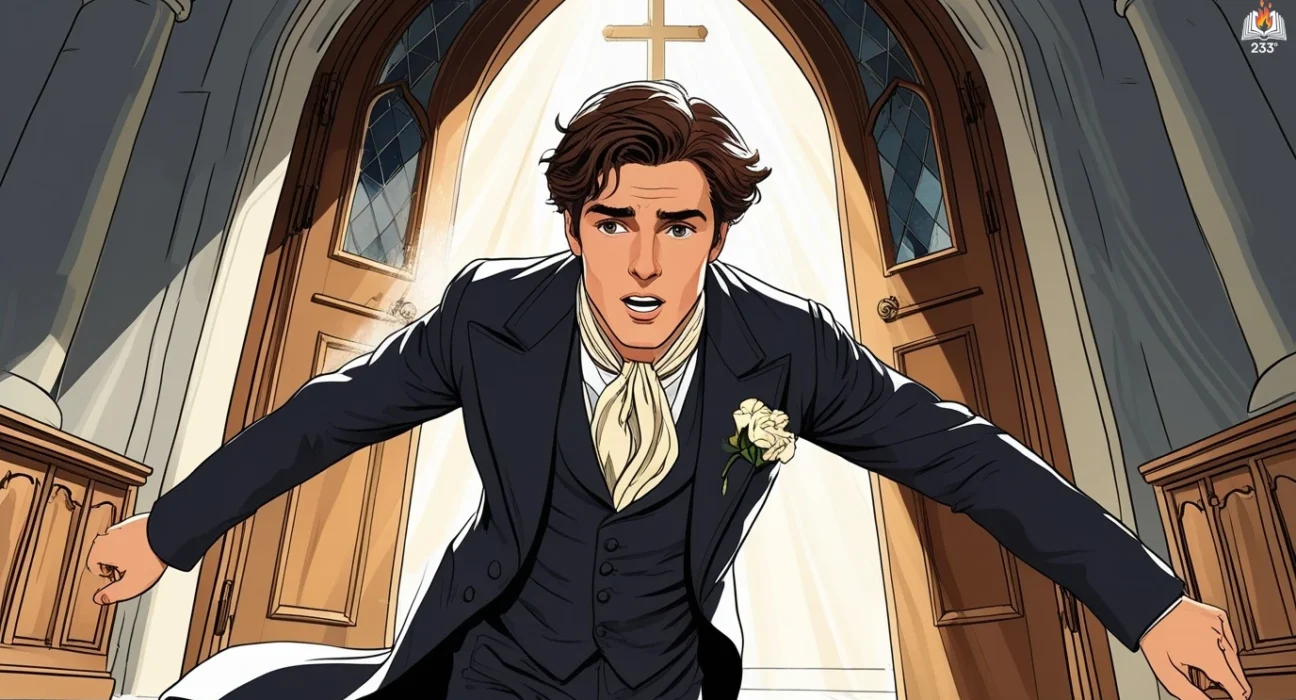
On the Way to the Wedding by Julia Quinn, published in 2006, is the final installment in the beloved Bridgerton series. Set in Regency-era England, the novel follows the youngest Bridgerton brother, Gregory, as he embarks on a chaotic journey in pursuit of true love – one that leads him, quite literally, to the steps of a church and a dramatic interruption of a wedding ceremony. With Quinn’s signature wit and heartfelt prose, the story explores love found in the most unexpected places, amidst mistaken identities, meddling friends, and societal expectations.
Plot Summary
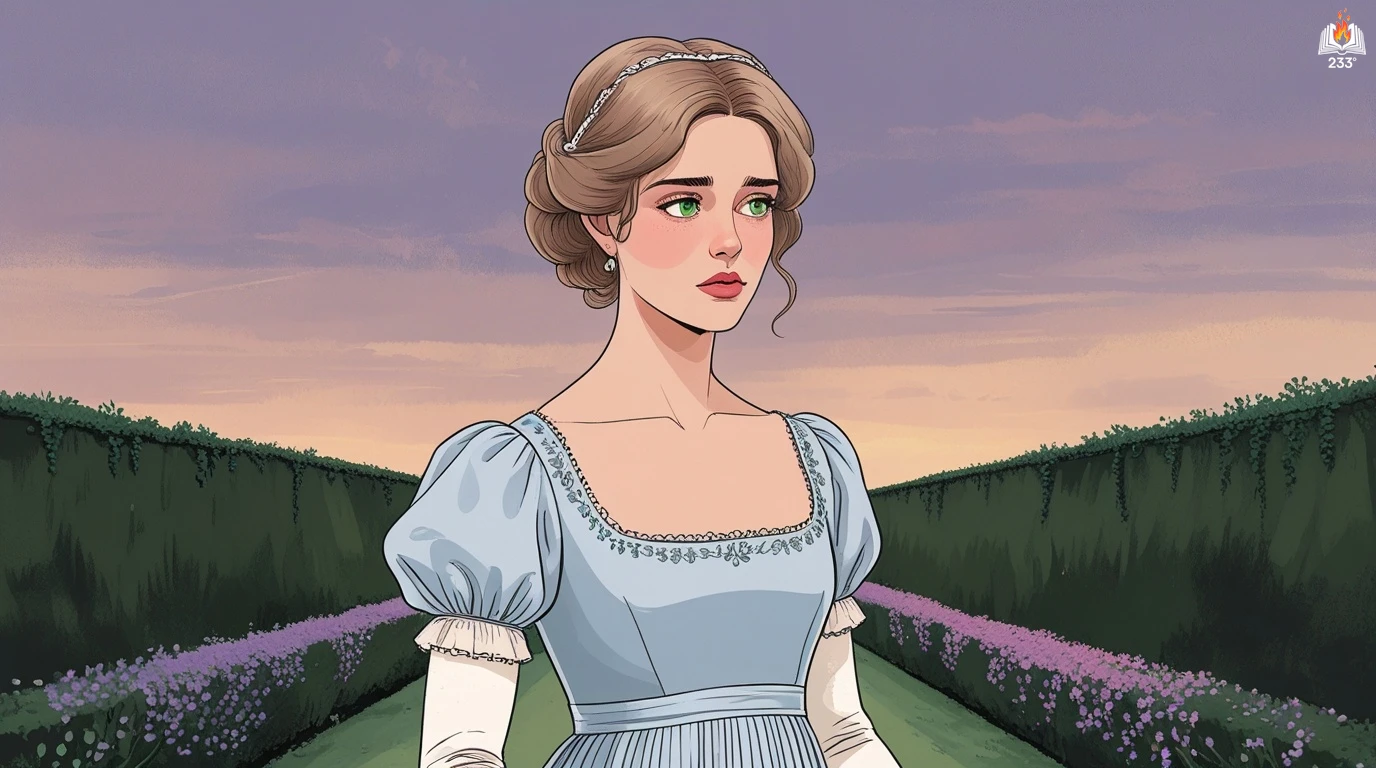
Gregory Bridgerton believed in love – not the kind that simmers and grows with time, but the sweeping, soul-wrenching kind that strikes like lightning and demands everything. Raised in a family of romantics who had all married for love, he was certain that when he found the one, he would simply know. That moment came with a single glance across a sunlit garden at Aubrey Hall, where a cascade of golden hair and the tilt of a graceful neck undid him entirely. Her name was Hermione Watson, and she was perfect. Lovely, delicate, and already in love with another man.
But Gregory, ever the idealist, was not deterred. Hermione’s heart, he was certain, could be won. All it required was charm, patience, and perhaps a touch of strategy. And so he set to work, but found himself constantly circling around her dearest friend – Lucinda Abernathy, called Lucy. Practical, forthright, and immune to grand romantic gestures, Lucy was not a woman to lose herself in passion or poetry. She was promised – practically engaged to Lord Haselby, a match arranged long ago by her ambitious uncle, a man who valued stability over sentiment.
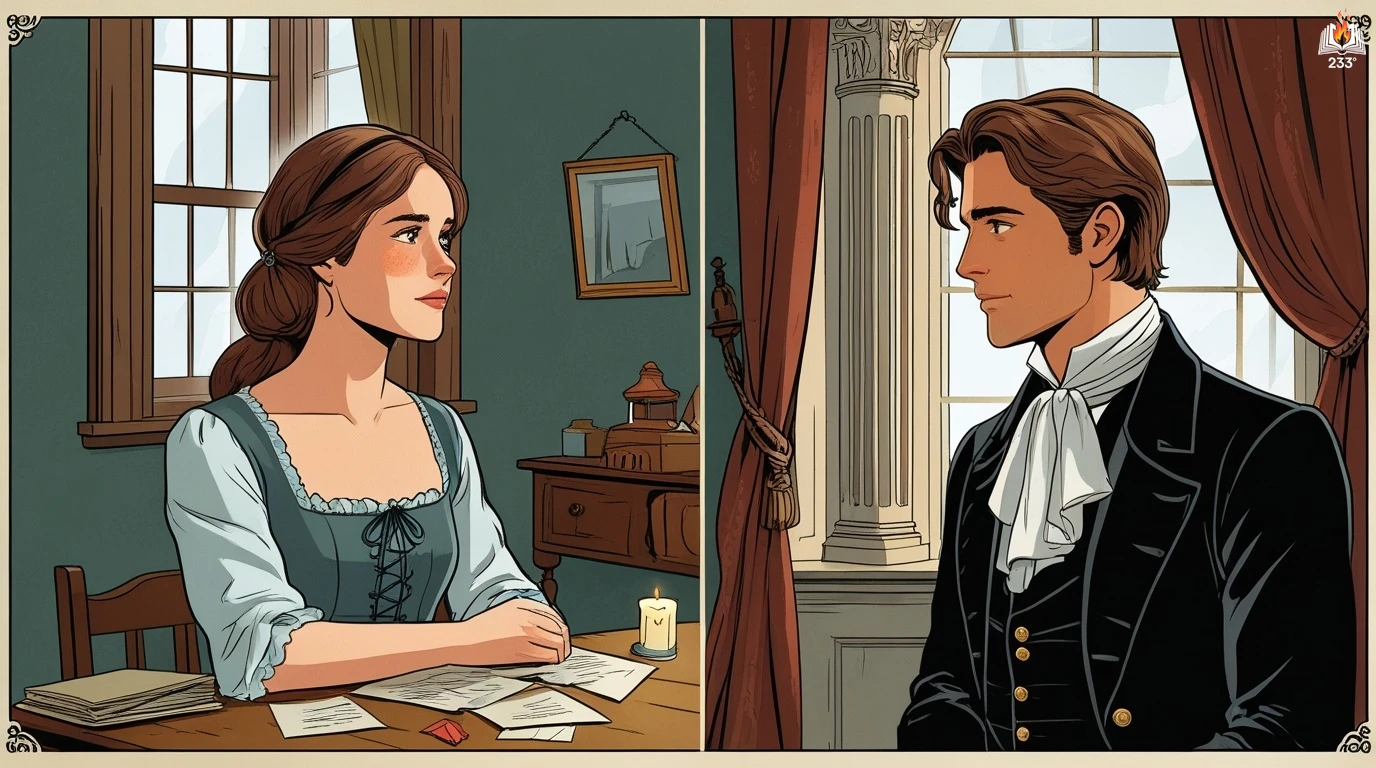
Gregory, in his pursuit of Hermione, turned to Lucy. After all, who better to assist him in winning the lady’s heart than her closest companion? Lucy, sharp-eyed and bemused by Gregory’s thunderstruck devotion, agreed. It would be harmless, she told herself. She would help her friend find happiness and steer Gregory away from inevitable disappointment. But as they spent time together – plotting, laughing, sharing conversations that ran deeper than either expected – Lucy began to see the man behind the charm. He wasn’t just a romantic fool. He was kind, loyal, and unexpectedly perceptive.
Still, Gregory’s eyes remained fixed on Hermione, who wavered between her feelings for a penniless secretary and her duty to marry well. Lucy’s efforts to convince her friend of Gregory’s merits were genuine at first, until they became tinged with something darker – the sting of her own growing attachment. She had no right to feel it, not when she was bound to another. Not when Gregory’s heart beat for someone else.
The tide turned at a country house party, where chance and mischief conspired to unravel every careful plan. Gregory, at last, came to the devastating realization that Hermione’s heart could not be swayed. She was in love – truly, painfully, and with someone entirely unsuitable. And it was Lucy, with her steady gaze and subtle humor, who stood beside him, offering solace not with words, but with presence.
He looked at her then, really looked, and saw what had been in front of him all along. There was no thunderbolt, no music, no sudden gasp of recognition. There was just a certainty – quiet, resolute, and undeniable. Lucy was the one. But by then, it was too late.
Lucy’s engagement to Haselby was no longer theoretical. It was announced, arranged, and demanded. Her uncle, a man for whom duty was law, refused to hear of her refusal. And Haselby, kind but resigned, was willing to marry a woman who did not love him. Trapped by obligation and family expectation, Lucy stood on the edge of a future she did not want, her heart aching for a life she dared not reach for.
Gregory refused to let her go. There were declarations – bold, public, desperate. He told her he loved her, again and again, until the words became breath. But Lucy, her eyes brimming with unspoken longing, pushed him away. It was impossible. Her uncle would never allow it, and Gregory could not imagine the lengths to which the man would go to ensure the match was made.
What followed was chaos – kidnappings, lock-ups, and family interventions that bordered on farce but cut with real danger. Gregory was tied up in a shed, Lucy was locked in a room, and somehow in the middle of it all, love refused to be silenced. Violet Bridgerton, matriarch and force of nature, stepped in with the subtlety of a hurricane, as did Gregory’s brothers, wives, and even Kate, whose matchmaking had sparked the fire in the first place.
Still, the wedding day dawned.
Lucy walked down the aisle with the weight of every expectation pressing against her chest. She had tried to flee. She had tried to resist. But Gregory was gone – banished, removed, silenced. Her uncle’s grip had closed too tightly. And so she walked.
Until the doors burst open.
Gregory came, breathless and wild-eyed, his voice hoarse with hope. He called her name. He asked her to stop. The world paused. The priest, the guests, even the flowers seemed to hold their breath. Lucy turned, and for the first time, let herself believe in the impossible.
There was no dramatic refusal, no grand rebellion. Just a choice. A quiet, perfect choice.
She chose Gregory.
What followed was not without difficulty – apologies made, arrangements undone, social consequences be damned. But love, the kind that Gregory always believed in, proved itself worth every scandal. Lucy, finally free of her uncle’s plans, married the man who loved her not for her beauty, her title, or her promise, but for herself – intelligent, loyal, brave, and wonderfully flawed.
The wedding they shared was not the one Lucy had prepared for. It was something far better. It was messy, joyful, real. Gregory, who once thought he’d fall in love at first sight, found instead that love grows, deepens, and flourishes when watered with time, trust, and laughter. Lucy, who never believed in romance, discovered that it could arrive in the form of a man who would chase her through churches and risk his reputation just to hear her say yes.
And say it she did.
Main Characters
Gregory Bridgerton – The romantic youngest Bridgerton sibling, Gregory is idealistic and utterly convinced in the power of true love. Unlike many of his peers, he seeks a deep emotional connection and believes he will recognize “the one” the moment he sees her. His journey is one of emotional maturity, as he begins with a superficial infatuation but gradually learns what real love demands – patience, sacrifice, and sincerity.
Lucinda “Lucy” Abernathy – Intelligent, pragmatic, and often underestimated, Lucy is Hermione’s loyal best friend. Practical and bound by duty, she is “practically engaged” to Lord Haselby, a match arranged by her family. Despite her initial resistance to romantic notions, Lucy finds herself caught in a web of unexpected emotions when Gregory enters her life. Her transformation is central to the novel’s emotional arc.
Hermione Watson – The quintessential beauty, Hermione captivates every man who crosses her path, including Gregory. Gentle and kind, she’s already in love with someone deemed unsuitable, Mr. Edmonds. Hermione’s story emphasizes how appearances can overshadow one’s true desires and how external pressures influence personal choices.
Neville Berbrooke – A comic yet endearing character paired with Lucy for an outing, Neville’s awkwardness and eccentricity provide levity. Though not central to the romantic drama, his presence underscores the chaotic and unpredictable nature of courtship in Quinn’s world.
Lady Kate Bridgerton – Gregory’s sharp-witted sister-in-law, Kate serves as a subtle matchmaker and observer. Her insights into the younger generation and gentle meddling highlight her wisdom and the supportive nature of the Bridgerton family dynamic.
Theme
True Love vs. Infatuation – The novel centers on Gregory’s evolution from infatuation with Hermione to a deep, enduring love for Lucy. It explores how love isn’t always immediate or convenient, and that the truest form often grows slowly and unexpectedly.
Duty and Societal Expectations – Lucy’s arranged match with Haselby reflects the rigid societal expectations placed on women of her time. Her internal conflict between personal happiness and familial obligation underscores the tension between social tradition and individual agency.
Female Friendship – The bond between Lucy and Hermione is one of the novel’s most consistent emotional threads. Despite rivalry for Gregory’s attention, their loyalty and care for one another remain steadfast, highlighting the importance of female solidarity.
Self-Discovery and Growth – Both Gregory and Lucy undergo profound internal journeys. Gregory learns that love requires effort and selflessness, while Lucy finds the courage to pursue what she truly wants, even at great personal risk.
Writing Style and Tone
Julia Quinn’s writing is infused with charm, intelligence, and an unmistakable sense of humor. Her style combines sparkling dialogue with deeply introspective moments, creating a balance between wit and emotional weight. She has a keen eye for character dynamics, and even the briefest interactions are layered with subtext. The pacing is brisk, but not rushed – she allows scenes to breathe, particularly those heavy with emotional transformation.
The tone throughout On the Way to the Wedding is playful and romantic, yet increasingly tense as the plot builds toward its dramatic climax. Quinn often juxtaposes lighthearted banter with the looming pressure of societal constraints and personal heartbreak. Her omniscient narration, peppered with sly commentary, allows readers to feel both immersed in the Regency world and in on the author’s clever, modern insights. This stylistic blend of historical setting with contemporary sensibility is quintessentially “Bridgerton” and a hallmark of Quinn’s enduring appeal.
Quotes
On the Way to the Wedding – Julia Quinn (2006) Quotes
“It was a damned good thing men couldn’t have children. Gregory took no shame in admitting that the human race would have died out generations earlier.”
“She's my little sister. Mine to torture and mine to protect.”
“I simply refuse to deal with idiots...It has cut my social obligations in half.”
“Lucy,” he whispered. She closed her eyes. “Be with me,” he said. Slowly, she shook her head. “Please don’t.” He tugged her closer and pulled the candlestick from her slackening fingers. “Be with me, Lucy Abernathy. Be my love, be my wife.”
“Lucy nodded dutifully, all the while making a mental list of all the places she would rather be. Paris, Venice, Greece, although weren’t they at war? No matter. She would still rather be in Greece. (On the Way to the Wedding, Bridgertons #8, by Julia Quinn)”
“What did one say when a gentleman confessed to a shortcoming? She couldn’t recall ever hearing one do so before, but surely, sometime in the course of history, some gentleman had. (Lucy about Gregory, On the Way to the Wedding, Bridgertons #8, by Julia Quinn).”
“How love feels,” he clarified. “Do you think it could possibly be different for different people? If you loved someone, truly and deeply, wouldn’t it feel like...like everything?”
“Mysterious creatures, women. If they could just learn to say what they meant, the world would be a far simpler place.”
“He loved her. It was the strangest, most wonderful sensation. It was exhilarating. It was as if the world had suddenly become open to him. Clear. He understood. He understood everything he needed to know, and it was all right there in her eyes.”
“Everyone had spent so much time telling her that love was a thing of magic, something wild and uncontrollable that came like a thunderstorm. And now it was something else? It was just comfort? Something peaceful? Something that actually sounded nice?”
“She didn't want to be commended for knowing how to settle for second-best. That was like winning a prize for the prettiest shoes in a footrace. Irrelevant and not the point.”
“He smiled. Her stomach felt strange. She tried to smile back. She really should be going. So naturally, she did not move.”
“He loved her. He'd said it, and even though she couldn't quite believe it, she believed *him*.”
“Every woman should know how to curse in another language since polite society has deemed English unavailable to us.”
“Lucy or Lucinda?” “Oh, Lucy,” Katharine said, knowing instantly what he was talking about. “She’s not really a Lucinda.”
“There is nothing wrong with doubting yourself, Hermione. Marriage is an enormous undertaking. The biggest choice you will ever make in your life. Once it’s done, you can’t change your mind.”
“She had been kissed. Her. Lucy. For once it was about her. She was at the center of her world. It was life. And it was happening to her.”
“Lucy could feel herself slipping, sliding into need, falling into a hazy place of love and desire where right was not quite identifiable from wrong.”
We hope this summary has sparked your interest and would appreciate you following Celsius 233 on social media:
There’s a treasure trove of other fascinating book summaries waiting for you. Check out our collection of stories that inspire, thrill, and provoke thought, just like this one by checking out the Book Shelf or the Library
Remember, while our summaries capture the essence, they can never replace the full experience of reading the book. If this summary intrigued you, consider diving into the complete story – buy the book and immerse yourself in the author’s original work.
If you want to request a book summary, click here.
When Saurabh is not working/watching football/reading books/traveling, you can reach him via Twitter/X, LinkedIn, or Threads
Restart reading!