
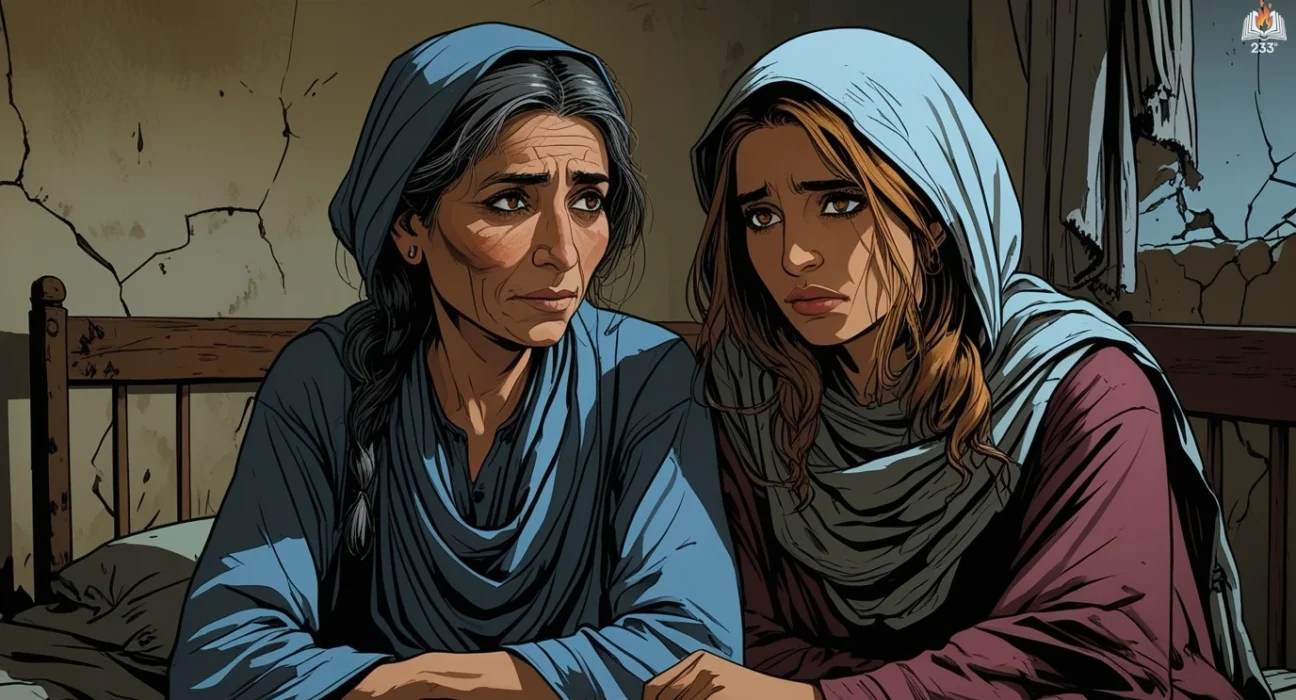
A Thousand Splendid Suns, published in 2007 by Khaled Hosseini, is a poignant tale of resilience and the enduring bonds between women. Set against the backdrop of Afghanistan’s turbulent history, the novel spans several decades, chronicling the lives of two women, Mariam and Laila, whose paths cross under devastating circumstances. It explores themes of love, sacrifice, oppression, and hope, painting a vivid picture of life in a war-torn country.
Plot Summary
In a small village on the outskirts of Herat, Mariam was born as the illegitimate daughter of a wealthy businessman, Jalil, and his servant, Nana. She grew up in a modest kolba, isolated from society, surrounded by her mother’s bitterness and the shame of her birth. Mariam cherished the weekly visits from Jalil, who regaled her with tales of Herat’s culture and grandeur. But her longing for acceptance in his world was met with rejection when, at fifteen, she ventured to his home only to be turned away. When she returned, she found that her mother had hanged herself in despair.
Mariam’s life was soon reshaped. Taken to Jalil’s house, she was married off to Rasheed, a much older shoemaker from Kabul. Her new life began with hope, but it quickly devolved into a grim reality as Rasheed’s temper and cruelty surfaced, particularly after Mariam suffered a series of miscarriages. Isolated in Rasheed’s oppressive household, Mariam endured years of abuse and loneliness.
In Kabul, a young girl named Laila grew up in a loving, progressive household. Her father encouraged her education, while her mother mourned the loss of her two sons, who had joined the Mujahideen. Laila’s best friend, Tariq, was her anchor and confidant. Their friendship deepened into love as the civil war engulfed Kabul. Amidst the violence, a rocket struck Laila’s home, killing her parents. Severely injured and orphaned, she was taken in by Rasheed and Mariam.
Rasheed, seeing an opportunity, pressured Laila into marriage. Unbeknownst to him, Laila was already pregnant with Tariq’s child, conceived in a moment of love before his departure. Laila agreed to the marriage to secure a future for her unborn child, Aziza. Mariam resented Laila at first, viewing her as an interloper. But over time, their shared suffering under Rasheed’s tyranny forged a bond between them. They became allies, sisters in adversity, and protectors of one another.
Life with Rasheed grew harsher as his moods turned increasingly violent. When Laila bore him a son, Zalmai, Rasheed’s favoritism toward the boy contrasted sharply with his disdain for Aziza. The family’s financial troubles worsened, forcing Rasheed to send Aziza to an orphanage. Laila visited her daughter whenever she could, enduring beatings and humiliation to bring Aziza moments of joy.
Hope flickered when Tariq, long presumed dead, reappeared in Laila’s life. Rasheed had orchestrated lies about Tariq’s death to manipulate Laila into staying with him. Tariq’s return reignited Laila’s dreams of escape, but Rasheed discovered their reunion and erupted in rage. His assault on Laila turned deadly, and Mariam intervened, striking him with a shovel to save Laila. In the aftermath, Mariam insisted that Laila flee with Tariq and the children, while she stayed behind to face the consequences.
Mariam was arrested and sentenced to execution. As she awaited her fate, she reflected on her life with a sense of peace, finding solace in the knowledge that she had given Laila and her children a chance at freedom and happiness. Her death was both a tragic end and a testament to her strength and sacrifice.
Laila and Tariq began a new life in Pakistan, where they found work and stability. Yet, the pull of home was strong. With the fall of the Taliban, Laila decided to return to Kabul. She and Tariq rebuilt their lives in the city, restoring an orphanage where Aziza had once lived and working to provide hope for others. Laila carried Mariam’s memory with her, honoring her through acts of love and resilience.
Years later, Laila visited Herat, where she found traces of Mariam’s past. She discovered a box Jalil had left for Mariam—a letter of regret and love, a small inheritance, and a glimpse of the father Mariam had longed to know. Through Mariam’s story, Laila found a deeper connection to her own journey and a renewed determination to build a brighter future for her family.
Back in Kabul, Laila prepared to welcome a new child into the world. If it was a girl, she had already chosen the name: Mariam, a tribute to the woman whose enduring spirit had shaped her life.
Main Characters
Mariam: An illegitimate child who grows up under the shadow of shame and isolation. Mariam’s journey is one of endurance and quiet strength, as she navigates abuse and societal rejection. Her story intersects with Laila’s, sparking a profound bond of mutual support.
Laila: Born into a progressive family, Laila’s life takes a dramatic turn after tragedy strikes. Intelligent and spirited, she fights to protect her children and seek a better future, embodying resilience and defiance against patriarchal norms.
Rasheed: A shoemaker and the abusive husband to both Mariam and Laila. Rasheed’s oppressive and controlling nature makes him a symbol of the systemic violence faced by women in Afghan society.
Tariq: Laila’s childhood friend and eventual love, Tariq represents hope, love, and loyalty amidst the chaos of war.
Theme
The Struggles of Women: The novel underscores the systemic oppression of women in Afghanistan, showcasing how Mariam and Laila endure and resist the physical, emotional, and societal abuses inflicted upon them.
Love and Sacrifice: Love, in its many forms—parental, romantic, and platonic—drives much of the story. Sacrifice, especially from the female characters, underscores the strength of love as a force of survival.
Resilience and Redemption: Both women endure harrowing challenges yet find solace and redemption in their shared bond. Their ability to find hope in despair exemplifies human resilience.
War and Its Impact on Civilians: The story vividly illustrates the devastating toll of war on ordinary lives, homes, and relationships, anchoring personal suffering within historical events.
Writing Style and Tone
Khaled Hosseini’s writing style is evocative and deeply empathetic. His prose combines lyrical beauty with raw emotional power, immersing readers in the vivid landscapes of Afghanistan and the inner lives of his characters. His descriptions are both poetic and grounded, enabling readers to feel the texture of Mariam’s and Laila’s world—from the bustling bazaars of Herat to the claustrophobic confines of their shared household.
The tone is one of poignant realism, oscillating between moments of heartbreak and quiet triumph. Hosseini captures the resilience of the human spirit amidst suffering, rendering a tone that is ultimately hopeful despite the characters’ profound trials. His narrative structure—shifting perspectives between Mariam and Laila—creates a rich, multifaceted portrayal of their intertwined lives.
Quotes
A Thousand Splendid Suns – Khaled Hosseini (2007) Quotes
“Marriage can wait, education cannot.”
“One could not count the moons that shimmer on her roofs, Or the thousand splendid suns that hide behind her walls.”
“Of all the hardships a person had to face, none was more punishing than the simple act of waiting.”
“A society has no chance of success if its women are uneducated...”
“A man's heart is a wretched, wretched thing. It isn't like a mother's womb. It won't bleed. It won't stretch to make room for you.”
“Learn this now and learn it well. Like a compass facing north, a man’s accusing finger always finds a woman. Always. You remember that, Mariam.”
“Behind every trial and sorrow that He makes us shoulder, God has a reason.”
“I will follow you to the ends of the world.”
“she is the noor of my eyes and the sultan of my heart.”
“You see, some things I can teach you. Some you learn from books. But there are things that, well, you have to see and feel.”
“You changed the subject." "From what?" "The empty-headed girls who think you're sexy." "You know." "Know what?" "That I only have eyes for you.”
“Perhaps this is just punishment for those who have been heartless, to understand only when nothing can be undone.”
“But the game involves only male names. Because, if it's a girl, Laila has already named her”
“Boys, Laila came to see, treated friendship the way they treated the sun: its existence undisputed; its radiance best enjoyed, not beheld directly.”
“yet love can move people to act in unexpected ways and move them to overcome the most daunting obstacles with startling heroism”
“and yet she was leaving the world as a woman who had love and been loved back. she was leaving it as a friend, a companion, a guardian. a mother. a person of consequence at last.”
“Laila has moved on. Because in the end she knows that’s all she can do. That and hope.”
“Tell your secret to the wind, but don’t blame it for telling the trees.”
“Tariq tucked the gun into the waist of his denims. Then he said a thing both lovely and terrible. "For you," he said. "I'd kill with it for you, Laila.”
“I'm sorry," Laila says, marveling at how every Afghan story is marked by death and loss and unimaginable grief. And yet, she sees, people find a way to survive, to go on.”
“Each snowflake was a sigh heard by an aggrieved woman somewhere in the world. All the sighs drifted up the sky, gathered into clouds, then broke into tiny pieces that fell silently on the people below. As a reminder of how women suffer.”
“Though there were moments of beauty, Mariam knew for the most part that life had been unkind to her.”
“She would never leave her mark on Mammy's heart the way her brothers had, because Mammy's heart was like a pallid beach where Laila's footprints would forever wash away beneath the waves of sorrow that swelled and crashed, swelled and crashed. ”
“the past held only this wisdom: that love was a damaging mistake, and its accomplice, hope, a treacherous illusion”
“And that, ...is the story of our country, one invasion after another...Macedonians. Saddanians. Arabs. Mongols. Now the Soviets. But we're like those walls up there. Battered, and nothing pretty to look at, but still standing.”
We hope this summary has sparked your interest and would appreciate you following Celsius 233 on social media:
There’s a treasure trove of other fascinating book summaries waiting for you. Check out our collection of stories that inspire, thrill, and provoke thought, just like this one by checking out the Book Shelf or the Library
Remember, while our summaries capture the essence, they can never replace the full experience of reading the book. If this summary intrigued you, consider diving into the complete story – buy the book and immerse yourself in the author’s original work.
If you want to request a book summary, click here.
When Saurabh is not working/watching football/reading books/traveling, you can reach him via Twitter/X, LinkedIn, or Threads
Restart reading!