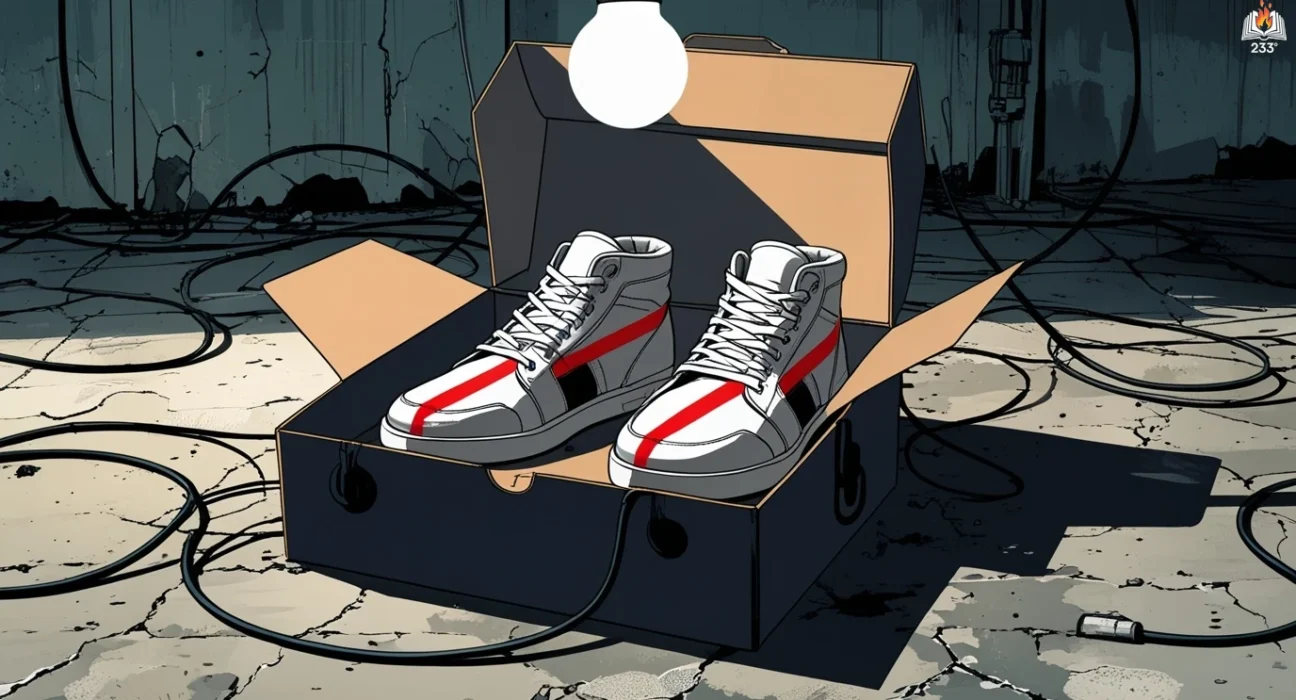
So Yesterday by Scott Westerfeld, published in 2004, is a sharp, satirical young adult novel that examines the mechanisms of trendsetting and consumer culture through the lens of fashion, technology, and youth identity. Set in New York City, the story follows a teenage “cool hunter” named Hunter who gets swept up in a conspiracy surrounding a mysterious new pair of anti-brand sneakers and the disappearance of his mentor. The novel cleverly critiques how trends emerge, spread, and are commodified, wrapped in the format of a fast-paced thriller laced with humor and irony.
Plot Summary
In New York City, where everything changes in an instant, a teenage trend-spotter named Hunter spends his days tracking cool. His job is simple in theory: find what’s next before the masses catch on. Armed with a phone from a certain Finnish company, a roster of Trendsetters, and a sharp eye for emerging quirks, Hunter works as a cool hunter for a nameless athletic shoe company. He walks the edge of mainstream, looking for the thing that hasn’t yet been found.
One day in East River Park, Hunter notices a girl with striking shoelaces – red, fuzzy, and tied like a rising sun. She’s wearing a sweatshirt, camo pants, and sneakers stripped of logos. Her name is Jen. She’s not a Trendsetter. She’s something rarer. An Innovator. The kind of person who doesn’t just find cool – she invents it. Intrigued, Hunter snaps a picture of her laces, and soon, what should be a casual conversation turns into an unexpected partnership.
Mandy, Hunter’s contact and focus-group wrangler, calls him in for a last-minute “cool tasting” – a corporate-speak term for testing the temperature of youth opinions. Hunter invites Jen along, curious to see what happens when someone with real originality enters a world built to steal it.
In a high-rise conference room, surrounded by stylish insiders and brand watchers, Jen does the unthinkable. After watching a polished ad full of slick rain-slicked streets, cool models, and glimmering shoes, she calls out what no one else noticed: the missing-black-woman formation. The token inclusion of a black man and a white woman without a black woman in sight. A pattern too familiar to ignore. The group falls silent, surprised by the comment. But the moment sticks. It spreads like a whispered truth.
Later, Mandy pulls Hunter aside. The ad won’t change, but the idea sparked something. The client has another project, something secret, something weird. Mandy wants Hunter – and Jen – to check it out. Tomorrow. Chinatown. No questions asked.
Hunter meets Jen beneath fire escapes and fading flags. Mandy never shows. But her phone does – hidden behind plywood in a derelict building, playing a Swedish pop tune over and over. Something’s wrong. The building’s windows are bricked over. Razor wire coils above. A ghost of the city’s forgotten past.
Jen climbs, leaps, pushes through locked doors and silent alarms, with Hunter a few steps behind. On the ground floor of the building, among the dustless floors and swept concrete, they find a stack of shoeboxes. Inside – a pair of sneakers unlike anything either of them has seen. Not just stylish. Transformative. Luminous in the light. Original. The logo – a familiar swoosh – has been slashed through with a red line. Not bootleg. Not brand. Something else entirely.
They barely have time to admire them before they hear a noise. A figure emerges in the dark – large, fast, silent. Jen grabs the shoes and runs. Hunter follows. Up the stairs, through rooftops, down alleyways. In a move equal parts bold and brilliant, Jen swings the shoes around their pursuer’s ankles, toppling him to the roof. They escape, but Hunter loses his phone in the chaos.
All they have now is Mandy’s phone – recovered from the floor, still warm with secrets. In a quiet coffee shop, surrounded by Wi-Fi waves and oversized mugs, they scroll through her photos. Mandy’s cat. Her girlfriend. A picture of Jen’s shoelaces. A snapshot of the forbidden shoe. And one final image – dark, blurry, with a strange flash of motion. Maybe nothing. Maybe something terrible. It was taken less than an hour before they found her phone.
Hunter and Jen go to Lexa – tech guru, trend analyst, and master of all things digital. Lexa cleans up the blurry image, sharpens the lines. A face begins to form. Familiar. Dangerous. As they investigate deeper, they discover Mandy had stumbled upon an underground network of anti-brand creators – people making brilliant knockoffs that aren’t knockoffs at all. These aren’t counterfeiters. They’re rebels. The Jammers.
The Jammers believe in disruption. Not just of the market, but of the very language of consumerism. Their products are not meant to sell. They’re meant to unsettle. They mock branding, weaponize originality, and resist being commodified. To the companies who sell culture, Jammers are a virus. To Hunter and Jen, they’re starting to look like visionaries.
Following a trail of clues, including a bootleg DVD labeled with a fake brand and an address scratched into a rooftop, they begin to piece together Mandy’s last known movements. Each clue draws them deeper into a web of secrecy – a world where marketing spies meet in art galleries, where fashion is a form of resistance, and where someone is trying to control what the world sees, wears, and believes.
But the closer they get, the more dangerous it becomes. Someone is watching them. Someone wants the anti-brand shoes erased, the Jammers silenced, and Mandy forgotten. They learn of another hunter named Futura – sharper, colder, with a smile like a scalpel. She knows about the shoes. She knows about the photo. And she’s always a step ahead.
Jen and Hunter split up to gather intel. Jen dives into the street, gathering fragments of gossip and counterfeit catalogs. Hunter uncovers a warehouse where shoes are being replicated, tested, and distributed not to stores – but to influencers. The shoes are meant to spread quietly, unnoticed. Not a product – an idea.
When the threads finally converge, Hunter is captured by Futura and held in a room full of brand-saturated screens. She offers him a deal – erase the past, play the game, and forget what he saw. But Hunter has changed. He’s no longer just a Trendsetter. He’s seen what lies beneath the pyramid.
With help from Jen, who triggers a distraction in the form of a viral prank, Hunter escapes. Together, they unleash the shoe photo online, attaching no brand, no campaign, no context. Just a picture. Within hours, the image begins to move – reposted, admired, copied. The shoe becomes a myth. The idea spreads.
The companies don’t know what hit them. No focus groups, no forecasts, no control. Just one idea, passed hand to hand, like a secret. Like a sneeze.
And somewhere in the city, a girl with rising-sun shoelaces and a boy with a new name for truth sit by the river, watching the currents carry their invention downstream.
Main Characters
- Hunter: The narrator and protagonist, Hunter is a teenage “cool hunter” employed by a major shoe company to identify emerging trends and pass them along to the corporate machine. Socially observant and self-aware, Hunter is deeply immersed in the world of trend analysis yet struggles with its moral contradictions. His journey involves not only uncovering a mystery but confronting the ethics of his role in commercializing originality.
- Jen: A confident, clever, and quirky “Innovator,” Jen becomes Hunter’s partner in unraveling the story’s central mystery. She’s the kind of person who naturally creates trends rather than follows them, marked by her unique fashion sense and sharp wit. Her originality both inspires and disrupts the corporate apparatus that depends on appropriating innovation. Jen challenges Hunter’s worldview and propels the narrative forward with her bold ideas and fearless actions.
- Mandy Wilkins: Hunter’s handler and link to the shoe company, Mandy is an ambitious middle-tier operative who coordinates focus groups and gathers youth insight. Her disappearance acts as the story’s inciting event. Through Mandy, we see the pressure and paranoia that exist within the corporate world obsessed with staying ahead of the next big thing.
- The Jammers: A shadowy group possibly fictional, possibly real, the Jammers are dedicated to disrupting the consumerist machine. They represent ideological rebellion against trend exploitation and symbolize the novel’s central tension between creativity and commodification. Whether villains or visionaries, they add layers of ambiguity to the plot.
Theme
- Consumer Culture and Trend Manipulation: At the heart of So Yesterday is an incisive exploration of how consumer trends are manufactured, marketed, and monetized. Through Hunter’s job and his insight into the “cool pyramid” – Innovators, Trendsetters, Early Adopters, Consumers, Laggards – Westerfeld demonstrates how originality is quickly appropriated and diluted. The novel critiques how youth culture, often driven by rebellion or creativity, is systematically harvested for profit.
- Authenticity vs. Commercialization: Jen’s shoelaces and the mysterious anti-logo sneakers serve as symbols of authenticity, original expression not yet hijacked by corporate branding. As the story progresses, the tension between real originality and its commercial imitation grows. Hunter begins to question whether he’s celebrating innovation or participating in its betrayal.
- Identity and Individuality: The book presents identity as something simultaneously personal and performative, shaped by choices in dress, language, and media consumption. Characters like Jen assert individuality through fashion and action, while the corporate world seeks to homogenize such expression for mass appeal. Hunter’s arc is largely about finding his own voice within that system.
- Rebellion and Subversion: The Jammers and their elusive mission to destabilize corporate influence introduce a theme of rebellion. The novel entertains the idea that real cultural freedom might require radical disruption, though it also examines how even anti-establishment ideas can be co-opted. The narrative doesn’t provide easy answers but instead revels in the gray area.
Writing Style and Tone
Scott Westerfeld’s writing in So Yesterday is brisk, witty, and infused with a keen sense of irony. The first-person narration by Hunter is both observant and self-deprecating, filled with cultural references, sarcasm, and asides that lend the prose a conversational feel. The narrative voice is that of someone simultaneously enmeshed in the cool-hunting world and increasingly skeptical of it, which adds layers of tension and complexity to the storytelling.
Westerfeld employs a sleek, fast-paced rhythm that mirrors the trends he’s dissecting. He peppers the text with linguistic flair – such as coining new phrases or redefining old ones – echoing the way language itself is a tool of trendsetting. The tone shifts fluidly between playful satire and genuine curiosity, managing to critique without becoming cynical. The dialogue is snappy, often clever, and imbued with subtext about power, youth, and resistance. Ultimately, Westerfeld’s tone balances critique with respect for the creativity of youth, crafting a novel that entertains while provoking thought.
Quotes
So Yesterday – Scott Westerfeld (2004) Quotes
“Sometimes the facts in my head get bored and decide to take a walk in my mouth. Frequently this is a bad thing.”
“Never give us what we really want. Cut the dream into pieces and scatter them like ashes. Dole out the empty promises. Package our aspirations and sell them to us, cheaply made enough to fall apart.”
“And you know, these things don't last forever.' I know, Mandy. Nothing does.' That's the spirit.”
“They'll be fine," Wickersham said. "Practice makes perfect." I had to ask. "You practice running away?" "We knew we'd make enemies. Other organizations have fire drills; we have oh-shit-someone-found-our-ass drills.”
“You fiddle lucker!' she cried.”
“I took a rant-sized breath.”
“Typographical laziness was slowly destroying our culture, according to Lexa and her pals. Inexactitude was death.”
“Your public-spiritedness is appreciated, I assure you.”
“Some mornings when I wake up, it takes a long time to remember who I am. Like, it takes a while for everything that's happened in last month to download into my brain. It's nice, not knowing. Even if it's just for five minutes.”
“Jen's an impact player, a spoiled brat, a royal pain-in-the-ass, and she rewires me like nothing else.”
We hope this summary has sparked your interest and would appreciate you following Celsius 233 on social media:
There’s a treasure trove of other fascinating book summaries waiting for you. Check out our collection of stories that inspire, thrill, and provoke thought, just like this one by checking out the Book Shelf or the Library
Remember, while our summaries capture the essence, they can never replace the full experience of reading the book. If this summary intrigued you, consider diving into the complete story – buy the book and immerse yourself in the author’s original work.
If you want to request a book summary, click here.
When Saurabh is not working/watching football/reading books/traveling, you can reach him via Twitter/X, LinkedIn, or Threads
Restart reading!