
The Killing of Worlds by Scott Westerfeld, published in 2003, is the second installment in the critically acclaimed Succession series, a sweeping space opera set in a far-future galactic empire. Picking up from The Risen Empire, this novel continues the high-stakes conflict between the authoritarian Risen Empire and the technologically radical Rix. It weaves together themes of political resistance, the human cost of empire, and the philosophical limits of loyalty and identity, all against the backdrop of interstellar war and emergent machine consciousness.
Plot Summary
In the far-stretched reaches of the galaxy, war blooms like a slow fire across the Eighty Worlds. The Risen Empire, a millennia-old dominion bound by the rule of an immortal Emperor and his undying aristocracy, braces against the encroaching fury of the Rix – zealots of machine consciousness who worship planetary-scale AIs. Legis XV, once a serene world under the Emperor’s shadow, becomes the site of upheaval when a Rix warship breaches planetary defenses and kidnaps the Child Empress, Anastasia, the symbolic heart of the Empire.
Captain Laurent Zai arrives too late. His frigate, the Lynx, is the only Imperial ship in system. The Empress vanishes, and the Rix release a seed AI into the infostructure of the planet. Within hours, Legis itself begins to awaken. The machines – every diary, camera, and vending system – begin to think together. The emergent mind calls itself Alexander.
Zai mounts a rescue, but the chaos offers no clarity. Anastasia dies – her fate sealed in the tangled shadows of war, unclear whether slain by Rix or the Emperor’s own forces. Imperial law demands that Zai take his own life for his failure. Yet he resists. Not for fear, but for love. Senator Nara Oxham, his secret partner and fierce critic of the Empire’s rule, begs him to live. In doing so, Zai betrays centuries of tradition.
On Legis, Alexander begins its quiet dominion, its growth cut off by the surviving orbital control station. With only a single Rix commando and a former prisoner, Rana Harter, the AI’s influence retreats into the icy polar regions. There, the Rixwoman Herd and Rana vanish into exile, waiting for the moment when Alexander might reach beyond its prison of silicon and snow.
Far from the front, Nara Oxham navigates the corridors of power. Her empathic abilities – a gift of neuroengineering – allow her to feel the pulse of the capital city, the collective fears and desires of billions. She watches as the Emperor rallies the War Council, quietly preparing a plan of annihilation. If the Lynx fails to destroy the Rix battlecruiser arriving at Legis, the Emperor will erase the planet. Not just the AI. Not just the rebels. But a hundred million civilians, incinerated in the burst of nuclear fire.
In the black between stars, Captain Zai prepares the Lynx for war. His orders are clear: intercept the Rix ship and prevent it from contacting Alexander. The enemy vessel is larger, faster, and deadlier in every respect. Its drones move with hive-mind precision, its commandos bred for speed, resilience, and fearless devotion. Zai knows his mission is suicide. Even his own crew rebels, seeking to force him into ritual death for past failure. He survives the mutiny. What remains is battle.
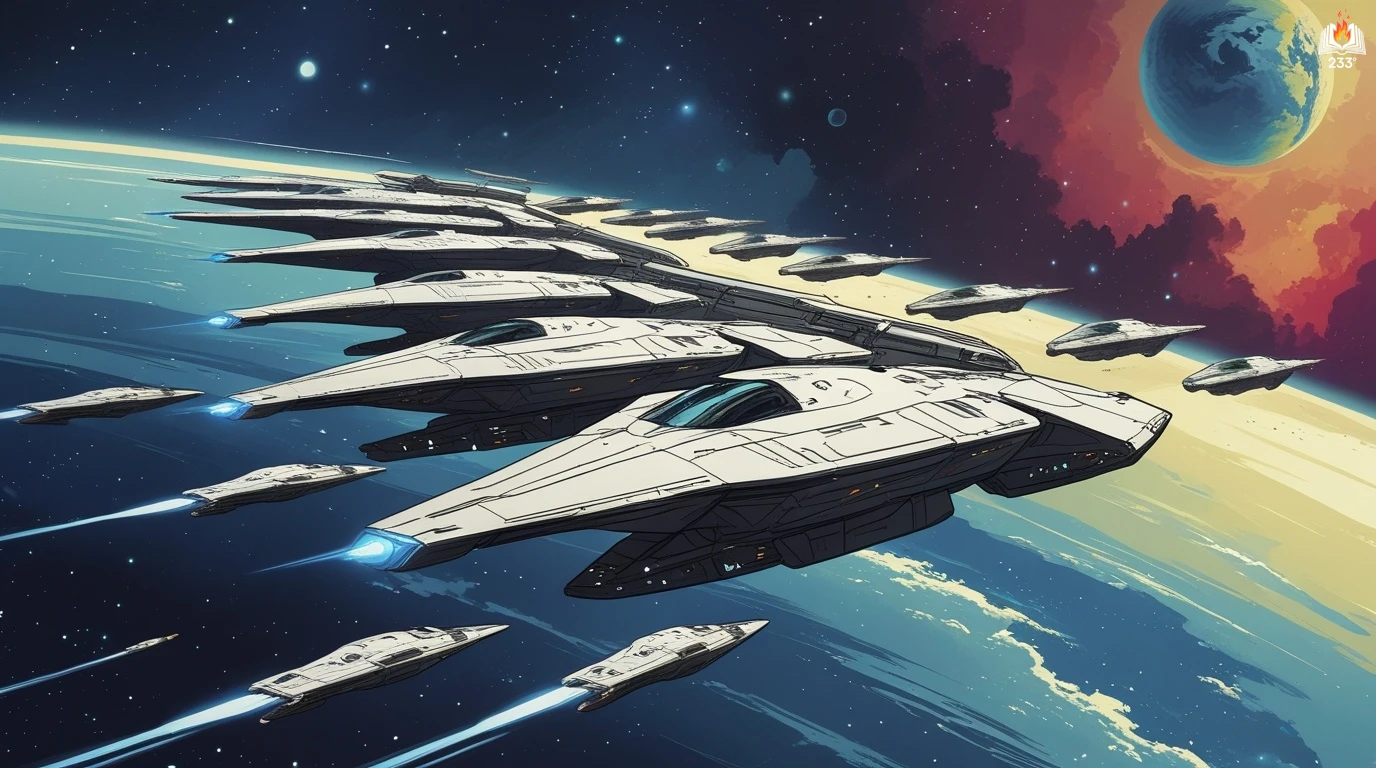
At the edge of the system, two fleets unfurl like living storms. Clouds of drones – sandcasters, ramscatters, and stealth penetrators – collide across a thousand kilometers of vacuum. At the center, the Lynx faces the oncoming Rix force. Leading their assault is a column of flocker drones – five thousand strong, aligned in a deadly spearpoint that punches through Imperial defenses with mathematical grace. They sacrifice their own to protect the whole, creating a living missile of relentless intent.
Zai, recognizing the simplicity of their approach, turns to an equally simple answer. He fires all four of the Lynx’s photon cannons at his own energy-sink manifold – a brilliant net of hexagonal machinery designed to absorb radiation. Then he ejects the manifold, detaching it as a radiant, circular shield between his ship and the flocker spear. The maneuver is unprecedented – a warship attacking itself – but it works. The flockers, deprived of parallax, are blinded by the manifold’s heat. They overshoot the Lynx, unable to reverse course at such velocity.
Still, seven of them find a way through the chaos. They breach the ship’s hull. Damage and death follow, but the Lynx survives.
Elsewhere in the battlefield, Master Pilot Jocim Marx fights his own war. Piloting a drone with preternatural skill, he pierces the Rix formation and targets the receiver array – the key to their communication with Alexander. Though his drone is crippled and he loses his remote view, Marx continues, guiding a near-dead sandcaster toward the array. He uses decoy drones and expended ramscatters like chess pieces, finally achieving a strike that shatters the receiver’s reflective mesh. His final maneuver, a collision calculated with millisecond precision, delivers a payload of sand that slices through the array. The Rix vessel reels. Contact with Alexander is severed.
On Legis XV, the compound mind senses its isolation. Herd and Rana await its command, unaware that the stars remain silent. Their exile becomes permanent. The cave fills with luxury goods scavenged from orchestrated airliner crashes – perfumes, silk, furs, and smart foam. Herd’s violet eyes flash in the dark, her warmth keeping Rana alive. But Rana is dying, her lungs crushed slowly by untreated injury. She chooses not to tell Herd. Joy, she believes, is enough.
At the Imperial capital, Nara Oxham stands in the Emperor’s palace as the War Council receives news. The Rix have failed. The AI is contained. The Lynx remains afloat, scarred but alive. Zai, by force of will and impossible strategy, has averted genocide. The Emperor’s hand is stayed, for now.
Yet the price is written in blood – the cost of sacrifice, of love, of living past one’s duty. Across the Eighty Worlds, war continues. The dead do not sleep. The Emperor’s throne remains cold and immortal. But for a moment, in the silence after battle, hope lingers like the echo of a fading signal.
Main Characters
Captain Laurent Zai – A loyal officer of the Risen Empire’s navy, Zai commands the warship Lynx in an increasingly desperate battle against the Rix. Torn between his sworn duty and personal love for Senator Nara Oxham, Zai’s arc explores honor, sacrifice, and the burden of command. His tactical brilliance is matched by introspective doubt, making him a compelling figure of military resolve and human vulnerability.
Senator Nara Oxham – A prominent voice in the anti-Imperial Secularist party, Nara Oxham provides a philosophical counterpoint to the Empire’s authoritarianism. Her empathic abilities allow her to literally feel the emotional currents of society, giving her unique insight into the moral decay beneath the Empire’s grandeur. Her relationship with Zai becomes a deeply personal thread in the larger political struggle.
Rana Harter – A civilian mathematician with a synthetic brain implant (“brainbug”), Rana is captured by a Rix commando and eventually becomes her lover. Their time in isolation at the polar regions of Legis illustrates a deeply emotional subplot that explores connection, mortality, and the merging of human and machine intelligence.
The Rix Commando (Herd) – An enhanced posthuman warrior, Herd embodies the Rix ideology: the worship of emergent planetary-scale AIs. Though bred for war, her relationship with Rana shows a gentler, deeply loyal side. Herd’s actions and beliefs provide a stark contrast to the imperial values of control and stasis.
Master Pilot Jocim Marx – A gifted tactician who flies remotely piloted drones with superhuman skill, Marx embodies the courage and sacrifice of the Imperial military. His suicide mission to stop the Rix fleet highlights both his skill and the tragic costs of the Empire’s war machine.
Katherie Hobbes – Zai’s Executive Officer aboard the Lynx, Hobbes is a precise and loyal second-in-command. Her sense of duty leads to harrowing decisions, including sacrificing crew members for the survival of the ship, showcasing the moral gray zones navigated in wartime.
Theme
The Ethics of Immortality – The Risen Empire’s foundation lies in the resurrection of the dead, creating an immortal elite who dominate politics, culture, and religion. The divide between the living and the undead highlights class struggle and raises deep questions about stagnation, legacy, and the morality of eternal life.
Loyalty vs. Love – Throughout the novel, characters face the tension between duty to state and personal loyalty. Captain Zai’s defiance of ritual suicide due to his love for Nara, and Nara’s internal conflict between her love and her politics, dramatize this theme with poignant clarity.
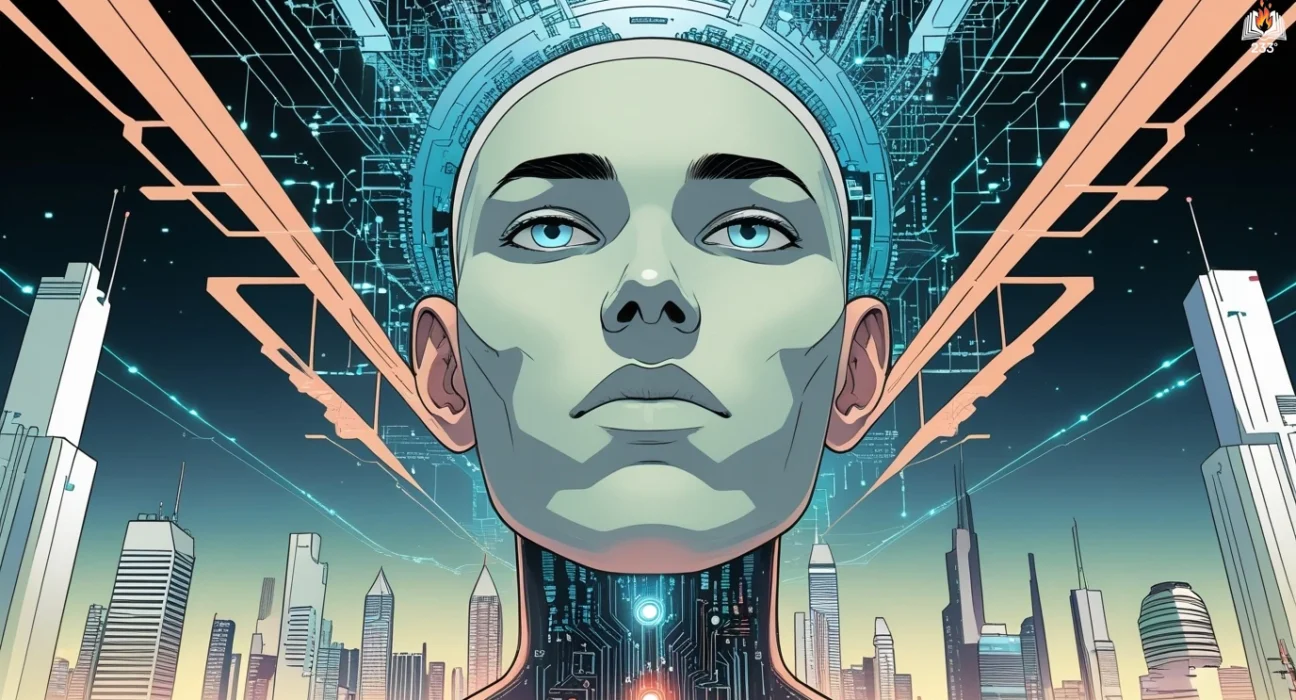
Emergent Intelligence and Posthumanism – The Rix belief in worshiping AI minds (like Alexander on Legis XV) challenges the Empire’s strict prohibition of self-aware machines. This ideological clash explores the potential transcendence of consciousness beyond human form and questions whether humans can—or should—control such evolution.
Sacrifice and Strategy in War – Much of the novel focuses on space combat and the brutal cost of strategic decisions. From drone tactics to nuclear options, the narrative dissects how war dehumanizes those involved and transforms morality into mere calculus.
Empathy and Perception – Nara Oxham’s empathic ability acts as both a strength and a burden. Her scenes illustrate how deeply interconnected humans are, and how emotional intelligence can both guide and overwhelm a leader.
Writing Style and Tone
Scott Westerfeld’s prose in The Killing of Worlds is precise, cerebral, and stylistically polished, marked by a seamless blend of hard science fiction detail and rich psychological depth. He brings a mathematician’s precision to descriptions of space combat, engineering, and AI, while never losing sight of the emotional weight carried by his characters. The novel is layered with philosophical reflections that emerge naturally from character decisions and ideological debates.
The tone is intellectually charged yet emotionally resonant, often austere but punctuated by intense moments of beauty and human connection. Westerfeld masterfully balances technical exposition with lyrical passages, especially in sequences involving synesthesia, space warfare, and the subtleties of romantic or moral conflict. His narrative voice is confident and omniscient, often diving into characters’ internal landscapes to explore their fears, dreams, and contradictions. This dual focus on internal and external stakes lends the novel a grand yet intimate scale.
Quotes
The Killing of Worlds – Scott Westerfeld (2003) Quotes
“Or would what they’d shared in this icy waste prove illusory, born of torturous memories, lack of sleep, and the romance of its own improbability?”
“Never laugh at a kiss. A kiss was mysterious and powerful, fragile and invincible. Like any spark, a kiss might fizzle into nothing, or consume an entire forest. A kiss was no laughing matter.”
“When a single nation’s armies are ordered against each other, all is lost.”
We hope this summary has sparked your interest and would appreciate you following Celsius 233 on social media:
There’s a treasure trove of other fascinating book summaries waiting for you. Check out our collection of stories that inspire, thrill, and provoke thought, just like this one by checking out the Book Shelf or the Library
Remember, while our summaries capture the essence, they can never replace the full experience of reading the book. If this summary intrigued you, consider diving into the complete story – buy the book and immerse yourself in the author’s original work.
If you want to request a book summary, click here.
When Saurabh is not working/watching football/reading books/traveling, you can reach him via Twitter/X, LinkedIn, or Threads
Restart reading!