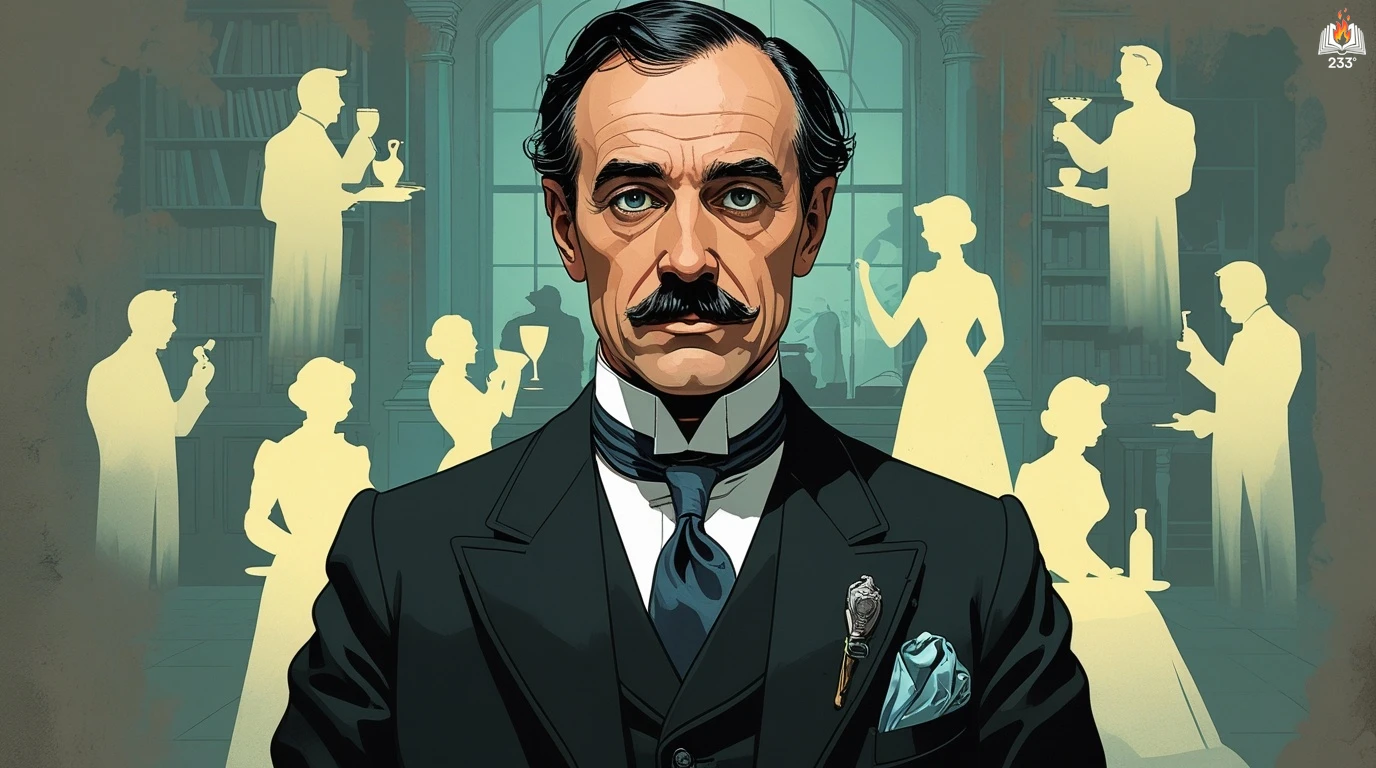
Breakfast at Tiffany’s, written by Truman Capote and published in 1958, is a luminous novella set in 1940s New York City. This iconic work, later adapted into a beloved film, presents the life and mystique of Holly Golightly, a young woman who floats through high society and cocktail parties with effortless charm and a tinge of melancholy. Capote’s storytelling blurs the line between wistful romance and haunting realism, inviting readers into a glittering yet vulnerable world shaped by longing, illusion, and escape.
Plot Summary
In a brownstone on the East Seventies of New York City, where stuccoed walls caught shadows and velvet chairs soaked in the city’s dust, a young writer once lived above a woman whose name left an echo in the air – Holly Golightly. She arrived without warning and vanished just the same, a traveler by nature, as temporary and vivid as perfume. The memory of her returned one rainy afternoon when Joe Bell, an ice-hockey-loving bartender with a hidden softness, summoned the writer to his bar with a peculiar urgency. Joe produced photographs – a wood carving of a girl’s face from a distant African tribe, the spitting image of Holly. A tale followed, tangled in disbelief, of a man who claimed to have seen the carving, of a woman who might have passed through the jungle with two fevered men and disappeared into the brush. But facts were as slippery as Holly herself.
She had once occupied the apartment below, ringing bells at odd hours, her voice always teasing, like champagne bubbles. Her mailbox card read “Miss Holiday Golightly, Traveling,” and she floated through life exactly as that suggested – always leaving, never arriving. She called the young writer “Fred,” not because it was his name, but because he reminded her of her brother. And so Fred he became.
She wore dark glasses even indoors, smoked Picayunes, read horoscopes, and sang show tunes on the fire escape while her red-striped cat dozed beside her. The cat had no name. Like her, it belonged nowhere and to no one. She survived on cottage cheese, Melba toast, and the generosity of men who picked up checks without complaint. She flitted from one admirer to the next – oilmen, playboys, Hollywood agents – always keeping just enough distance to remain untethered. There was Sid Arbuck, who called her “baby” and pounded on her door after one too many drinks. There was Rusty Trawler, a doughy millionaire with the temperament of a spoiled child. And there was Sally Tomato, a jailed mobster she visited weekly at Sing Sing, posing as his niece, relaying “weather reports” to a lawyer who mailed her crisp hundreds for her time.
The boy upstairs became her confidant, though never quite her lover. She crept into his room on nights when strange men grew teeth or voices trembled with longing. She asked him to read his stories aloud, only to dismiss them for their lack of glamour. Still, she liked having him there, a steady heartbeat in her ever-spinning orbit. She told him about Fred, her real brother, a gentle, peanut-butter-obsessed giant who remained in her past like a relic in amber. She told him about her dreams – of a place where things fit, where she could buy furniture and name the cat. That place, she decided, was something like Tiffany’s.
For a while, another girl joined the picture – Mag Wildwood, a stuttering, statuesque tornado from Arkansas who swept into Holly’s life and never quite left. She brought with her a fiancé, José Ybarra-Jaegar, a Brazilian diplomat whose clean looks and quiet ambition marked a sharp contrast to Holly’s usual men. He wanted to be president someday. He moved in. And though he and Holly danced carefully around one another, there was a softness between them that suggested a future she hadn’t dared to plan before. She began practicing Spanish, knitting Argyle socks, and imagining life in Brazil.
But change circled her like sharks. The arrest came one morning – police knocking, photographers flashing – and Holly, in her robe, blinking behind dark lenses. The charge was conspiracy. Her visits to Sally Tomato, her weather reports, the neatly arranged cash – it all formed a paper trail she never imagined. Fred watched from the crowd as they led her away. José disappeared like smoke. From the prison cell to the bail bondsman, Fred stayed close, navigating the mess with a quiet devotion that neither expected nor named.
They planned an escape. Mexico. New beginnings. But before she could leave, she needed to say goodbye to the cat. They rode together in a cab through gray, dripping streets. She opened the door, set the cat down in a Harlem alley, and told it to go – to find itself, to live. Then she turned away. Fred, aghast, ran back, calling, searching through garbage bins and stairwells. But the cat was gone. The city had swallowed it.
When he returned, she was leaving. She pressed into his hand a small gift – the engraved birdcage he once admired in an antique store. Inside, a lipstick-scrawled card. He looked up, and she was gone. A taxi carried her away, bound for anywhere.
Time passed. Seasons changed their coats. The brownstone was repainted, the tenants rotated, but Fred walked those blocks, hoping. He looked for her in every sharp jawline, every glint of gold in a woman’s hair. Occasionally, Joe Bell called with a lead – a rumor, a sighting, a whisper. None true. Then came the carving. Then came silence again.
Years later, the cat returned. Or maybe it was just a cat that looked the same – thin, orange, with dark eyes and a limp grace. Fred picked it up and carried it home. He fed it, gave it a name, and placed the birdcage in the window, where the morning light could catch its shine.
Main Characters
Holly Golightly: Holly is a dazzling and enigmatic woman in her late teens who lives in a Manhattan brownstone. With her distinctive style, erratic behavior, and refusal to be tied down, she captures the imagination of everyone she meets. Holly rebrands herself constantly, reinventing her past and name, as she drifts through life seeking emotional security and wealth. Beneath her charm and glamour lies a deep loneliness and yearning for a place where she truly belongs.
The Narrator (“Fred”): A struggling writer who lives above Holly and becomes fascinated by her unpredictable life. He narrates the story with introspective sensitivity, forming a complex attachment to Holly that wavers between platonic affection, admiration, and subtle desire. Through him, readers see Holly’s contradictions – her warmth and detachment, boldness and fragility.
Joe Bell: A reserved and somewhat gruff bartender who shares a mutual affection for Holly. He represents a quiet, watchful presence in her life, someone who notices her disappearance and clings to her memory. His feelings for Holly remain unspoken and unrequited, giving his character a tender, mournful depth.
Doc Golightly: A key to Holly’s buried past, Doc is an older man from Texas who once took her in and married her when she was a child named Lulamae Barnes. His sudden reappearance forces Holly to confront the life she left behind, adding layers to her identity and emphasizing her constant reinvention.
José Ybarra-Jaegar: A Brazilian diplomat and Holly’s romantic interest later in the story. José symbolizes the hope of respectability and security, though Holly’s dreams inevitably clash with the realities of social expectations and scandal.
Sally Tomato: An incarcerated gangster whom Holly visits weekly at Sing Sing, under the guise of being his niece. Her association with Sally ultimately entangles her in legal trouble and reveals the naivety underlying her calculated charm.
Theme
Freedom vs. Belonging: The most persistent theme in the novella is Holly’s yearning for freedom while simultaneously craving belonging. She refuses to be “caged” by people, names, or places, and yet longs for a place that feels like home – represented metaphorically by Tiffany’s, a symbol of stability and grace.
Identity and Reinvention: Holly’s shifting identity, from Lulamae Barnes to Miss Holiday Golightly, reflects her desire to escape her origins and define herself anew. Her careful control over how she is perceived underscores the fluid nature of identity and the illusions people construct to survive.
Loneliness and Connection: Despite being surrounded by people and suitors, Holly remains profoundly alone. The narrator, Joe Bell, and even the unnamed cat parallel her condition – individuals adrift, yearning for meaningful connection in a transient, dispassionate world.
Materialism and Innocence: Capote plays with the tension between superficial glamour and inner innocence. Holly pursues wealth and high society not out of greed, but as a means of securing safety. The childlike honesty with which she manipulates her world complicates her morality, making her both tragic and endearing.
Writing Style and Tone
Capote’s prose is both lyrical and precise, blending sharp urban observation with delicate emotional shading. His sentences are elegant, evocative, and deceptively simple, often carrying beneath them layers of irony, nostalgia, or quiet sorrow. The tone of the novella drifts between wistfulness and detachment, much like Holly herself. Through the narrator’s reflective voice, Capote immerses the reader in a world where reality and fantasy intertwine.
Capote employs dialogue with remarkable authenticity, using conversation not only to reveal character but to mask and unveil truths simultaneously. Holly’s speech – whimsical, evasive, oddly wise – becomes a tool of both intimacy and deflection. Meanwhile, the subdued melancholy of the narrator’s voice wraps the story in a gauzy reminiscence, allowing Capote to explore memory, loss, and the human desire to hold onto something – or someone – already gone.
Quotes
Breakfast at Tiffany’s – Truman Capote (1958) Quotes
“It may be normal, darling; but I'd rather be natural.”
“Anyone who ever gave you confidence, you owe them a lot.”
“The answer is good things only happen to you if you're good. Good? Honest is more what I mean... Be anything but a coward, a pretender, an emotional crook, a whore: I'd rather have cancer than a dishonest heart.”
“I don't want to own anything until I find a place where me and things go together.”
“Aprils have never meant much to me, autumns seem that season of beginning, spring.”
“It’s better to look at the sky than live there. Such an empty place; so vague. Just a country where the thunder goes.”
“You can love somebody without it being like that. You keep them a stranger, a stranger who's a friend.”
“Home is where you feel at home. I'm still looking.”
“Never love a wild thing...If you let yourself love a wild thing. You'll end up looking at the sky.”
“Everybody has to feel superior to somebody," she said. "But it's customary to present a little proof before you take the privilege.”
“Don't wanna sleep, don't wanna die, just wanna go a-travellin' through the pastures of the sky”
“I told you: you can make yourself love anybody.”
“would you reach in the drawer there and give me my purse. A girl doesn't read this sort of thing without her lipstick.”
“we don't belong to each other: he's an independent, and so am I.”
“I loved her enough to forget myself, my self pitying despairs, and be content that something she thought happy was going to happen.”
“Good luck and believe me, dearest Doc - it's better to look at the sky than live there. Such an empty place; so vague. Just a country where the thunder goes and things disappear.”
“I'm very scared, Buster. Yes, at last. Because it could go on forever. Not knowing what's yours until you've thrown it away.”
“Leave it to me: I'm always top banana in the shock department.”
“You’re wrong. She is a phony. But on the other hand you’re right. She isn’t a phony because she’s a real phony. She believes all this crap she believes. You can’t talk her out of it.”
“It should take you about four seconds to walk from here to the door. I'll give you two.”
“Reading dreams. That's what started her walking down the road. Every day she'd walk a little further: a mile, and come home. Two miles, and come home. One day she just kept on.”
“I'll never get used to anything. Anybody that does they might as well be dead.”
“But it's Sunday, Mr. Bell. Clocks are slow on Sundays.”
“Love should be allowed. I’m all for it. Now that I’ve got a pretty good idea what it is.”
“Maybe the older you grow and the less easy it is to put thought into action, maybe that’s why it gets all locked up in your head and becomes a burden.”
We hope this summary has sparked your interest and would appreciate you following Celsius 233 on social media:
There’s a treasure trove of other fascinating book summaries waiting for you. Check out our collection of stories that inspire, thrill, and provoke thought, just like this one by checking out the Book Shelf or the Library
Remember, while our summaries capture the essence, they can never replace the full experience of reading the book. If this summary intrigued you, consider diving into the complete story – buy the book and immerse yourself in the author’s original work.
If you want to request a book summary, click here.
When Saurabh is not working/watching football/reading books/traveling, you can reach him via Twitter/X, LinkedIn, or Threads
Restart reading!