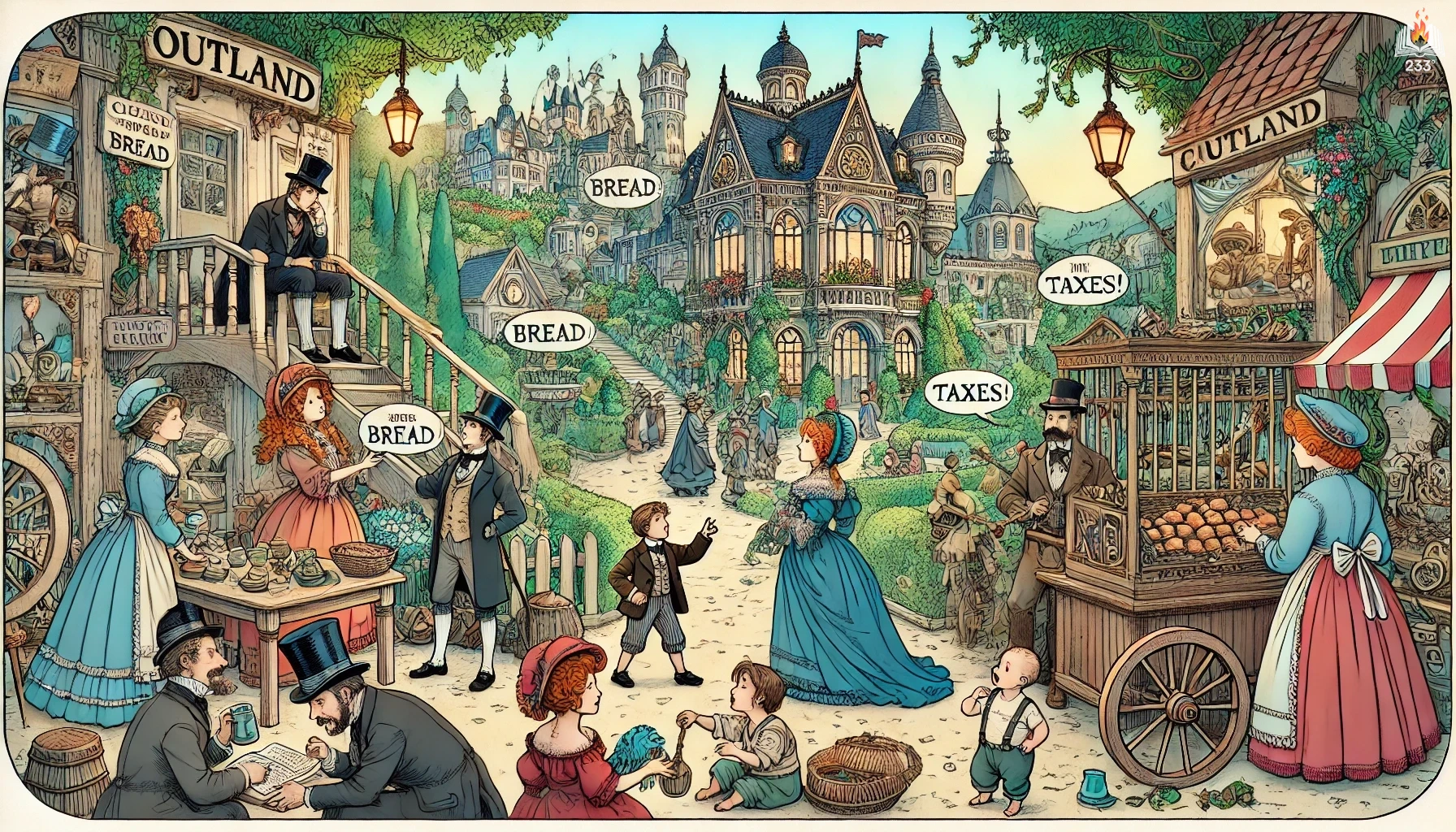
Dance Dance Dance by Haruki Murakami, published in 1988, is a surreal and deeply introspective novel that continues the story from A Wild Sheep Chase, forming an informal part of Murakami’s “Trilogy of the Rat.” Set primarily in Japan during the early 1980s, the novel follows a lonely and unnamed protagonist who is haunted by dreams of a mysterious woman and a peculiar hotel. This journey leads him through a labyrinth of emotional disconnection, metaphysical mystery, and modern urban ennui, all filtered through Murakami’s signature blending of the mundane and the fantastic.
Plot Summary
In the cold monotony of Tokyo, a man lives alone, thirty-four years old and drifting through life with a job that means little and connections that mean even less. He writes filler pieces for magazines, promotional fluff, interviews that blur into each other. For four years, he has existed like this, numbed by routine and haunted by memory. The woman who once brought color into his life – mysterious, beautiful, unreachable – vanished without explanation. Kiki. Her name lingers like smoke. Her memory circles him in dreams, drawing him back to the place where they had last been together – the Dolphin Hotel.
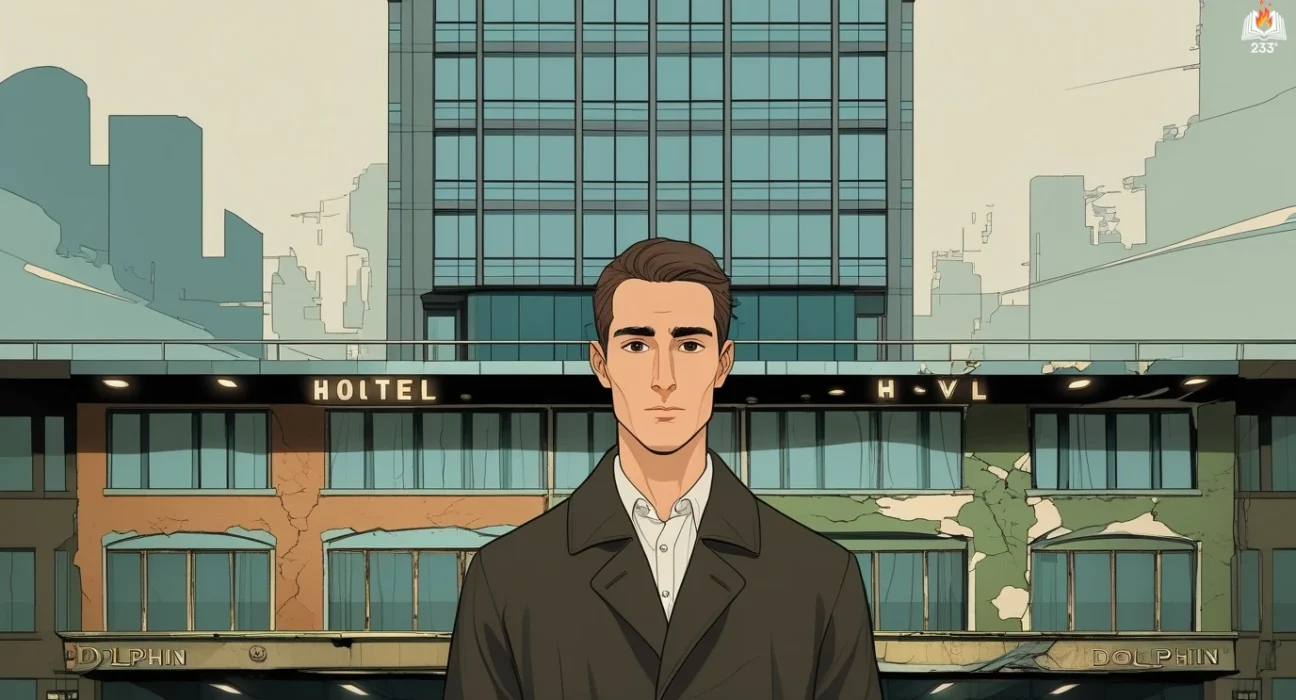
But the Dolphin Hotel is no longer what it was. Where once stood a crumbling, near-forgotten building full of strange silences and strange people, there now rises a gleaming monument of steel and glass – Hôtel Dauphin. Sleek, modern, soulless. He checks in, nevertheless, and begins to search, not just for Kiki, but for something unnamed – a lost thread in his life, a faint trace of belonging. The past he is chasing has been erased, buried under layers of concrete and corporate polish, but something lingers beneath. In quiet moments, he hears the echoes. A faint cry. A presence in the walls.
Inside this new hotel, he meets Yumiyoshi, a hotel receptionist with a careful smile and distant eyes. Their conversations are clipped and awkward at first, but something real begins to grow between them – tentative, unsteady. The man begins to sense that she, too, is troubled, caught in something invisible and unspeakable. The hotel, it seems, has not entirely shed its old skin.
Then comes Yuki – a teenage girl, thirteen and already old in her silence. Her mother, Ame, is a famous photographer who has left her alone in the hotel. The man becomes her reluctant guardian. Yuki doesn’t need protecting; she sees more than most, possibly more than she should. She’s psychic, in the way children are sometimes psychic – seeing things that adults bury. She speaks in sharp fragments, strips conversations to the bone. And she, too, is drawn into the current of the man’s search.
Their paths lead to Gotanda, a once-popular actor and a schoolmate from long ago. Polished, handsome, weary behind his charm, Gotanda hides cracks in his perfect surface. His life is tangled in illusions – fame, women, a marriage gone cold. But when the man sees a film starring Kiki, it is Gotanda who becomes the only link to her. He reveals that Kiki once lived with him, but she disappeared from his life as easily as she did from the man’s. The mystery only deepens. Time folds in on itself. Gotanda is not the man he appears to be, and beneath the layers of celebrity lies guilt, failure, and something darker.
Then, as if from nowhere, the Sheep Man appears again. In a place that is not quite real, behind a closed door in the hotel, in a flicker of electricity or a rhythm in the air, he speaks in riddles and caution. He does not offer answers, only a reminder – keep dancing. Dance and don’t stop. The world, the connections, the chaos of it all, only makes sense if one keeps moving. This advice, odd and absurd, stays with the man. He begins to realize that life is not a puzzle to be solved, but a rhythm to be endured.
As he continues searching for Kiki, people around him begin to vanish. A call girl he meets is murdered. A hotel worker disappears. Gotanda is implicated in something shadowy. But there is no certainty, only suggestion. Violence and sorrow ripple through these lives without resolution. The man visits a writer friend who lives in Honolulu and discovers Kiki’s real name, her origins, and her end. She is dead – killed, forgotten, already dissolved into the endless noise of the world. Her death had been covered up. He had come too late.
Yuki, meanwhile, slowly begins to thaw. Her emotional distance softens in the man’s presence. Together, they visit her estranged father in Hawaii, a cold man obsessed with status and order. The meeting is uncomfortable, painful in its artificiality. But for Yuki, it closes a chapter. She begins to move forward.
Back in Tokyo, the man reconnects with Yumiyoshi. Their affection for one another has grown in slow increments, wordless gestures, sidelong glances. They spend a night together in quiet intimacy, not passion, but something that matters more – shared solitude. But the hotel still waits. The Sheep Man’s voice still calls. The final message is clear: to heal, one must dance. To stay human, one must keep rhythm with life, no matter how absurd, painful, or empty it seems.
In a moment between waking and sleep, the man returns again to that space behind the walls, the place where Kiki once whispered, where the past breathes beneath the present. There is no resolution, no revelation, only the soft pulse of memory and the weight of absence. But there is also a strange peace in knowing that not everything must be understood.
In the end, he keeps moving. He returns to his work, to the city’s blur, to his meaningless assignments and dim coffee shops. But something has changed. Not the world – the world remains just as hollow, just as full of static – but the man carries something within him now. Not answers, but rhythm. Not peace, but motion.
And in that motion, in that endless, awkward, graceful dance, he finds a place to belong.
Main Characters
Unnamed Narrator – A disillusioned 34-year-old freelance writer whose life has become a monotonous routine of ghostwriting and superficial encounters. Driven by a series of recurring dreams, he returns to the mysterious Dolphin Hotel, hoping to reconnect with Kiki, a woman from his past. His existential loneliness, passive introspection, and need for emotional connection drive the novel’s narrative and its themes of alienation and self-discovery.
Kiki – A beautiful, enigmatic former call girl and ear model who once lived with the narrator. She disappeared without explanation years earlier and becomes the catalyst for his journey. Although physically absent for most of the book, her ghostly presence haunts the narrator’s psyche, symbolizing both desire and the ephemeral nature of connection.
Yuki – A 13-year-old psychic girl with a razor-sharp tongue and emotional detachment. She crosses paths with the narrator in a strange twist of fate and becomes his reluctant companion. Despite her youth, she often acts as an emotional mirror, exposing the narrator’s buried vulnerabilities and deep loneliness.
The Sheep Man – A surreal, cryptic figure dressed in a sheep costume who speaks in a jittery, all-lowercase monologue. He exists in a metaphysical space connected to the Dolphin Hotel and delivers cryptic advice that guides the narrator. A recurring motif in Murakami’s fiction, he represents the border between the real and the surreal.
Yumiyoshi – A receptionist at the new Dolphin Hotel, initially professional and distant, but gradually drawn into the narrator’s emotional orbit. Her tentative romance with the narrator underscores the human desire for genuine connection in an increasingly alienating world.
Gotanda – A once-famous actor and the narrator’s old school acquaintance. Charismatic and haunted, Gotanda conceals deep pain and becomes entwined in the novel’s mystery. His glamorous surface belies a tragic internal decay that parallels the narrator’s own spiritual drift.
Theme
Alienation and Urban Disconnection – The novel portrays the emotional void of urban life, where routine and superficiality dominate. Characters drift through Tokyo and Sapporo like ghosts, unable to forge meaningful bonds in a society driven by consumerism and image.
Memory and Loss – Much of the narrative revolves around the narrator’s quest to reclaim what was lost – not only Kiki, but also his sense of self. The past is elusive and mutable, and the act of remembering becomes both a healing and destabilizing force.
The Supernatural and the Subconscious – Dreams, telepathy, and metaphysical spaces like the old Dolphin Hotel represent the blurring of reality and imagination. These elements mirror the inner psychological landscape of the narrator, where unresolved trauma and yearning manifest as surreal phenomena.
Search for Identity and Meaning – Through conversations, wanderings, and uncanny events, the narrator undergoes an internal transformation. The search for self is presented not as a linear journey, but as a dance – hesitant, circular, and rhythmically intuitive.
Capitalism and Emptiness – The transformation of the Dolphin Hotel from a dingy, surreal haven into a gleaming commercial behemoth symbolizes the flattening effect of consumer culture. The artificial gloss of modern life conceals deep spiritual hollowness.
Writing Style and Tone
Haruki Murakami’s writing in Dance Dance Dance is lucid, conversational, and deceptively simple. He uses crisp, journalistic prose layered with emotional subtlety and philosophical depth. The first-person narrative is introspective and often droll, laced with dry humor and sudden poignancy. Murakami seamlessly integrates pop culture references, Western music, and culinary detail to ground the surreal in the everyday, creating a uniquely modern narrative texture.
The tone is melancholic yet hopeful, emotionally detached yet quietly yearning. Murakami constructs an atmosphere that is simultaneously mundane and dreamlike. The world his characters inhabit is slightly off-kilter – recognizable but eerie, familiar yet fragmented. His use of repetition (in dreams, phrases, and motifs like music or hotels) gives the novel a hypnotic rhythm, reinforcing the thematic focus on patterns, cycles, and the search for coherence in a disjointed reality. It is a tone that quietly invites readers to dance their way through despair and back toward connection.
Quotes
Dance Dance Dance – Haruki Murakami (1988) Quotes
“Unfortunately, the clock is ticking, the hours are going by. The past increases, the future recedes. Possibilities decreasing, regrets mounting.”
“As time goes on, you'll understand. What lasts, lasts; what doesn't, doesn't. Time solves most things. And what time can't solve, you have to solve yourself.”
“The sky grew darker, painted blue on blue, one stroke at a time, into deeper and deeper shades of night.”
“What we seek is some kind of compensation for what we put up with.”
“We knew exactly what we wanted in each other. And even so, it ended. One day it stopped, as if the film simply slipped off the reel. ”
“Life is a lot more fragile than we think. So you should treat others in a way that leaves no regrets. Fairly, and if possible, sincerely.”
“People die all the time. Life is a lot more fragile than we think. So you should treat others in a way that leaves no regrets. Fairly, and if possible, sincerely. It's too easy not to make the effort, then weep and wring your hands after the person dies.”
“Even so, there were times I saw freshness and beauty. I could smell the air, and I really loved rock 'n' roll. Tears were warm, and girls were beautiful, like dreams. I liked movie theaters, the darkness and intimacy, and I liked the deep, sad summer nights.”
“People fall in love without reason, without even wanting to. You can't predict it. That's love.”
“People leave traces of themselves where they feel most comfortable, most worthwhile.”
“Mediocrity's like a spot on a shirt—it never comes off.”
“Possibilities are like cancer. The more I think about them, the more they multiply, and there's no way to stop them. I'm out of control. ”
“I used to think the years would go by in order, that you get older one year at a time. But it's not like that. It happens overnight.”
“Precipitate as weather, she appeared from somewhere, then evaporated, leaving only memory.”
“When there's nothing to do, you do nothing slowly and intently.”
“Friends don't need the intervention of a third party. Friendship's a voluntary thing.”
“I'm your phantom dance partner. I'm your shadow. I'm not anything more.”
We hope this summary has sparked your interest and would appreciate you following Celsius 233 on social media:
There’s a treasure trove of other fascinating book summaries waiting for you. Check out our collection of stories that inspire, thrill, and provoke thought, just like this one by checking out the Book Shelf or the Library
Remember, while our summaries capture the essence, they can never replace the full experience of reading the book. If this summary intrigued you, consider diving into the complete story – buy the book and immerse yourself in the author’s original work.
If you want to request a book summary, click here.
When Saurabh is not working/watching football/reading books/traveling, you can reach him via Twitter/X, LinkedIn, or Threads
Restart reading!