
MaddAddam, published in 2013 by Margaret Atwood, is the final installment in the speculative dystopian MaddAddam trilogy, following Oryx and Crake and The Year of the Flood. The novel weaves together narratives from the first two books, bringing the survivors of a man-made apocalypse into a tense confrontation with the remnants of a brutal world. It explores the aftermath of a pandemic that decimated humanity, blending ecological warnings, satire, and intricate storytelling in a richly imagined speculative future.
Plot Summary
In the aftermath of a devastating pandemic, the world lies in disarray. The remnants of humanity are scattered, struggling to survive amid genetically engineered creatures and the scars of a society that pushed science beyond its limits. The survivors gather at a cobb house enclave, a fragile sanctuary against the chaos that still prowls outside. Among them are the Crakers, bioengineered beings designed by Crake, their innocence and simplicity contrasting with the violent remnants of humanity.
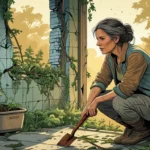
Toby, a former God’s Gardener and a figure of resilience, takes on the role of caretaker and storyteller. She has returned with Amanda, a survivor traumatized by her captivity at the hands of Painballers, savage criminals whose dehumanization in the pre-apocalypse world made them monstrous. Amanda’s fragile state speaks to the cost of survival in a broken world. Ren, Toby’s companion, tends to Amanda while grappling with her own scars, and Zeb, resourceful and enigmatic, departs on a mission to find other survivors, leaving Toby to hold the fragile group together.
The enclave is a precarious haven. The Painballers, who escaped after a chaotic encounter, remain a looming threat, driven by hunger and violence. The Crakers, childlike in their understanding of the world, complicate matters further. Their genetic engineering has left them without malice or guile, but also without a capacity to understand the darkness that shaped humanity. They revere Crake as a god and Oryx as a benevolent figure, folding their creators into a mythos that guides their lives. Jimmy, the Crakers’ prophet—known to them as Snowman-the-Jimmy—lies feverish and wounded, a man trapped between his past and the Crakers’ unshakable faith in him.
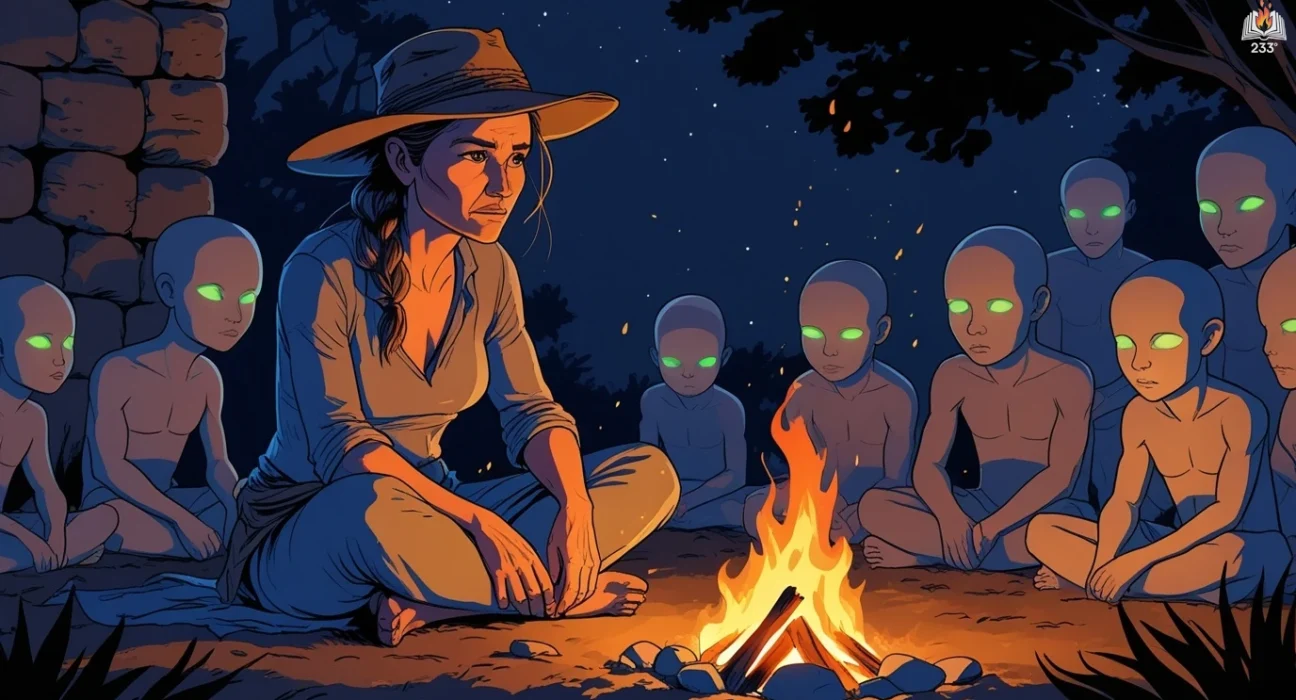
As Toby takes on the responsibility of caring for Jimmy, she finds herself drawn into the Crakers’ worldview. They insist she tell them the stories of Crake and Oryx, believing these tales will guide them as Jimmy’s once did. Reluctantly, she begins to fill the role, donning Jimmy’s symbolic hat and weaving myths to maintain the Crakers’ trust. The storytelling becomes a means of survival, a way to build a fragile bridge between the engineered beings and the remnants of humanity.
Zeb’s absence weighs on Toby, though she hides her worry behind her pragmatic demeanor. The enclave’s defenses are fortified, and supplies are scavenged from the ruins of the old world. Yet, the specter of the Painballers grows ever closer. One night, they strike, ambushing the group. The battle is swift and brutal, with the Crakers caught in the chaos. Despite their innocence, they prove resourceful, using their genetically enhanced abilities to aid the humans in their desperate fight. The Painballers are subdued, but the cost is high, leaving the survivors shaken and wary of further violence.
As tensions simmer, Zeb returns with news of other survivors. He brings with him fragments of the God’s Gardeners, a group that once sought harmony with nature in the face of corporate oppression and ecological collapse. These survivors join the enclave, their presence both a boon and a challenge. Old loyalties and divisions surface, and the enclave’s fragile unity is tested.
The Crakers, with their uncanny blend of naivety and wisdom, become central to the group’s survival. Their genetic adaptations make them immune to many of the dangers that plague the humans, and their ability to live harmoniously with the altered creatures of the world offers a glimpse of a new way forward. Yet, their growing integration into the human group raises questions about identity and agency. Are they truly free beings, or simply another creation shaped by humanity’s flawed hands?
Through the Crakers’ eyes, the survivors begin to see the world differently. They confront their past mistakes and the consequences of unchecked ambition. Crake’s vision of a cleansed world—a blank slate—looms large, yet it is the Crakers themselves who defy his intentions. They create music, form rituals, and adapt myths, embodying the very humanity Crake sought to erase. Their presence forces the survivors to consider not just how to live, but how to rebuild without repeating the errors of the past.
Amid these struggles, Toby and Zeb’s relationship deepens, their shared history and unspoken bond becoming a source of strength. Together, they navigate the challenges of leadership and survival, balancing pragmatism with the hope of renewal. Their journey is mirrored by that of the enclave itself, as it evolves from a shelter into a fledgling community, shaped by both the wisdom of the past and the possibilities of the future.
The enclave’s fragile peace is tested once more as the Painballers return, driven by desperation and rage. This time, the battle is decisive. The Painballers are defeated, their reign of terror brought to an end. The victory, hard-won and bittersweet, marks a turning point. The survivors bury their dead and reaffirm their commitment to protecting one another, human and Craker alike.
As the days stretch into weeks, the enclave begins to thrive. Gardens are planted, shelters are fortified, and new bonds are forged. The Crakers, with their songs and rituals, become both a source of solace and a reminder of the world that has been lost—and the world that could be rebuilt. Toby, now a storyteller and leader, finds a measure of peace in her role. She continues to tell the Crakers their stories, weaving a tapestry of past and present that binds the group together.
As the sun sets over the cobb house, the survivors gather around a fire. The Crakers sing their crystalline songs, their voices mingling with the laughter and conversation of the humans. The enclave, once a fragile refuge, has become a beacon of resilience and hope, a testament to the enduring spirit of life even in the face of devastation.
Main Characters
- Toby: A former God’s Gardener and skilled survivalist, Toby becomes a central figure in leading and protecting the remaining survivors. Compassionate yet pragmatic, she bridges the gap between the humans and the genetically engineered Crakers.
- Zeb: A rugged and resourceful figure from the God’s Gardeners, Zeb has a dark and mysterious past. He is deeply loyal and instrumental in battling external threats.
- Jimmy/Snowman-the-Jimmy: A relic of the pre-apocalypse world, Jimmy serves as the Crakers’ reluctant prophet. Wounded and feverish, his survival hinges on others.
- The Crakers: A bioengineered humanoid species created by Crake to inhabit a post-human world. They are peaceful, naive, and alien in their thinking, yet central to the survivors’ survival.
- Amanda: A resilient character who endures significant trauma at the hands of Painballers but retains her will to live.
- Painballers: Dehumanized criminals from the old world, they embody the chaos and savagery that remains after the apocalypse.
Theme
- Survival and Community: The novel explores how remnants of humanity and new species form fragile alliances to rebuild society, finding strength in collective action.
- Ethics of Creation: Through Crake’s bioengineering, the story questions humanity’s hubris in playing God and the moral consequences of tampering with life.
- Ecological Collapse: The novel warns of humanity’s exploitation of nature, showing a world overrun by genetic splices and a landscape reclaimed by wilderness.
- Forgiveness and Redemption: Characters wrestle with their pasts and strive for redemption, exemplifying human resilience and the potential for renewal even in bleak times.
- Storytelling and Myth: Stories act as a means of survival, education, and connection, particularly in how the Crakers incorporate myths of Crake and Oryx into their worldview.
Writing Style and Tone
Margaret Atwood’s writing style in MaddAddam is a masterful blend of poetic prose, biting satire, and stark realism. Her language is richly descriptive, vividly portraying the juxtaposition of a post-apocalyptic wilderness and remnants of a dystopian technocratic society. Atwood employs alternating timelines and perspectives to piece together the story, creating an intricate narrative mosaic that mirrors the chaos and fragility of the world she describes.
The tone oscillates between dark humor, tragedy, and hope. Atwood’s satirical edge critiques humanity’s destructive tendencies while her empathetic portrayal of characters fosters an undercurrent of resilience. This balance between cynicism and optimism enriches the novel’s exploration of human nature and survival.
Quotes
MaddAddam – Margaret Atwood (2013) Quotes
“There's the story, then there's the real story, then there's the story of how the story came to be told. Then there's what you leave out of the story. Which is part of the story too.”
“The best way of being kind to bears is not to be very close to them.”
“Life is warped. I'm just in sync.”
“It had helped to keep her sane, that writing. Then, when time had begun again and real people had entered it, she'd abandoned it here. Now it's a whisper from the past. Is that what writing amounts to? The voice your ghost would have, if it had a voice?”
“But hatred and viciousness are addictive. You can get high on them. Once you've had a little, you start shaking if you don't get more.”
“Why is it always such a surprise? thinks Toby. The moon. Even though we know it's coming. Every time we see it, it makes us pause, and hush.”
“Perfection exacts a price, but it's the imperfect who pay it”
“People need such stories, because however dark, a darkness with voices in it is better than a silent void.”
“Though as he'd say, what is 'belief' but a willingness to suspend the negatives?”
“Amazing how quickly the past becomes idyllic.”
“Why is war so much like a practical joke? she thinks. Hiding behind bushes, leaping out, with not much difference between Boo! and Bang! except the blood.”
“The only sure camouflage was unpredictability.”
“Gender roles suck," says Swift Fox. Then you should stop playing them, thinks Toby.”
“I remember adapt,” says Toby. “It was another way of saying tough luck. To people you weren’t going to help out.”
“The moon. Even though we know it’s coming. Every time we see it, it makes us pause, and hush.”
“I already told you,” said Adam. “There is no need to swear.” “Sorry, it just fucking slipped out,” said Zeb.”
“He was twisted as a pretzel, he was a tinfoil-halo shitnosed frogstomping king rat asshole, but he wasn't stupid.”
“what is ‘belief’ but a willingness to suspend the negatives?”
“When you focus on details like this - close up, really clear, totally useless - you know you're in shock”
“He would have died soon, but more painfully. Anyway, it was Urban Bloodshed Limitation. First rule: limit bloodshed by making sure that none of your own gets spilled.”
“And I said that Crozier did not need to call Fuck right now because we were not in trouble and did not need his help. And Toby said, That's right, he doesn't like to be summoned on trivial matters. And Zeb coughed.”
“Would I laugh?" "Matter of fact, you would," says Zeb. "Heart like shale. What you need is a good fracking.”
“So that made me happy but the part that really made me happy was that you wanted me to be happy. That's what Thank you means.”
“Is that what writing amounts to? The voice your ghost would have, if it had a voice?”
We hope this summary has sparked your interest and would appreciate you following Celsius 233 on social media:
There’s a treasure trove of other fascinating book summaries waiting for you. Check out our collection of stories that inspire, thrill, and provoke thought, just like this one by checking out the Book Shelf or the Library
Remember, while our summaries capture the essence, they can never replace the full experience of reading the book. If this summary intrigued you, consider diving into the complete story – buy the book and immerse yourself in the author’s original work.
If you want to request a book summary, click here.
When Saurabh is not working/watching football/reading books/traveling, you can reach him via Twitter/X, LinkedIn, or Threads
Restart reading!