Oryx and Crake by Margaret Atwood, published in 2003, is the first book in the MaddAddam Trilogy. It sets the stage for a dystopian world shaped by genetic engineering, environmental collapse, and corporate greed. The trilogy, which also includes The Year of the Flood (2009) and MaddAddam (2013), explores overlapping narratives of survivors, environmental activists, and genetically engineered beings as they navigate the aftermath of a biotech apocalypse. Together, the books weave a compelling tale of humanity’s resilience, hubris, and the thin line between destruction and redemption.
Plot Summary
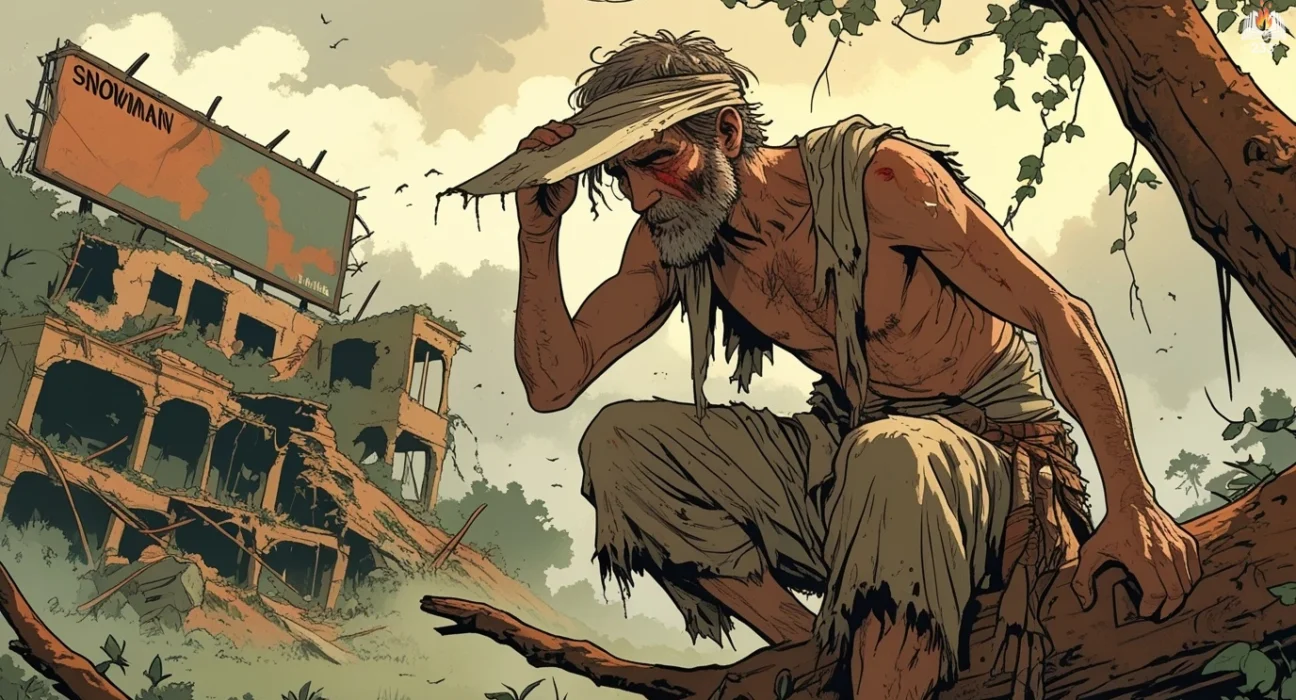
Snowman wakes in a tree, shielding himself from the scorching sun and hostile predators. The ruins of the old world stretch around him, a chaotic jumble of rusted structures, overgrown vegetation, and the remnants of human ambition. Once known as Jimmy, he now roams the desolate landscape, clothed in rags, haunted by memories of a lost civilization and his own role in its demise. Snowman tends to a group of humanoid beings, the Crakers, who look to him for guidance. They are innocently perfect, the creation of his childhood friend, Crake. As Snowman scavenges for survival, fragments of the past flood his mind, revealing the path to humanity’s destruction.
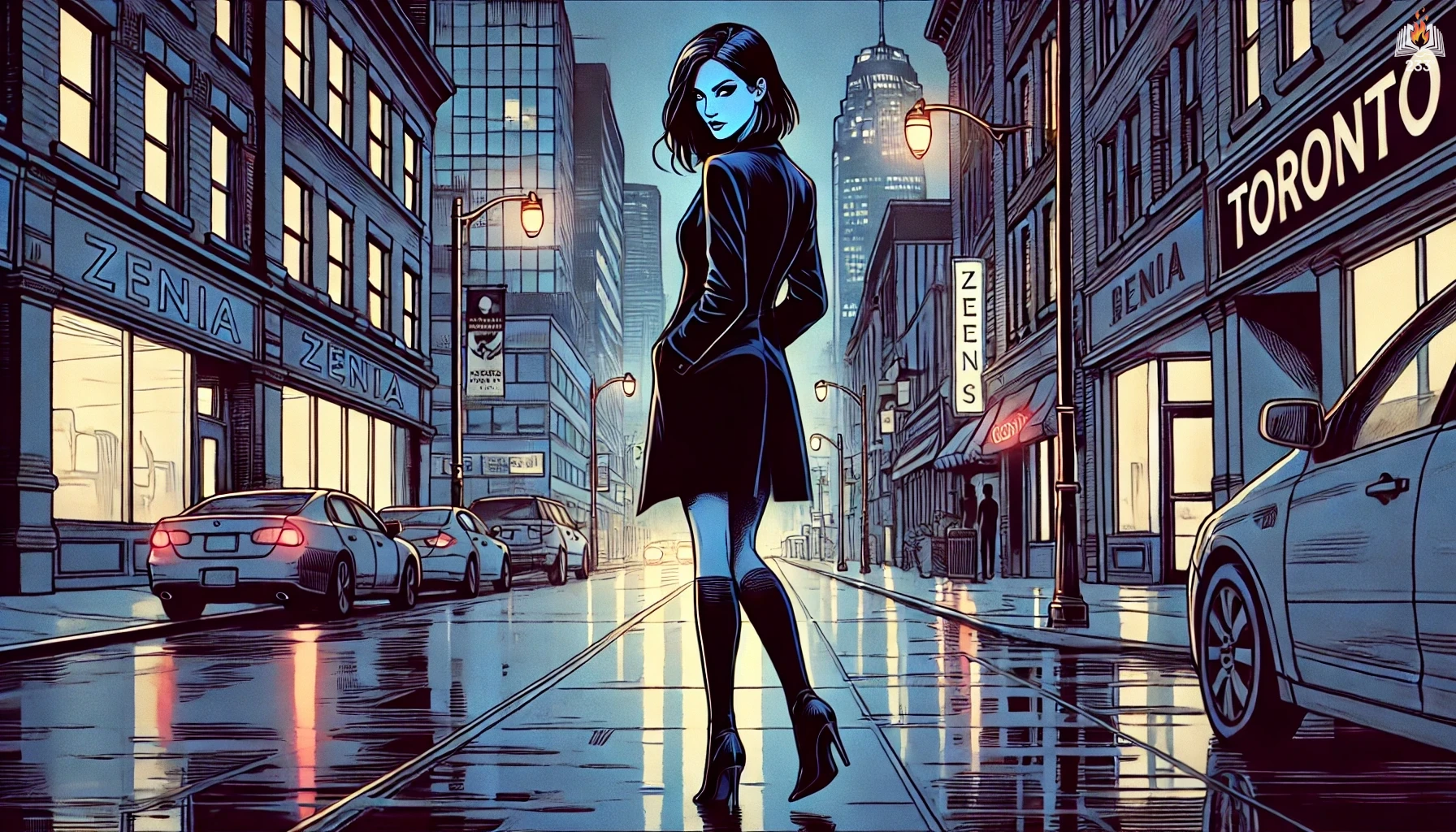
In the days before the collapse, Jimmy lived in a world dominated by sprawling biotech corporations that shaped humanity’s future. Society was starkly divided—elite scientists lived in fortified compounds, while the less fortunate toiled in chaotic and lawless cities, known as the pleeblands. Jimmy’s father was a researcher at OrganInc Farms, a company engineering genetically modified animals like pigoons, designed to grow human organs for transplants. His mother, once a scientist, grew disillusioned with the ethical compromises of genetic engineering. Her despair strained their home, and eventually, she fled, leaving behind a young Jimmy with unanswered questions and a deepening sense of abandonment.
Jimmy’s friendship with Crake began in their youth, forged over video games, casual cruelty, and a shared fascination with humanity’s darker impulses. Crake, a genius, approached life with a clinical detachment, masking his emotions with an impenetrable veneer of logic. Their games often explored simulated destruction, laying the groundwork for Crake’s grim fascination with controlling life itself. Meanwhile, Jimmy was more emotional and adrift, drawn to words rather than numbers, struggling to find meaning in a world that valued scientific precision over creativity.
As they grew older, Crake’s brilliance led him to the prestigious Watson-Crick Institute, a breeding ground for scientific prodigies, while Jimmy, less academically inclined, attended a second-rate institution focusing on advertising and media. Their paths diverged, but their connection remained intact. Crake eventually invited Jimmy to join him at the Paradice project, a top-secret venture within the massive biotech corporation RejoovenEsense. There, Crake unveiled his vision—a genetically engineered species designed to replace humanity.
The Crakers, as they were called, were meticulously crafted to embody Crake’s ideals. They were free of aggression, jealousy, and the destructive tendencies that had plagued humanity. Their biological needs were simplified, designed to harmonize with the natural world rather than exploit it. Crake viewed his creation as the pinnacle of evolution, a way to cleanse the planet of humanity’s parasitic presence. Jimmy was tasked with creating a mythos for the Crakers, introducing concepts they could understand while obscuring the truth of their origins.
In Paradice, Jimmy met Oryx, a woman whose enigmatic presence captivated both him and Crake. Oryx’s past was marked by exploitation—sold into child trafficking and forced to endure unimaginable suffering. Yet, she carried herself with an unshakable calm, her resilience a testament to her strength. She became a teacher for the Crakers, guiding them with a gentle touch that contrasted with Crake’s cold precision. Jimmy fell in love with Oryx, though her relationship with Crake complicated their tangled dynamic.
Unbeknownst to Jimmy, Crake’s ambitions extended far beyond the Crakers. Using a supposedly harmless health supplement called BlyssPluss, Crake engineered a pandemic, a devastating plague that swept across the globe with brutal efficiency. As the world succumbed to chaos, Crake ensured that the Crakers, immune to the disease, remained safe within Paradice. When Crake returned to the facility amidst the unfolding apocalypse, he forced Jimmy to confront a horrifying reality. In a final, calculated act, Crake slit Oryx’s throat and presented himself as a target for Jimmy’s gun. Stunned and enraged, Jimmy shot Crake, unwittingly assuming the role of protector for the Crakers.
Alone in a ravaged world, Jimmy—now Snowman—led the Crakers out of Paradice, guiding them to a coastal refuge. He fabricated stories to explain the past, positioning Crake as a godlike figure and himself as their intermediary. The Crakers, with their childlike innocence and unwavering trust, became Snowman’s burden and only companions. Yet, his memories of Oryx and Crake continued to haunt him, their voices intermingling with his guilt and loneliness.
As Snowman ventures farther from the Crakers to scavenge supplies, he discovers signs of other survivors. These glimpses of human life stir a fragile hope within him but also heighten his anxiety about the Crakers’ safety. Snowman’s journey brings him back to the ruins of Paradice, where the echoes of his past reverberate through the wreckage. There, surrounded by the detritus of Crake’s ambition, he faces the stark reality of his choices and the fragile hope of a future in the shadow of devastation.
The tale concludes with Snowman contemplating the uncharted path ahead. The presence of other humans presents both danger and possibility, a faint flicker of the old world amidst the relentless march of the new. As he returns to the Crakers, the weight of his responsibility remains, and the delicate balance between survival and meaning endures in the aftermath of human hubris.
Main Characters
Snowman (Jimmy): The protagonist, known as Snowman in the post-apocalyptic world, is a deeply reflective and flawed individual. Once an ordinary child in a genetically engineered society, he becomes the reluctant caretaker of the genetically modified Crakers. His wry humor and fragmented memories reveal his guilt and despair over his role in the collapse of humanity.
Crake (Glenn): A brilliant but emotionally detached scientist and Jimmy’s childhood friend. Crake masterminds the genetic experiments that lead to the creation of the Crakers and the catastrophic plague. His utilitarian worldview and disdain for humanity drive his actions.
Oryx: A mysterious and enigmatic figure, Oryx is both a symbol of love and exploitation. She serves as a teacher for the Crakers and becomes the object of both Snowman’s and Crake’s affections. Her past as a victim of child exploitation reflects the dark side of human behavior.
The Crakers: Genetically engineered humanoids created by Crake to be humanity’s successors. They embody Crake’s ideal of a peaceful, sustainable species but are naive about the complexities of human emotions and history.
Theme
The Ethics of Scientific Progress: The novel critiques humanity’s unbridled pursuit of scientific advancement without considering the moral and ecological consequences. It explores the dangers of playing god through genetic manipulation.
Human Hubris and Collapse: Atwood highlights how humanity’s arrogance, especially its disregard for nature and overreliance on technology, leads to its downfall.
Loneliness and Memory: Snowman’s isolation underscores the human need for connection, while his fragmented recollections examine the interplay of memory, identity, and regret.
Exploitation and Power: Through Oryx’s experiences and corporate control over science, the novel examines the exploitation of individuals and nature in the pursuit of profit and power.
Environmental Degradation: The destruction of ecosystems and the manipulation of nature for human benefit illustrate the environmental consequences of unchecked industrialization.
Writing Style and Tone
Margaret Atwood’s writing in Oryx and Crake is characterized by her masterful use of vivid imagery, irony, and dark humor. She balances lyrical descriptions of nature and devastation with incisive commentary on society’s flaws. The fragmented structure mirrors Snowman’s mental state, seamlessly blending flashbacks with the present. Atwood’s prose is precise yet evocative, creating an atmosphere of tension and melancholy.
The tone is a mixture of bleakness and sardonic wit. Atwood employs a detached, almost clinical perspective when recounting scientific advancements and societal collapse, but she infuses Snowman’s narrative with a deeply personal, introspective quality. This juxtaposition amplifies the emotional weight of the story while critiquing humanity’s self-destructive tendencies.
Quotes
Oryx and Crake – Margaret Atwood (2003) Quotes
“If he wants to be an asshole, it's a free country. Millions before him have made the same life choice.”
“He doesn't know which is worse, a past he can't regain or a present that will destroy him if he looks at it too clearly. Then there's the future. Sheer vertigo.”
“Nature is to zoos as God is to churches.”
“After everything that's happened, how can the world still be so beautiful? Because it is.”
“They spent the first three years of school getting you to pretend stuff and then the rest of it marking you down if you did the same thing.”
“All it takes,” said Crake, “is the elimination of one generation. One generation of anything. Beetles, trees, microbes, scientists, speakers of French, whatever. Break the link in time between one generation and the next, and it’s game over forever.”
“We understand more than we know.”
“When any civilization is dust and ashes," he said, "art is all that's left over. Images, words, music. Imaginative structures. Meaning—human meaning, that is—is defined by them. You have to admit that.”
“Immortality,' said Crake, ' is a concept. If you take 'mortality' as being, not death, but the foreknowledge of it and the fear of it, then 'immortality' is the absence of such fear. Babies are immortal. Edit out the fear, and you'll be...”
“There's something to be said for hunger: at least it lets you know you're still alive.”
“These things sneak up on him for no reason, these flashes of irrational happiness. It's probably a vitamin deficiency.”
“So this was the rest of his life. It felt like a party to which he'd been invited, but at an address he couldn't actually locate. Someone must be having fun at it, this life of his; only, right at the moment, it wasn't him.”
“When they're gone out of his head, these words, they'll be gone, everywhere, forever. As if they had never been.”
“...how much needless despair has been caused by a series of biological mismatches, a misalignment of the hormones and pheromones? Resulting in the fact that the one you love so passionately won't or can't love you. As a species we're pathetic that way: imperfectly monogamous.”
“You can’t buy it, but it has a price,” said Oryx. “Everything has a price.”
“EXTINCTATHON, Monitored by MaddAddam. Adam named the living animals, MaddAddam names the dead ones. Do you want to play?”
“I'll make you mine, lovers said in old books. They never said, I'll make you me.”
“I am not my childhood,' Snowman says out loud.”
“Anyway, maybe there weren't any solutions. Human society, corpses and rubble. It never learned, it made the same cretinous mistakes over and over, trading short-term gain for long-term pain.”
“expectation isn't the same as desire”
“Why is it he feels some line has been crossed, some boundary transgressed? How much is too much, how far is too far?”
“She had no images of this love. She could offer no anecdotes. It was a belief rather than a memory.”
We hope this summary has sparked your interest and would appreciate you following Celsius 233 on social media:
There’s a treasure trove of other fascinating book summaries waiting for you. Check out our collection of stories that inspire, thrill, and provoke thought, just like this one by checking out the Book Shelf or the Library
Remember, while our summaries capture the essence, they can never replace the full experience of reading the book. If this summary intrigued you, consider diving into the complete story – buy the book and immerse yourself in the author’s original work.
If you want to request a book summary, click here.
When Saurabh is not working/watching football/reading books/traveling, you can reach him via Twitter/X, LinkedIn, or Threads
Restart reading!