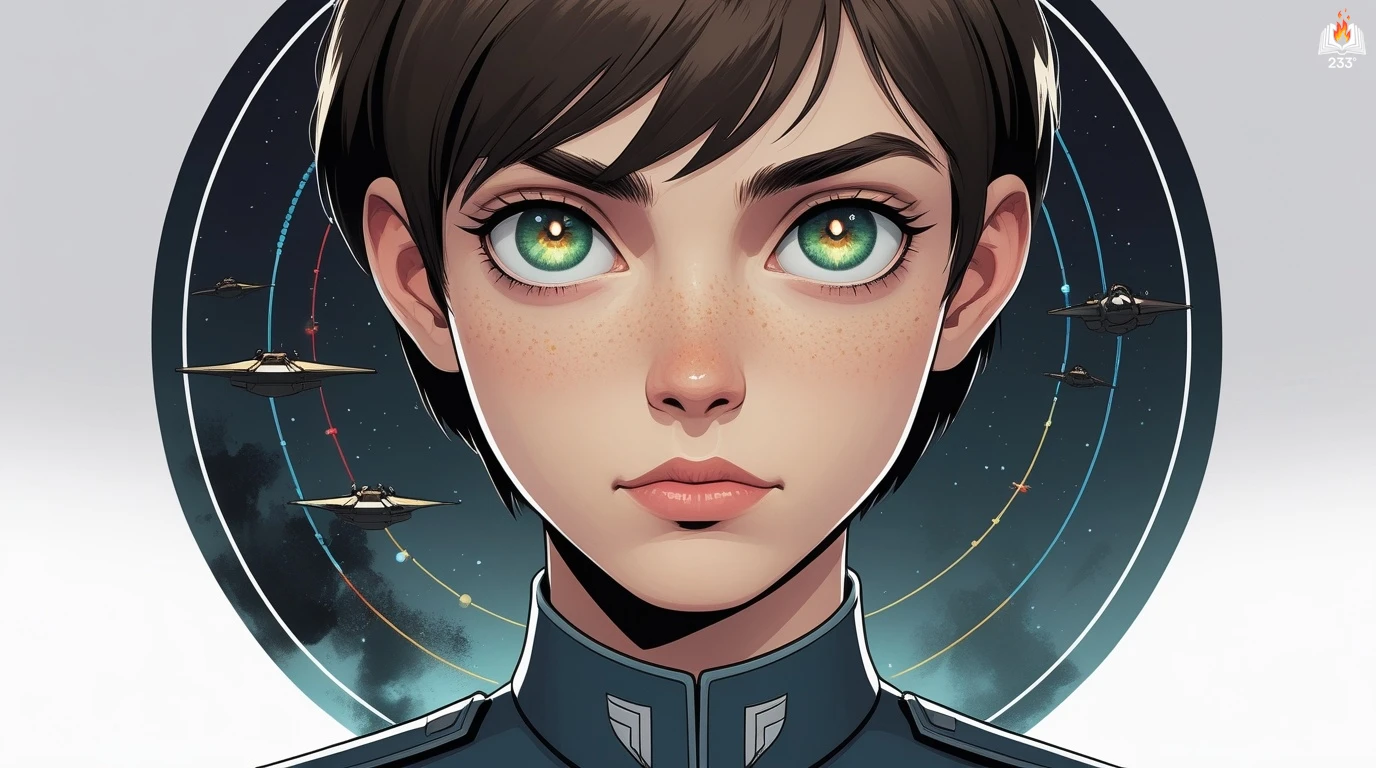
The Hive (2019) by Orson Scott Card and Aaron Johnston is the second novel in the Second Formic War series, continuing the desperate struggle of humanity against the alien Formic threat. The novel explores the evolution of military strategy, leadership, and sacrifice as a group of child prodigies, seasoned warriors, and political players fight to repel the Hive Queen’s cunning invasion. The story is set against the backdrop of escalating conflict, political infighting, and the haunting question of what it takes to win a war for humanity’s survival.
Plot Summary
A swarm of Formic microships slipped into the solar system, unnoticed, latching onto asteroids to hollow them out, mine their metals, and transform them into warships. The Hive Queen, a master of deception, was building her army from within humanity’s own backyard, setting the stage for a second war that would test not only weapons but the limits of human resolve.
Aboard a C-class transport bound for GravCamp near Jupiter, thirteen-year-old Bingwen traveled with his small band of Chinese boys – orphans molded into warriors under Colonel Chin Li’s relentless command. The boys, barely teenagers, stood out among the two hundred marines aboard, many of whom viewed their presence as a violation of war’s grim dignity. But Bingwen was no ordinary child. He had once faced the Formics inside an asteroid and lived to tell of it, and his mind had been honed sharp by both hardship and training.
When the captain of the transport was found dead by a self-inflicted slaser wound, a ripple of suspicion spread through the ship. A typed note and the right-handed wound would have been sufficient for most to accept suicide – but not for Bingwen. Quietly, he dug through records, puzzled over inconsistencies, and sensed that this death was more than despair. Mazer Rackham, the legendary marine on board, offered cautious guidance, urging Bingwen not to dig too deep where powerful eyes might be watching. Yet Bingwen’s hunger for truth was relentless, his mind too quick to be satisfied with official reports.
Colonel Li, cold-eyed and calculating, saw in Bingwen and his squad not merely children but the seeds of a future army. He handed Bingwen a data cube loaded with service records, tasking the boys with dissecting the flaws in the Fleet’s promotion system. The mission was as much a test as it was an assignment, and Bingwen understood that failure was not an option. Li’s grip over them tightened further, restructuring their identities under the Commander Candidates Academy, a thinly veiled ploy to shield them from accusations of child soldiering.
Meanwhile, Colonel Dietrich, commander of GravCamp, waited with disdain, determined to block the boys from setting foot on his base. Bingwen knew that their only weapon against Dietrich’s judgment would be excellence – they would have to become better, faster, and smarter than the marines they trained alongside. And so, under the makeshift name Rat Army, they prepared to prove they belonged in a war they were too young to fight but too fierce to abandon.
A mission soon pulled Mazer, Bingwen, and Nak from the transport: a derelict IF warship, the Kandahar, drifted in the outer rim, its crew presumed dead, its intel priceless. Aboard a TRAC vessel called the selenop, the trio spent weeks in the suffocating dark, hurtling through the black toward the unknown. They exercised, studied, and puzzled over the secrets Colonel Li might be hiding, suspecting that his orders came through a clandestine ansible link, a backdoor to power and influence beyond their reach.
When the Kandahar loomed into view, its surface gaped with a surgically precise hole – not the blast mark of weapons, but the clean cut of boarding. The absence of IF markings, the black hull designed to vanish against the void, raised darker questions. Inside, the corridors were a tomb, strewn with drifting debris, the silence broken only by the faint blinks of dying consoles. Bodies were scarce, but traces of violence clung to every wall, and the few dead they found spoke of asphyxiation, hurried struggle, and a final grim warning: the Formics had taken prisoners alive.
Retrieving the data cube from the recon drone was simple compared to what followed. Without warning, the ship shuddered, flinging them against walls and scattering debris like a storm. The Kandahar had been found again – not by the Fleet, but by Formics. There was no running; a selenop was a spider before a hawk. Mazer led them through darkened corridors, rifles in hand, eyes sharp for the enemy they had no hope of defeating.
The cargo bay doors creaked open under manual force, a narrow, desperate escape route. But Bingwen’s sharp mind turned over questions even as they prepared to flee. Why had the Formics boarded, not destroyed? Why prisoners, why now? And what lay on the data cube that could shift the tide of war?
Back aboard the selenop, as they set course for GravCamp, the questions lingered. Yet a new fight awaited. Colonel Dietrich, unyielding and proud, prepared to expel them, but Li had already maneuvered the board. Mazer, caught between duty and rebellion, stood ready to teach young soldiers the brutal truths of war. Bingwen and his army of boys sharpened themselves against every challenge, knowing that their presence was a challenge in itself – not just to the Formics, but to the men and women they would one day command.
In the background, the war darkened. Reports told of mounting casualties, lost ships, and victories too small to stem the tide. Mazer felt the gnawing pull of combat, aching to return to the field where he belonged, even as GravCamp loomed ahead. Bingwen and his squad, armored in defiance and necessity, faced a world that saw them as children, unaware that children were often the ones who bore the sharpest scars and carried the heaviest burdens.
As the stars shifted outside their windows, as the engines hummed and the data cube sat heavy in their care, the war churned on. The Hive Queen waited, cunning and patient, and humanity’s survival hung not only on the shoulders of its veterans, but on the unsteady but unbreakable resolve of its youngest warriors.
Main Characters
Bingwen: A brilliant thirteen-year-old Chinese boy and a natural-born leader, Bingwen is sharp, courageous, and deeply principled. Having survived the horrors of the first Formic invasion, he carries a sense of duty far beyond his years. His arc revolves around navigating the adult-dominated military world, earning respect, and investigating suspicious military actions.
Mazer Rackham: A legendary soldier known for his tactical brilliance, Mazer is frustrated by being sidelined as an instructor when he craves action. His mentorship of Bingwen and the others showcases his wisdom, moral integrity, and quiet defiance of bureaucratic inertia.
Colonel Chin Li: A cold, calculating military strategist, Li is determined to forge young prodigies into future commanders. Though manipulative, he has an undeniable belief in the necessity of preparing child leaders for a brutal war, creating tension between his ambitions and ethical lines.
Nak, Chati, Jianjun, Micho: Fellow members of Bingwen’s squad, each orphaned and shaped by the war, these boys bring humor, friction, and camaraderie. Nak’s discipline, Chati’s rebelliousness, and Jianjun’s loyalty deepen the dynamics of the group as they face both military and moral challenges.
Colonel Gerhard Dietrich: The rigid, by-the-book commander of GravCamp, Dietrich opposes the presence of child soldiers in training. His skepticism and conflict with Colonel Li create political and emotional tension in the narrative.
Theme
Leadership and Responsibility: The novel deeply explores what it means to lead in wartime, especially through Bingwen’s eyes. It challenges the notion of age and authority, showing how courage, intellect, and moral clarity shape true leaders.
War and Ethics: Moral dilemmas permeate the story, particularly the question of sacrificing a few to save many. Characters grapple with the cost of victory, the ethics of child soldiers, and the thin line between murder and military necessity.
Survival and Sacrifice: Every decision in The Hive carries weight, highlighting how survival in war demands sacrifice. The novel examines both personal sacrifice and the sacrifice of values, forcing characters to confront their own limits.
Deception and Strategy: The Hive Queen’s cunning tactics and the military’s internal deceptions reflect the central motif of strategy through misdirection. The novel celebrates ingenuity but warns of the dangers when truth is buried under layers of lies.
Writing Style and Tone
Orson Scott Card and Aaron Johnston write in a taut, cinematic style that balances tense action with thoughtful introspection. Their prose is crisp and accessible, but layered with psychological depth, making even technical military descriptions compelling. Dialogue flows naturally, often laced with wit or moral tension, particularly in exchanges between Bingwen and his mentors.
The tone alternates between tense and reflective, moving seamlessly from adrenaline-charged battles to intimate, character-driven moments. The authors skillfully maintain a sense of looming dread, underscored by moments of humanity, humor, and tenderness. The moral complexity of war permeates the narrative, creating a tone that is both urgent and sobering.
Quotes
The Hive – Orson Scott Card (2019) Quotes
“Humanity must win too.”
We hope this summary has sparked your interest and would appreciate you following Celsius 233 on social media:
There’s a treasure trove of other fascinating book summaries waiting for you. Check out our collection of stories that inspire, thrill, and provoke thought, just like this one by checking out the Book Shelf or the Library
Remember, while our summaries capture the essence, they can never replace the full experience of reading the book. If this summary intrigued you, consider diving into the complete story – buy the book and immerse yourself in the author’s original work.
If you want to request a book summary, click here.
When Saurabh is not working/watching football/reading books/traveling, you can reach him via Twitter/X, LinkedIn, or Threads
Restart reading!