Deadeye Dick by Kurt Vonnegut Jr., published in 1982, is a darkly comic novel that chronicles the life of Rudy Waltz, who accidentally kills a pregnant woman as a child and spends the rest of his life as a social outcast known as “Deadeye Dick.” This novel is part of Vonnegut’s broader fictional universe, sharing settings like Midland City with his other works, notably Breakfast of Champions.
Plot Summary
Rudy Waltz arrived in the world in Midland City, Ohio, a place of little consequence that nonetheless loomed large over his life. His father, Otto Waltz, fancied himself an artist, a man of European refinement stranded in the American Midwest. Otto filled their home with relics of European grandeur – medieval weapons, old paintings, and a grand weather vane showing a mounted Austrian chasing a Turk – but his greatest treasure was his eccentricity. Otto’s dreams, however, curdled into disappointment, and his frustrations seeped into the bones of the Waltz household.
Rudy grew up beneath the long shadow of his father’s vanity and his mother Emma’s ornamental uselessness. His brother Felix was the golden child, destined to escape. Rudy, however, was destined for something else entirely. At the age of twelve, with the simple pull of a trigger, Rudy shot a rifle from the attic window, meaning only to test his aim. But the bullet sailed through the sky, through a window across town, and struck a pregnant woman dead. From that moment, Rudy became Deadeye Dick, the town’s most notorious son.
The world did not forgive, and neither did Rudy. Though he was spared jail time, his name was stained forever. The child who wanted nothing more than to please his father became a man determined to withdraw from life. He vowed to remain celibate, to bear his punishment in silence. While Felix thrived, Rudy became the town pharmacist, a caretaker of small illnesses in a place that never let him forget the larger wound he had opened.
Midland City itself bore its own scars. Once a modest, hopeful town, it became a place of quiet decline, its citizens withering in small houses, clinging to memories and grudges. Otto’s artistic dreams sputtered out, his lectures about Hitler and the virtues of European culture turning from charming to alarming. He sent a congratulatory letter to Hitler himself, hung a Nazi flag from their home, and then, as the world changed around him, spiraled into humiliation and despair.
Emma drifted like a ghost through their drafty home, cared for by servants who provided more warmth than her own family. Rudy found solace in the kitchen, among pots and pans, learning recipes from the black servants who treated him with the affection denied by his parents. In that cramped space, he learned how to cook, how to survive, and how to listen.
As Rudy aged, he watched the town evolve, crumble, and stumble through time. He bore witness to the rise and fall of those around him. Felix became a media man, successful and slippery, always able to sidestep the disasters that trapped his brother. Celia Hildreth, once the most beautiful girl in town and the object of Felix’s brief affection, slid into drug addiction and despair, her beauty a curse she could not escape.
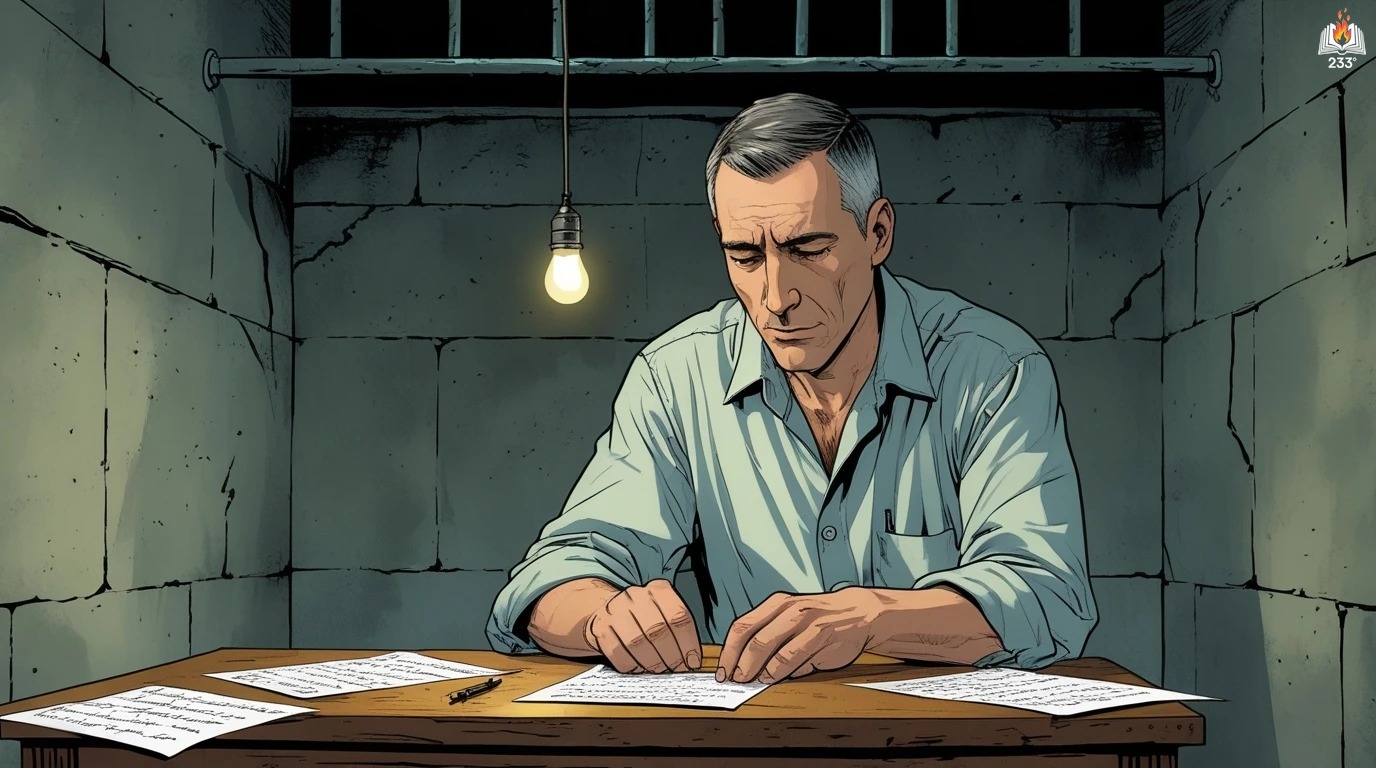
Otto’s life collapsed under the weight of lawsuits and public scorn. His art, his guns, his dreams – all sold, lost, or broken. He wound up in prison, a broken man clinging to past glories. Even then, his pride burned bright. He wiped himself with his war citation and declared himself ready for the only honors left – becoming a licensed dog or a notary public.
Rudy’s life moved in small circles, defined by routine and restraint. Yet even in his self-imposed exile, he was not free from calamity. A neutron bomb, accidentally detonated by the military, erased Midland City from the map. One hundred thousand souls vanished in an instant, their bodies gone, their homes and shops eerily intact. Rudy, by then living in Haiti with Felix, read the news and wondered if it mattered. Were the lives of those who judged him so harshly, who reduced him to a single, tragic mistake, missed by the world?
In Haiti, Rudy found something resembling peace. He and Felix ran the Grand Hotel Oloffson, a decaying gingerbread palace filled with history and ghosts. There, Rudy served food, listened to Creole chatter, and reflected on a life that had slipped past him like water through fingers. The hotel, with its faintly absurd charm, suited Rudy. It was a place for those slightly adrift, those marked by past follies and unfinished business.
The echoes of the past lingered. Rudy remembered Otto’s flamboyant past – the grand costume of the Hungarian Life Guard, the ridiculous demands to be called the King of the Early Evening, the way he transformed their home into a stage set lit by a hundred candles. Rudy remembered Celia, dressed for a prom she never wanted to attend, trembling before the great doors of their strange house. He remembered Otto emerging with an apple in hand, calling for Helen of Troy to claim her prize, and the girl’s frozen terror as the myth collided with her modest life.
Rudy’s own role in Midland City’s long story remained fixed, a silent witness to its absurdities and cruelties. He understood the randomness of life, how accidents and intentions tangled to form the fabric of a person’s fate. His celibacy was not a heroic sacrifice, but a quiet resistance, a way to control the chaos that had once erupted from his fingertips.
As the years passed, Rudy found small satisfactions. Cooking Haitian fish in coconut cream, stewing goat and bananas, setting a table for vaguely disgruntled guests – these tasks became his rituals, his offerings to a world that had given him little. Even in the shadow of destruction, Rudy saw beauty in small acts, in meals prepared with care, in the rhythms of a language with only the present tense.
The ghosts of Midland City faded, but Rudy remained a keeper of memory. He did not rage against the past, nor did he search for redemption in grand gestures. He had learned, through trial and quiet endurance, that life offered no neat resolutions, no perfect endings. His was a life shaped by accident and carried forward by resilience, a life that bore the scars of absurdity and yet found moments of unexpected grace.
In the flicker of candlelight, in the hush of the Haitian night, Rudy Waltz stood as a man no longer defined by the shot that had once shattered a life, but by the quiet persistence of his own survival.
Main Characters
Rudy Waltz: The protagonist and narrator, Rudy is a pharmacist burdened by guilt after accidentally shooting a pregnant woman at age twelve. His life is marked by isolation, celibacy, and a deep sense of failure, yet he tells his story with sardonic humor. Rudy’s detached, observant voice shapes the novel’s tone and offers insight into human absurdity.
Otto Waltz (Father): A grandiose and artistic man, Otto is obsessed with European culture and collects firearms, ultimately passing his fixation on to Rudy. Otto’s idealism and failures as a businessman and artist profoundly affect Rudy’s worldview and sense of inadequacy.
Emma Waltz (Mother): Emma is a pampered, ornamental figure with little grasp of practical reality. Her dependence on Rudy in her later years highlights the novel’s exploration of family obligation and decline.
Felix Waltz (Brother): Felix is Rudy’s older, more worldly brother, who escapes the small-town life Rudy is trapped in. Felix’s success as a soldier and businessman contrasts sharply with Rudy’s arrested life, emphasizing themes of escape and entrapment.
Celia Hoover: Once the beautiful star of Rudy’s failed play, Celia’s tragic decline into drug addiction and reclusion mirrors Rudy’s own fall from promise, underlining the novel’s themes of decay and disappointment.
Theme
Guilt and Redemption: Rudy’s lifelong burden of guilt shapes his identity and decisions, reflecting on how a single act can irrevocably define a person. Yet, Vonnegut complicates the idea of redemption, showing Rudy’s attempts at goodness as quiet, often unnoticed gestures.
Randomness of Fate: Vonnegut explores life’s absurdity through the arbitrary tragedy of Rudy’s crime and the larger disasters that befall Midland City. This theme challenges notions of control and moral causality in human lives.
Social Alienation: Rudy’s status as an outcast comments on the cruelty of societal judgment. His celibacy, isolation, and detachment from ordinary ambitions critique the American fixation on success, sexuality, and productivity.
The Absurdity of War and Violence: Through Rudy’s accidental shooting, the violent history of his family, and the neutron bombing of Midland City, Vonnegut portrays violence as senseless and grotesque, often laced with dark humor to heighten its tragic absurdity.
Writing Style and Tone
Kurt Vonnegut’s writing style in Deadeye Dick is marked by simplicity, brevity, and irony. His childlike, declarative sentences unmask the absurdity of everyday life, making profound observations seem disarmingly casual. Vonnegut frequently uses dark humor, playful digressions (including recipes), and anecdotal asides, creating a voice that is at once intimate and detached. The novel’s nonlinear structure, leaping across time and memory, mirrors Rudy’s fragmented psyche and deepens the sense of life’s randomness.
The tone balances bitter cynicism with wistful compassion. Though Rudy’s story includes death, failure, and public scorn, Vonnegut’s tone avoids heavy moralizing. Instead, he cultivates a bittersweet atmosphere where humor and despair coexist. This emotional duality allows Vonnegut to critique human folly while still affirming human resilience, leaving the reader both sobered and strangely comforted.
Quotes
Deadeye Dick – Kurt Vonnegut Jr (1982) Quotes
“That is my principal objection to life, I think: It's too easy, when alive, to make perfectly horrible mistakes.”
“To be is to do - Socrates. To do is to be - Jean-Paul Satre. Do be do be do -Frank Sinatra.”
“To the as-yet-unborn, to all innocent wisps of undifferentiated nothingness: Watch out for life.”
“You want to know something? We are still in the Dark Ages. The Dark Ages--they haven't ended yet.”
“I concluded that the best thing for me and for those around me was to want nothing, to be enthusiastic about nothing, to be as unmotivated as possible, in fact, so that I would never again hurt anyone.”
“egregious. most people think that word means terrible or unheard of or unforgivable. it has a much more interesting story than that to tell. it means "outside the herd." imagine that - thousands of people, outside the herd.”
“If a person survives an ordinary span of sixty years or more, there is every chance that his or her life as a shapely story has ended and all that remains to be experienced is epilogue. Life is not over, but the story is.”
“I was the great marksman, anyway. If I aimed at nothing, then nothing is what I would hit.”
“the late twentieth century will go down in history, i'm sure, as an era of pharmaceutical buffoonery.”
“I identified a basic mistake my parents had made about life: They thought that it would be very wrong if anybody ever laughed at them.”
“It's a widely accepted principle,' he says, 'that you can claim a piece of land which has been inhabited for tens of thousands of years, if only you repeat this mantra endlessly: 'We discovered it, we discovered it, we discovered it....”
“To be is to do’
“My wife has been killed by a machine which should never have come into the hands of any human being. It is called a firearm. It makes the blackest of all human wishes come true at once, at a distance: that something die.”
“To the as-yet-unborn, to all innocent wisps of undifferentiated nothingness: Watch out for life. I have caught life. I have come down with life.”
“To all my friends and enemies in the buckeye state. Come on over. There's room for everybody in Shangri-La.”
“the actress playing Celia could ask why god had ever put her on earth. and then the voice from the back of the theater could rumble: "to reproduce. nothing else really interests me. all the rest is frippery.”
“Any city in any country, including my own hometown, was to me just another place where I might live or might not live.”
“It’s a widely accepted principle,” he says, “that you can claim a piece of land which has been inhabited for tens of thousands of years, if only you will repeat this mantra endlessly: ‘We discovered it, we discovered it, we discovered it....”
“The late twentieth century will go down in history, I’m sure, as an era of pharmaceutical buffoonery.”
“That is my principal objection to life, I think: It is too easy, when alive, to make perfectly horrible mistakes. ***”
“For some reason, the less you pay for a watch, the surer you can be that it will never stop.”
“Leave your story outside.”
“It is too easy, when alive, to make perfectly horrible mistakes”
“That is my principal objection to life, I think: It is too easy, when alive, to make perfectly horrible mistakes.”
We hope this summary has sparked your interest and would appreciate you following Celsius 233 on social media:
There’s a treasure trove of other fascinating book summaries waiting for you. Check out our collection of stories that inspire, thrill, and provoke thought, just like this one by checking out the Book Shelf or the Library
Remember, while our summaries capture the essence, they can never replace the full experience of reading the book. If this summary intrigued you, consider diving into the complete story – buy the book and immerse yourself in the author’s original work.
If you want to request a book summary, click here.
When Saurabh is not working/watching football/reading books/traveling, you can reach him via Twitter/X, LinkedIn, or Threads
Restart reading!