The Long Earth, published in 2012, is the first book in an imaginative science fiction series co-authored by Terry Pratchett and Stephen Baxter. This novel introduces the concept of an infinite series of parallel Earths, collectively known as the Long Earth, which can be accessed by a simple device called a “Stepper.” When this technology becomes publicly available, humanity begins to explore these new worlds, profoundly altering society and raising questions about identity, civilization, and the nature of reality.
Plot Summary
On a battlefield in 1916, Private Percy Blakeney awakens amid serene greenery and birdsong – a far cry from the mud and blood of No Man’s Land. Disoriented but alive, he stumbles upon a world both familiar and untouched, where the chaos of war has no presence. The forest seems to belong to another Earth, one that exists beside his own, whispering a mystery he cannot grasp. A century later, in Madison, Wisconsin, a girl named Maria Valienté gives birth to her son Joshua in a similar green world, one blinked into and out of existence without warning. This newborn, calm and attuned to the universe’s Silence, would become the bridge between countless Earths.
In 2015, police officer Monica Jansson discovers a curious device in a scorched house once owned by a reclusive scientist. Inside a plastic cube, a simple switch and a potato hide a secret that soon erupts across the globe – the ability to “step” into parallel Earths, each untouched by human civilization. The world watches in awe and terror as children vanish and reappear, clutching homemade versions of the device, exploring new lands, some not returning. Among these children is Joshua, who builds his Stepper carefully, varnishes it, and waits for the right moment. Unlike the others, he returns unafraid, composed, with a growing understanding that he belongs in the spaces between the worlds.
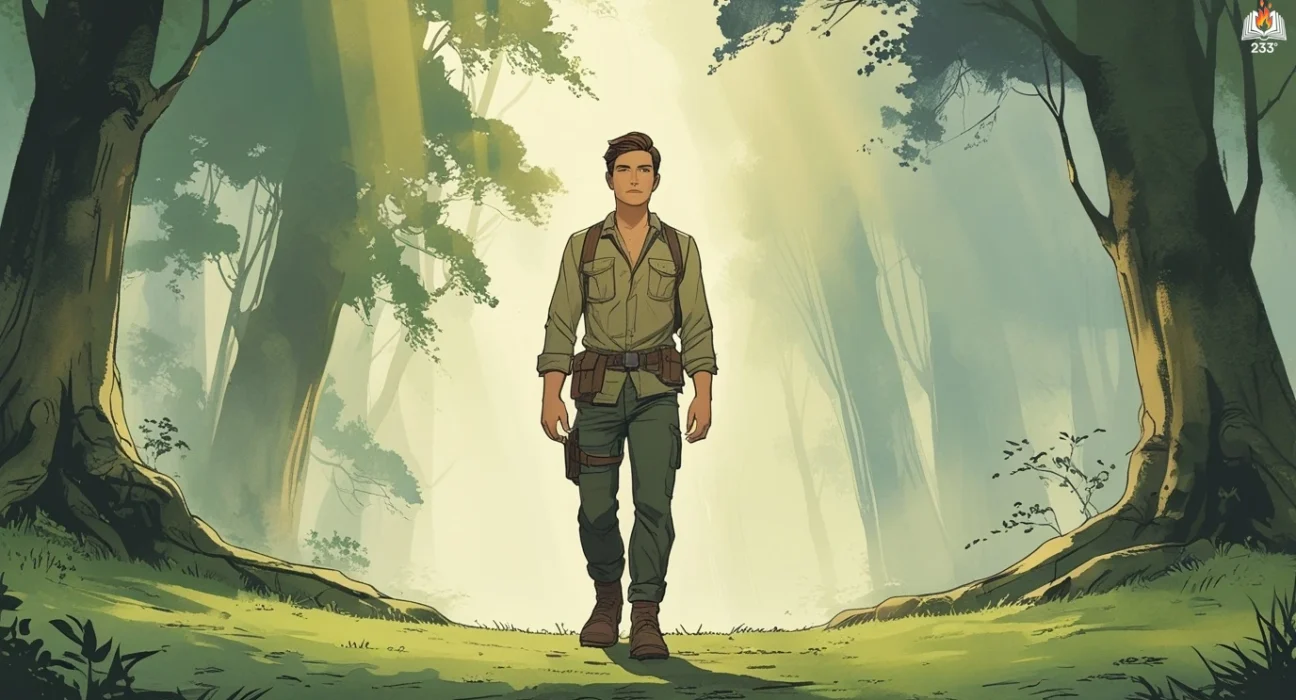
Joshua becomes a quiet legend, the boy who guided the lost back to safety, the boy who could step without a device. He feels at home in the forested stillness of the Long Earth, each world just a step away, each untouched by human hands. These Earths stretch in both directions, West and East, potentially infinite, filled with ancient forests, extinct species, and silence deeper than thought.
Lobsang, a sentient computer claiming to be the reincarnated soul of a Tibetan motorcycle repairman, reaches out to Joshua. Funded by the powerful transEarth Corporation, Lobsang offers him a journey: to explore the outermost reaches of the Long Earth, to discover what lies beyond the known worlds. Despite mistrust and resistance, Joshua agrees, drawn by the promise of solitude, discovery, and something unnamed that has always pulled at his soul.
Together they traverse the High Meggers, Earths so distant from Datum Earth that human civilization is not even a shadow. They ride in a vehicle built by Lobsang, a fusion of futuristic engineering and quiet ambition. Along the way, they encounter new dangers – environments shaped by evolution untouched by mankind, landscapes carved by forces unknown, and even echoes of ancient intelligence. They rescue pioneers gone feral, observe strange social experiments, and hear tales of other stepwise travelers who ventured too far, never to return.
The Long Earth, while empty of humans, is not empty of life. Wildlife flourishes, unchallenged and strange. Dinosaurs roam some Earths; in others, vast seas support ecosystems unrecognizable to modern eyes. Through it all, Joshua senses the Silence – a comforting presence that speaks not in words but in its very stillness. Lobsang, though artificial in form, grows increasingly human in behavior, revealing memories, doubts, and a yearning for meaning.
Their voyage culminates when they reach a world entirely alien – not just uninhabited but watching, sentient in a way that transcends form. A great sea, housing a single, vast organism, pulses with thought. This consciousness stirs, murmuring its first awareness: I. To what purpose? The implications unsettle even Lobsang, who realizes that humanity’s expansion may not go unanswered.
Meanwhile, Sally Linsay, daughter of the mysterious inventor of the Stepper, makes her own journey through the Long Earth. She was born to it, raised in its quiet shadow, and left behind the constraints of Datum Earth in search of her father and his purpose. She is self-sufficient, wary of others, and driven by a need to understand why her father gave humanity the means to scatter across realities. She and Joshua cross paths, their goals aligning momentarily before diverging again, each carrying the weight of legacy and unanswered questions.
Back on Datum Earth, the world reels from the changes brought by Step Day. Economies falter as people abandon cities for paradise Earths. Gold loses its value. Governments scramble to adapt, to control, to understand a reality that no longer stands still. Some Earths are claimed by homesteaders seeking freedom, others by corporations hunting resources. But the Long Earth remains mostly wild, vast beyond measure.
In one such Earth, a man named Jim Russo attempts to strike it rich by panning for gold where the California Gold Rush once bloomed. But he is only one among many, and the gold, like the old dreams, no longer holds its power. He is mocked by others who have already moved on, who understand that wealth in the Long Earth is not found in metal, but in opportunity, in freedom, in the unknown.
As Joshua and Lobsang continue their journey, they begin to understand the deeper currents shaping the Long Earth. Something is moving – not just humans stepping outward, but the Earths themselves reacting. Creatures migrate across worlds. Ecosystems shift. And in the distance, further than anyone has stepped, there is a growing sense of something coming. A disturbance. A presence.
In the final stretch of their expedition, Lobsang confesses his fears and hopes. He believes the Long Earth was not merely discovered but perhaps awakened. And Joshua, who once sought only solitude, feels the weight of responsibility. The Long Earth is no longer a secret. It is a frontier, a home, and perhaps a mirror reflecting all of humanity’s potential – both its wonders and its perils.
They return changed. Not with answers, but with understanding. The Long Earth remains, its mysteries intact, its Silence ever present. And so the journey continues, across worlds without number, in search of meaning beneath the endless sky.
Main Characters
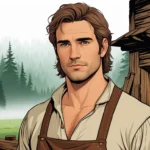
Joshua Valienté: A quiet, introspective man with a mysterious affinity for the Long Earth, Joshua was abandoned as a baby and raised in a group home. Independent, methodical, and deeply connected to the Silence he perceives across the Long Earth, Joshua becomes the perfect explorer. His moral compass and desire for solitude make him both a reluctant hero and a guide through the unknown.
Lobsang: An artificial intelligence claiming to be the reincarnation of a Tibetan motorcycle repairman, Lobsang is witty, omnipresent, and intellectually formidable. He partners with Joshua to explore the outer reaches of the Long Earth, motivated by curiosity and a desire for self-definition. His presence raises philosophical questions about consciousness and humanity.
Monica Jansson: A no-nonsense police officer who first encounters the potential of the Stepper device. Intelligent and skeptical, she serves as an early grounding force in the narrative, and her interactions with Joshua provide important insights into his character.
Sally Linsay: The daughter of the Stepper’s inventor, Sally is adventurous, resourceful, and fiercely independent. She embarks on her own journey into the Long Earth, driven by personal motivations and a deep connection to its mysteries.
Theme
Exploration and Frontier Spirit: Echoing the age of colonial expansion and the American pioneer mythos, the Long Earth presents a vast frontier. The characters’ journeys into the unknown reflect humanity’s perpetual desire to explore, conquer, and understand what lies beyond the horizon.
Individualism vs. Collectivism: Many characters wrestle with the tension between solitude and community. Joshua, in particular, thrives in isolation but is drawn into collective endeavors, questioning the balance between personal freedom and social responsibility.
Human Identity and Consciousness: Lobsang’s existence blurs the line between human and machine, pushing the reader to contemplate what it means to be truly human. Themes of reincarnation, artificial intelligence, and memory serve as philosophical underpinnings throughout the story.
Environmental and Social Commentary: The empty parallel worlds reflect an untouched Earth, free from human interference. The novel critiques overpopulation, resource exploitation, and societal rigidity, contrasting them with the possibilities of new beginnings.
Writing Style and Tone
Terry Pratchett’s signature wit and narrative charm merge seamlessly with Stephen Baxter’s hard science fiction rigor, creating a distinctive blend of humor and cerebral storytelling. The prose flows effortlessly between philosophical musings, technological exposition, and vivid descriptions of alternate Earths. Dialogue is often sharp, infused with irony and layered meaning, especially in exchanges involving Lobsang.
The tone oscillates between wonder and foreboding. There’s a sense of boundless possibility in the exploration of the Long Earth, tempered by the dangers and ethical dilemmas that arise. The narrative evokes the quiet awe of discovery and the disquieting realization of humanity’s potential to replicate its flaws across infinite worlds.
Quotes
The Long Earth – Terry Pratchett (2012) Quotes
“Modesty is only arrogance by stealth.”
“Maybe the only significant difference between a really smart simulation and a human being was the noise they made when you punched them.”
“But then science is nothing but a series of questions that lead to more questions.”
“He quite liked the English. They tended to say sorry a lot, which was quite understandable given their heritage and the crimes of their ancestors.”
“When you arise in the morning, think of what a precious privilege it is to be alive – to breathe, to think, to enjoy, to love.”
“I don’t think it's weak to admit you made a mistake. That takes strength, if you ask me.”
“Watering down the currency of expression, causing anything to mean whatever you want it to mean, until nothing is meant and nothing is precise.”
“I find it best to worry about the little things. Things that can be helped by being worried about. Such as the making of clam chowder, (..)coffee. The bigger stuff, well, you have to handle that as it faces you.”
“The way I see it, my ancestors put a lot of effort into getting out of the goddamn ocean and I don’t think I should throw all of that hard work back in their faces.”
“Oh, don’t be absurd, man.' The Prime Minister sat back in his chair. 'Come on. We can’t just ban a thing because we can’t control it.' The minister responsible for health and safety looked startled. 'I don’t see why not. It’s never stopped us before.”
“But right now, as for my own philosophy, there is a quotation that rather sums it up: “When you arise in the morning, think of what a precious privilege it is to be alive – to breathe, to think, to enjoy, to love.”
“But smart has to have a depth as well as a length. Some smart brushes over a problem. And some smart grinds exceeding slow, like the mills of God, and it grinds fine, and when it comes up with an answer, it has been tested.”
“Don’t worry! On another Earth it already happened’,”
“To be fucking human, to not put too fine a point on it, and Daniel Boone can kiss my ass.”
“leave me in peace to converse with my friends? Whom I promise not to kill and dissect.”
“Surley, they couldn't be French? He tried French anyway, 'Parlay buffon say?”
“You ain’t the boss of me, sir, you surely ain’t. The only thing you could do right now is kill me, and you still wouldn’t be the boss of me.’ There”
“few bad words were said – apart from ‘Republican’, which was an extremely bad word”
“Songs can be very expressive, Lobsang. You can sing your homesickness.”
“The thought constructed itself a piece at a time, like an incomplete jigsaw. Think, don't panic.”
“But, yeah, it was a totally weird place, looking back. But the right kind of weird. Good weird. The nuns had a lot of freedom. We read Carl Sagan before the Old Testament.”
“When you arise in the morning, think of what a precious privilege it is to be alive – to breathe, to think, to enjoy, to love.”’ The”
“he was whisked away from the lines of passengers and led along corridors with the politeness you might observe when dealing with a politician belonging to a country that had nuclear weapons and a carefree approach to their deployment.”
“All creatures on Earth have been hammered on the anvil of its gravity, for example, which influences size and morphology. So I am sceptical about finding armoured reptiles who can fly and spout flames.”
We hope this summary has sparked your interest and would appreciate you following Celsius 233 on social media:
There’s a treasure trove of other fascinating book summaries waiting for you. Check out our collection of stories that inspire, thrill, and provoke thought, just like this one by checking out the Book Shelf or the Library
Remember, while our summaries capture the essence, they can never replace the full experience of reading the book. If this summary intrigued you, consider diving into the complete story – buy the book and immerse yourself in the author’s original work.
If you want to request a book summary, click here.
When Saurabh is not working/watching football/reading books/traveling, you can reach him via Twitter/X, LinkedIn, or Threads
Restart reading!