
The Invisible Life of Addie LaRue by V. E. Schwab, published in 2020, is a genre-defying novel that blends historical fiction, fantasy, and romance to tell the story of a young woman who makes a Faustian bargain to escape an unwanted life—only to discover that her newfound freedom comes with a harrowing price: she will live forever, but be remembered by no one. Spanning centuries and continents, Schwab’s narrative shifts between 18th-century France and modern-day New York City, exploring memory, identity, love, and art with lyrical prose and emotional depth.
Plot Summary
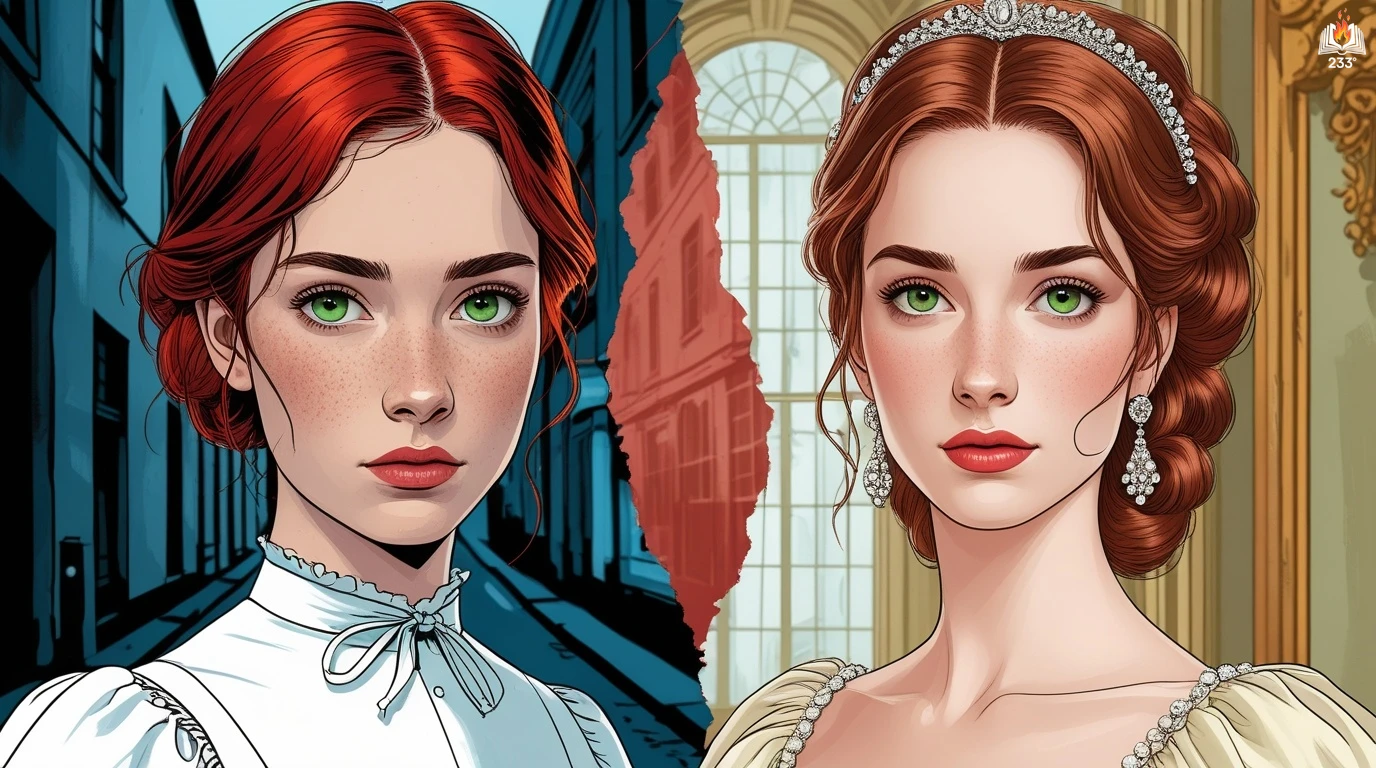
In a quiet corner of Villon-sur-Sarthe, where fields yawn beneath skies of slate and the world is small enough to trap a life between sunrise and supper, a girl named Adeline LaRue dares to want more. She walks with her eyes tipped toward the horizon, filled with stories of cities and skies she’s never seen. While her village threads tradition like embroidery into every waking moment, Addie dreams of art, adventure, and a life that belongs to her alone.
But dreams are dangerous things in a world that expects obedience, and when her parents arrange a marriage to a widower with three children, Addie stands at the altar of her own erasure. Desperate, she flees into the forest, to the old gods Estele warned her about – the ones that answer after dark. As the sun dies behind the trees, something ancient stirs. He comes to her in the form of her imagined stranger, green-eyed and beautiful, a shape born of her longing and her art. He offers freedom, and she, willing to sacrifice anything but her soul, yields to the moment.
Only it is her soul he takes.
In exchange for immortality, Addie is forgotten. The moment she leaves a room, her name crumbles. No one remembers her face, her voice, her presence. Parents forget they had a daughter. Friends blink and lose her. Lovers turn cold with confusion. Time bends but memory does not hold. She is unclaimed, untethered – a ghost with a heartbeat, locked in a world that cannot retain her.
The first years are brutal. She starves, steals, sleeps in stables and alleyways. In the frozen light of Paris and the thunder of revolution, in the glittering salons of Vienna and the war-torn streets of Berlin, she learns to survive. History moves around her like a river, and she is a leaf swept along – always watching, never known. Her only companion is the god who cursed her. He visits on anniversaries, bearing cruel affection and teasing offers to take back her soul, to end her exile. She refuses him, again and again, with the defiance of someone who has nothing left but her will.
Yet, even in the shadows, she leaves marks. Artists sketch her silhouette without knowing why. A composer hears her humming and crafts a melody. A playwright dreams of her face and writes her into legend. She becomes the muse without a name, the ghost behind the canvas. Though forgotten, she inspires, and through that inspiration, she endures.
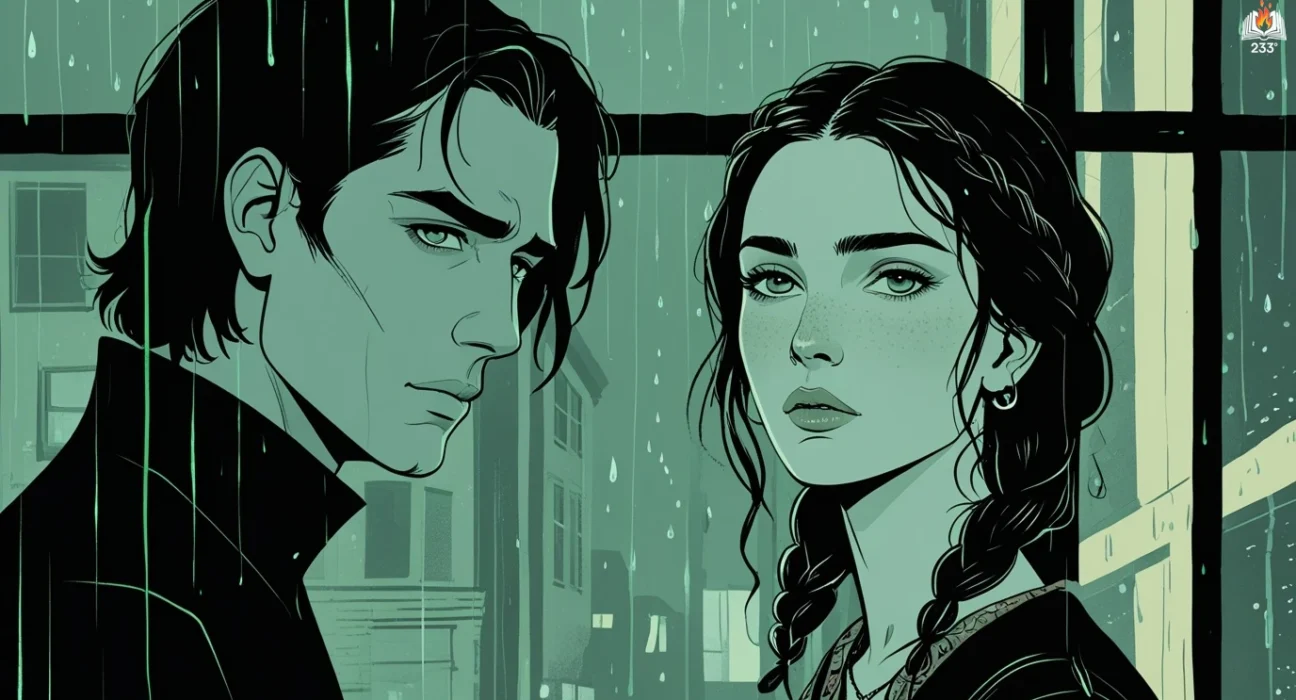
Time folds into itself until it opens again in New York, in a used bookstore scented with paper and rain. There, Addie meets Henry Strauss – soft-voiced, kind-eyed, fractured by his own loneliness. And when he looks at her, truly looks, he remembers. The curse shatters. For the first time in three hundred years, someone knows her. Says her name. Holds it like something precious.
Henry has his own bargain with the darkness. One year of being loved by all who meet him – a balm to his aching self-worth – in exchange for his soul. He has only weeks left when he meets Addie, and together they stretch those days like silk, weaving joy from borrowed time. They walk Brooklyn’s streets, drink coffee thick with memory, and press themselves into poems and photographs, trying to outpace the end.
Addie tells him everything. The truth curls from her lips like smoke, and Henry captures it in ink. He writes her life down – every place she has been, every pain and joy, the shape of her loneliness, the force of her hope. Through his words, she is remembered. Not just for a night or a year, but forever.
The god watches. Always watching. Luc, the darkness, still returns, still tempts. He sees her falling in love and tries to steal her back. Offers her comfort. Offers her power. Offers her the memory of her name carved in the stone of history. But Addie resists. She would rather be forgotten than belong to him.
The clock runs down. Henry’s final day comes, quiet and cold. But before he slips away, he gives Addie one last gift – the manuscript, the story of her life, to be published in his name. In it, Addie’s presence will echo, her footsteps carved into the margins of art and time. A life remembered. A mark made.
Then, she is gone from him.
But not lost.
Luc finds her again in a quiet street, where lights flicker and the air tastes of dusk. She wears her sadness like armor now, her beauty sharpened into resolve. She has made her choice – not surrender, not escape, but sacrifice. Her soul for Henry’s freedom. A deal sealed not in desperation, but defiance.
She stays with Luc.
He believes he has won, believes she has come to him willingly at last. But Addie LaRue, forgotten by the world, has learned to play long games. She whispers into his quiet moments, curls around his thoughts like smoke. She will make him love her, not out of mercy, but because it is the one thing he cannot take, cannot demand. And when he does, when the god who does not feel finally feels something true, she will strike. She will win.
Because ideas are wilder than memories, and Addie LaRue has become an idea.
The girl who lived forever and was forgotten by everyone will be remembered not because someone recalled her name, but because she dared to leave behind a trail of beauty, of longing, of truth. Her name may be a secret. Her face may fade. But in the hidden corners of music and sculpture and stories told by candlelight, she endures.
And that, at last, is enough.
Main Characters
Adeline “Addie” LaRue: A fiercely independent and imaginative woman from 18th-century rural France who strikes a desperate bargain with a dark god to escape an unwanted marriage and live freely. The cost of her wish is steep – she becomes immortal, but no one she meets remembers her. Addie is clever, resilient, and aching for meaning, connection, and the ability to leave a mark on the world. Her journey is defined by loneliness, rebellion, fleeting beauty, and defiance against erasure.
Luc (The Darkness): The enigmatic and seductive god-like figure who answers Addie’s plea after dark. He grants her immortality but curses her with forgettability. Luc is both tormentor and lover, a complex being who evolves alongside Addie across centuries. His motives blur between cruelty, control, and eventual obsession, as their relationship oscillates between adversarial and intimate.
Henry Strauss: A young bookseller in 2010s New York who becomes the first person in over 300 years to remember Addie. Kind, introspective, and burdened by his own deep insecurities, Henry harbors a secret bargain of his own. His relationship with Addie is tender and transformative, a fleeting yet powerful tether that gives her a glimpse of the life she yearned for.
Theme
Memory and Forgetting: The curse of being forgotten lies at the heart of Addie’s story. Her struggle to assert her identity in a world that cannot retain her presence speaks to a profound existential fear—what does it mean to exist if no one remembers you? Schwab uses memory as a metaphor for legacy, artistry, and the human desire to be known.
Freedom and Autonomy: Addie’s choice to make a deal with darkness is fueled by her desperation to escape the confined roles available to women in her time. Her fight for freedom is ongoing, complicated by the ironic truth that her wish results in a new kind of imprisonment—eternal solitude.
Love and Human Connection: Despite her curse, Addie continually seeks meaningful connections. Her relationships—fleeting, fractured, or miraculous—explore different forms of love: romantic, artistic, and spiritual. Henry’s ability to remember her redefines her world, but even love has a cost in this story.
Art and Immortality: Addie’s legacy lives not through memory but through inspiration. Though forgotten, she leaves echoes of herself in art, music, and stories. This motif reinforces the idea that art can defy oblivion, that the human spirit finds ways to endure through creation.
Writing Style and Tone
Schwab’s writing is lyrical, poetic, and richly sensory. Her prose dances between times and places with grace, offering vivid imagery and emotional resonance. The author frequently employs repetition, alliteration, and metaphor, crafting a narrative that feels both intimate and grand. The language is deliberate and artistic, reflective of the book’s meditation on time, memory, and art.
The tone is contemplative and melancholic, woven through with longing, defiance, and quiet hope. Schwab captures the aching loneliness of immortality without memory and the fragile beauty of human connections. Even in its darker passages, the tone never becomes cynical; instead, it pulses with a quiet reverence for life’s fleeting moments, for stories, and for the power of choice.
Quotes
The Invisible Life of Addie LaRue – VE Schwab (2020) Quotes
“Books, she has found, are a way to live a thousand lives--or to find strength in a very long one.”
“What is a person, if not the marks they leave behind?”
“...it is sad, of course, to forget. But it is a lonely thing, to be forgotten. To remember when no one else does.”
“Three words, large enough to tip the world. I remember you.”
“A dreamer,” scorns her mother. “A dreamer,” mourns her father. “A dreamer,” warns Estele. Still, it does not seem such a bad word.”
“There is a defiance in being a dreamer”
“Because time is cruel to all, and crueler still to artists. Because visions weakens, and voices wither, and talent fades.... Because happiness is brief, and history is lasting, and in the end... everyone wants to be remembered”
“Blink and you’re twenty-eight, and everyone else is now a mile down the road, and you’re still trying to find it, and the irony is hardly lost on you that in wanting to live, to learn, to find yourself, you’ve gotten lost.”
“Blink, and the years fall away like leaves.”
“Nothing is all good or all bad,” she says. “Life is so much messier than that.”
“Stories are a way to preserve one's self. To be remembered. And to forget.”
“ Don't you remember, she told him then, when you were nothing but shadow and smoke? Darling, he'd said in his soft, rich way, I was the night itself. ”
“Being forgotten, she thinks, is a bit like going mad. You begin to wonder what is real, if you are real. After all, how can a thing be real if it cannot be remembered?”
“Do you know how to live three hundred years?” she says. And when he asks how, she smiles. “The same way you live one. A second at a time.”
“But this is how you walk to the end of the world. This is how you live forever. Here is one day, and here is the next, and the next, and you take what you can, savor every stolen second, cling to every moment, until it’s gone.”
“His heart has a draft. It lets in light. It lets in storms. It lets in everything.”
“But a life without art, without wonder, without beautiful things—she would go mad. She has gone mad.”
“It is just a storm, he tells himself, but he is tired of looking for shelter. It is just a storm, but there is always another waiting in its wake.”
“That time always ends a second before you’re ready. That life is the minutes you want minus one.”
“You know,” she’d said, “they say people are like snowflakes, each one unique, but I think they’re more like skies. Some are cloudy, some are stormy, some are clear, but no two are ever quite the same.”
“And there in the dark, he asks if it was really worth it. Were the instants of joy worth the stretches of sorrow? Were the moments of beauty worth the year of pain? And she turns her head, and looks at him, and says 'Always.”
“I am stronger than your god and older than your devil. I am the darkness between stars, and the roots beneath the earth. I am promise, and potential, and when it comes to playing games, i divine the rules, I set the pieces, and I choose when to play.”
“Do not mistake this kindness. I simply want to be the one who breaks you.”
“Adeline has decided she would rather be a tree, like Estele. If she must grow roots, she would rather be left to flourish wild instead of pruned, would rather stand alone, allowed to grow beneath the open sky.”
We hope this summary has sparked your interest and would appreciate you following Celsius 233 on social media:
There’s a treasure trove of other fascinating book summaries waiting for you. Check out our collection of stories that inspire, thrill, and provoke thought, just like this one by checking out the Book Shelf or the Library
Remember, while our summaries capture the essence, they can never replace the full experience of reading the book. If this summary intrigued you, consider diving into the complete story – buy the book and immerse yourself in the author’s original work.
If you want to request a book summary, click here.
When Saurabh is not working/watching football/reading books/traveling, you can reach him via Twitter/X, LinkedIn, or Threads
Restart reading!