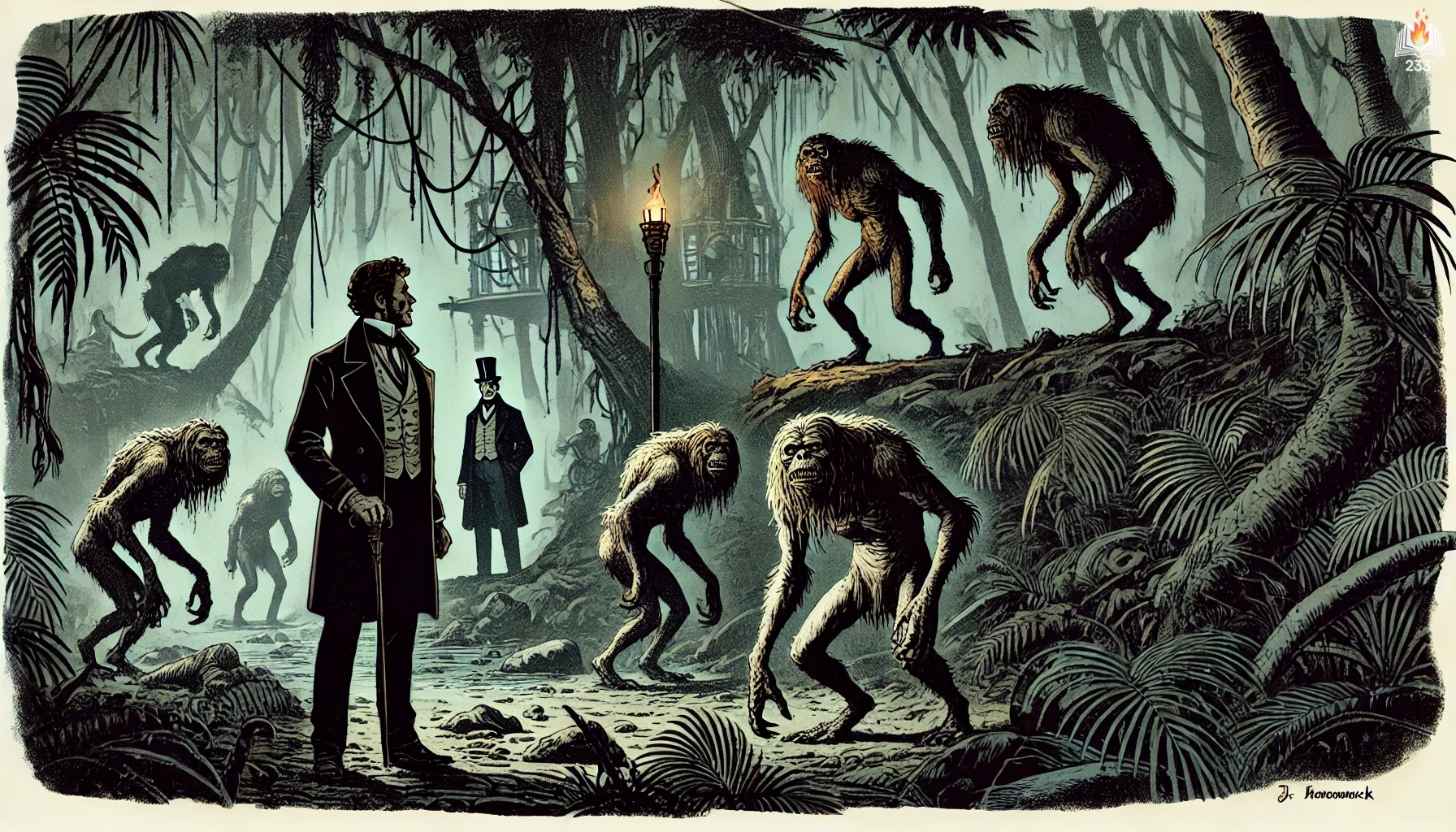
Small Gods by Terry Pratchett, published in 1992, is part of the acclaimed Discworld series – a sprawling satirical fantasy saga that blends sharp wit, deep philosophy, and social commentary. This installment stands out for its exploration of religion, belief, and institutional power through a story set in the theocratic land of Omnia. It follows the reluctant prophet Brutha and a tortoise claiming to be a god, embarking on a journey that questions the very nature of faith and divinity.
Plot Summary
In the dust-swept deserts of Omnia, where the sun baked the stone streets of the Citadel and incense curled in the shadows of towering temples, belief was more than ritual – it was reality. Gods lived not in the heavens but in the minds of men, and the strength of a deity was measured not by might, but by worship. So it was a troubling time for the Great God Om, who found himself, not soaring with wings of fire, but trapped in the slow, stubby body of a one-eyed tortoise.
Brutha, a novice gardener in the temple grounds, heard the god’s voice while hoeing melons. He was not like the other novices. Simple, literal, obedient to the letter, Brutha remembered everything he saw and heard, but he questioned nothing. His faith was not intellectual but rooted in unshakable certainty, handed down by a grandmother whose belief could split granite. To him, Om’s voice was no metaphor – it was a real voice inside his head, speaking from a dusty tortoise with chipped shell and a foul temper.
Om, stripped of divine power due to a dramatic lack of true believers, had been surviving on the edges of thought, sustained by the flickering belief of a single boy. Brutha’s unwavering devotion had unknowingly anchored Om to existence. But belief alone wasn’t enough to restore his might. He needed worship, recognition, and perhaps, a little help from his only believer to ascend once more.
Meanwhile, the Omnian Church, bloated with bureaucracy and drenched in blood, prepared for a holy mission. Deacon Vorbis, head of the fearsome Quisition, moved through the corridors of power like a shadow of intent. Cold, unreadable, and terrifying in his silence, Vorbis sought to root out heresy and expand Omnia’s influence through war and fear. He saw Brutha – earnest, innocent Brutha – as the perfect vessel for a new prophet. A pure soul, untouched by questioning, ideal for manipulation.
Vorbis arranged for Brutha to accompany a peace delegation to Ephebe, a city known for philosophy, democracy, and dangerously subversive ideas. Ephebe was everything Omnia feared – a place where gods were optional, arguments were endless, and laughter echoed in temples. Brutha, carrying Om the tortoise in a basket, stepped into a world that churned his certainty and tested the limits of his faith.
In the twisting streets and libraries of Ephebe, Brutha met philosophers who believed in thinking more than praying, and rebels who whispered of a godless world. One of them, Didactylos, author of a banned text claiming the world rode on the back of a giant turtle, became a symbol of dangerous truth. The phrase The Turtle Moves echoed through secret meetings, passed from lips that sought freedom from divine tyranny.
Brutha’s journey through Ephebe was not just across stone alleys but through his own mind. Om, still trapped in tortoiseshell and forced to depend on Brutha’s arms, began to understand the weakness of power and the power of humility. He saw the cruelty done in his name – the burnings, the purges, the screams behind locked doors – and for the first time, he questioned his own divinity.
Vorbis, ever the strategist, saw opportunity in chaos. He orchestrated a betrayal, engineering his own martyrdom to ignite a holy war. Captured and tortured by the Ephebians, Vorbis endured with serene composure, convinced of his righteousness. But when rescue came, it was Brutha, not an army, who carried the broken deacon across the desert, step by painful step, through heat and thirst and silence. Om, riding in the novice’s pouch, watched and learned.
The desert reshaped them all. Brutha, guided only by inner conviction and the faint voice of a god trying to remember how to be one, began to see the difference between belief and control, between truth and doctrine. Om, witnessing Brutha’s kindness, began to question what sort of god he had been, and what sort he might become.
Back in Omnia, the tide turned. Brutha stood before the Cenobiarch and challenged the very structure of faith. He spoke not with thunder, but with clarity, demanding that belief should be voluntary, that fear and violence had no place in divine service. The God Om, restored to power by the depth and purity of Brutha’s faith, manifested not in fire or wings, but in quiet transformation. He chose not to strike down his enemies, but to rebuild from within.
Vorbis, stripped of position and sanity, wandered the Citadel as a ghost of power, eventually succumbing to the very silence he once wielded as a weapon. His end came not in flames, but in forgetfulness, a final mockery of his desire for eternal legacy.
Brutha became the new leader of the Church, but not as prophet or tyrant. He ruled with patience, listening more than speaking, guiding rather than commanding. He opened the Citadel’s gates to dialogue and thought, to books and philosophers, to those who believed and those who did not. Om, now wiser and quieter, walked beside him in spirit, understanding that the true strength of a god lay not in control, but in choice.
In the quiet after years passed, Om visited Brutha one last time. The boy who once hoed melons in silent obedience had grown into a man who reshaped faith itself. Om offered him a place beside the gods, but Brutha declined. He had built a better world, one where belief was free, and that was enough.
Far from the towering temples and echoing prayers, in a quiet garden where bees drifted between blossoms, a tortoise ambled under the sun. Somewhere, above or beyond or within, the Turtle still moved.
Main Characters
Brutha – A devout novice in the Omnian church, Brutha is earnest, simple-minded, and deeply faithful. He is chosen by the Great God Om, who appears to him in the form of a tortoise. Brutha’s unwavering belief and innate goodness contrast starkly with the corruption and cruelty of the religious hierarchy. Over time, he evolves from a passive believer into a thoughtful reformer, grappling with the meaning of true faith.
The Great God Om – Once a powerful deity, Om finds himself trapped in the body of a powerless tortoise due to a dramatic loss of believers. His sharp tongue, cynicism, and desperation for worship make him both comical and tragic. Through Brutha, he embarks on a quest to reclaim his former glory, learning humility and the value of genuine belief along the way.
Vorbis – The sinister head of the Quisition, Vorbis embodies religious authoritarianism. Cold, calculating, and remorseless, he seeks to dominate both people and gods in the name of doctrinal purity. His confrontation with Brutha and eventual downfall underscore the dangers of blind fanaticism.
Lu-Tze – A time-traveling history monk who appears sporadically, Lu-Tze offers cryptic wisdom and gentle subversion. His role emphasizes the unpredictability of history and the quiet influence of seemingly inconsequential figures.
Theme
The Nature of Belief – Central to Small Gods is the idea that gods exist only as long as people believe in them. Pratchett challenges organized religion by highlighting how belief can be manipulated, commodified, and used as a tool for power or, conversely, as a source of personal truth and growth.
Religion vs. Institutional Power – The novel draws a stark line between personal faith and institutional religion. Through the oppressive Omnian Church, Pratchett criticizes dogma and the use of fear and violence to control the masses, revealing how institutions often stray from the tenets they claim to uphold.
Free Will and Destiny – Characters frequently wrestle with the tension between destiny and free will. Brutha’s journey reflects the power of individual choice in shaping not just personal fate but broader societal change.
Transformation and Redemption – From gods to mortals, many characters undergo profound change. Om becomes more compassionate, Brutha matures into a leader, and even Vorbis confronts, if only momentarily, his own humanity. These arcs illustrate the potential for redemption and growth.
Writing Style and Tone
Terry Pratchett’s writing in Small Gods is laced with his signature satirical wit, blending the absurd with the profound. His prose is brisk, filled with clever wordplay, sharp observations, and unexpected turns of phrase. He often breaks the fourth wall or uses footnotes to expand on jokes or ideas, creating a conversational and engaging reading experience. This style allows readers to laugh even as they’re led into deep philosophical reflections.
The tone oscillates between comedic and serious, never settling into pure farce or solemnity. Pratchett uses humor as a scalpel, dissecting sensitive issues like religious zealotry, cruelty in the name of piety, and the fragility of belief. Yet, there is a deep compassion underlying his satire – a belief in the possibility of kindness, understanding, and change. The result is a narrative that is both entertaining and intellectually resonant, accessible yet profound.
Quotes
Small Gods – Terry Pratchett (1992) Quotes
“Time is a drug. Too much of it kills you.”
“His philosophy was a mixture of three famous schools -- the Cynics, the Stoics and the Epicureans -- and summed up all three of them in his famous phrase, 'You can't trust any bugger further than you can throw him, and there's nothing you can do about it, so let's have a drink.”
“What have I always believed? That on the whole, and by and large, if a man lived properly, not according to what any priests said, but according to what seemed decent and honest inside, then it would, at the end, more or less, turn out all right.”
“He says gods like to see an atheist around. Gives them something to aim at.”
“Fear is a strange soil. It grows obedience like corn, which grow in straight lines to make weeding easier. But sometimes it grows the potatoes of defiance, which flourish underground.”
“What's a philosopher?' said Brutha. Someone who's bright enough to find a job with no heavy lifting,' said a voice in his head.”
“Just because you can explain it doesn't mean it's not still a miracle.”
“Gods don't like people not doing much work. People who aren't busy all the time might start to think.”
“The figures looked more or less human. And they were engaged in religion. You could tell by the knives (it's not murder if you do it for a god).”
“The trouble was that he was talking in philosophy but they were listening in gibberish.”
“Bishops move diagonally. That's why they often turn up where the kings don't expect them to be.”
“We are here and it is now. The way I see it is, after that, everything tends towards guesswork.”
“There are hardly any excesses of the most crazed psychopath that cannot easily be duplicated by a normal kindly family man who just comes in to work every day and has a job to do.”
“The turtle moves.”
“Gravity is a habit that is hard to shake off.”
“There’s no point in believing in things that exist.”
“I think," he said, "I think, if you want thousands, you have to fight for one.”
“Words are the litmus paper of the mind.”
“The trouble with being a god is that you've got no one to pray to.”
“The people who really run organizations are usually found several levels down, where it is still possible to get things done.”
“One day a tortoise will learn how to fly.”
“Belief, he says. Belief shifts. People start out believing in the god and end up believing in the structure.”
“Thou shalt not submit thy god to market forces.”
“It's hard to explain," said Brutha. "But I think it's got something to do with how people should behave... you should do things because they're right. Not because gods say so. They might say something different another time.”
“When you can flatten entire cities at a whim, a tendency towards quiet reflection and seeing-things-from-the-other-fellow's-point- of-view is seldom necessary.”
We hope this summary has sparked your interest and would appreciate you following Celsius 233 on social media:
There’s a treasure trove of other fascinating book summaries waiting for you. Check out our collection of stories that inspire, thrill, and provoke thought, just like this one by checking out the Book Shelf or the Library
Remember, while our summaries capture the essence, they can never replace the full experience of reading the book. If this summary intrigued you, consider diving into the complete story – buy the book and immerse yourself in the author’s original work.
If you want to request a book summary, click here.
When Saurabh is not working/watching football/reading books/traveling, you can reach him via Twitter/X, LinkedIn, or Threads
Restart reading!