The Strange Library by Haruki Murakami, originally published in Japan in 2005 and translated into English in 2014, is a surreal and haunting novella that weaves fantasy, psychological dread, and childhood vulnerability into a uniquely disturbing library visit. Known for his dreamlike narratives and metaphysical themes, Murakami crafts a story that blends the eerie logic of nightmares with the nostalgic sensibility of a coming-of-age tale, all set in the shadowy, mysterious corridors of a library that turns into a trap.
Plot Summary
A boy walks into the city library with new leather shoes tapping sharply against the linoleum floor. He only wishes to return a pair of books and look up something he had wondered about – how taxes were collected in the Ottoman Empire. The woman at the circulation desk tells him to head to Room 107. He obeys.
Down a staircase he never noticed before and through a corridor shrouded in silence, he arrives at the room. An old man with fly-speckled skin and thick glasses greets him with exaggerated politeness. The boy, hesitant and unsure, mentions his interest in Ottoman tax collection. The old man’s eyes gleam with unusual delight. Soon, he presents the boy with three ancient books – titles forgotten by time, dense with knowledge – but insists they must be read in a special reading room, deep within the library’s bowels.
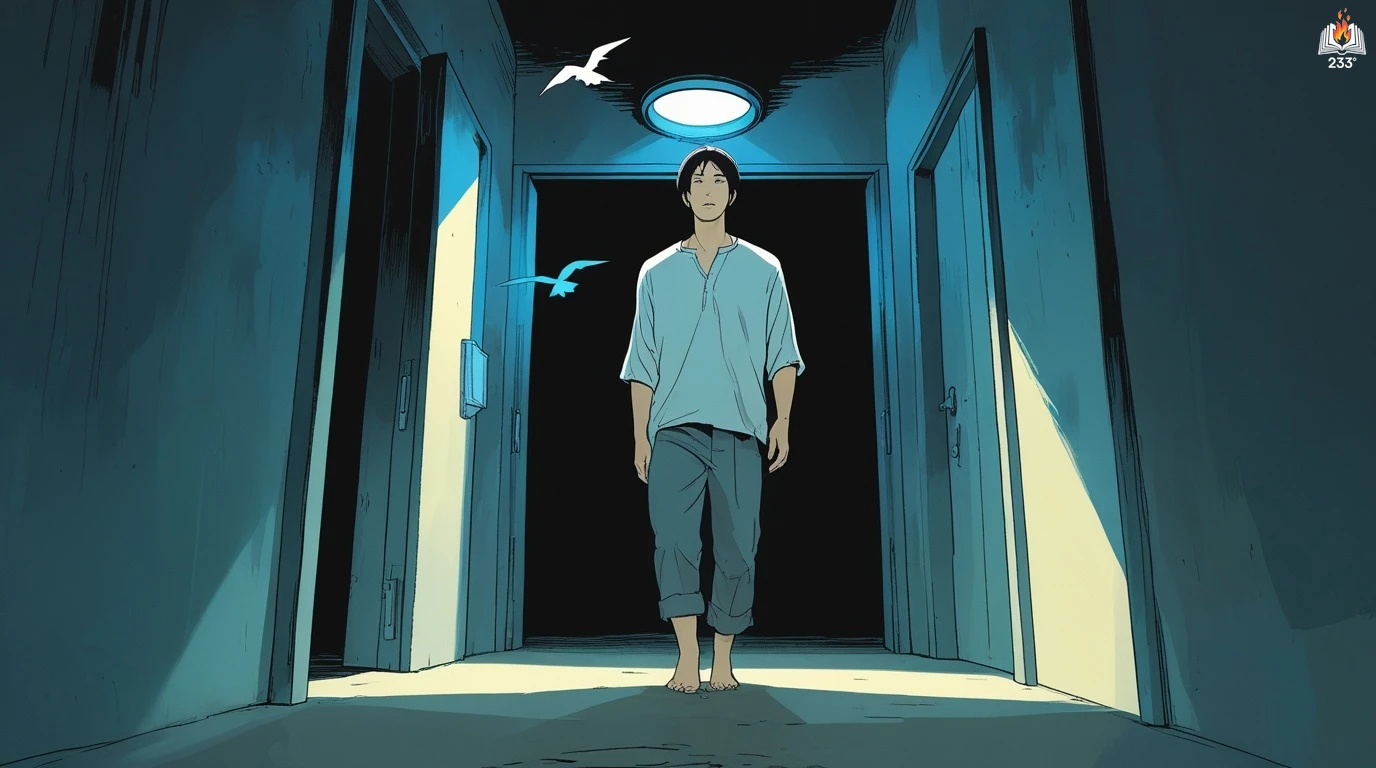
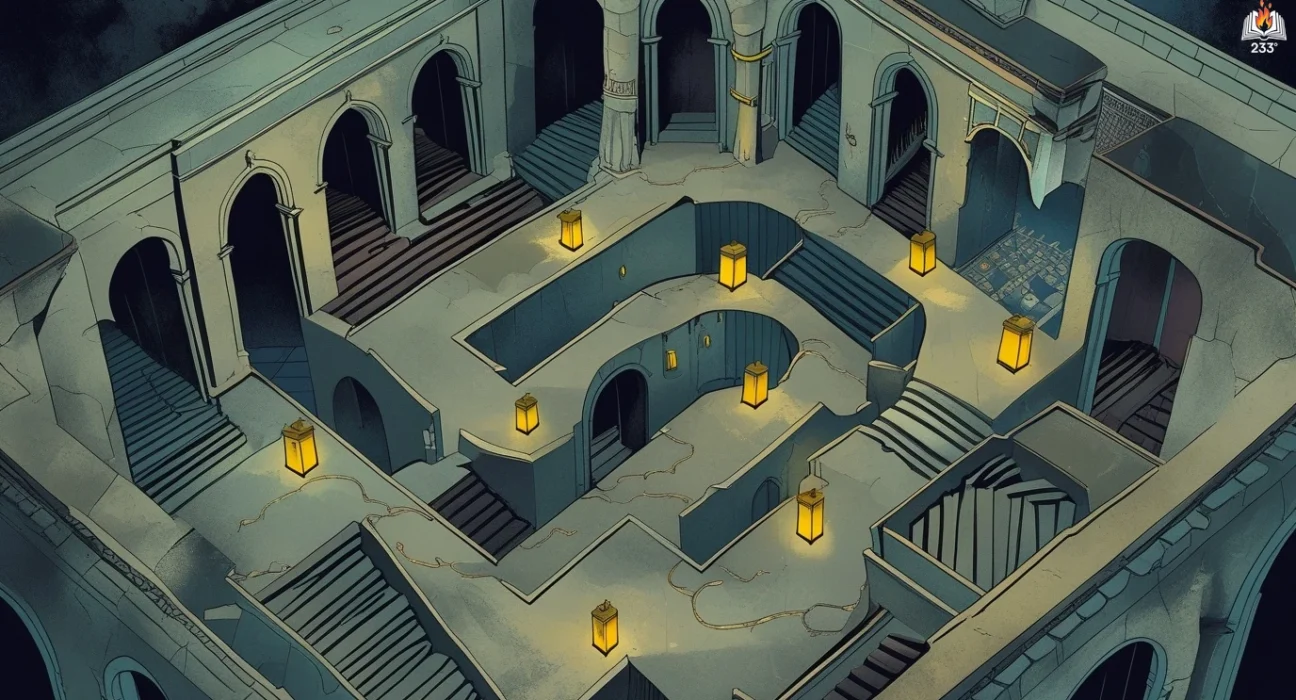
They descend through a series of winding halls, tunnels that fork endlessly. The boy wonders how such a labyrinth exists beneath a modest public library, but politeness – ingrained by his mother – keeps him from voicing doubts. The old man leads him to a steel door marked “Reading Room.” Beyond it lies nothing but darkness.
Inside, the light dies behind them, the lock clicks shut, and they descend further until a pale glow appears. There, in the shadows, waits a small man cloaked in sheepskin. With a voice both gentle and weary, the sheep man confirms what the old man demands – the boy must read all three books, memorize every word, and only then may he leave.
But the truth unravels quickly. The reading room is a cell, complete with a bed, toilet, and iron ball chained to his ankle. His only companions are the sheep man, who brings doughnuts and lemonade, and a voiceless girl who arrives with trays of elegant dinners and messages spoken only with her hands. She is beautiful – so beautiful, it hurts to look at her. The sheep man tells the boy plainly – the old man plans to eat his brain, for a mind filled with knowledge is a delicacy, creamy and grainy and irresistible.
The boy cries, protests, reasons. But the sheep man, though kind, is powerless. If he helps, he’ll be thrown into a jar of ten thousand caterpillars. So the boy pretends to comply. He reads. The books, though written in old Turkish, flow into his memory as if etched by fire. He becomes the Ottoman tax collector, walking Istanbul’s streets, counting coin and sipping coffee, a blade at his waist and wives at home. Memory and identity blur.
The voiceless girl returns, again and again, with meals and quiet comfort. They talk without sound. She explains nothing clearly, but he begins to understand: her world, the sheep man’s, and his own – all overlap, sometimes touching, sometimes not. He confides in her his plan to escape. She wants to join him. He promises she can.
The sheep man, too, dares to hope. They talk of opening a doughnut shop. He will fry, the boy will sell. They will escape together.
The night of the new moon arrives. The girl appears one last time, pale and faint, her body near-transparent. She kisses the boy on the cheek and tells him the moment is near. Then she vanishes like mist.
The sheep man removes the iron ball and chain. They step into the corridor and make for the maze. The boy leaves his shoes behind – too loud, too risky. The cold floors sting his feet. The sheep man spins in circles at junctions, listens to walls, tastes stones, whispers to spiders. Slowly, the path emerges.
Time thins. Morning creeps closer. Finally, they reach the last corridor, where a door glows faintly ahead. The sheep man laughs softly – this is it. Freedom.
The door swings open.
Inside waits the old man.
Beside him, the dog.
The same dog that bit the boy when he was younger. Enormous and black, with green eyes and a jewel-studded collar. In its mouth, the limp, bloodied body of the boy’s pet starling. He falls to the floor, but the sheep man catches him. The old man sneers. He was never asleep. He knew.
The willow switch cracks against the desk. The sheep man cowers. The dog growls. The boy trembles. The old man declares his sentence: the sheep man will be sliced and fed to centipedes. The boy will be devoured slowly, screaming, though his unfinished knowledge makes the brain less delicious.
But the starling grows.
Its body, lodged in the dog’s jaw, swells like a storm. It shatters the teeth. The dog tries to howl. The old man beats the bird with the willow switch, but it keeps growing, swelling until it fills the room. The wings thunder. The dog is crushed. The old man is pinned.
The starling’s voice, now the girl’s, speaks: Run.
The boy grabs the sheep man’s hand and bolts. No time to look back. They reach the main hall. The building is silent. They fling open a window and fall into the morning park.
Grass meets them like breath. Sunlight grazes their skin. The boy lies still, eyes closed, breath returning.
When he looks around, the sheep man is gone.
Back home, his mother waits with breakfast, calm and quiet. No questions. No reproach. The birdcage is empty. The starling is gone. He doesn’t ask.
He never returns to the library. The memory clings too tightly. He sometimes remembers the shoes he left behind, then the sheep man, then the girl. Did they exist? Was it all real? He cannot say.
His mother dies, quietly and without pain. There is a funeral. Now, he is alone. The house is silent. The birdcage remains. At two o’clock in the morning, lying awake, he remembers the library basement. The cell. The silence. The new moon’s darkness that never fully lifts.
Main Characters
The Boy – The unnamed protagonist is a studious, polite, and imaginative young boy who simply wishes to learn about Ottoman tax systems. Obedient and sensitive, he is easily manipulated by adults but possesses a resilient core. His internal monologue reflects anxiety, loyalty to his mother, and a longing for connection, which deepens as his experience turns from educational to nightmarish.
The Old Man – A grotesque figure who embodies menace cloaked in civility, the old man is both a librarian and captor. He represents oppressive authority and sadism, compelling the boy to memorize books only to later consume his knowledge-filled brain. He thrives on control, enforcing submission with a magical willow switch and a monstrous dog.
The Sheep Man – A mysterious figure covered in sheepskin, he is both a guard and reluctant accomplice. Kind-hearted and timid, he helps the boy navigate the labyrinth and even conspires to escape, despite the threat of a gruesome punishment involving caterpillars. His dream of opening a doughnut shop adds depth and humanity to his strange persona.
The Voiceless Girl – Ethereal and beautiful, she communicates through hand gestures and exudes a haunting calm. She nourishes the boy physically and emotionally, offering both food and hope. Her reality remains ambiguous, as she may be a dream, a spirit, or an embodiment of the boy’s inner resilience and longing for solace.
The Big Black Dog – A terrifying creature with green eyes and a jewel-studded collar, the dog is an enforcer of the old man’s will and a symbol of past trauma. It may be real or metaphorical, but its reappearance ties directly to the boy’s childhood fear and helplessness.
Theme
Loss of Innocence – The story charts a chilling transition from curiosity to disillusionment. The boy begins with a simple academic inquiry and ends in a traumatic reckoning with mortality, betrayal, and existential solitude. His journey mirrors the abrupt and often incomprehensible challenges of growing up.
Memory and Identity – As the boy immerses himself in ancient texts, he begins to lose the boundary between himself and the tax collector he reads about. This fusion blurs reality and fiction, highlighting how memory and identity can shift under pressure and how stories can consume or reshape us.
Imprisonment and Escape – Physical captivity in the library’s labyrinth reflects emotional and psychological traps. Whether it’s parental expectations, fear of disobedience, or the literal ball and chain, the boy must find the courage to break free from confining systems to reclaim agency.
The Supernatural and Surreal – Murakami blurs the lines between dream and waking life. The girl who may or may not exist, the sheep man’s ambiguous loyalty, and the grotesque transformations in the climax elevate the narrative from mere fantasy to a meditation on reality’s fragility.
Loneliness and Isolation – Despite the strange companionships, the boy ultimately faces a profound solitude. The loss of his mother and starling underscores the irreversible distance between people and the inevitability of existential aloneness.
Writing Style and Tone
Haruki Murakami’s prose in The Strange Library is clean and deceptively simple, yet rich with atmospheric detail. His signature surrealism permeates every corner of the story, drawing readers into a world that operates on dream logic. Dialogue is sparse but sharply constructed, often swinging between whimsical and terrifying. The understated tone creates an eerie calm that magnifies the horror when it strikes, making the mundane unsettling.
Murakami’s narrative technique involves a slow unraveling of reality, where nothing is overtly explained, and metaphor bleeds into literal action. The tone shifts fluidly from melancholic introspection to absurd humor to chilling dread, maintaining a tight grip on emotional resonance. The child’s voice is written with vulnerability and sincerity, deepening the reader’s empathy while enhancing the surreal tension. This fusion of whimsical absurdity with existential gravity makes the novella both accessible and profoundly disturbing.
Quotes
The Strange Library – Haruki Murakami (2005) Quotes
“Why do I act like this, agreeing when I really disagree, letting people force me to do things I don't want to do?”
“I’m not very good at giving anyone a clear no.”
“At the same time, my anxiety had turned into an anxiety quite lacking in anxiousness. And any anxiety that is not especially anxious is, in the end, an anxiety hardly worth mentioning.”
“The tricky thing about mazes is that you don't know if you've chosen the right path until the very end. If it turns out you were wrong, it's usually too late to go back and start again. That's the problem with mazes.”
“No matter what the situation may be, I still take pleasure in witnessing the joy of others.”
“The world follows its own course. Each possesses his own thoughts, each treads his own path. So it is with your mother, and so it is with your starling. As it is with everyone. The world follows its own course.”
“Ever since I was little my mother had told me, if you don’t know something, go to the library and look it up.”
“So just because I don’t exist in the sheep man’s world, it doesn’t mean that I don’t exist at all.”
“Our worlds are all jumbled together--your world, my world, the sheepman's world. Sometimes they overlap and sometimes they don't.”
“She didn't answer. Instead, she smiled sweetly. It was a smile so radiant that the air seemed to thin around it.”
“Like a blind dolphin, the night of the new moon silently drew near.”
“I lie here by myself in the dark at two o'clock in the morning and think about that cell in the library. About how it feels to be alone, and the depth of the darkness surrounding me. Darkness as pitch black as the night of the new moon.”
“Enough of your prattle," the old man said. "I cannot abide people who conjure up a raft of excuses, disparaging the efforts of those who have gone out of their way to help them. Such people are common trash.”
“I turned to run, but I didn't actually take a step, even though I wanted to. That wasn't the way I was raised. My mother taught me that if you knock on a door, you have to wait there until someone answers.”
“And any anxiety that is to not especially anxious is in the end, an anxiety hardly worth mentioning.”
“Because brains packed with knowledge are yummy, that’s why. They’re nice and creamy. And sort of grainy at the same time.”
“I can read the two of you as easily as I can a watermelon patch in broad daylight.”
“It was a small soft hand. I thought my heart might break in two.”
“She was so pretty that looking at her made my eyes hurt.”
“Every time I get new shoes, it takes me a while to get used to their noise.”
“Mr. Sheep Man," I asked. "Why would that old man want to eat my brains?" "Because brains packed with knowledge are yummy, that's why. They are nice and creamy. And sort of grainy at the same time".”
“The library was even more hushed than usual. Darkness as pitch black as the night of the new moon.”
“I cannot abide people who conjure up a raft of excuses, disparaging the efforts of those who have gone out of their way to help them. Such people are common trash.”
“The tricky thing about mazes is that you don’t know if you’ve chosen the right path until the very end. If it turns out you were wrong, it’s usually too late to go back and start again. That’s the problem with mazes.”
“My mother taught me that if you knock on a door, you have to wait there until someone answers.”
We hope this summary has sparked your interest and would appreciate you following Celsius 233 on social media:
There’s a treasure trove of other fascinating book summaries waiting for you. Check out our collection of stories that inspire, thrill, and provoke thought, just like this one by checking out the Book Shelf or the Library
Remember, while our summaries capture the essence, they can never replace the full experience of reading the book. If this summary intrigued you, consider diving into the complete story – buy the book and immerse yourself in the author’s original work.
If you want to request a book summary, click here.
When Saurabh is not working/watching football/reading books/traveling, you can reach him via Twitter/X, LinkedIn, or Threads
Restart reading!