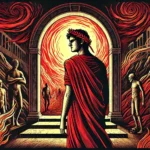
The Woman in White is a mystery novel by Wilkie Collins, widely regarded as one of the first sensation novels. Published in 1860, it blends elements of gothic fiction, romance, and detective thrillers. The story revolves around a young drawing teacher, Walter Hartright, who encounters a mysterious woman dressed in white on a lonely road at night. This chance meeting sets off a series of bizarre and sinister events involving deception, identity theft, and crime. The novel is known for its multiple narrators, vivid characters, and intricate plot.
Plot Summary
On a warm July evening, Walter Hartright, a young drawing teacher, set out for his mother’s cottage near Hampstead. Along a deserted road, he was startled by the sudden appearance of a mysterious woman dressed entirely in white. She seemed distressed and asked him for directions to London, claiming to have suffered an accident. Walter, struck by her fragility and curious nature, offered assistance. As they walked, she spoke of people from her past, including Limmeridge House in Cumberland, a place where Walter was soon to work. After parting ways, he later learned from two men that the woman had escaped from an asylum. This chance encounter would come to haunt him, intertwining his fate with hers.
Arriving at Limmeridge House, Walter was introduced to his students, the gentle and beautiful Laura Fairlie and her half-sister, Marian Halcombe. Laura’s striking resemblance to the woman in white disturbed Walter, though he did not yet understand the connection. Over time, he grew fond of both women, especially Laura, whose delicate nature and grace captivated him. However, Laura was already promised to Sir Percival Glyde, a man of wealth and status, though she confessed to Walter that she did not love him.
Marian, ever protective of her sister, noticed Walter’s growing affection and gently advised him to leave Limmeridge. Heartbroken but respectful of Laura’s engagement, Walter departed. Before he left, he discovered a letter addressed to Laura from the mysterious woman in white, Anne Catherick, warning her against marrying Sir Percival. Though disturbed by the letter, Walter could not stay to investigate further.
Sir Percival soon arrived at Limmeridge, and despite the ominous warnings, the marriage proceeded. Laura, resigned to her fate, left her home with her new husband and moved to his estate, Blackwater Park, accompanied by Marian. At Blackwater Park, Sir Percival’s true nature began to surface. He became increasingly impatient and desperate to secure Laura’s wealth. His ally in this scheme was Count Fosco, an eccentric but dangerously intelligent Italian who had married Laura’s aunt.
Marian, sensing danger, grew suspicious of Sir Percival and Count Fosco. She overheard a conversation revealing Sir Percival’s financial ruin and his plan to force Laura into signing documents that would give him control over her fortune. Determined to protect her sister, Marian confronted Sir Percival, but her efforts were in vain. Her health deteriorated under the strain of the conflict, and she soon fell seriously ill.
In the midst of Marian’s illness, Sir Percival and Fosco executed their plan. They imprisoned Laura in an asylum, using Anne Catherick, who bore an uncanny resemblance to Laura, as her replacement. Anne, who had long been under the control of Sir Percival due to a secret from his past, had finally succumbed to her illness. With her death, the switch was complete. Laura, now believed to be dead by everyone except Marian and Walter, was left to languish in the asylum under Anne’s identity.
Marian, recovering from her illness, was determined to rescue her sister and expose the conspiracy. She sought out Walter, who had returned from his travels abroad. Together, they unraveled the plot, discovering that Sir Percival’s desperation stemmed from a dark secret: he was not the legitimate heir to his title or estate. His birth was illegitimate, and the forged marriage documents were intended to secure his position by fraudulently claiming Laura’s fortune.
Walter, Marian, and Laura, once freed from the asylum, went into hiding. With Marian’s fierce loyalty and Walter’s resolve, they plotted to gather evidence against Sir Percival and Count Fosco. Sir Percival, in his increasing paranoia, tried to destroy the incriminating documents that proved his illegitimacy. In a reckless attempt to burn them, he perished in the flames.
Count Fosco, however, was not so easily defeated. His intellect and cunning made him a formidable adversary. Walter, undeterred, tracked Fosco’s movements and learned of his involvement with a secret political society. Using this knowledge, Walter confronted Fosco and forced him to confess to his crimes in exchange for his life. Fosco, seeing no other option, fled the country, leaving behind a written confession.
With Sir Percival dead and Fosco in exile, Laura was restored to her rightful identity. Her marriage to Sir Percival was annulled, and she was free to rebuild her life with Walter. The two were married, and together with Marian, they returned to Limmeridge House. Though the events had left them all scarred, they found solace in each other, knowing that justice had prevailed.
In the end, the sinister plots were unraveled, and the lives of the innocent were restored, though not without loss. The woman in white, Anne Catherick, had played a pivotal role, her tragic life intertwined with Laura’s fate. Her warnings, though initially ignored, had set in motion the chain of events that would lead to Sir Percival’s downfall and the restoration of Laura’s happiness.
Main Characters
Walter Hartright: The protagonist and narrator of large portions of the story, Walter is a drawing master who gets involved in unraveling the mystery of the woman in white. He is kind, principled, and determined to seek justice for those wronged.
Laura Fairlie: A gentle and beautiful young woman, Laura becomes central to the mystery after her marriage to Sir Percival Glyde. Her resemblance to the woman in white is crucial to the plot. Laura is delicate, submissive, and greatly loved by her half-sister, Marian.
Marian Halcombe: Laura’s strong-willed and intelligent half-sister, Marian plays a key role in the investigation of Sir Percival Glyde’s dark secrets. Her loyalty, courage, and resourcefulness are vital to uncovering the truth.
Sir Percival Glyde: Laura’s husband and the villain of the novel, Sir Percival is manipulative, secretive, and determined to secure Laura’s fortune at any cost, even through nefarious means. His hidden past becomes a critical turning point in the story.
Count Fosco: A charismatic and cunning Italian who aids Sir Percival in his schemes. Count Fosco is an eccentric villain, known for his intelligence, charm, and love for animals, which contrasts with his ruthless behavior.
Anne Catherick (The Woman in White): A mentally fragile woman who bears an uncanny resemblance to Laura. Her mysterious appearance and connection to Sir Percival form the backbone of the plot. Anne’s quest for justice and escape from her tormentors drives much of the action.
Theme
Identity and Deception: The novel explores the manipulation of identity, particularly through the confusion between Anne Catherick and Laura Fairlie. Disguises, forged documents, and hidden histories all play into this theme, raising questions about how easily identity can be constructed or destroyed.
Madness and Sanity: The treatment of women and mental illness is a recurring theme. Anne Catherick is confined to an asylum, and her claims are dismissed as madness. The novel critiques how Victorian society used the idea of insanity as a tool to control women.
Class and Gender: Collins critiques the strict social hierarchy and gender roles of Victorian England. Marian Halcombe’s intelligence and leadership contrast sharply with society’s expectations of women, while Laura’s passive suffering reflects the vulnerability of women trapped in harmful marriages.
Justice and Revenge: Throughout the novel, the characters strive for justice, particularly Walter, Marian, and Anne. Count Fosco and Sir Percival Glyde represent corruption and greed, but the novel insists on the eventual triumph of morality and truth.
Writing Style and Tone
Wilkie Collins employs a multi-narrative structure, giving voice to different characters to present varying perspectives on the same events. This allows for a complex, layered storytelling style that builds suspense and deepens the mystery. The narrators are chosen based on their involvement in key events, allowing for subjective experiences to shape the reader’s understanding.
The tone of the novel is predominantly dark and suspenseful, fitting the gothic and sensationalist elements that define the story. Collins masterfully combines a sense of foreboding with moments of tenderness and emotion, especially in the close relationship between Marian and Laura. His language is both descriptive and atmospheric, pulling the reader into the eerie settings and intense psychological drama.
Quotes
The Woman in White – Wilkie Collins (1859) Quotes
“My hour for tea is half-past five, and my buttered toast waits for nobody.”
“Any woman who is sure of her own wits, is a match, at any time, for a man who is not sure of his own temper.”
“No sensible man ever engages, unprepared, in a fencing match of words with a woman.”
“Our words are giants when they do us an injury, and dwarfs when they do us a service.”
“The best men are not consistent in good—why should the worst men be consistent in evil?”
“Women can resist a man's love, a man's fame, a man's personal appearance, and a man's money, but they cannot resist a man's tongue when he knows how to talk to them.”
“Silence is safe.”
“Let the music speak to us of tonight, in a happier language than our own.”
“I have always held the old-fashioned opinion that the primary object of work of fiction should be to tell a story.”
“Some of us rush through life and some of us saunter through life. Mrs. Vesey sat through life.”
“I am thinking,’ he remarked quietly, ’whether I shall add to the disorder in this room, by scattering your brains about the fireplace.”
“The fool's crime is the crime that is found out and the wise man's crime is the crime that is not found out.”
“I say what other people only think, and when all the rest of the world is in a conspiracy to accept the mask for the true face, mine is the rash hand that tears off the plump pasteboard, and shows the bare bones beneath.”
“This is the story of what a Woman's patience can endure, and what a Man's resolution can achieve.”
“I am a bundle of nerves dressed up to look like a man!”
“She looked so irresistibly beautiful as she said those brave words that no man alive could have steel his heart against her.”
“There are three things that none of the young men of the present generation can do.They can't sit over their wine;they can't play at wist;and they can't pay a lady a compliment.”
“Men little know when they say hard things to us how well we remember them, and how much harm they do us.”
“Where is the woman who has ever really torn from her heart the image that has been once fixed in it by a true love? Books tell us that such unearthly creatures have existed - but what does our own experiences say in answer to books?”
“...it will always remain my private persuasion that Nature was absorbed in making cabbages when Mrs. Vesey was born, and that the good lady suffered the consequences of a vegetable preoccupation in the mind of the Mother of us all. ”
“Don't let me think.”
“Dont speak of tomorrow.Let the music speak to us tonight,in a happier language than ours.”
“I sadly want a reform in the construction of children. Nature's only idea seems to be to make them machines for the production of incessant noise.”
“It is the grand misfortune of my life that nobody will let me alone.”
“Tears are scientifically described as a Secretion. I can understand that a secretion may be healthy or unhealthy, but I cannot see the interest of a secretion from a sentimental point of view.”
“It was cold and barren. It was no longer the view that I remembered. The sunshine of her presence was far from me. The charm of her voice no longer murmured in my ear.”
We hope this summary has sparked your interest and would appreciate you following Celsius 233 on social media:
There’s a treasure trove of other fascinating book summaries waiting for you. Check out our collection of stories that inspire, thrill, and provoke thought, just like this one by checking out the Book Shelf or the Library
Remember, while our summaries capture the essence, they can never replace the full experience of reading the book. If this summary intrigued you, consider diving into the complete story – buy the book and immerse yourself in the author’s original work.
If you want to request a book summary, click here.
When Saurabh is not working/watching football/reading books/traveling, you can reach him via Twitter/X, LinkedIn, or Threads
Restart reading!