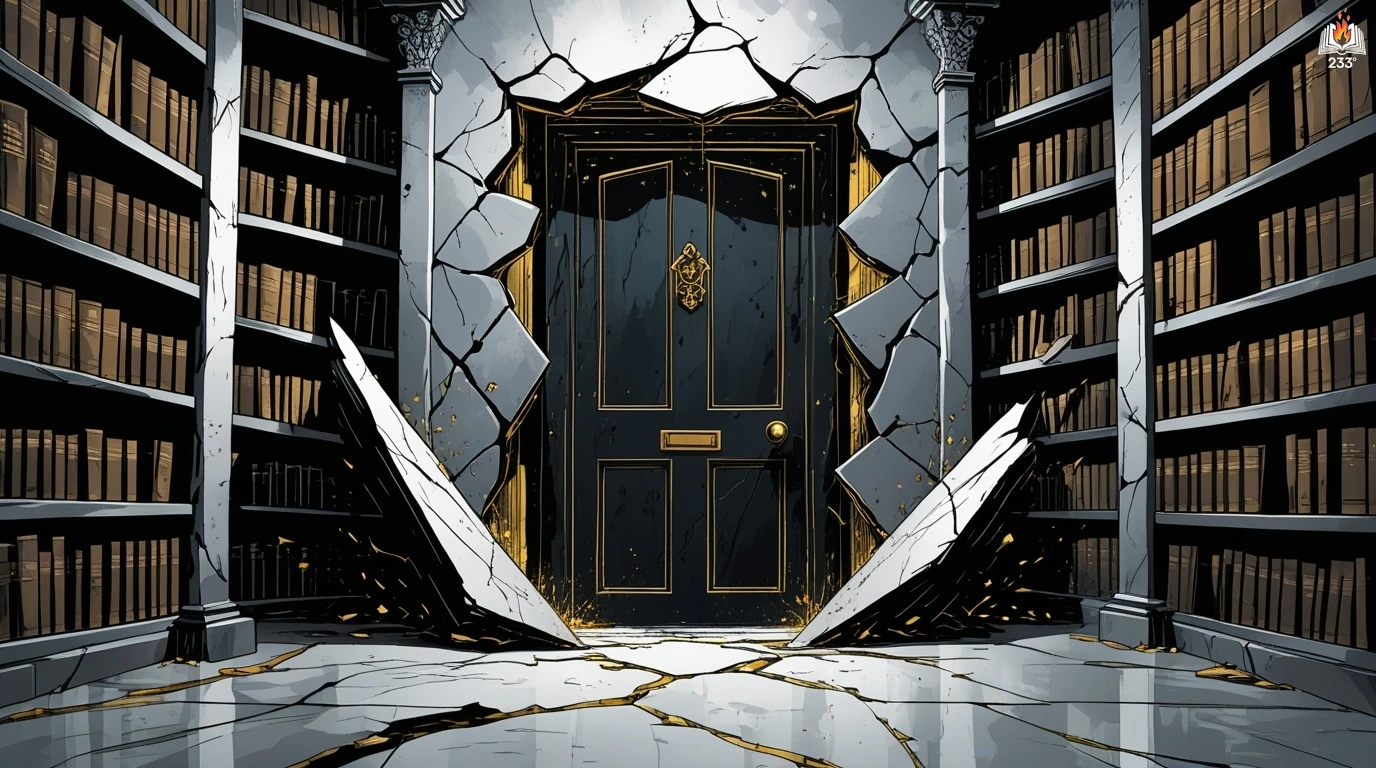


The Silkworm by Robert Galbraith (a pseudonym of J.K. Rowling), published in 2014, is the second novel in the Cormoran Strike detective series, following The Cuckoo’s Calling. This mystery plunges private investigator Cormoran Strike and his assistant Robin Ellacott into the dark heart of the London literary scene when a missing author, Owen Quine, is discovered brutally murdered. The case intertwines egos, grudges, and secrets within the volatile world of publishing, forcing Strike to navigate a tangled web of allegiances and lies in pursuit of justice.
Plot Summary
The November streets of London shimmered with damp and gloom when a woman in an outdated brown coat walked into the Denmark Street office of private detective Cormoran Strike. Leonora Quine, blunt and unrefined, bore the look of someone who had long since surrendered to disappointment. Her husband, Owen Quine, had vanished. A writer prone to dramatic gestures and emotional absences, Quine had often gone off before – but never for this long. This time, Leonora insisted, felt different. There was something wrong.
Strike, weathered by war and misfortune, should have said no. His business was finally profitable, thanks to the case that had made his name across London, but something about Leonora’s insistence – her lonely conviction, the helplessness beneath her defiance – stirred a flicker of sympathy. She spoke of a writers’ retreat mentioned by a man named Christian Fisher. That was her only lead, and it dissolved quickly. Fisher had never expected Quine to show up at the retreat. In fact, he found the very idea laughable. Quine, he explained, had written something that would set the literary world ablaze.
It was a manuscript called Bombyx Mori – Latin for silkworm. Quine had crafted a grotesque allegory, casting real figures from his publishing circle in disturbing roles. Veiled enough to escape legal proof but vicious enough to leave no doubt, the work dripped with venom and contempt. Daniel Chard, CEO of Quine’s publishing house, was portrayed as a deformed creature. Literary titan Michael Fancourt, an old rival, was ridiculed. Quine’s own agent, Elizabeth Tassel, was not spared either.
As Strike delved deeper, the corridors of publishing revealed a strange breed of predator. The world Quine inhabited was not gilded with genius but cluttered with envy, betrayal, and buried grudges. Quine had once enjoyed the glimmer of promise, but time had turned him sour, erratic, and desperate for recognition. He had clung to the fading embers of past glory, surrounded by people who either pitied him, ignored him, or loathed him.
When Quine’s body was finally found, it confirmed Leonora’s fears in ways she could never have imagined. He had been tied, disemboweled, and left to rot in an abandoned house, staged to mirror the grotesque death scene of the protagonist in Bombyx Mori. The manuscript, it turned out, had been more than literary provocation – it had become a blueprint for murder.
Leonora was swiftly arrested. The police saw a brittle woman, neglected by her husband, insulted by his writing, and finally pushed over the edge. Her prints were on the manuscript. She had no alibi. But Strike, despite the surface of things, believed she lacked the cunning – or the cruelty – for such a crime.
Elizabeth Tassel, sharp-tongued and chain-smoking, had spent decades tethered to Quine’s mediocrity. She had once been a writer herself, her dreams shriveled by bitterness and rejection. Tassel revealed that Bombyx Mori had been a disaster waiting to happen. Quine had passed it around recklessly, forcing others to read the bile he had disguised as fiction. But not all copies had been accounted for. And Strike suspected the key lay in what had been added to the final version – not what Quine had written, but what had been done to it after he was dead.
With Robin Ellacott at his side, loyal, brilliant, and increasingly vital to the investigation, Strike navigated a path through petty rivalries and half-forgotten scandals. Michael Fancourt emerged as a ghost from the past, his own wife driven to suicide years ago by an anonymous satirical attack. He believed Quine had written that vicious piece. The irony was bitter – now, Quine had written something far worse, and was himself the victim. But Strike suspected Fancourt was not the avenger here. His rage was theatrical, his disdain real, but it lacked the personal signature that murder required.
Strike watched. He listened. He asked the questions no one else had thought to ask. And slowly, a different picture formed – one that led not to artistic outrage or wounded pride, but to something more intimate and resentful.
Elizabeth Tassel had been more than Quine’s agent. She had been his friend, his savior, his jailer. She had fed his delusions, kept him afloat, tolerated his affairs and tantrums. And in return, he had betrayed her trust with a manuscript that turned her into a grotesque joke. Worse, he had handed that manuscript to others. Tassel had begged to retrieve the copies. When she realized she could not contain the damage, she had done what decades of humiliation had taught her to do – she erased the problem.
Strike confronted her with the pieces of the puzzle she thought she had hidden. The forged additions to the manuscript, the manipulation of timelines, the misplaced trust in her own invisibility. Tassel, cloaked in disappointment, had finally lashed out in fury. She had staged Quine’s death to match his own work, thinking no one would trace the layers back to her. But Strike had followed the silken thread she had left behind.
Leonora was cleared. She returned home to her daughter, carrying the weight of a tragedy that had nearly swallowed her. Strike, limping and exhausted, watched the press turn its attention elsewhere. Robin returned to her desk, her fiancé’s disapproval deepening with every new case she took pride in. And the city, indifferent as ever, swallowed the scandal whole and moved on.
Above the neon haze of Denmark Street, Strike sat in his cramped flat, finally still. He had pulled the truth from a web of deception, where fiction had bled into violence and art had become a weapon. In the quiet aftermath, he closed the file on Owen Quine – a man destroyed by the very words he thought would make him immortal.
Main Characters
Cormoran Strike – A war veteran turned private detective, Strike is defined by his tenacity, keen observation skills, and moral code. Haunted by his past and driven by a strong sense of justice, he approaches each case methodically. His physical discomfort from a prosthetic leg never impedes his sharp instincts and calm under pressure. In The Silkworm, he balances his rising fame with the gritty demands of the investigation and remains a stoic presence amid the chaos of the literary elite.
Robin Ellacott – Strike’s resourceful and ambitious assistant, Robin yearns for more than clerical work. Her intelligence and growing aptitude for investigative work prove vital to the case. Robin is caught in a quiet battle between her loyalty to Strike and the expectations of her fiancé, which adds emotional complexity to her character arc. Her compassion, determination, and natural talent continue to shine as she pushes beyond her perceived limits.
Leonora Quine – The socially awkward wife of the missing author, Owen Quine, Leonora is stubborn, direct, and deeply devoted to her intellectually disabled daughter. Her desperation to find her husband leads her to Strike. Though seemingly meek, her quiet resilience anchors her through the emotional turmoil and suspicion cast upon her.
Owen Quine – A once-promising author now seen as a literary has-been, Quine is flamboyant, egotistical, and deeply insecure. His disappearance and subsequent murder are at the center of the story. His controversial manuscript, Bombyx Mori, filled with grotesque allegories, proves to be a key to understanding the motives of those around him.
Elizabeth Tassel – Quine’s embittered literary agent, Elizabeth is acerbic, disillusioned, and driven by both loyalty and long-harbored grievances. Her complex relationship with Quine and her own literary ambitions play a critical role in the unfolding mystery.
Michael Fancourt – A famous and respected novelist with a history tied closely to Quine and Tassel. Fancourt’s past is littered with tragedy and betrayal, and his disdain for Quine fuels suspicions. His pride, intellect, and grudges all play into the layers of motive Strike must unravel.
Daniel Chard – CEO of Roper Chard publishing, Chard is portrayed as polished and politically maneuvering. Quine’s Bombyx Mori appears to attack him personally, placing him in the suspect pool as Strike considers those with motive to silence the author.
Theme
Literary Vanity and Revenge – The cutthroat world of publishing becomes a battleground of egos, where old rivalries, slights, and grudges surface with venom. Quine’s posthumous manuscript becomes a weapon, its grotesque allegories exposing the malice lurking behind literary pretensions.
Truth Versus Perception – Much like in classic detective fiction, appearances in The Silkworm are deceptive. Characters wear social and professional masks, and Strike’s challenge lies in peeling them away to reveal the truth beneath.
Isolation and Obsession – Many characters are marked by their isolation, either self-imposed or circumstantial. Quine’s descent into obsession, Elizabeth’s bitterness, and Leonora’s marginalized life underscore how loneliness can warp perceptions and decisions.
Art as a Double-Edged Sword – The manuscript Bombyx Mori acts as both a symbol of creative expression and a vehicle for destruction. Galbraith raises questions about artistic freedom, ethical boundaries, and whether some truths are too dangerous to share.
Writing Style and Tone
Robert Galbraith writes with meticulous detail and an unhurried narrative rhythm that mirrors Strike’s investigative method. The prose is rich with sensory descriptions – from the grimy pubs of London to the faded elegance of publishing houses. Galbraith draws readers into the dark, often claustrophobic world of the characters with vivid interior monologues and sharp observational dialogue.
The tone of The Silkworm is steeped in noir: cynical, atmospheric, and occasionally grotesque. It veers from dry humor to biting satire, especially in its portrayal of literary elites. Galbraith’s language often borders on theatrical, reflecting the novel’s themes of performance and deception. Intertextual references, particularly to Jacobean revenge tragedies, further enrich the narrative, blurring the line between fiction and murder.
Quotes
The Silkworm – Robert Galbraith (2014) Quotes
“The whole world's writing novels, but nobody's reading them.”
“...writers are a savage breed, Mr. Strike. If you want life-long friendship and selfless camaraderie, join the army and learn to kill. If you want a lifetime of temporary alliances with peers who will glory in your every failure, write novels.”
“We don’t love each other; we love the idea we have of each other. Very few humans understand this or can bear to contemplate it. They have blind faith in their own powers of creation. All love, ultimately, is self-love.”
“There are always loose ends in real life.”
“You know, there's pride, and then there's stupidity”
“We need readers,” muttered Daniel Chard. “More readers. Fewer writers.”
“... cheer the fuck up and eat your burger.”
“Though they spent so much time trying to make themselves beautiful, you were not supposed to admit to women that beauty mattered.”
“You are not writing properly unless someone is bleeding, probably you.”
“Like most writers, I tend to find out what I feel on a subject by writing about it. It is how we interpret the world, how we make sense of it.”
“Fancourt can't write women,' said Nina dismissively. 'He tries but he can't do it. His women are all temper, tits and tampons.”
“One mellows almost without realizing it's a compensation of age, because anger is exhausting.”
“Forever encased in the amber of a writer's prose.”
“... it is hard to throw off long-established love: Hard, but this you must manage somehow...”
“You can’t plot murder like a novel. There are always loose ends in real life.”
“People do kill themselves, you know, Miranda, when they think their whole reason for living is being taken away from them. Even the fact that other people think their suffering is a joke isn’t enough to shake them out of it.”
“If you want life-long friendship and selfless camaraderie, join the army and learn to kill. If you want a lifetime of temporary alliances with peers who will glory in your every failure, write novels.”
“All love, ultimately, is self-love.”
“Many lonely people, Strike knew, found it pleasant to be the focus of somebody’s undivided attention and sought to prolong the novel experience.”
“With the invention of the internet, any subliterate cretin can be Michiko Kakutani.”
“Writers are different,” said Waldegrave. “I’ve never met one who was any good who wasn’t screwy.”
“...difficile est longum subito deponere amoren, difficile est, uerum hoc qua lubet efficias... ...it is hard to throw off long-established love: Hard, but this you must manage somehow...”
“Hard to remember these days that there was a time you had to wait for the ink and paper reviews to see your work excoriated. With the invention of the internet, any subliterate cretin can be Michiko Kakutani.”
“He wondered fleetingly how many people who sat alone for hours as they scribbled their stories practiced talking about their work during their coffee breaks....”
“Strike had not been able to guard against warm feelings for Robin, who had stuck by him when he was at his lowest ebb and helped him turn his fortunes around; nor, having normal eyesight, could he escape the fact that she was a very good-looking woman.”
We hope this summary has sparked your interest and would appreciate you following Celsius 233 on social media:
There’s a treasure trove of other fascinating book summaries waiting for you. Check out our collection of stories that inspire, thrill, and provoke thought, just like this one by checking out the Book Shelf or the Library
Remember, while our summaries capture the essence, they can never replace the full experience of reading the book. If this summary intrigued you, consider diving into the complete story – buy the book and immerse yourself in the author’s original work.
If you want to request a book summary, click here.
When Saurabh is not working/watching football/reading books/traveling, you can reach him via Twitter/X, LinkedIn, or Threads
Restart reading!