Jailbird, written by Kurt Vonnegut in 1979, is a darkly comedic exploration of American politics, capitalism, and social justice, blending satire and history in Vonnegut’s unmistakable style. As part of Vonnegut’s celebrated body of work, it is often mentioned alongside his major novels like Slaughterhouse-Five and Breakfast of Champions, though it stands apart with its deep dive into post-Watergate America and the labor struggles of the 20th century.
Plot Summary
Walter F. Starbuck sat on the edge of his prison cot, clad in olive-drab coveralls, his old hands folded atop a pile of neatly folded bedding. The clock ticked toward his release from the Federal Minimum Security Adult Correctional Facility, but no one waited for him beyond the gates. Once, Walter had walked the polished halls of the Nixon White House, serving as the President’s special advisor on youth affairs, but now he was a convicted felon with no home to return to and no arms to welcome him.
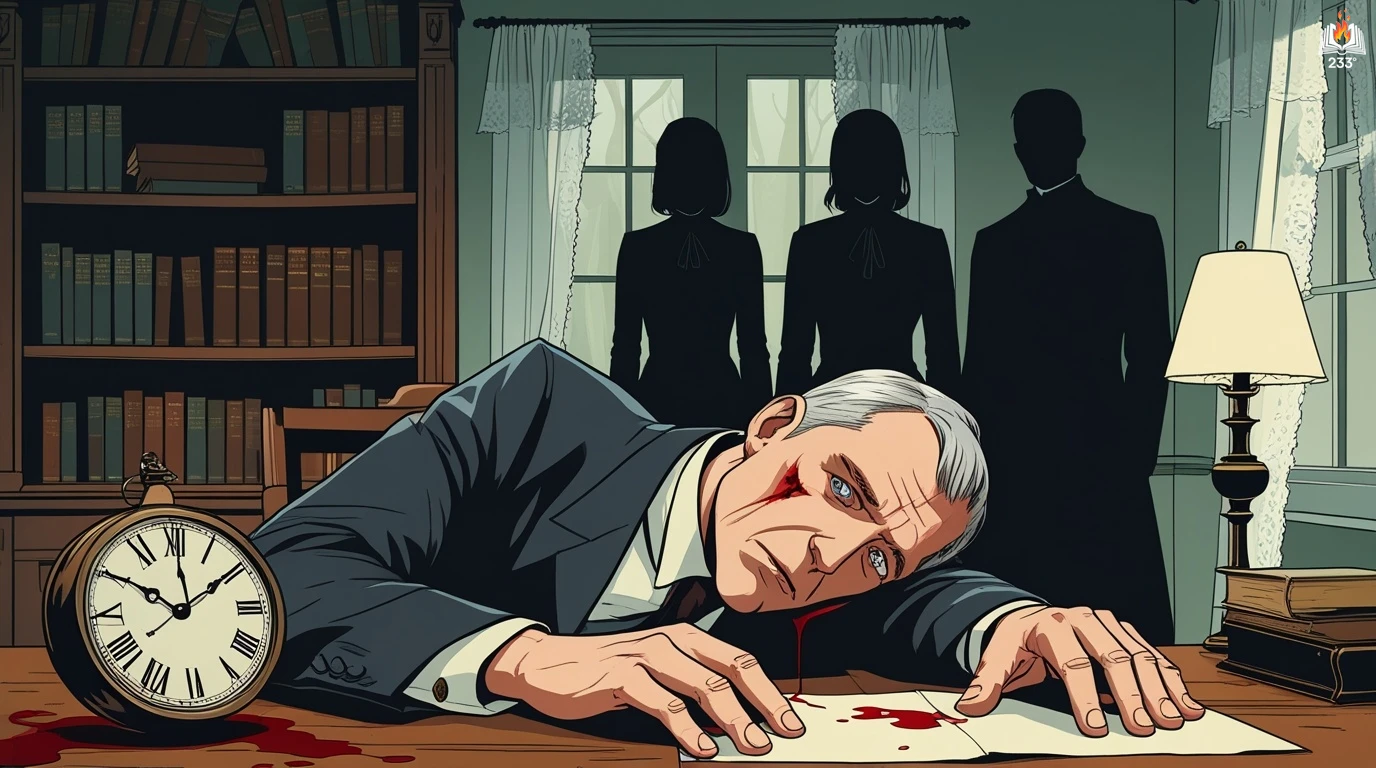
His life had been shaped less by ambition and more by accident, a leaf blown from one era to the next. Born the son of immigrants – a Lithuanian cook and a Polish chauffeur – he was plucked from the humble carriage house on Euclid Avenue into the gilded silence of Alexander Hamilton McCone’s mansion. McCone, a steel magnate scarred by the memory of the Cuyahoga Massacre, made it his mission to mold the boy into a Harvard gentleman. In that vast mansion where McCone’s wife and daughter were mostly absent, Starbuck learned chess and heard the echo of history.
The Cuyahoga Massacre, burned into McCone’s memory, loomed like a specter over Starbuck’s childhood. It had begun with the hunger of steelworkers and ended with their blood on the snow outside McCone’s factory. The weight of that tragedy transformed McCone into a recluse, stammering through his days, his wealth funneled into art and culture rather than industry. For Starbuck, the Massacre became a parable without a clear moral, though its shadow followed him even as he grew into a man.
At Harvard, Starbuck blossomed briefly, intoxicated by the ideals of socialism. He joined the Young Communist League and edited a radical newspaper, convinced that the revolution of the working class was not only possible but imminent. But history had its own plans. When Hitler and Stalin signed their nonaggression pact, Starbuck’s youthful faith cracked, and he drifted away from the fervor that had once defined him.
A Rhodes Scholarship, a government job in the Department of Agriculture, a small role in Franklin Roosevelt’s grand New Deal machine – the pieces fell into place, not through genius but by the pull of inertia. In time, though, the world darkened. America turned away from the romance of collective action and dove headlong into the machinery of power, and Starbuck, never brilliant but always useful, followed quietly behind.
Years later, Starbuck found himself adrift in the Nixon administration, a small figure at the margins of the Watergate scandal. His role was comically insignificant, but the punishment was not. The world that once celebrated the promise of public service now devoured its own. Starbuck was left to count the cracks in his prison walls and clap his hands to complete a vulgar song lodged in his head from long ago. His release brought no redemption, only freedom dressed as exile.
The world outside had not paused for Walter Starbuck. America had grown noisier, crueler, and more forgetful. He wandered through a city indifferent to his existence, until chance led him into the path of Mary Kathleen O’Looney. Once, she had been a firebrand, a labor activist whose name carried the electric charge of rebellion. Now she was a bag lady, weaving through alleys and train stations, guarding a secret that no one suspected.
Mary Kathleen’s secret was staggering: she was the covert owner of the RAMJAC Corporation, an empire of astonishing size, and she longed to use it for the cause she had once championed. Alone, unhinged, she entrusted Starbuck with her final wishes – to dismantle the corporate behemoth and return its wealth to the people. But power, once handed to human hands, rarely moves as its giver intends. Starbuck, haunted by his own mediocrity and craving some measure of usefulness, stumbled through the execution of her will, setting off a chain of confusion, betrayal, and legal chaos.
Starbuck’s journey through the wreckage of his life wove past ghosts and survivors of other American tragedies. Clyde Carter, the prison guard who had watched over him, emerged as an unlikely friend, his small kindnesses puncturing the hard shell of Walter’s solitude. Kilgore Trout, the failed science-fiction writer adrift in his own crumbling mythology, flickered in and out of Starbuck’s orbit, a reminder that the world devours its dreamers with as much efficiency as it does its bureaucrats.
At the heart of it all lay Starbuck’s uneasy reconciliation with himself. He was no revolutionary, no great villain, no tragic hero. He was a man buffeted by history, pulled along by the currents of larger forces – a minor actor in the theater of corruption and redemption. The inheritance Mary Kathleen had thrust upon him did not make him a savior or a destroyer. It made him, briefly, visible, before the machinery of government and capital folded him back into obscurity.
As the months passed, the brief blaze of attention faded. Investigations closed, headlines dwindled, and Walter Starbuck walked unnoticed among the masses. In the quiet, he reflected on the worn thread of his life – the labor strikes, the war, the idealism of youth, the compromises of middle age, the humiliations of public disgrace. He moved through the world like a man halfway erased, still capable of small acts of kindness, still hoping for a scrap of dignity.
The streets of New York swallowed him, and Walter Starbuck became another figure among the countless others walking in the twilight of empire. The city’s skyscrapers rose like monuments to forgotten promises, the rivers rolled past the decaying ports, and Starbuck, unremarkable and unimportant, continued on his way. There were no grand reckonings, no sweeping gestures of triumph or defeat. Only a man with a lined face and tired eyes, watching the world drift past, one small life among millions.
Main Characters
Walter F. Starbuck: The protagonist and narrator, Starbuck is a mild, self-effacing former bureaucrat recently released from prison after a minor role in the Watergate scandal. His life is shaped by a mix of naïve idealism, mediocrity, and guilt, and he serves as Vonnegut’s lens for exploring the absurdity and cruelty of American power structures. Starbuck’s reflective, often rueful voice carries the novel’s moral and emotional weight.
Alexander Hamilton McCone: A wealthy industrialist and Starbuck’s benefactor, McCone is a haunted figure shaped by the infamous Cuyahoga Massacre. His tragic arc – from an industrialist to an art-collecting recluse with a severe stutter – reflects both personal and societal collapse, offering a window into the costs of unchecked capitalism.
Mary Kathleen O’Looney: A pivotal, ghostly figure from Starbuck’s past, Mary Kathleen is a former radical turned wealthy corporate owner, living as a bag lady. Her hidden wealth and final wishes entangle Starbuck in a tangle of corporate and personal moral dilemmas, symbolizing the collision between radical dreams and capitalist realities.
Clyde Carter: A prison guard and one of Starbuck’s few friends, Carter is a distant cousin of President Jimmy Carter. His presence, with warmth and understated humanity, provides a glimpse of grace and decency in the bleak institutional world.
Kilgore Trout: Making a cameo appearance, Vonnegut’s recurring alter ego Trout adds a metafictional touch, symbolizing the collapse of imagination and failure to thrive in a cynical world.
Theme
Capitalism and Corporate Power: Vonnegut critiques capitalism’s inhumanity, showing how it crushes both the poor and the idealistic. Through characters like McCone and Mary Kathleen, the novel examines how wealth corrupts and isolates, often at odds with original intentions of fairness or justice.
Betrayal and Moral Compromise: Starbuck’s life is defined by small betrayals – of ideals, of friends, of himself. Vonnegut explores how personal failings are intertwined with systemic failures, turning political scandals into deeply human tragedies.
Memory and Regret: The novel is steeped in reflection, with Starbuck haunted by his past. Memory is not just a recounting of facts but an emotional excavation, bringing forth longing, shame, and occasional grace.
Class Struggle and Labor History: Vonnegut weaves in real and fictional labor struggles (like the Cuyahoga Massacre), highlighting the forgotten sacrifices of workers and the relentless march of industrial progress over human dignity.
Absurdity and Black Humor: As in much of Vonnegut’s work, laughter is a survival tool against the absurdity of existence. The novel’s tragic events are often couched in humor, underscoring both cruelty and resilience.
Writing Style and Tone
Vonnegut’s style in Jailbird is a masterful blend of dry wit, melancholy, and satire. His prose is deceptively simple, characterized by short, declarative sentences, plain language, and a conversational voice that draws the reader into Starbuck’s confessions. He uses digressions, historical asides, and metafictional flourishes, effortlessly blending real events with fictional characters. These narrative techniques create a kaleidoscopic view of history, mixing comedy and tragedy in equal measure.
The tone of Jailbird oscillates between dark humor and profound sadness. Vonnegut’s signature irony infuses the novel, but beneath the jokes is a tender, almost mournful contemplation of human failure and resilience. Starbuck’s voice is filled with self-deprecation and moral fatigue, capturing both the absurdity of political life and the quiet ache of personal regret. This fusion of the comic and the tragic creates a uniquely Vonnegutian atmosphere, where laughter and tears often occupy the same line.
Quotes
Jailbird – Kurt Vonnegut Jr (1979) Quotes
“You can't just eat good food. You've got to talk about it too. And you've got to talk about it to somebody who understands that kind of food.”
“I still believe that peace and plenty and happiness can be worked out some way. I am a fool.”
“Never have I risked my life, or even my comfort, in the service of mankind. Shame on me.”
“It's all right,' she said. 'You couldn't help it that you were born without a heart. At least you tried to believe what the people with hearts believed- so you were a good man just the same.”
“We are here for no purpose, unless we can invent one. Of that I am sure. The human condition in an exploding universe would not have been altered one iota if, rather than live as I have, I had done nothing but carry a rubber ice-cream cone from closet to closet for sixty years.”
“She read my books the way a young cannibal might eat the hearts of brave old enemies. Their magic would become hers.”
“Life goes on- and a fool and his self respect are soon parted...”
“I was making my mind as blank as possible, you see, since the past was so embarrassing and the future so terrifying.”
“It is a hard daydream to let go of—that one has friends.”
“Body sizes can be remarkable for their variations from accepted norms, but still explain almost nothing about the lives led inside those bodies.”
“My nose, thank god, had conked out by then. Noses are merciful that way. They will report that something smells awful. If the owner of a nose stays around anyway, the nose concludes that the smell isn't so bad after all. It shuts itself off, deferring to superior wisdom.”
“There was more. There was always more.”
“This piece of groping wisdom impresses me still. A sensible prayer people could offer up from time to time, it seems to me, might go something like this: “Dear Lord—never put me in the charge of a frightened human being.” Kenneth”
“To give an extra dimension to the scolding she gave me: The word “twerp” was freshly coined in those days, and had a specific definition—it was a person, if I may be forgiven, who bit the bubbles of his own farts in a bathtub.”
“Two top drawers in the dresser easily accepted all I owned, but I looked into all the other drawers anyway. Then I discovered that the bottom drawer contained seven incomplete clarinets - without cases, mouthpieces, or bells. Life is like that sometimes.”
“I was speechless. Never had I dreamed that the First Amendment of the Constitution of the United States of America and the enchanting technology of a motion-picture camera would be combined to form such an atrocity.”
“As for the pursuit of happiness on this planet: I was as happy as any human being in history. “Thank God,” I thought, “that cigarette was only a dream.”
“I performed what was perhaps the most obscenely intimate physical act of my life. I gave birth to a broken, querulous little old man by doing this: by putting on my civilian clothes. There”
“And I am now compelled to wonder if wisdom has ever existed or can ever exist. Might wisdom be as impossible in this particular universe as a perpetual-motion machine?”
“Hello and good-bye." What else is there to say? Our language is much larger than it needs to be.”
“The economy is a thoughtless weather system and nothing more.”
We hope this summary has sparked your interest and would appreciate you following Celsius 233 on social media:
There’s a treasure trove of other fascinating book summaries waiting for you. Check out our collection of stories that inspire, thrill, and provoke thought, just like this one by checking out the Book Shelf or the Library
Remember, while our summaries capture the essence, they can never replace the full experience of reading the book. If this summary intrigued you, consider diving into the complete story – buy the book and immerse yourself in the author’s original work.
If you want to request a book summary, click here.
When Saurabh is not working/watching football/reading books/traveling, you can reach him via Twitter/X, LinkedIn, or Threads
Restart reading!