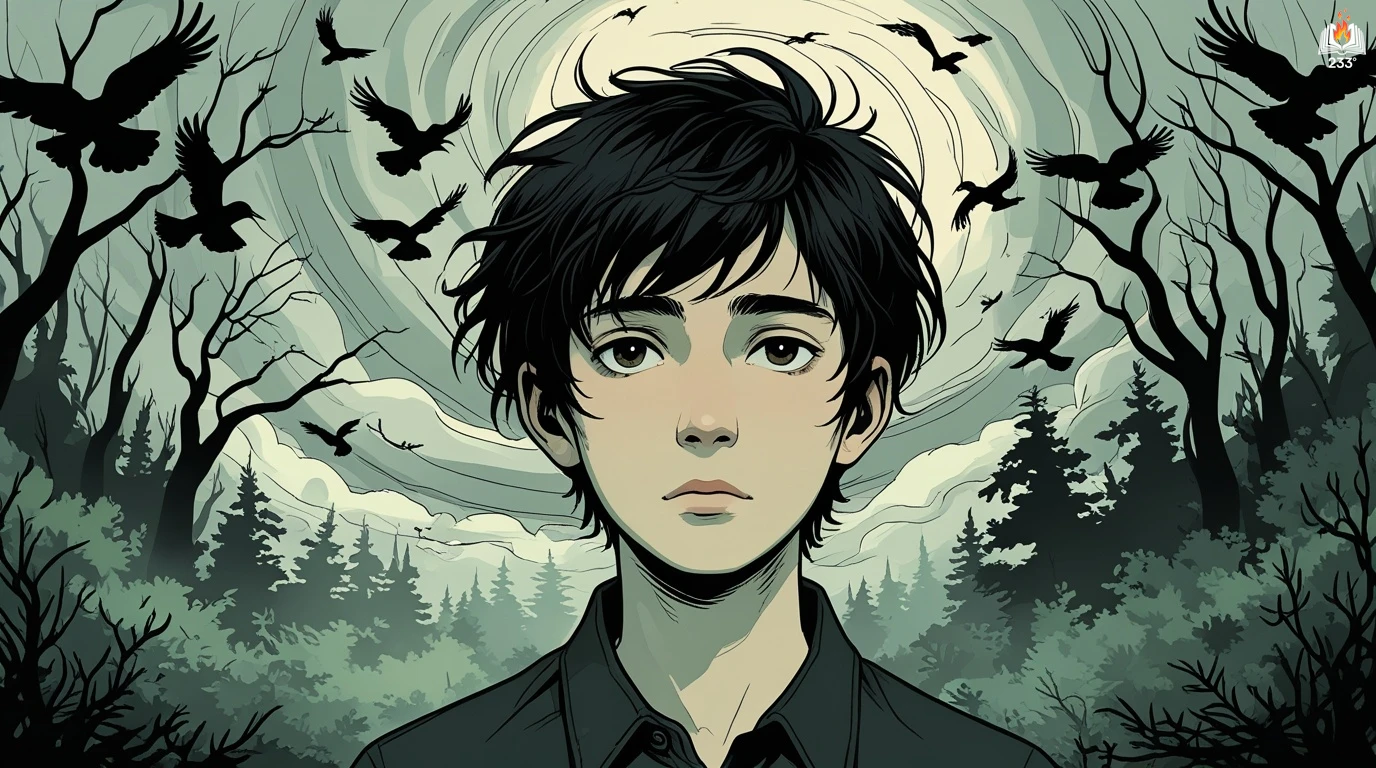


Guards! Guards! is a comedic fantasy novel by Terry Pratchett, first published in 1989 as part of the expansive and beloved Discworld series. As the eighth installment, it marks the beginning of the City Watch subseries, which introduces readers to the dysfunctional but determined Night Watch of Ankh-Morpork. Blending satire, fantasy, and mystery, the novel reimagines traditional heroic narratives by placing unlikely heroes in the face of magical upheaval and political conspiracy.
Plot Summary
In the dark, labyrinthine alleys and tottering towers of Ankh-Morpork, a city that leaned more towards creative entropy than order, a secret stirred. The Elucidated Brethren of the Ebon Night, a band of hooded conspirators with lofty dreams and low intelligence, gathered in secret. Under the leadership of the Supreme Grand Master, they plotted to overthrow the Patrician and summon a dragon. The logic was simple – bring chaos, defeat the beast with a puppet king, and rule the city behind a throne of velvet and illusion.
But dragons are never as cooperative as expected.
The creature that emerged from their clumsy incantations was no manageable pet. It was vast, majestic, and devastating. It flew over Ankh-Morpork with wings like thunderclouds and breath of searing flame. And the city, always pragmatic when faced with danger, tried very hard to ignore it, until buildings caught fire and terrified citizens began whispering about ancient prophecies.
Meanwhile, deep in the bowels of the city, the Night Watch – a sad remnant of civic pride – shambled through their half-hearted patrols. Captain Sam Vimes, a man fermented in gin and marinated in cynicism, barely clung to his sense of purpose. Sergeant Colon and Corporal Nobbs were no better, functioning more out of habit than duty. Into this decrepit fold came Carrot Ironfoundersson, a strapping young man raised by dwarfs, who carried a sword, a book of laws, and an unshakeable belief in right and wrong.
Carrot was a force of nature. His innocent determination was like a boulder rolling downhill, flattening corruption with polite tenacity. He arrested people with cheerful efficiency, cited laws no one remembered, and walked through danger with the calm assurance of someone too oblivious to know fear. His arrival shook the Night Watch awake – or at least roused it to a groggy, confused state of semi-alertness.
As dragon sightings increased and citizens began murmuring about kings and heroes, Vimes found himself dragged from apathy into purpose. The Watch stumbled upon the plot, tripping over clues as much as uncovering them. A charred corpse hinted at magical misfire, while a trail of suspiciously draconic activity pointed toward something far more organized than spontaneous combustion.
Lady Sybil Ramkin entered the fray, a formidable noblewoman and breeder of swamp dragons – small, ill-tempered creatures that smoked more than they flamed and exploded with alarming frequency. She offered knowledge and fireproof compassion, particularly toward Vimes, who found in her not just help but the flickering of something warm and human beneath his whiskey-soaked exterior.
The dragon, meanwhile, crowned itself. No one dared oppose it. The city’s nobility, forever flexible in the face of terror, adapted quickly. They offered sacrifices and flattery, and the dragon roared approval from its new lair in the palace. The Supreme Grand Master, now Vizier to the beast, gloated over his success, unaware that control was slipping from his grasp.
The Watch, galvanized by Carrot’s zeal and Vimes’ reluctant leadership, uncovered the truth. They chased shadows through the city’s alleys, outwitted assassins, and battled bureaucracy with bravado. When the Grand Master framed Vimes for the arson of the Library, even the Librarian – once human, now orangutan – joined the fight. Books were sacred, after all.
But how does one fight a dragon?
With another dragon, of course.
Lady Ramkin’s ragtag collection of swamp dragons provided the answer. They were unreliable, snappish, and combustible, but with enough determination and a modified broomstick, they could fly. The Watch cobbled together a plan that was more desperation than strategy and soared into the skies, armed with courage, chaos, and Carrot’s unbreakable faith.
In the final confrontation, it wasn’t just strength that won. The dragon, summoned by greed and controlled by lies, could not stand against unity and truth. The secret society crumbled, exposed by its own ambition. The beast vanished, undone by the unraveling of the magic that bound it.
And Carrot, who held a royal birthright in his hand – an old sword, a hint of lineage, a destiny unclaimed – chose instead the badge of a watchman. He restored the Watch not through force but integrity, proving that real power lay not in dragons or crowns, but in doing what was right, night after night.
Captain Vimes found himself promoted, sober, and less alone. Lady Sybil’s presence in his life was less of a revolution and more a gentle, inevitable realignment. The city, ever unpredictable, carried on – a little safer, a little stranger, and under the wary gaze of a Watch that now stood a bit taller.
Somewhere in the stacks of Unseen University, the Librarian reshelved a charred book with a satisfied “Ook,” and high above the city, the stars shimmered as if they too approved.
Main Characters
Captain Sam Vimes – The disheveled and often drunken captain of the Night Watch, Vimes is a cynical man burdened by years of corruption and apathy in the city’s policing system. However, beneath his grim exterior lies a deep sense of justice and an iron will that awakens as events in the city unfold. Vimes’ arc is one of reluctant heroism, slowly rekindling his purpose and integrity.
Carrot Ironfoundersson – A human raised by dwarfs, Carrot is unfailingly earnest, naive, and rigidly adherent to the law. Despite being unaware of his possible royal lineage, Carrot’s natural charisma and moral clarity begin to restore order to the Watch. His straightforwardness and honesty provide a comedic and heartfelt contrast to the city’s chaos.
The Librarian – Once a wizard, now transformed into an orangutan by a magical accident, the Librarian of Unseen University is both comical and formidable. He’s deeply protective of the magical books in his care and communicates only through the word “Ook”, yet remains one of the most competent and intelligent figures in the city.
The Supreme Grand Master – The enigmatic and manipulative leader of a secret society intent on overthrowing the Patrician and summoning a dragon to seize power. His schemes drive the central conflict of the story, embodying the novel’s satirical take on power and fanaticism.
Lord Vetinari – The cold, calculating Patrician of Ankh-Morpork, Vetinari maintains control of the city through meticulous order and quiet intimidation. He represents the pragmatic, shadowy force of governance that ultimately ensures stability amid chaos.
Theme
Bureaucracy and Institutional Decay: The Night Watch is a symbol of institutional neglect, and its members begin the story as caricatures of failed authority. Through humor and gradual transformation, Pratchett explores how flawed institutions can be revitalized by genuine leadership and purpose.
Heroism and Identity: The novel deconstructs classic hero tropes. Carrot, the would-be prince, is a hero not because of lineage, but because of his unshakable moral compass. Vimes becomes heroic by confronting his own despair and embracing duty.
Satire of Fantasy Tropes: Pratchett playfully mocks the conventions of fantasy literature – secret cults, dragons, chosen ones – while simultaneously using them to tell a compelling story. This metafictional element adds depth and delight for readers familiar with genre clichés.
Power and Corruption: Through the Elucidated Brethren and the summoning of the dragon, the narrative examines how power corrupts and how those who seek it often do so out of resentment or a desire for control, rather than altruism.
Writing Style and Tone
Terry Pratchett’s style in Guards! Guards! is richly satirical, laden with irony, wit, and wordplay. His prose blends high fantasy with modern sensibilities, creating a unique linguistic texture that parodies real-world politics, philosophy, and literature. The omniscient narrator frequently steps outside the narrative to offer humorous commentary, making the book not just a story but a continuous conversation with the reader.
The tone is a finely tuned balance between absurdist comedy and heartfelt sincerity. While the book is filled with laugh-out-loud moments and slapstick humor, it doesn’t shy away from exploring serious issues such as duty, justice, and personal redemption. The story’s emotional core, centered on Vimes’ rebirth and Carrot’s incorruptibility, ensures that the novel resonates well beyond its jokes.
Quotes
Guards! Guards! – Terry Pratchett (1989) Quotes
“A good bookshop is just a genteel Black Hole that knows how to read.”
“If there was anything that depressed him more than his own cynicism, it was that quite often it still wasn't as cynical as real life.”
“The three rules of the Librarians of Time and Space are: 1) Silence; 2) Books must be returned no later than the last date shown; and 3) Do not interfere with the nature of causality.”
“I believe you find life such a problem because you think there are good people and bad people. You're wrong, of course. There are, always and only, the bad people, but some of them are on opposite sides. ”
“Noble dragons don't have friends. The nearest they can get to the idea is an enemy who is still alive.”
“The reason that clichés become clichés is that they are the hammers and screwdrivers in the toolbox of communication.”
“Never build a dungeon you wouldn't be happy to spend the night in yourself. The world would be a happier place if more people remembered that.”
“But we were dragons. We were supposed to be cruel, cunning, heartless and terrible. But this much I can tell you, we never burned and tortured and ripped one another apart and called it morality.”
“There are many horrible sights in the multiverse. Somehow, though, to a soul attuned to the subtle rhythms of a library, there are few worse sights than a hole where a book ought to be.”
“People who are rather more than six feet tall and nearly as broad across the shoulders often have uneventful journeys. People jump out at them from behind rocks then say things like, "Oh. Sorry. I thought you were someone else.”
“... the food was good solid stuff for a cold morning, all calories and fat and protein and maybe a vitamin crying softly because it was all alone.”
“Thunder rolled . . It rolled a six.”
“They felt, in fact, tremendously bucked-up, which was how Lady Ramkin would almost certainly have put it and which was definitely several letters of the alphabet away from how they normally felt.”
“You had to hand it to the Patrician, he admitted grudgingly. If you didn't, he sent men to come and take it away.”
“... a metaphor ... is like lying but more decorative.”
“And when the Patrician was unhappy, he became very democratic. He found intricate and painful ways of spreading that unhappiness as far as possible.”
“Perhaps the magic would last, perhaps it wouldn't. But then again, what does?”
“Last hopeless chances have got to work. Nothing makes sense otherwise. You might as well not be alive.”
“Lessee...he'd gone off after the funeral and gotten drunk. No, not drunk, another word, ended with "er." Drunker. that was it.”
“One of the things forgotten about the human spirit is that while it is, in the right conditions, noble and brave and wonderful, it is also, when you get right down to it, only human.”
“People were stupid, sometimes. They thought the Library was a dangerous place because of all the magical books, which was true enough, but what made it really one of the most dangerous places there could ever be was the simple fact that it was a library.”
We hope this summary has sparked your interest and would appreciate you following Celsius 233 on social media:
There’s a treasure trove of other fascinating book summaries waiting for you. Check out our collection of stories that inspire, thrill, and provoke thought, just like this one by checking out the Book Shelf or the Library
Remember, while our summaries capture the essence, they can never replace the full experience of reading the book. If this summary intrigued you, consider diving into the complete story – buy the book and immerse yourself in the author’s original work.
If you want to request a book summary, click here.
When Saurabh is not working/watching football/reading books/traveling, you can reach him via Twitter/X, LinkedIn, or Threads
Restart reading!