

The Secret Diaries of Miss Miranda Cheever by Julia Quinn, published in 2007, is a historical romance novel that opens the Bevelstoke series, set in early 19th-century England. The narrative blends wit, emotional depth, and romantic longing, centering on a quiet, intelligent girl who falls in love at the age of ten and chronicles her life, dreams, and heartbreak in a journal that will span over a decade.
Plot Summary
At the age of ten, Miranda Cheever understood quite clearly that she would never be the belle of any ball. With her solemn brown eyes, long legs, and unremarkable hair, she found herself forever relegated to the side, the silent observer among prettier, brighter girls. That is, until one afternoon, when the viscount known to his family as Nigel but to the world as Turner, took her hand, called her beautiful in his own teasing way, and told her she would one day grow into herself. He placed a violet ribbon in her hair – a color she was told she could never wear – and with that simple act, she fell in love.
Years passed, and Miranda’s diary filled with words. Words she couldn’t speak aloud, truths too tender for daylight. Turner, once warm and mischievous, had changed. Marriage to the radiant but cruel Leticia had carved bitterness into him, turning the boy she adored into a hardened man who wore loss like a cloak. When Leticia died – and the entire countryside whispered condolences – Turner stood silent, unrepentant, and entirely ungrieving. Miranda, now nineteen and still hopelessly devoted, witnessed it all. Not because she was invited, but because Olivia, Turner’s twin and Miranda’s closest friend, needed her there. And Miranda had never learned to say no to Olivia.
After the funeral, the air hung thick with silence and brandy. Miranda wandered the quiet halls of Haverbreaks, unable to sleep, clutching her diary to her chest. She found herself drawn to the study, to firelight, and to Turner – drunk, cynical, and entirely unfit for company. Yet she stayed. When he asked if she’d ever been kissed, the moment shattered into something both beautiful and cruel. What began as a tender brush of lips twisted into a desperate, angry attempt at solace. She pushed him away. And he let her. Barely.
By morning, nothing had changed, yet everything had. Miranda woke determined to leave, only to be swept into Olivia’s schemes. Olivia, ever the orchestrator, decided Miranda must marry her brother Winston. It was a logical arrangement – they were of an age, familiar with one another, and if successful, it would make them sisters in truth. Miranda, ever polite, did not object. She could not tell Olivia that her heart had always belonged to the older brother, not the twin.
Winston, cheerful and charming, began to look at Miranda with new eyes. Over breakfast, he asked her to ride with him, and though her heart hesitated, her pride accepted. As they rode together, Winston laughed easily, listened well, and made her forget – if only for a moment – the man she had spent nine years loving. Turner watched them from a distance, angered by the ease between them, though he did not know why.
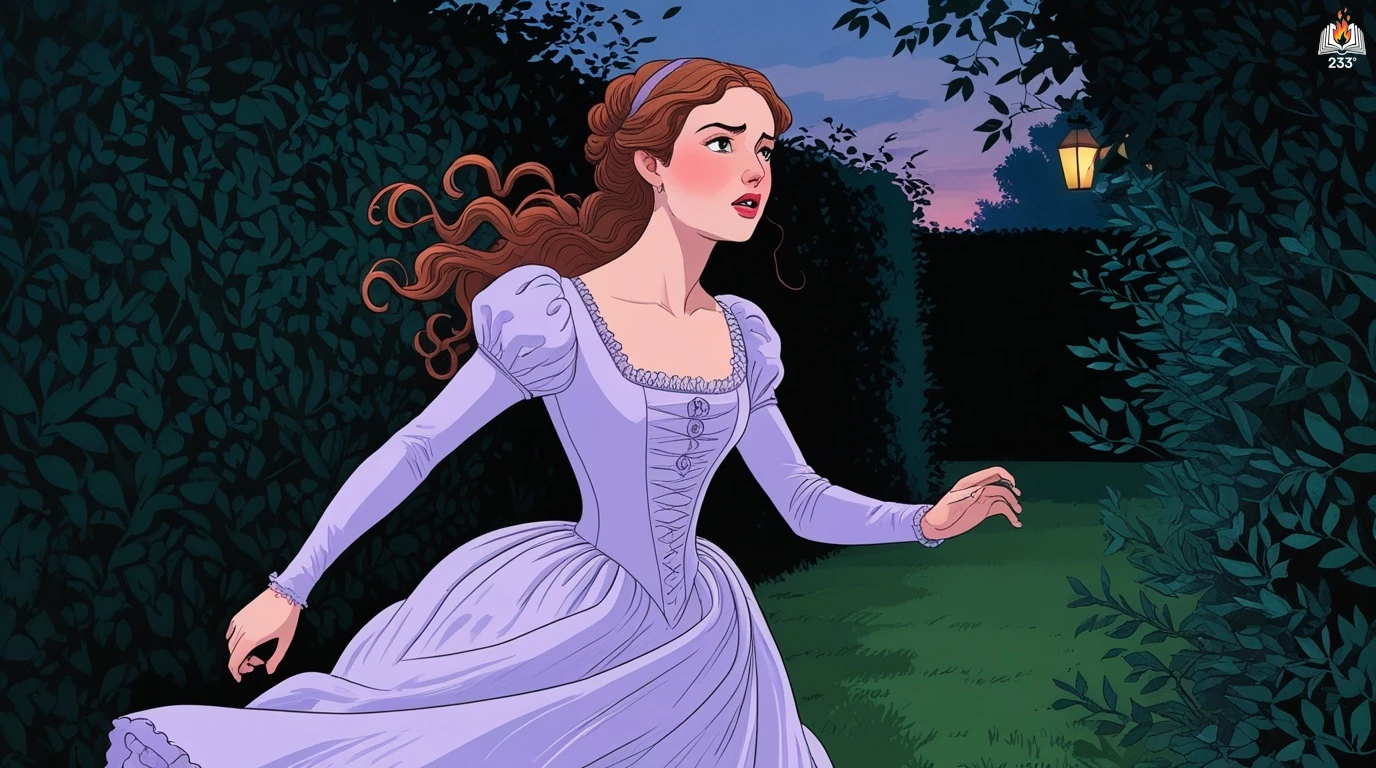
Despite Turner’s brooding presence, Miranda stayed on at Haverbreaks. Olivia refused to let her go, and Winston’s attentions only grew. But Turner, drawn by forces he refused to name, kept crossing Miranda’s path. Sometimes he was kind. Sometimes he was cruel. Always, he left her confused. One day he found her journaling in the garden, teased her, touched her hand, and then kissed her again. This time it was soft, almost reverent. But it ended just the same – with him walking away.
The London season approached, and with it, Lady Rudland’s offer to sponsor Miranda’s debut. Her father, buried in his books and ever grateful to anyone who would keep his daughter entertained, agreed without question. Miranda and Olivia went to London together, full of plans, gowns, and whispered possibilities. Winston, now seriously interested, began to court Miranda with the sincerity only a boy raised to be a gentleman could muster. She was flattered, but not foolish. Winston was not the one she dreamed of, not the one who filled her pages with longing.
Turner came to London too, and though he had no interest in society’s pleasures, he kept turning up. Balls, parks, family dinners – wherever Miranda was, he followed. One evening, after a tense exchange, he pulled her aside, kissed her not out of anger or desperation, but something close to awe, and then asked her to marry him. She refused. Not because she did not love him, but because he did not say the words. Love. Need. Forever. She would not marry a man who sought solace, not partnership.
They parted. Turner, furious with himself, returned to the country. Miranda remained in London, her season quiet but dignified. She did not marry Winston, though Olivia was disappointed. She did not marry anyone. She wrote, walked, danced when asked, and waited. Not for Turner, she told herself, but for peace.
Months later, Turner reappeared. He looked older, tired, but lighter somehow. He found Miranda alone in the garden of Haverbreaks, the same place where she had once written in the shadow of her heartbreak. This time, he did not kiss her first. He spoke. He told her he had been wrong – about life, about love, about her. That he missed her. That he needed her. That he loved her.
She listened. She said nothing. Then she handed him a small, worn book. The diary she had begun the day he placed a ribbon in her hair. Inside, a single entry stood out:
2 March 1810
Today I fell in love.
He read. He looked up. And then she smiled.
They married quietly. No grand announcements, no fanfare. Just a ceremony, a promise, and a violet ribbon tied into the bride’s hair. Miranda stopped writing that day. Not because she had nothing left to say, but because her life had finally caught up with her dreams.
Main Characters
Miss Miranda Cheever: A bright, observant, and unassuming young woman whose wit and introspection set her apart in a society that favors beauty and polish. From a young age, she feels out of place due to her plain looks and awkward demeanor, but she finds solace and purpose in her writing. Her emotional growth and unwavering affection for Turner shape much of the story’s arc, and her diary offers a poignant window into her transformation.
Nigel Bevelstoke, Viscount Turner: Known as Turner, he is Miranda’s childhood hero who grows into a bitter, disillusioned man following a disastrous marriage. Charismatic yet emotionally scarred, Turner struggles with grief, cynicism, and guilt. His connection with Miranda is complex, shifting from brotherly affection to an unsettling, deeply rooted passion that challenges both his ideals and hers.
Lady Olivia Bevelstoke: Miranda’s closest friend and Turner’s vivacious twin sister. Spirited and fiercely loyal, Olivia offers comic relief and heartfelt support throughout the story. Her deep bond with Miranda and her schemes (including matchmaking plans) propel many pivotal events forward.
Winston Bevelstoke: Olivia’s twin and Miranda’s childhood companion. Though less central, his presence introduces a subplot of potential romantic entanglement that further complicates Miranda’s feelings and decisions.
Theme
Unrequited and Enduring Love: At the heart of the novel lies Miranda’s childhood infatuation with Turner, which matures into deep, steadfast love. This theme underscores the emotional longing and internal conflict she endures, while also exploring how love can persist even through disillusionment and time.
Transformation and Self-Worth: Miranda’s journey is one of growing into herself—emotionally, intellectually, and physically. She evolves from an awkward, overlooked girl into a woman who challenges others’ perceptions and claims her own voice and dignity. Her journal is both a literal and symbolic record of her growth.
Grief, Trauma, and Redemption: Turner’s arc is steeped in grief over a loveless and humiliating marriage. His emotional barricades and caustic demeanor reflect deeper wounds, and his path toward healing parallels his reluctant recognition of Miranda’s worth and his own capacity to love again.
Female Friendship and Loyalty: The bond between Miranda and Olivia forms a powerful counterbalance to the central romance. Their honest exchanges, playful banter, and unwavering support reflect the strength of chosen sisterhood and emotional refuge outside romantic love.
Societal Expectations and Inner Truth: The novel explores the weight of appearances, titles, and gender norms in Regency England. Miranda’s introspective nature and Turner’s battle with public versus private duty critique these superficial structures.
Writing Style and Tone
Julia Quinn’s prose in The Secret Diaries of Miss Miranda Cheever is marked by its intelligent charm, fluid dialogue, and dry humor. Quinn masterfully captures the regency setting while imbuing it with a distinctly modern sensibility, especially in Miranda’s sharp internal narration and diary entries. The use of the journal as a narrative device adds layers of intimacy and reflection, letting readers feel immersed in Miranda’s private world.
The tone oscillates between light-hearted banter and poignant melancholy. Quinn handles both emotional tenderness and romantic tension with subtlety, often allowing humor and irony to coexist with heartache and longing. The story maintains a gentle pace, letting moments linger long enough to be felt without dragging the plot. Her ability to blend romantic drama with wry observations about society and character foibles gives the novel its enduring appeal.
Quotes
The Secret Diaries of Miss Miranda Cheever – Julia Quinn (2007) Quotes
“She hated that she was still so desperate for a glimpse of him, but it had been this way for years.”
“Turner let his face fell into his hands. "I'm never going to touch her again", he moaned. "He's never going to touch me again!" they heard Miranda roar. "Well,it doesn't look like you'll have much argument from your wife on that point", Olivia chirped.”
“Oh, very well, do you want to know why I really think you should keep a journal?" She nodded. "Because someday you're going to grow into yourself, and you will be as beautiful as you already are smart.”
“I have friends who have children, and they have told me how remarkable it is to have a new life that is a piece of your own flesh anf blood. But I --" "I realized that I didn't love her because she was a piece of me, I loved her because she was a piece of you.”
“Society is capricious and rewards the bad as often as the good. But it never rewards the quiet.”
“He looked down at the first entry. 2 MARCH1810 Today I fell in love. A tear welled up in his eye. “Me too, my love. Me too.”
“And then what would she say? I just told your brother that I love him, and I'm afraid that he hates me? I can't be alone with Turner because I'm afraid he might ravish me? I can't be alone with Turner because I'm afraid I might ravish him. ”
“I've always thought that violet ribbons look especially nice with brown hair.”
“He did things to her, she realized. Strange, shivery things that left her breathless. He need only to look at her—not in his usual, conversational way, but to really look at her, to let his eyes settle on hers, deeply blue and insightful, and she felt naked, her soul bared.”
“Get yourself a dress and get yourself some flowers, because, sweetheart, you’re getting yourself a new name.”
“Baiting her was great fun. And he didn’t feel the least bit guilty for it. For all her disgruntled behavior, he had no doubt that she enjoyed the verbal sparring every bit as much as he did.”
“It wasn’t when his hands had gone ’round her upper arms to steady her.”
“I suppose that’s what makes something art. What can send one person into raptures may fail to move another even the tiniest bit.”
“Unrequited love, she was discovering, was much worse when one actually saw the object of one’s desire.”
“Of course, handsome is as handsome does, and so many well-formed people have ill-formed minds.”
We hope this summary has sparked your interest and would appreciate you following Celsius 233 on social media:
There’s a treasure trove of other fascinating book summaries waiting for you. Check out our collection of stories that inspire, thrill, and provoke thought, just like this one by checking out the Book Shelf or the Library
Remember, while our summaries capture the essence, they can never replace the full experience of reading the book. If this summary intrigued you, consider diving into the complete story – buy the book and immerse yourself in the author’s original work.
If you want to request a book summary, click here.
When Saurabh is not working/watching football/reading books/traveling, you can reach him via Twitter/X, LinkedIn, or Threads
Restart reading!