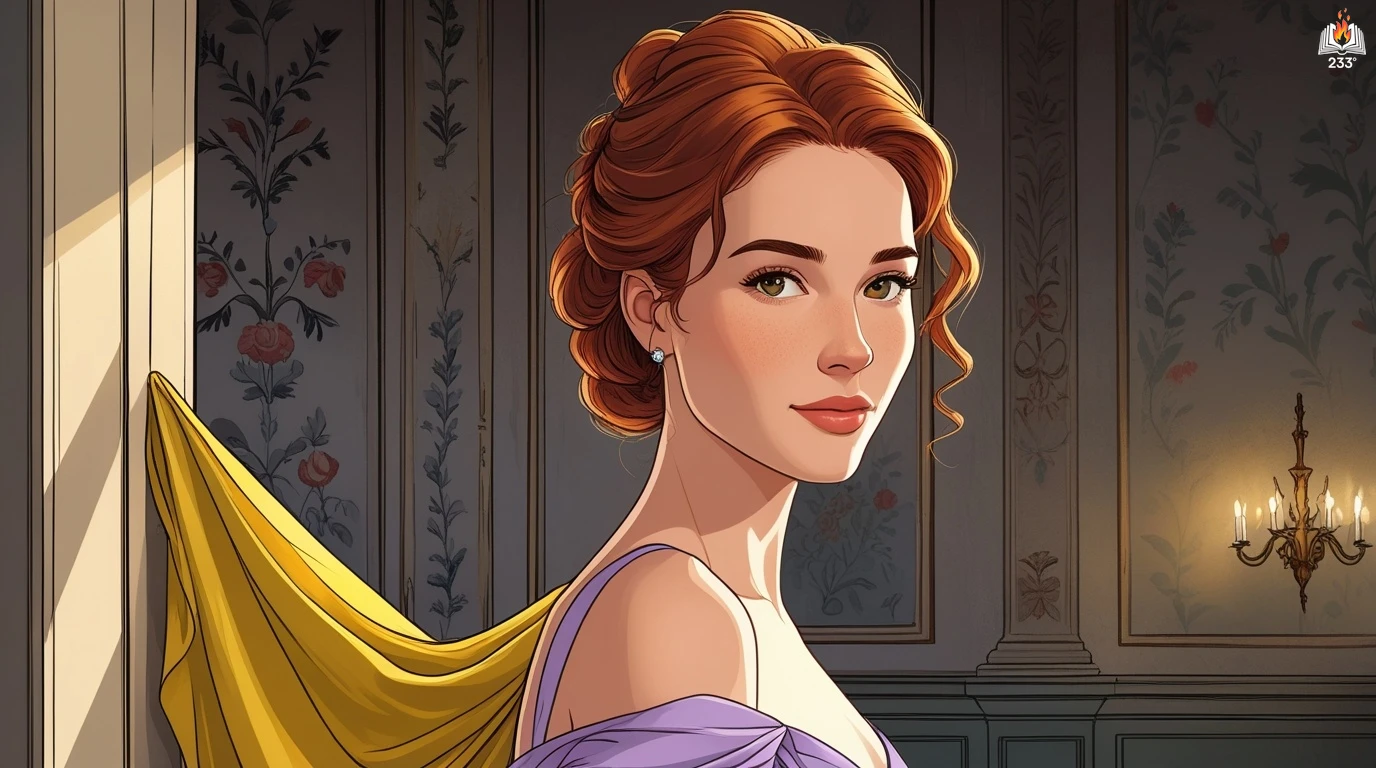
Ten Things I Love About You by Julia Quinn, published in 2010, is part of her beloved Bevelstoke series, known for its blend of Regency romance, sharp wit, and endearing characters. Set in London in 1822, the novel follows Annabel Winslow, a spirited young woman trying to secure a marriage that will protect her impoverished family—while fending off the advances of a lecherous old earl. Her fate unexpectedly collides with Sebastian Grey, a charming rogue with secrets of his own, in a story that is equal parts romantic comedy and social satire.
Plot Summary
In the spring of 1822, in the smoke-streaked elegance of Mayfair, Miss Annabel Winslow found herself the object of a most unwelcome affection. At nineteen, with broad hips and a family teetering on the edge of financial ruin, she had been whisked from her country home in Gloucestershire and thrust into the relentless swirl of London society by her grandmother, Lady Vickers, whose matchmaking strategy was as subtle as a cannon blast.
The suitor in question was Lord Newbury – aged, jowled, and thoroughly odious. Desperate to produce a male heir before his death, and loathing the idea of his nephew inheriting his title and estates, he cast his sights on Annabel’s childbearing form. Her protests mattered little. Her grandmother was thrilled by the possibility, her grandfather delighted, and her impoverished mother too far away to intervene. Annabel knew what was expected of her. But knowing and wanting were rarely the same thing.
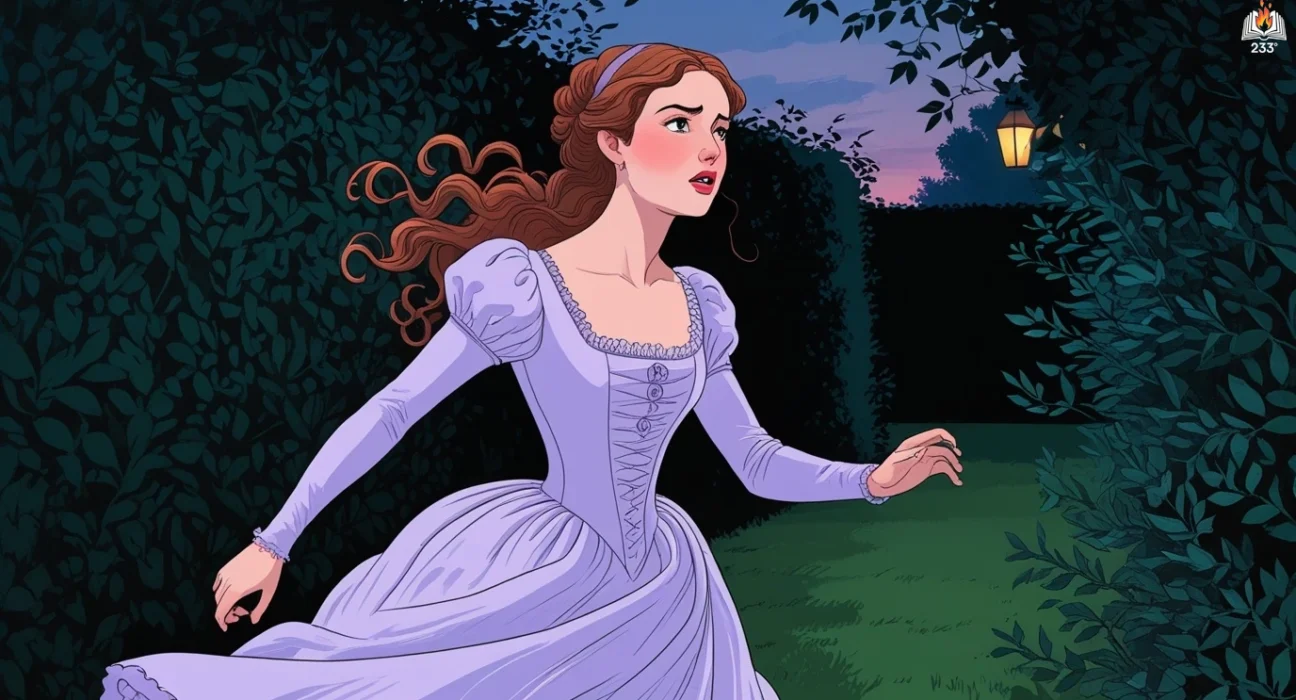
At a glittering garden party hosted by Lady Trowbridge, Lord Newbury made his intentions violently clear, pressing Annabel into a dark corridor, fumbling and groping with a revolting sense of entitlement. She managed to escape him – barely – and, breathless and trembling, fled across the lawn and through a hedge onto Hampstead Heath. There, away from the stiff elegance of the ballroom and the ever-watchful eyes of society, she found solace in solitude. Or so she thought.
Instead, she stumbled – quite literally – over a man lounging on a blanket beneath the stars. He was handsome, lounging like a prince on holiday, and utterly unbothered by her intrusion. His eyes gleamed with amusement rather than scandal, and he greeted her not with reproach, but with curiosity. He asked no names, offered no titles, but his voice curled with mischief and ease. He was not what she expected – not a predator, not a bore, not a man who judged or demanded. He was something else entirely.
That something else was Sebastian Grey – charming rake, society’s most delicious scandal, and, quite inconveniently, Lord Newbury’s despised nephew and current heir to the earldom. If his uncle married and produced a son, Sebastian would be cast aside. And though he claimed not to care, there was a sharpness beneath his careless smile, a sense of restraint that clung to him even when sprawled on a blanket, teasing a stranger in the dark.
Annabel did not recognize him, and Sebastian, intrigued by the fierce intelligence flickering behind her wary eyes, chose not to enlighten her. Their conversation danced and sparked, equal parts flirtation and veiled honesty, until Annabel remembered herself and slipped away, leaving behind the strangest sense that she had shared something far more intimate than her name.
Fate, however, had no intention of leaving them as strangers. They met again, in parlors and drawing rooms, at balls and teas, always skirting the line between propriety and temptation. Sebastian, accustomed to being adored for his beauty and his title, was drawn instead to Annabel’s sharp wit and her stubborn insistence on not falling for him. Annabel, who had never truly known a man who listened, found herself unnerved by how often Sebastian seemed to understand her without asking.
Meanwhile, Lord Newbury’s pursuit grew bolder, and her grandparents’ pressure more insistent. Annabel was cornered – marry the earl and save her family, or resist and risk everything. Her siblings’ futures, their education, even their food, hung in the balance. Her own happiness, by comparison, felt a frivolous thing. But happiness had a way of insisting upon itself.
Sebastian, for all his charm, carried his own secrets. Beneath the layers of casual mockery and effortless elegance, he was a man marked by war, by sleepless nights, and by the pen he wielded in secret. London’s most popular gothic novelist – Sarah Gorely – was none other than Sebastian Grey. His scandalous stories of barons and governesses funded his lifestyle and fed a creative fire that few knew existed. If the truth ever emerged, his reputation would be torn to shreds, and his carefully cultivated disinterest would become the city’s favorite mockery.
And yet, Annabel made him want to risk it. Not just his secrets, but his carefully ordered detachment. He found himself writing her into his stories, into his thoughts, into the parts of his heart he had long pretended did not need anything as pedestrian as love. She made him laugh, yes – but she also made him yearn.
When Annabel discovered Sebastian’s authorship by accident, the revelation didn’t horrify her. Instead, it thrilled her, and she saw at once what most could not – that the man hiding behind sarcasm and sin was, in fact, terrified of being known. She challenged him. Not to confess, but to believe that he could be loved, not in spite of who he was, but because of it.
Their growing intimacy was nearly shattered when Lord Newbury’s offer of marriage finally arrived. Annabel’s family was jubilant. Her grandmother practically threw confetti. And Annabel… hesitated.
Sebastian, wounded by her indecision and unwilling to beg, withdrew. Pride clashed with longing. Annabel stood on the edge of a decision that could define her life – security or love, duty or desire.
In the end, she did not choose. She acted.
Lord Newbury, furious at the delay, confronted Annabel at yet another gathering. When his fury turned public and threatening, Sebastian stepped in – not as a rescuer, but as a man who had had enough. Enough of silence. Enough of pretending not to care. He laid the truth bare – about Newbury, about Annabel’s dignity, about everything that made him unfit to court any woman, let alone this one.
The confrontation left the ton in a frenzy, Newbury humiliated, and Annabel free. It also left Sebastian exposed – vulnerable in a way he had never been. Annabel, no longer uncertain, chose him. Not for his title. Not for his pen. But because she wanted a life that felt like hers.
They married in spring, in Gloucestershire, far from Mayfair’s glitter and gossip. Her brothers came home from Eton, her sisters danced in borrowed dresses, and Sebastian, finally, wrote a story that didn’t need a pseudonym.
He called it Ten Things I Love About You.
Main Characters
Annabel Winslow: The eldest daughter in a large, financially struggling family, Annabel is intelligent, strong-willed, and caught between duty and desire. Brought to London by her grandmother to marry well, she becomes the target of Lord Newbury, an elderly earl seeking a fertile bride. Annabel is pragmatic but not cynical, with a warm and quick-witted nature that makes her deeply sympathetic. Her journey is one of self-respect and the pursuit of genuine love.
Sebastian Grey: The nephew and heir presumptive to the Earl of Newbury, Sebastian is outwardly a rake and bon vivant, but inwardly harbors depth, wit, and a surprising secret—he writes popular gothic novels under a pseudonym. He is at once mischievous and emotionally astute, using his charm to mask the wounds left by war and familial tension. Sebastian’s evolution from an amused observer of society to a man in love is central to the story’s heart.
Lord Newbury: A widowed, aging earl desperate to produce a male heir to keep his title and wealth from falling into Sebastian’s hands. He is pompous, coarse, and fixated on Annabel’s childbearing potential, making him a repellent suitor and a source of conflict and danger. His grotesque pursuit of Annabel serves as a foil to Sebastian’s respectful affection.
Lady Louisa McCann: Annabel’s cousin and confidante, Louisa is genteel and socially adept, providing both emotional support and critical insight. Her loyalty and quiet strength underscore the importance of female friendship in a restrictive society.
Lady Vickers: Annabel’s bold, unfiltered grandmother, who is simultaneously hilarious and morally dubious. She sees marriage as a transaction and isn’t afraid to say so. Her presence adds both comic relief and biting commentary on the roles women are forced into.
Theme
Duty vs. Desire: Annabel is torn between her obligation to support her family through a wealthy marriage and her own longing for respect, love, and dignity. This tension is the moral core of the novel, reflecting broader questions of female autonomy and societal pressure.
Inheritance and Lineage: Much of the plot revolves around legacy—both biological and social. Lord Newbury’s obsession with securing a son, and Sebastian’s ambivalence toward inheriting the earldom, highlight the absurdities and rigid hierarchies of aristocratic succession.
Social Masks and Hidden Truths: Both main characters hide essential parts of themselves—Annabel conceals her dread of London society, and Sebastian conceals his identity as a novelist. The gradual unmasking of their true selves brings depth and emotional resonance to their relationship.
Female Vulnerability and Strength: The novel doesn’t shy away from depicting the danger women face in a patriarchal society—Lord Newbury’s aggression is harrowing—but it also celebrates female resilience and wit. Annabel’s growth is not about rebellion but quiet resistance and the courage to choose her own path.
Wit as Weapon and Shield: Humor is not just entertainment here—it’s armor. The characters, especially Sebastian and Annabel, use wit to navigate their world, deflect judgment, and assert control over situations where they are otherwise powerless.
Writing Style and Tone
Julia Quinn’s writing is renowned for its vibrant dialogue, razor-sharp humor, and affectionate mockery of Regency social conventions. In Ten Things I Love About You, Quinn’s voice is breezy yet incisive, often breaking the fourth wall with a modern wink that amplifies the absurdities of 19th-century courtship rituals. Her use of numbered lists, ironic exposition, and quick-cut scene transitions creates a lively, cinematic pace that keeps the reader immersed.
The tone of the novel oscillates deftly between light-hearted and serious. While the story bubbles with flirtatious banter, comedic misunderstandings, and exaggerated side characters, there is a real emotional undercurrent in Annabel’s vulnerability and Sebastian’s hidden fears. Quinn balances the froth and the feeling masterfully, ensuring the humor never undercuts the emotional stakes. Her prose invites both laughter and empathy, delivering a reading experience that is both delightful and meaningful.
Quotes
Ten Things I Love About You – Julia Quinn (2010) Quotes
“I can imagine no greater bliss than to lie about, reading novels all day.”
“Besides," he said breezily, "were it not for misunderstandings, we would be sadly lacking in great literature." She looked at him questioningly. "Where would Romeo and Juliet be?" "Alive.”
“Don’t tell me your name. It’s likely to awaken my conscience, and that’s the last thing we want.”
“I vow to spend the rest of my life keeping your hands and feet warm.”
“Annabel stared at the door, then turned to Sebastian, feeling quite dazed. "I think my grandmother may have just given me permission to ruin myself." "I'll do all the ruining tonight," he said with a grin. "If you don't mind.”
“When the dead body said, "Good evening," Annabel had to face the grim conclusion that it wasn't as dead as she'd hoped.”
“She could not bear the thought. She simply could not bear the thought that she might somehow prove to her grandfather that her mother had indeed been a fool and her father had been a damned fool and that she was the damnedest fool of them all.”
“Happiness could be like a head cold. Or cholera. Catching.”
“If he was planning to attack and ravish, he gave no indication of being in a hurry to do so.”
“I think your eyes might be the exact same color as mine," she said wonderingly. "What fine gray-eyed babies we shall have," he said, before he thought the better of it.”
“You're charm can be terrifying." "I suppose if you put it that way I cannot help but be complimented.”
“I like my parents," Olivia said. Sebastian shook his head, "A concept so alien I think it must be unpatriotic.”
“You'll lose your audience and then where will we be? We have future gray-eyed babies to feed, you know.”
“He closed his eyes. The insides of his eyelids were a brownish black, not at all the same as the thick purple of the night. Darkness had so many colors. It was strange, that, and perhaps a little disquieting. But
“But I wouldn't choose to spend time with them." Sebastian considered this, "Especially my father. As he's dead.”
“What are you doing here?"Lady Vickers asked, turning her frosty glare to Sebastian. "Exactly what you think, my lady," he said.”
“Sebastian Grey. The worrds rang like a miserable moan in her head. On the list of men she ought not to be kissing, he had to rank at the top, along with the King, Lord Liverpool, and the chimney sweep.”
“You'll marry the earl and carry on with the nephew on the side." "Grandmother!”
“There were a thousand ways to make an idiot of oneself, with new opportunities arising every day. It was exhausting trying to avoid them all.”
“I miss my dog." ... "What was his name again?" "Mouse." "That was very unkind of you." "Naming him mouse?" "Isn't he a greyhound?" "I could have named hum Turtle." "Frederick!"... "It's better than Frederic," Annabel said, "Good heavens, that's my brother's name.”
“This is none of your concern,' his uncle spat. 'I beg to differ,' Sebastian said quietly. 'A lady in distress is always my concern.”
“Dogs deserve proper names." "Cats, too?" "Cats are entirely different. They catch mice.”
“Today I glory in my sixdom." "Sixdom?" "Sixitude." Annabel started to grin. "Sixulation," Louisa proclaimed.”
“He wondered if everyone’s lives had a dividing point. A moment which sat clearly between before and after.”
“A lady must have her own private reserve of secrets and strength,” her grandmother continued. “Trust me.” She took a sip of her drink, let out a contented exhale, and took another. “Once you are married you will understand what I mean.”
We hope this summary has sparked your interest and would appreciate you following Celsius 233 on social media:
There’s a treasure trove of other fascinating book summaries waiting for you. Check out our collection of stories that inspire, thrill, and provoke thought, just like this one by checking out the Book Shelf or the Library
Remember, while our summaries capture the essence, they can never replace the full experience of reading the book. If this summary intrigued you, consider diving into the complete story – buy the book and immerse yourself in the author’s original work.
If you want to request a book summary, click here.
When Saurabh is not working/watching football/reading books/traveling, you can reach him via Twitter/X, LinkedIn, or Threads
Restart reading!