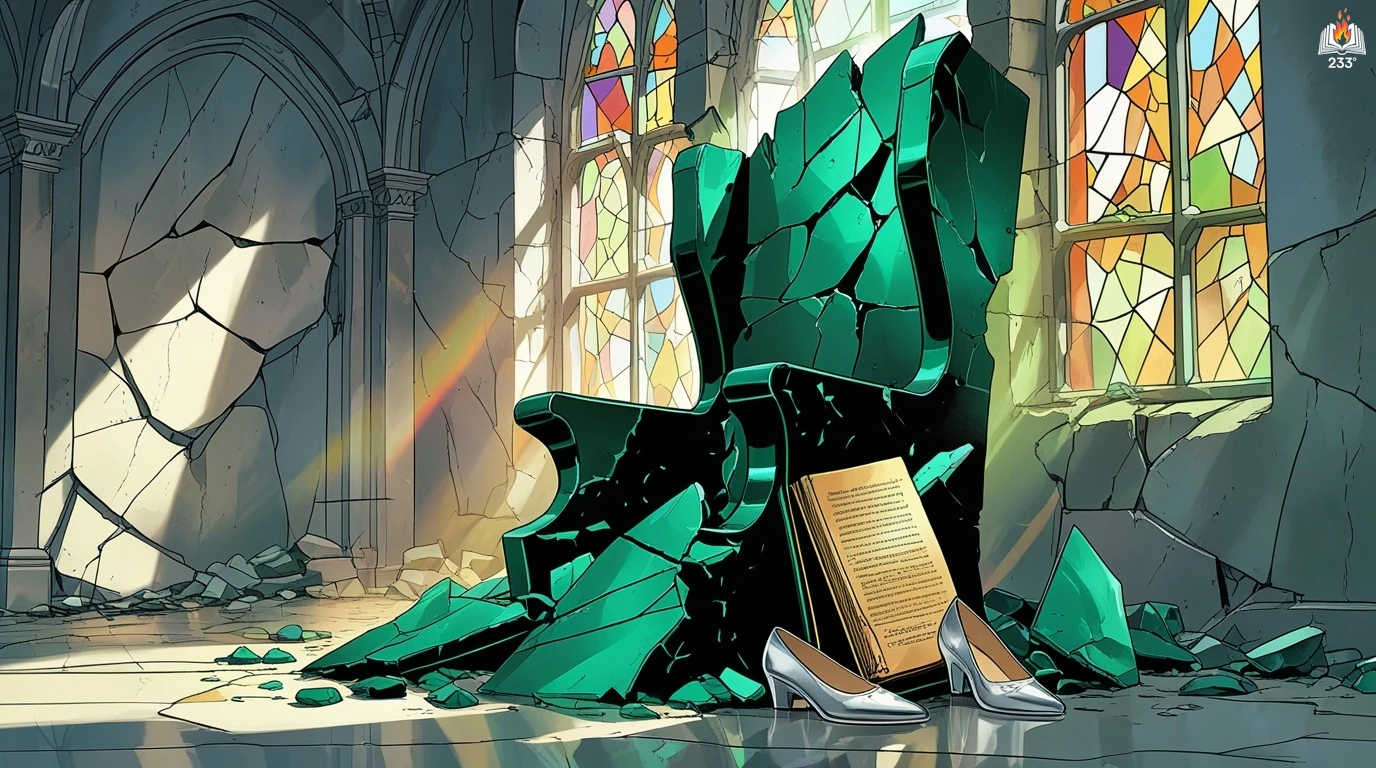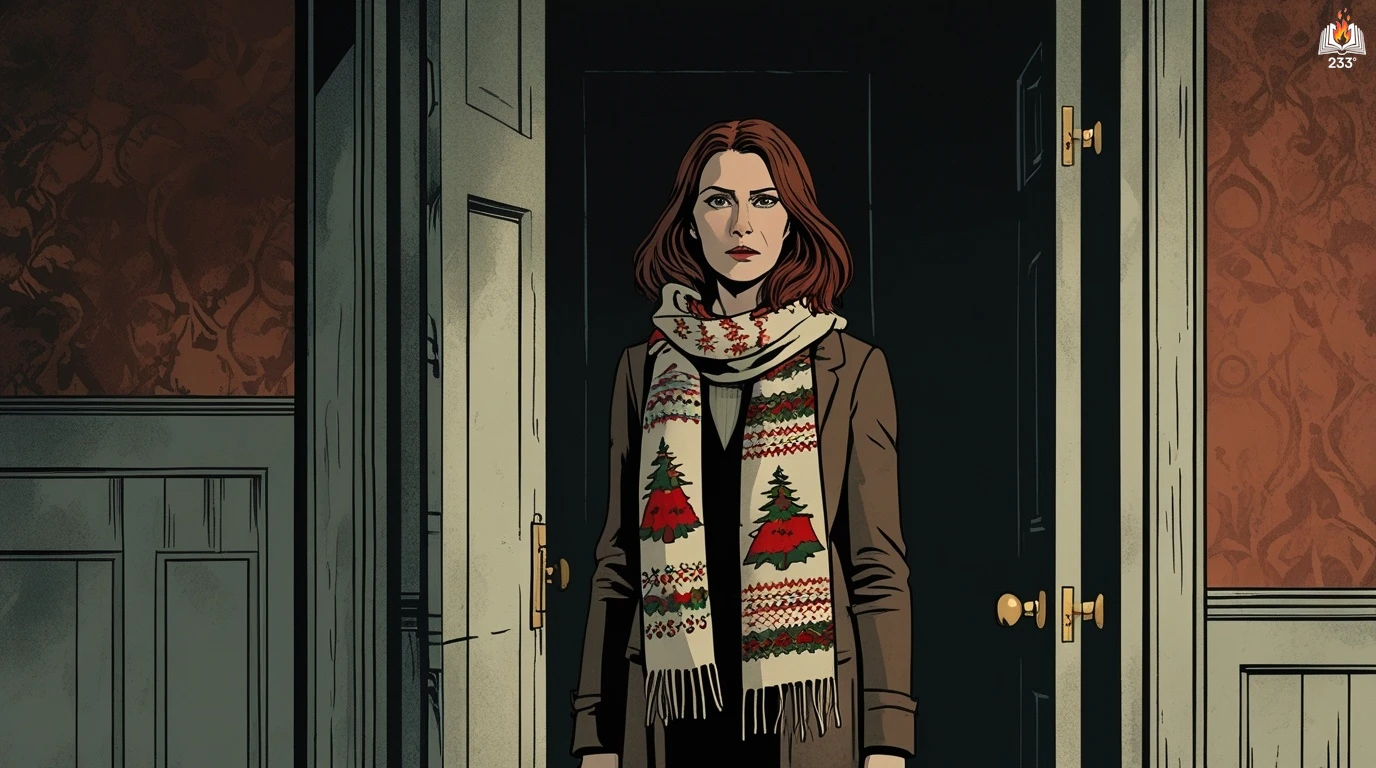

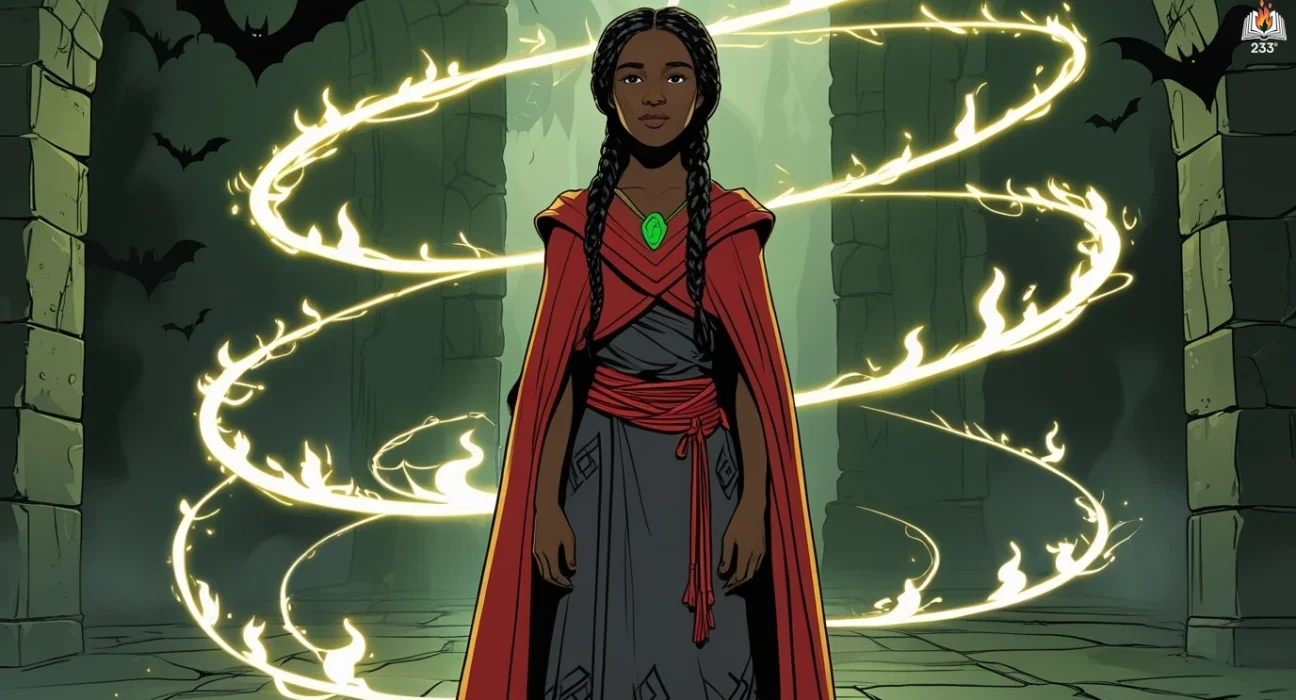
Son of a Witch by Gregory Maguire, published in 2005, is the second installment in The Wicked Years, a celebrated series that reimagines the universe of L. Frank Baum’s Oz. Building on the success of Wicked, this novel shifts focus to Liir, a young man who may or may not be the son of Elphaba, the infamous Wicked Witch of the West. Set in the turbulent aftermath of her death, the story explores a fractured Oz, where political unrest, tribal conflict, and religious extremism threaten to unravel what remains of order. Liir’s journey from a comatose invalid to a man confronting legacy, love, and identity is both intimate and epic, continuing the morally complex and lushly imagined world Maguire introduced in his first Oz tale.
Plot Summary
Under the eerie light of a jackal moon, a battered young man is discovered in the scrublands known as the Disappointments. His body is shattered, his skin pale and still, his identity unknown. Oatsie Manglehand, guide of the weary Grasstrail Train, finds him lying among the mud and wind-gnawed stones, barely clinging to life. Though her passengers grumble, she cannot leave him to die. The caravan presses on, carrying the broken stranger northward, away from the scavenging wilds and into the arms of those who might still care.
The caravan reaches the austere and devout Cloister of Saint Glinda, where maunts in their grey habits take in the nameless boy. Under the watch of the stern yet perceptive Superior Maunt, the lad is placed in a round chamber, a room shaped like a witch’s hat, high in the rafters where bats sleep soundly and whispers echo like prayers. The Sisters call upon memory and shadow, and the name returns to the oldest among them like the slow bloom of a forgotten bruise – Liir. He had once passed through their gates as a child in the silent company of Elphaba, the green-skinned novice who became the Wicked Witch of the West.
Now Liir hovers on the border between life and death. His bones are crushed but not bleeding, his breath shallow but persistent. One Sister notes a strange tint to his wounds, a shade like Elphaba’s own. But no proof exists. Not yet.
It is Candle, a mute Quadling girl with a domingon, who brings breath back into his lungs. She does not speak, but her fingers conjure music that is less sound than spirit – strange, humming harmonies that slip beneath the skin and nudge the soul. As she plays, Liir dreams, and in those dreams his memory wakes.
He had lived with Elphaba at Kiamo Ko, an ancient fortress tucked away in the crags of the Great Kells. Whether he was her son, her ward, or merely a lost boy she tolerated, Liir never knew. Her love, if it was love, had the cold discipline of purpose. He had followed her, obeyed her, shadowed her like a rootless echo. When Dorothy arrived and Elphaba met her end, melting into myth beneath a bucket of water, Liir was left behind – untethered, directionless.
He took her charred broom and left Kiamo Ko, unsure what he sought but compelled to follow Dorothy and her strange companions – the Tin Woodman, the Scarecrow, the Cowardly Lion. The group wandered into the wilds, and when the journey ended, Dorothy returned home, and Liir was alone again.
He joined the Home Guard, not for glory but for clarity, for instruction, for somewhere to stand. Commander Cherrystone, a man with paper-white skin and the clipped precision of a scalpel, saw something in the boy. Liir trained, killed, obeyed. He searched for the missing – the enslaved Birds of Oz, the girls taken from the Cloisters, the vanished tribes of the west. But wherever he went, he found only bones and silence.
He met Trism bon Cavalish, a falconer charged with training dragons to terrorize rebels. Trism’s gentle hands belied his duty, and his sorrow found an answer in Liir’s confusion. Between them, an intimacy bloomed unspoken, fragile as a whispered promise. Together they turned on the Empire. They freed the dragons, let them scatter like fire through the sky.
Liir moved like a specter across Oz. He fought against the Yunamata and Scrow, tribes pushed to the edge of revolt. He searched for Nor, the caged girl taken from Elphaba’s past, perhaps his sister. He broke rules and barriers, bringing unrest to the very throne of the Emperor Apostle – a child-king swaddled in ritual and paranoia, cloaked in incense and fear. In the Emerald City, Liir confronted this boy-saint, only to be cast back out into exile.
Weary and wounded, he returned to the Cloister of Saint Glinda, where Candle waited with her domingon. Her music threaded through the splinters of his memories, and slowly, piece by piece, he reassembled himself. The world outside had grown darker. The puppet rulers clutched at control while the people whispered of Elphaba’s return. Some said she had risen again, that her green fire would burn injustice from the roots.
But Liir had no fire. He had only his name, his doubt, and the fragile thread of purpose Candle had handed him through sound. He wandered once more, to Kumbricia’s Cradle, to the edges of Oz where gods might still listen. There, he met a wise and haunting figure – the Goose, the oracle, the voice of the Unnamed God. Through riddles and myth, the Goose unveiled a truth Liir had long suspected: that he had power, and that it was born not only of blood but of will.
A final task pulled him back to the Cloister. A mission born of vision – Candle’s, not his – sent him to Southstairs, the dreadful prison where secrets are buried under stone and suffering. There he found Nor, or what remained of her. He carried her out of darkness on Elphaba’s broom, wrapped in shadows and grief.
When he returned to Candle, he found the world changed again. The Emperor had fallen. The winds whispered Elphaba’s name in praise and in dread. Candle was not alone – beside her, swaddled in a bundle of coarse cloth, was a child. His child. Or hers. Or both. The blood of Elphaba ran in tiny veins, or perhaps it didn’t. The broom waited in the corner, its ash-dark wood glinting faintly in the sun.
Liir stepped forward, not to fly, not to flee, but to stay. To stand. To guard the spark that had been handed down – through music, through memory, through a witch’s silence and a mute girl’s song.
Main Characters
Liir: The protagonist, a vulnerable and uncertain young man who struggles with questions of identity and lineage. Possibly Elphaba’s son, he starts the novel near death, and through recollection and recovery, gradually pieces together his place in Oz. Liir is marked by a desperate need to belong, to do good, and to live up to the enigma of Elphaba, while forging a destiny of his own.
Elphaba (The Wicked Witch of the West): Though dead before the novel begins, Elphaba’s shadow looms large. She is remembered as an icon of defiance and mystery, and her possible maternity over Liir drives much of his soul-searching.
Candle: A silent and enigmatic Quadling girl who communicates through her haunting music played on a domingon. She becomes Liir’s nurse and, later, an emotional anchor. Her quiet devotion and spiritual depth contrast with the chaos around her.
The Superior Maunt: The sagely head of the Cloister of Saint Glinda. With a weathered wisdom, she oversees the care of the dying and the broken, and represents the complex moral ambiguity of institutional faith.
Commander Cherrystone: A rigid military figure and representative of the Emperor’s brutal regime. His role in Liir’s life is antagonistic, yet he becomes a catalyst for Liir’s political awakening.
Trism bon Cavalish: A falconer and reluctant servant of the oppressive government. His closeness to Liir becomes personal and emotionally charged, marking one of the novel’s few moments of romantic vulnerability.
Mother Yackle: A mystical, near-immortal figure who reappears from Wicked. She remains a cryptic observer, representing fate and prophecy.
The Emperor Apostle: The despotic ruler of Oz, who wields religious and political power to manipulate the masses. His tyranny fuels the rebellion that simmers throughout the narrative.
Theme
Identity and Inheritance: Central to the novel is Liir’s search for self – Is he Elphaba’s son? What does it mean to carry her legacy? This theme probes the nature of blood, memory, and chosen kinship in shaping who we become.
Moral Ambiguity: Like its predecessor, Son of a Witch resists the dichotomy of good and evil. Characters operate in shades of gray, and acts of heroism often lead to unintended consequences. This thematic current challenges the traditional narrative structure of Oz and mirrors real-world complexities.
Power and Corruption: Through the Emperor’s rule and the complicity of institutions like the military and religious orders, the novel explores how power consolidates through fear, conformity, and violence.
Silence and Voice: Candle’s muteness, the maunts’ vows of silence, and Liir’s internal struggles all highlight how voice – both literal and symbolic – becomes a battleground for agency, identity, and protest.
Memory and Trauma: Flashbacks and fragmented recollections reveal how past pain and unresolved trauma drive present action. Liir’s wounds are physical and psychological, and healing becomes a metaphor for reckoning with history.
Writing Style and Tone
Gregory Maguire’s prose is rich, layered, and evocative, marrying mythic grandeur with philosophical introspection. He builds a world that is both whimsical and grim, laced with poetic flourishes, archaic diction, and sharp political commentary. The language often echoes religious and classical cadences, grounding the fantasy setting in a gravitas that deepens its emotional and thematic stakes. His use of flashbacks and nonlinear narrative creates a dreamlike quality that mirrors Liir’s disorientation and growth.
The tone of Son of a Witch is melancholic, reflective, and at times quietly hopeful. There’s a persistent undercurrent of sorrow, shaped by loss, disillusionment, and war. Yet moments of tenderness and revelation gleam like candlelight in the darkness. Maguire’s Oz is not a land of clear morals or simple joy; it is a mirror to our own world – fractured, conflicted, and searching for meaning. The story invites contemplation more than escapism, demanding the reader’s emotional and intellectual engagement with every page.
Quotes
Son of a Witch – Gregory Maguire (2005) Quotes
“Memory is a part of the present. It builds us up inside; it knits our bones to our muscles and keeps our hearts pumping. It is memory that reminds our bodies to work, and memory that reminds our spirits to work to: it keeps us who we are.~Candle”
“It's the only condition I know. Bitter Love, Loneliness, contempt for corruption, blind hope. It's where I live. A permanent state of bereavement. This is nothing new.”
“I learned failure early and mastered it.”
“It isn't whether you do it well or ill, it's that you do it all.”
“Wisdom is not the understanding of mystery. Wisdom is accepting that mystery is beyond understanding. That's what makes it mystery.”
“I hate to be obvious," added the Scarecrow, "but you'd have saved yourself a heap of trouble if you weren't too cheap to invest in a leash, Dorothy.”
“Begging your pardon, sir....One population can't make peace with another by force.”
“Everyone dies. It's a question of where and how, that's all.”
“One plus one equals both.”
“Forget us, forget us all, it makes no difference now, but don't forget we loved it when we were alive.”
“at least i'm talkng to myself. instead of giving myself the cold shoulder”
“Before you save anyone else, you have to save yourself. otherwise, you'rejust a bundle of tics, a stringed puppet manipulated by the chance and the insensible wind.”
“We are loping sequences of chemical conversions, acting ourselves converted. We are twists of genes acting ourselves twisted; we are wicks of burning neuroses acting ourselves wicked. And nothing to be done about it. And nothing to be done about it.”
“How could anyone live without flying?”
“Glinda waved dismissively. Then she tucked her hand against her mouth and bit her knuckles. It was hard to tell if her pretty ways were studied or innate. "Oh, oh," she managed, "I don't know that I'll see you again- and you remind me so of her.”
“Under every roof, a story, just as behind every brow, a history”
“I learned to fly on a broom," he said, rolling up his sleeves. "I can learn to milk a goat, I bet." Though flying on a broom proved to be the easier task, he found.”
“A notion of character, not so much discredited as simply forgotten, once held that people only came into themselves partway through their lives. They woke up, were they lucky enough to have consciousness, in the act of doing something they already knew how to do...”
“The wall read: ELPHIE LIVES OZMA LIVES THE WIZARD LIVES and then EVERYONE LIVES BUT US.”
“If the unlettered farmers of Munchkinland and the factory workers of Gillikin believe that their fate is being determined by how the Time Dragon dreams them up, they don't need to bother to take responsibility for their actions or for changing their class and station in life.”
“It's the work that's important, not the individual who does it.”
“In the end, all disguises must drop.”
“Sometimes thought Liir-his first thought in weeks and weeks-sometimes I hate this marvelous land of ours. It's so much like home, and then it holds out on you.”
“The colossal might of wickedness, he thought: how we love to locate it massively elsewhere. But so much of it comes down to what each one of us does between breakfast and bedtime.”
“Yes, I'm nervous. You'll find in time most people are. They simply learn better how to disguise it, and sometimes, if they're wise, how to use their anxiety to serve the public good. Perhaps being jittery helps me pay closer attention.”
“We are the next thing the Time Dragon is dreaming, and nothing to be done about it.”
We hope this summary has sparked your interest and would appreciate you following Celsius 233 on social media:
There’s a treasure trove of other fascinating book summaries waiting for you. Check out our collection of stories that inspire, thrill, and provoke thought, just like this one by checking out the Book Shelf or the Library
Remember, while our summaries capture the essence, they can never replace the full experience of reading the book. If this summary intrigued you, consider diving into the complete story – buy the book and immerse yourself in the author’s original work.
If you want to request a book summary, click here.
When Saurabh is not working/watching football/reading books/traveling, you can reach him via Twitter/X, LinkedIn, or Threads
Restart reading!