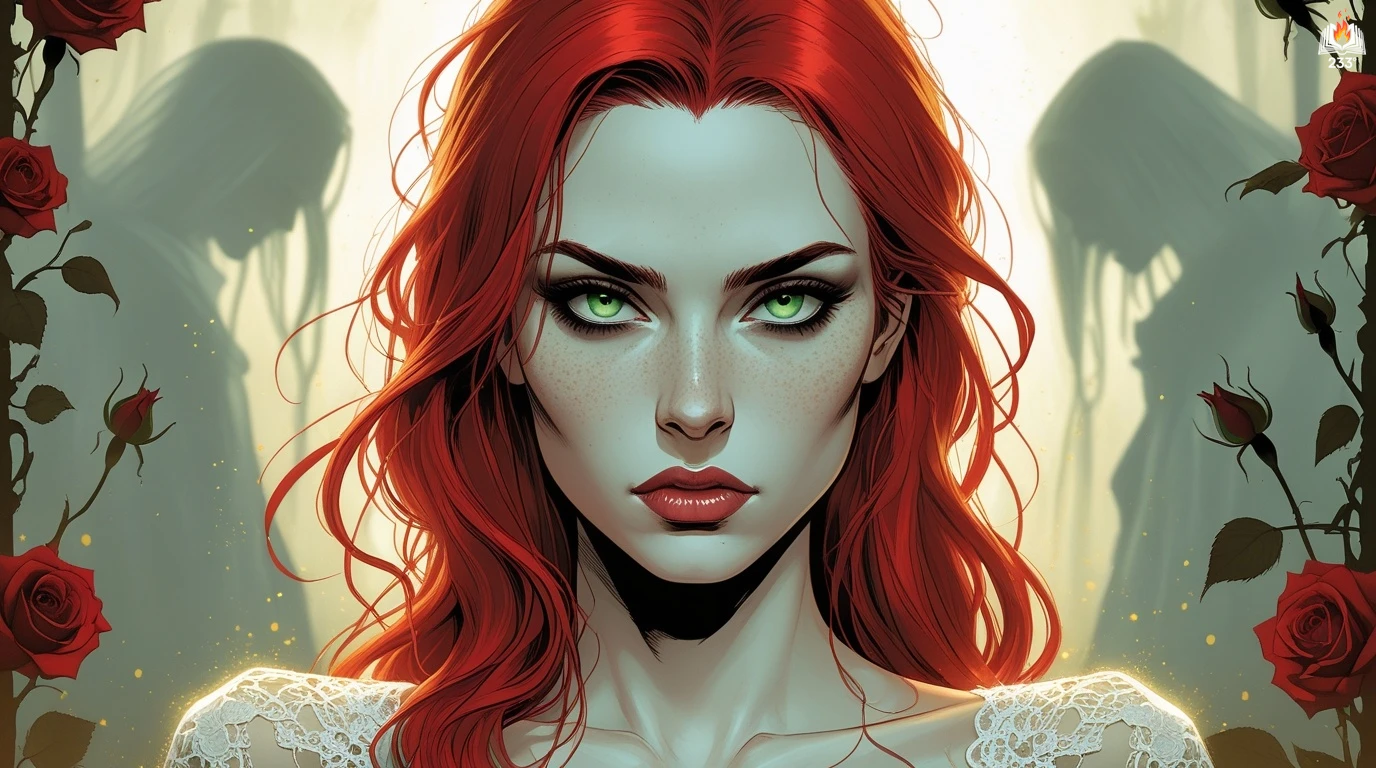
Mort, written by Terry Pratchett and published in 1987, is the fourth installment in the beloved Discworld series. This humorous and fantastical novel introduces readers to the peculiar world of Death—not merely as a concept, but as a character. In this universe, Death takes an apprentice: a gangly, awkward boy named Mortimer, or Mort for short. The story masterfully blends wit, satire, and existential questions, taking place on the flat Discworld which rests atop four giant elephants standing on the back of a cosmic turtle named Great A’Tuin.
Plot Summary
In the octarine-hued hills near the Ramtops, where magic grew like weeds and reannual plants bloomed a year before they were planted, a boy named Mortimer lived among grapevines and goats, his mind always adrift among peculiar questions. Tall, freckled, and almost entirely constructed of knees, Mort was not what one would call an asset to agricultural society. His family, kind-hearted but perplexed, thought it best to apprentice him at the Sheepridge hiring fair, with hopes that someone, somewhere, might mold him into usefulness.
As midnight crept into the square and the other boys found masters in farriers, toymakers, and licensed beggars, Mort stood alone, itchy in a brown garment that could comfortably house a circus troupe. The clock tolled the final stroke when hooves rang out, echoing like thunder in a canyon of silence. The rider, tall and cloaked in black, dismounted a steamy white horse that smoldered against the night. Where his face should have been was a skull, gleaming in the torchlight. And when he spoke, the voice arrived directly in Mort’s head, bypassing trivialities like ears.
Death had come – not for Mort’s soul, but his services.
With the agreement of Mort’s bemused father, Death claimed the boy as his apprentice. Together they rose into the sky upon the back of Binky, a horse who walked on air as casually as others strolled through puddles. Below them, the Discworld turned beneath a garland of starlight, wrapped in its glittering Rimfall like a jewel tossed into space.
Mort awoke in a house that smelled faintly of old tombs and formaldehyde. The furniture bore motifs of bones and black velvet. There was a kitchen, staffed by the stoop-shouldered Albert, who could make eggs sizzle like a midsummer thunderstorm. And there was Ysabell, Death’s adopted daughter, pale and sharp, her dress trailing like storm clouds, her words even sharper than her tone.
Tasks began humbly. There was muck to shovel, broccoli to plant in unnaturally dark soil, and corridors to wander, draped in gloom and antique time. Death, meanwhile, was not the soul-reaping terror Mort expected. He had a fondness for curry, a fascination with party snacks, and a persistent, slightly confused desire to understand what it meant to be human. Mort watched and learned as they traveled the world, collecting souls with a touch of the sword or the sweep of the scythe, arriving neither early nor late but precisely when due.
Then came Sto Lat, a city snugly built around a castle perched upon a glacial rock, where courtiers gathered for a royal feast. King Olerve stood surrounded by minstrels and murmurings, while a figure with a lizard grin – the Duke of Sto Helit – hovered near. Death, holding an hourglass marked with the king’s name, handed Mort the task. But Mort, seeing the Duke’s ambition and the King’s humanity, hesitated.
Instead of swinging Death’s blade, Mort swung fate. He intercepted the assassin’s blow, shielding the King from destiny and letting the grains in his hourglass fall unnoticed into the realm of the impossible.
The world, however, has rules.
Time, confused by Mort’s defiance, split. Two realities emerged – one where the King died and the Duke’s schemes bore fruit, and another where the King lived on, unwelcome and increasingly invisible to his own people. Only a handful, including Mort and Princess Keli, daughter of the supposedly deceased King, could sense the divergence.
Keli, practical and inquisitive, had enough royal bearing to continue ruling and enough curiosity to notice that her reality was fraying at the seams. Mort, caught between duty and conscience, found himself drawn to her, even as he struggled with the growing weight of his borrowed power. Death had retreated from his responsibilities, indulging in human pleasures – fishing, gambling, and drink – leaving Mort as the reluctant caretaker of mortality.
Meanwhile, Ysabell, long accustomed to her father’s detachment, began to see in Mort something different – someone who questioned, who cared, who could change the path laid out before him. Their reluctant alliance evolved into a partnership as they sought a way to mend reality before both timelines collapsed.
Albert, the caustic manservant with a secret past, warned them of the dangers. He, it turned out, was once Alberto Malich, a wizard who had tried to dodge Death and ended up serving him instead. He understood the consequences of meddling with time and urged caution, even as Mort grew more entangled in a destiny of his own making.
With the hourglass of Princess Keli nearly empty and the alternate timeline collapsing, Mort prepared to defy reality once more. He challenged Death – not with blade or brute force, but with belief. Their duel tore through the house, through time itself, watched only by those too foolish or too stubborn to blink. Steel clashed against spectral fire as Mort held his ground, demanding the right to make things right.
Death, moved not by threat but by Mort’s passion, yielded. Keli’s hourglass was restored. The divergent world began to dissolve, forgotten by all but those who had walked its crooked paths. Mort, weakened and wiser, expected punishment or banishment. But Death offered something unexpected – pride, and the return of the mantle.
In the quiet aftermath, Mort stood beside Ysabell in the garden that bloomed with shadows. Death, once more reaper and guide, resumed his duties with the grace of a cosmic constant. Mort, no longer the awkward boy of octarine fields, found himself changed, not just in skill but in soul.
And in the distance, unseen by most but always present, Binky galloped toward the horizon, carrying a black-robed figure whose touch was gentle, whose timing was perfect, and whose job was never truly done.
Main Characters
Mort (Mortimer): The protagonist, Mort is a clumsy, red-haired young man with a curious mind and a heart full of wonder. Unsuitable for mundane trades and dismissed by many for his absent-mindedness, Mort is unexpectedly chosen by Death to be his apprentice. Throughout the novel, Mort matures significantly, wrestling with moral dilemmas, learning the weight of life and death, and ultimately discovering his own agency.
Death: A skeletal, hooded figure who speaks in capital letters and rides a white horse named Binky. Far from a mere harbinger of doom, Death is portrayed as philosophical, occasionally whimsical, and increasingly fascinated by humanity. His attempts to understand mortal pleasures—such as dining or socializing—lend both humor and poignancy to the narrative.
Ysabell: Death’s adopted daughter, Ysabell is sharp-tongued, intelligent, and initially dismissive of Mort. Over time, she reveals depth, vulnerability, and courage, and she plays a crucial role in the story’s climax and Mort’s emotional development.
Albert: Death’s loyal manservant, Albert is an ancient, grumbling ex-wizard who handles the practical affairs of Death’s domain. Pragmatic and cynical, he serves as comic relief while also offering surprising insights into mortality and time.
King Olerve and Duke of Sto Helit: The political figures central to Mort’s first major moral test. The king’s impending death and the duke’s ambition catalyze Mort’s inner conflict about duty and justice.
Theme
The Nature of Death and Duty: The novel examines what it means to die, and who decides when and how. Through Mort’s apprenticeship, Pratchett delves into the mechanics and responsibilities of death, challenging readers to consider mortality as more than an end, but a cosmic role governed by rules and rituals.
Fate vs. Free Will: A central tension arises as Mort, armed with Death’s powers, begins to question predestination. His decision to alter fate disrupts the natural order, prompting a philosophical exploration of choice, consequence, and the human desire to intervene.
Coming of Age and Identity: Mort’s journey is emblematic of adolescence. From an unsure, awkward youth, he grows into a reflective individual who questions authority, falls in love, and makes morally difficult decisions—all hallmarks of coming-of-age narratives.
Reality and Perception: Mort and Death operate in realms others cannot perceive, highlighting how much of existence is shaped by what people are willing or able to see. The novel frequently blurs lines between illusion and reality, especially through magical and metaphysical elements.
Writing Style and Tone
Pratchett’s writing in Mort is a brilliant blend of satirical wit, linguistic playfulness, and philosophical depth. His prose dances effortlessly between comic absurdity and profound insight. Wordplay and clever footnotes abound, offering readers a multi-layered narrative that rewards both laughter and contemplation.
The tone of Mort oscillates between whimsical irreverence and somber reflection. While the world of Discworld is comically exaggerated—complete with anthropomorphic personifications and magical mayhem—it’s grounded by an underlying earnestness. The novel doesn’t shy away from exploring loss, existential dread, and moral ambiguity. Death himself, despite his skeletal visage, is imbued with warmth and curiosity, making him one of the most endearing and complex characters in the series.
Quotes
Mort – Terry Pratchett (1987) Quotes
“It would seem that you have no useful skill or talent whatsoever," he said. "Have you thought of going into teaching?”
“He'd been wrong, there was a light at the end of the tunnel, and it was a flamethrower.”
“Albert grunted. "Do you know what happens to lads who ask too many questions?" Mort thought for a moment. "No," he said eventually, "what?" There was silence. Then Albert straightened up and said, "Damned if I know. Probably they get answers, and serve 'em right.”
“Scientists have calculated that the chances of something so patently absurd actually existing are millions to one. But magicians have calculated that million-to-one chances crop up nine times out of ten.”
“Ankh-Morpork had dallied with many forms of government and had ended up with that form of democracy known as One Man, One Vote. The Patrician was the Man; he had the Vote.”
“He was determined to discover the underlying logic behind the universe. Which was going to be hard, because there wasn't one.”
“THAT’S MORTALS FOR YOU, Death continued. THEY’VE ONLY GOT A FEW YEARS IN THIS WORLD AND THEY SPEND THEM ALL IN MAKING THINGS COMPLICATED FOR THEMSELVES. FASCINATING.”
“People don't alter history any more than birds alter the sky, they just make brief patterns in it.”
“I USHERED SOULS INTO THE NEXT WORLD. I WAS THE GRAVE OF ALL HOPE. I WAS THE ULTIMATE REALITY. I WAS THE ASSASSIN AGAINST WHOM NO LOCK WOULD HOLD. "Yes, point taken, but do you have any particular skills?”
“T____'s __ __s____, _____'s __s_ __. —Death”
“Oh. I see. People don't want to see what can't possibly exist.”
“When she spoke again it was in the thin, careful and above all brave voice of someone who has pulled themselves together despite overwhelming odds but might let go again at any moment.”
“It struck Mort with sudden, terrible poignancy that Death must be the loneliest creature in the universe. In the great party of Creation, he was always in the kitchen.”
“Well,----me,” he said. “A----ing wizard. I hate----ing wizards!” “You shouldn’t----them, then,” muttered one of his henchmen, effortlessly pronouncing a row of dashes.”
“Mort was already aware that love made you feel hot and cold and cruel and weak, but he hadn't realized that it could make you stupid.”
“Tragic heroes always moan when the gods take an interest in them, but it's the people the gods ignore who get the really tough deals.”
“THERE'S NO JUSTICE, said Mort. JUST US.”
“YOU MUST LEARN THE COMPASSION PROPER TO YOUR TRADE" "And what's that?" "A SHARP EDGE.”
“I? KILL? said Death, obviously offended. CERTAINLY NOT. PEOPLE GET KILLED, BUT THAT'S THEIR BUSINESS. I JUST TAKE OVER FROM THEN ON. AFTER ALL, IT'D BE A BLOODY STUPID WORLD IF PEOPLE GOT KILLED WITHOUT DYING, WOULDN'T IT?”
“How do you get all those coins?" asked Mort. IN PAIRS.”
“He felt as if he had been shipwrecked on the Titanic, but in the nick of time had been rescued. By the Lusitania.”
“I DON'T KNOW ABOUT YOU, he said, BUT I COULD MURDER A CURRY.”
“Although the scythe isn't pre-eminent among the weapons of war, anyone who has been on the wrong end of, say, a peasants' revolt will know that in skilled hands it is fearsome.”
“Then there was the puzzle of why the sun came out during the day, instead of at night when the light would come in useful.”
We hope this summary has sparked your interest and would appreciate you following Celsius 233 on social media:
There’s a treasure trove of other fascinating book summaries waiting for you. Check out our collection of stories that inspire, thrill, and provoke thought, just like this one by checking out the Book Shelf or the Library
Remember, while our summaries capture the essence, they can never replace the full experience of reading the book. If this summary intrigued you, consider diving into the complete story – buy the book and immerse yourself in the author’s original work.
If you want to request a book summary, click here.
When Saurabh is not working/watching football/reading books/traveling, you can reach him via Twitter/X, LinkedIn, or Threads
Restart reading!