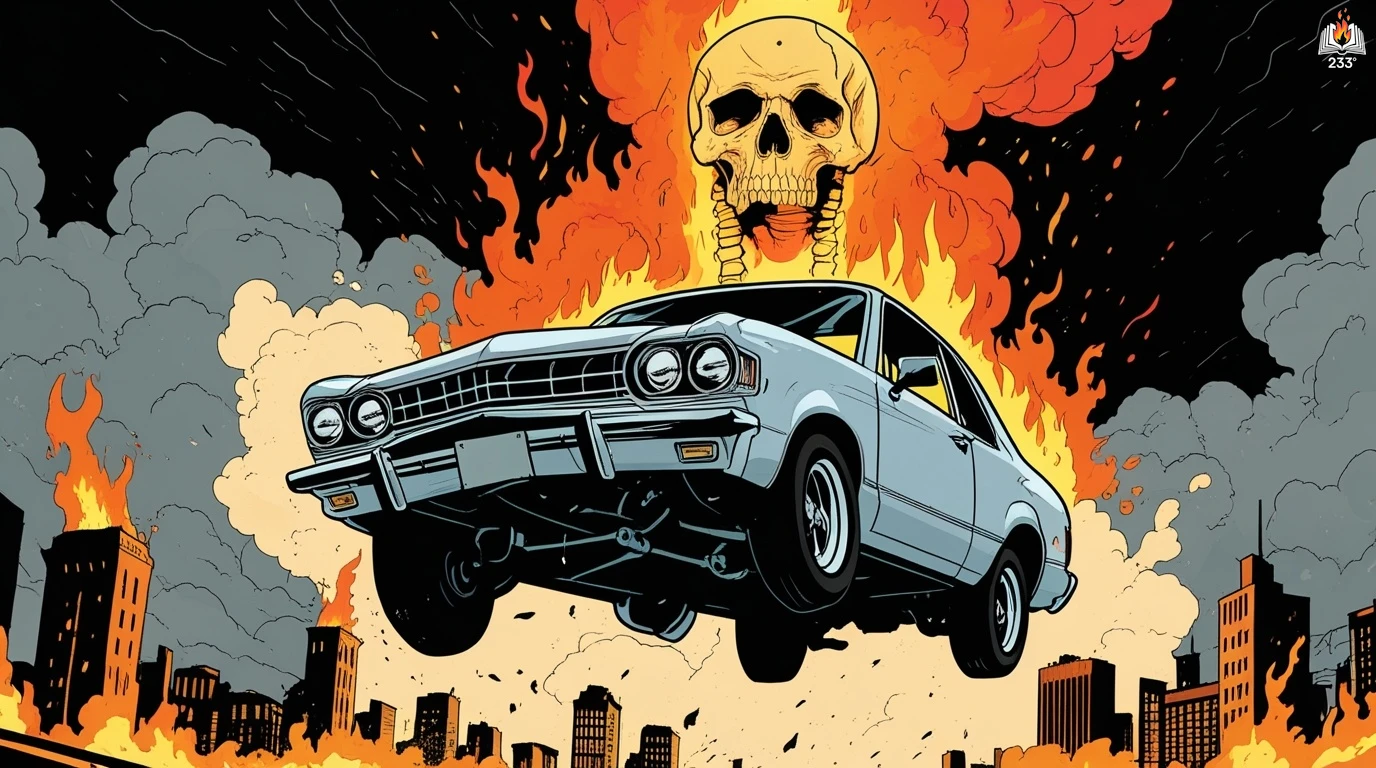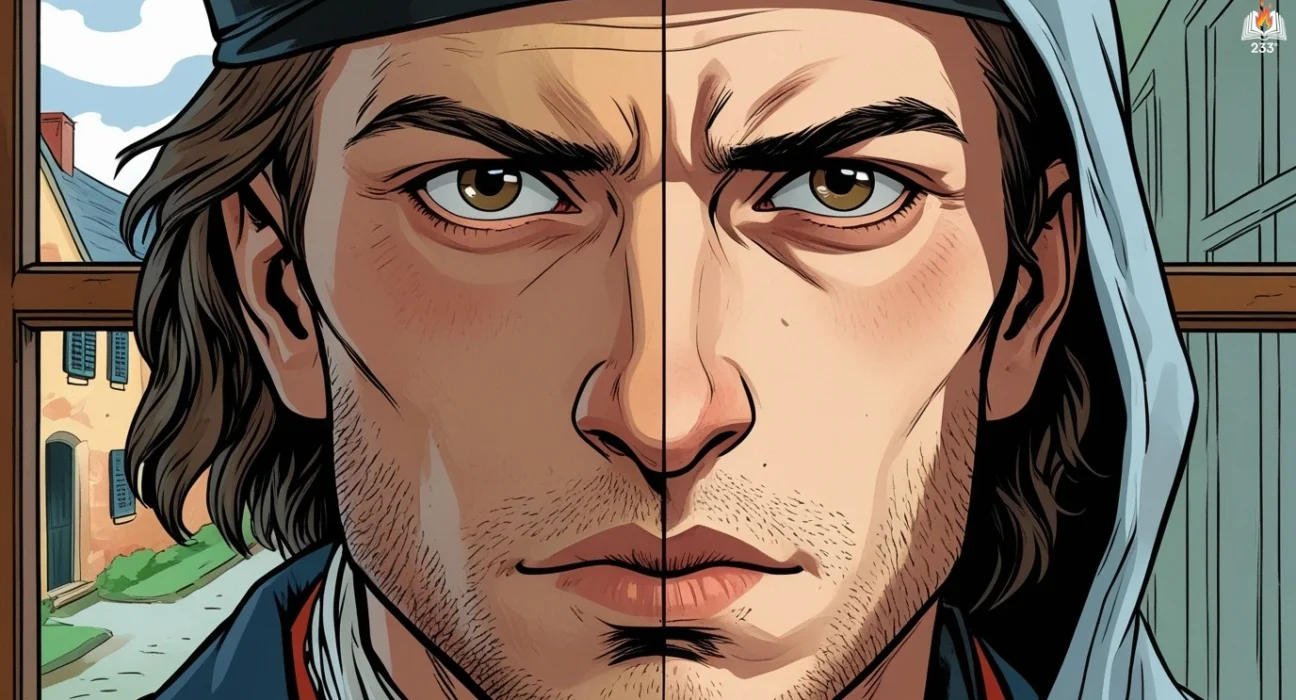
Choke is a 2001 novel by Chuck Palahniuk, the acclaimed author of Fight Club, known for his sharp, transgressive fiction that probes the darker sides of modern life. In Choke, Palahniuk continues his exploration of damaged characters navigating a fractured society, centering on Victor Mancini – a sex addict and historical reenactor who fakes choking in restaurants to scam money out of sympathetic bystanders. The novel balances grim humor, emotional decay, and existential questioning, establishing itself as a striking piece within Palahniuk’s body of work.
Plot Summary
Victor Mancini is not the kind of man anyone wants to be. He spends his days dressed in breeches and buckle shoes, reenacting colonial servitude at a living history museum, and his nights choking on overpriced steak in upscale restaurants. Not by accident. He gags on purpose, lets his face turn blue, signals desperation with flailing hands until a Good Samaritan jumps up, saves him, and then – out of guilt or gratitude – starts sending him checks. He collects these patrons like some people collect sins, hoarding their pity like savings bonds. They believe they saved his life. He believes he’s finally given someone a reason to care.
He learned this trick from his mother. Ida Mancini, a lifelong anarchist and repeat convict, bounced through life sabotaging consumer culture, kidnapping her son, and dispensing cryptic life lessons soaked in mythology and trauma. She is now withering away in a care facility, her memory shredded, her body skeletal. Victor visits her regularly, but she rarely recognizes him. One week he’s her son. The next, a court-appointed lawyer named Fred Hastings. He plays along, clinging to the scraps of her lucidity in hopes she’ll someday reveal who his real father is – a truth she guards like a dying secret.
Outside the hospital, Victor’s world teeters on the verge of collapse. He attends sex addiction support groups not for recovery, but as a buffet. There’s always someone broken enough to find him charming, someone willing to take him home. That’s where he meets Nico, Tanya, Leeza – different nights, different compulsions. He doesn’t love them, but for a few minutes at a time, he doesn’t feel alone. Then comes the shame, the guilt, the cold bathroom floors, and the aching silence after climax. The cycle spins endlessly, like a prayer wheel lubricated with sweat and regret.
Denny, his best friend and fellow sexaholic, is trying to get clean. He counts days of sobriety the way others count blessings. Denny gets locked in the colonial stocks for sneaking modern luxuries into their reenactment town – ChapStick, chewing gum, a wristwatch. But he’s optimistic, filled with dreams of building a rock garden and being a decent human being. He finds a girlfriend. He saves himself a little. Victor watches from the sidelines, suspicious of hope, uncomfortable with redemption.
At the hospital, a new doctor enters the scene. Paige Marshall is beautiful, strange, and unsettlingly compassionate. She claims to have a way to restore Ida’s mind, a revolutionary treatment, but she needs Victor’s help. As their interactions deepen, Victor finds himself caught between desire and suspicion. Paige insists she’s a doctor, yet her behavior suggests otherwise. She knows things she shouldn’t. She plays parts too well. Her presence stirs something in Victor – not love, exactly, but the flicker of something cleaner than what he’s known.
Victor starts unraveling. Flashbacks to his childhood crawl through his brain like maggots under skin. Motel rooms, fast food, lies wrapped in fairy tales. Ida taught him that art was born from suffering, that symbols mattered more than facts. She painted his shadow on a cliff one winter night, telling him he’d grow into the outline. She said he’d be someone worthy. Years later, he’s still trembling under the weight of that shape.
At the museum, he fakes his way through history, feeding tourists half-truths in an accent borrowed from television. At night, he writes his fourth step – a detailed moral inventory required by his recovery program. But he never finishes it. The list grows too long. Every line reminds him that the past is heavier than the present.
Paige offers more answers, claiming Victor might be the genetic clone of Jesus Christ, the result of an experiment involving Ida and preserved holy DNA. The absurdity only adds to the confusion. Is she lying? Is she insane? Is he? Victor clings to this theory not because he believes it, but because it gives his life a shape, a mythology to explain the wreckage. If he’s the clone of Christ, then maybe his suffering has purpose. Maybe his mother’s madness is part of a divine plan.
As Ida’s condition deteriorates, Paige vanishes. Victor searches for her, chasing shadows through the sterile halls of the hospital, questioning everything. When he finally confronts the truth, he learns that Paige was not a doctor at all. She was a patient, posing as someone else, playing the role she needed to survive. Like Victor, she was a performer, acting out salvation in a world that never offered any.
Denny builds his stone garden and invites Victor to live there with him, away from the chaos. But Victor can’t stay. He returns to the restaurants, returns to choking. It’s the only thing that makes people care. It’s the only time he feels real.
Ida dies without giving him the answers he longed for. No name. No origin story. Just a collection of fragments and lies. He’s left with his shadow on the cliff and a vague sense that he never fit the mold she made for him.
Victor drives. He chokes. He falls. He rises. Each night, another performance. Each breath, a gamble. Each savior, another stranger looking for a reason to believe they matter.
And so he continues – half martyr, half conman – a man addicted not just to sex or deception, but to the idea that love can be earned through suffering, that someone might stay if you just make them feel needed enough. Somewhere between colonial charades and medical hoaxes, Victor Mancini looks for redemption in all the wrong places and keeps choking on hope.
Main Characters
Victor Mancini – A sex addict trapped in a cycle of self-destruction and disillusionment. Victor is simultaneously repulsive and sympathetic, seeking meaning in a world that seems void of it. By pretending to choke in restaurants to receive money from would-be saviors, he exploits the very human compassion he is secretly desperate for. His complicated relationship with his mother and his unresolved trauma drive much of the novel’s internal tension.
Ida Mancini – Victor’s mentally ill mother, who spends most of the novel institutionalized. Her erratic behavior, cryptic storytelling, and manipulations deeply influence Victor’s psychological state. Ida’s refusal to reveal the truth about Victor’s origins becomes a central mystery, anchoring his identity crisis.
Paige Marshall – A caregiver at the hospital where Victor’s mother resides, Paige claims to have a radical solution for Ida’s illness. Her ambiguous identity and motives add a surreal layer to the narrative, representing both a potential redemptive force and a further complication in Victor’s quest for truth.
Denny – Victor’s earnest but troubled friend, also recovering from sex addiction. Denny’s journey of personal reform and his attempts to create a better life provide a foil to Victor’s stagnation. His hopefulness and sincerity contrast sharply with Victor’s cynicism and detachment.
Theme
Addiction and Control: Addiction functions as both a literal and metaphorical theme. Victor’s sex addiction, Denny’s similar struggles, and the broader compulsions of other characters reflect a desperate need to control chaotic lives. The novel interrogates whether true autonomy is possible in a world dictated by urges, neuroses, and manipulative systems.
Identity and Origin: Victor’s uncertainty about his parentage mirrors his existential confusion. The quest to uncover the truth of his birth is tangled in lies and memory distortion, symbolizing the broader search for meaning in a postmodern landscape where objective truth is elusive or irrelevant.
Performance and Deception: From Victor’s colonial reenactment job to his public choking cons, performance is omnipresent. Characters are constantly wearing metaphorical (and literal) costumes, concealing their realities to manipulate or survive. This theme questions authenticity in human interaction and self-perception.
Savior Complex and Redemption: Victor orchestrates choking episodes to compel others into a moment of false heroism, highlighting the human desire to be savior or saved. The theme evolves to probe deeper questions about what constitutes true redemption and whether it’s attainable for broken people in a broken system.
Writing Style and Tone
Chuck Palahniuk’s writing in Choke is brutal, rhythmic, and deeply ironic. He employs short, repetitive sentences and motifs that mimic obsessive thought patterns, lending the prose a compulsive energy that mirrors the characters’ addictions. His use of first-person narration is raw and unfiltered, allowing readers uncomfortably close access to Victor’s fractured psyche. Palahniuk often loops key phrases (“If you’re reading this…”, “What would Jesus not do?”) to underscore thematic resonance and psychological dissonance.
The tone is unapologetically sardonic, laced with dark humor and nihilism. Yet beneath the abrasive exterior lies an undercurrent of vulnerability and despair. Palahniuk masterfully juxtaposes grotesque moments with sudden poignancy, forcing readers to confront empathy in the most unlikely of circumstances. The clinical frankness with which he details bodily functions, sexual encounters, and institutional life forms a confrontational style that strips sentimentality and leaves raw emotional tissue exposed.
Quotes
Choke – Chuck Palahniuk (2001) Quotes
“What I want is to be needed. What I need is to be indispensable to somebody. Who I need is somebody that will eat up all my free time, my ego, my attention. Somebody addicted to me. A mutual addiction.”
“More and more, it feels like I'm doing a really bad impersonation of myself.”
“I feel my heart ache, but I've forgotten what that feeling means.”
“Because nothing is as good as you can imagine it. No one is as beautiful as she is in your head. Nothing is as exciting as your fantasy.”
“Without access to true chaos, we'll never have true peace. Unless everything can get worse, it won't get any better.”
“My first time I jacked off, I thought I'd invented it. I looked down at my sloppy handful of junk and thought, This is going to make me rich.”
“It's pathetic how we can't live with the things we can't understand. How we need everything labeled and explained and deconstructed.”
“After you find out all the things that can go wrong, your life becomes less about living and more about waiting.”
“You gain power by pretending to be weak.”
“We've spent so much time judging what other people created that we've created very, very little of our own.”
“Because nothing is as perfect as you can imagine it.”
“We've taken the world apart but we have no idea what to do with the pieces.”
“At some point, your memories, your stories, your adventures, will be the only things you'll have left.”
“Here in your mind you have complete privacy. Here there's no difference between what is and what could be.”
“There's an opposite to déjà vu. They call it jamais vu. It's when you meet the same people or visit places, again and again, but each time is the first. Everybody is always a stranger. Nothing is ever familiar.”
“Torture is torture and humiliation is humiliation only when you choose to suffer.”
“Sex pretty much cures everything.”
“Anything you can aquire is only another thing you'll lose.”
“By the time you're thirty, your worst enemy is yourself.”
“You can’t fool people into loving you.”
“If you're going to read this, don't bother.”
“Those who forget the past are condemned to repeat it.”
“Why do I do anything?' she says. 'I'm educated enough to talk myself out of any plan. To deconstruct any fantasy. Explain away any goal. I'm so smart I can negate any dream.”
“I wish I had the courage not to fight and doubt everything... I wish, just once, I could say, 'This. This is good enough. Just because I choose it.”
We hope this summary has sparked your interest and would appreciate you following Celsius 233 on social media:
There’s a treasure trove of other fascinating book summaries waiting for you. Check out our collection of stories that inspire, thrill, and provoke thought, just like this one by checking out the Book Shelf or the Library
Remember, while our summaries capture the essence, they can never replace the full experience of reading the book. If this summary intrigued you, consider diving into the complete story – buy the book and immerse yourself in the author’s original work.
If you want to request a book summary, click here.
When Saurabh is not working/watching football/reading books/traveling, you can reach him via Twitter/X, LinkedIn, or Threads
Restart reading!