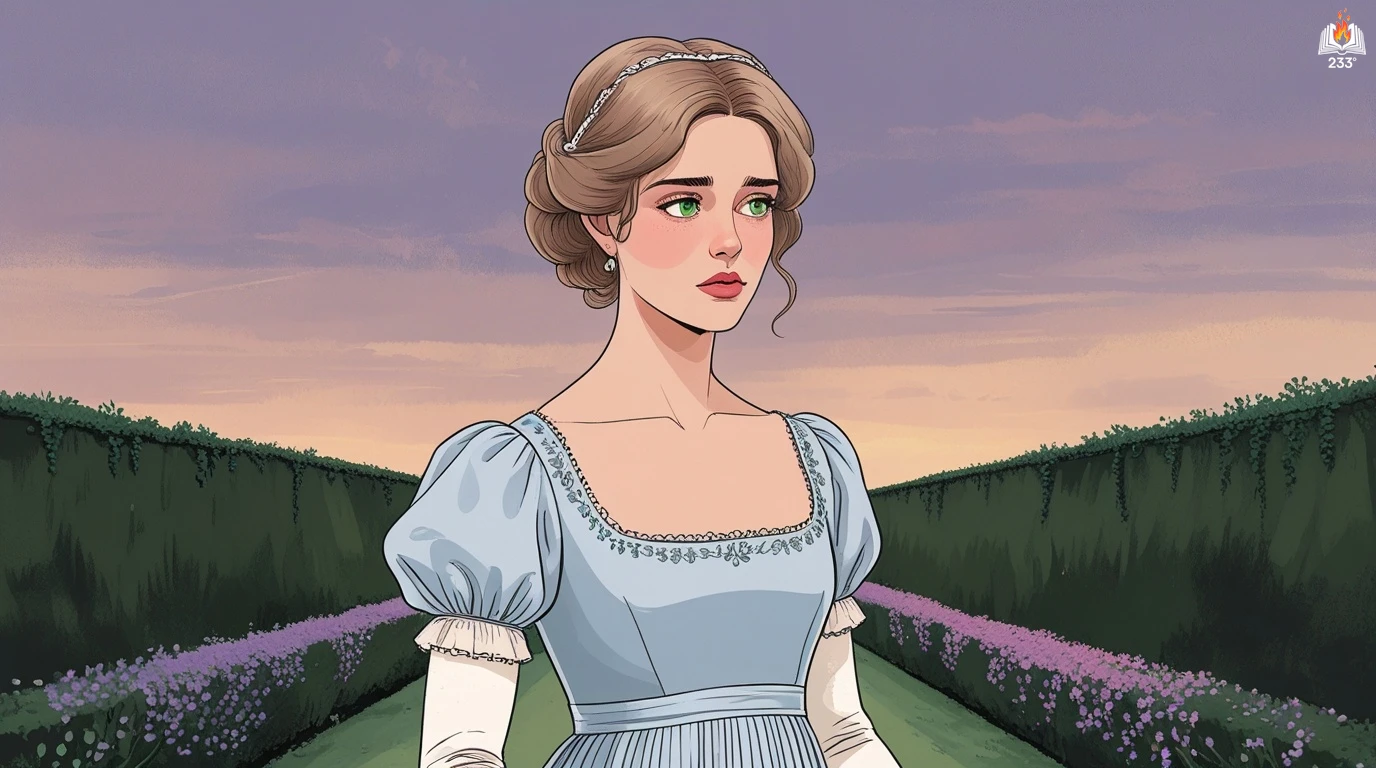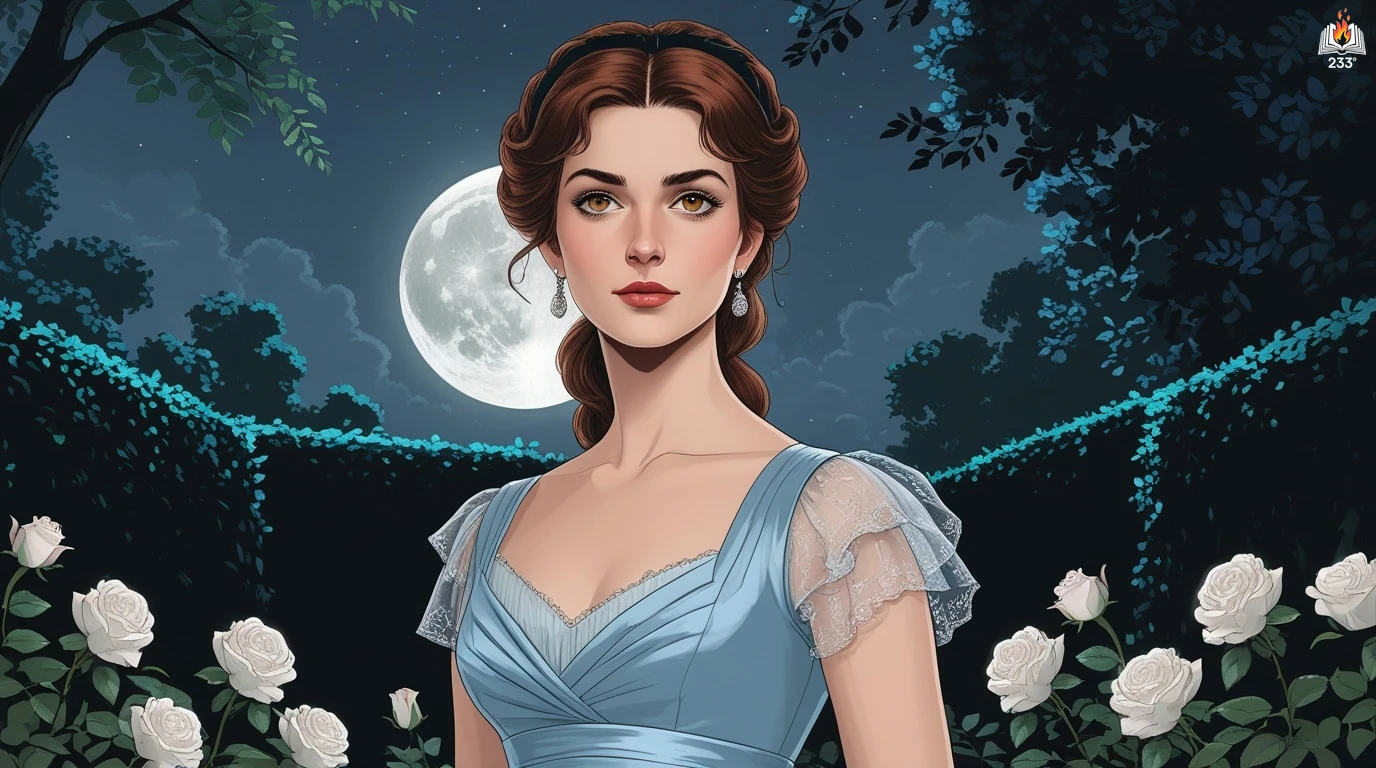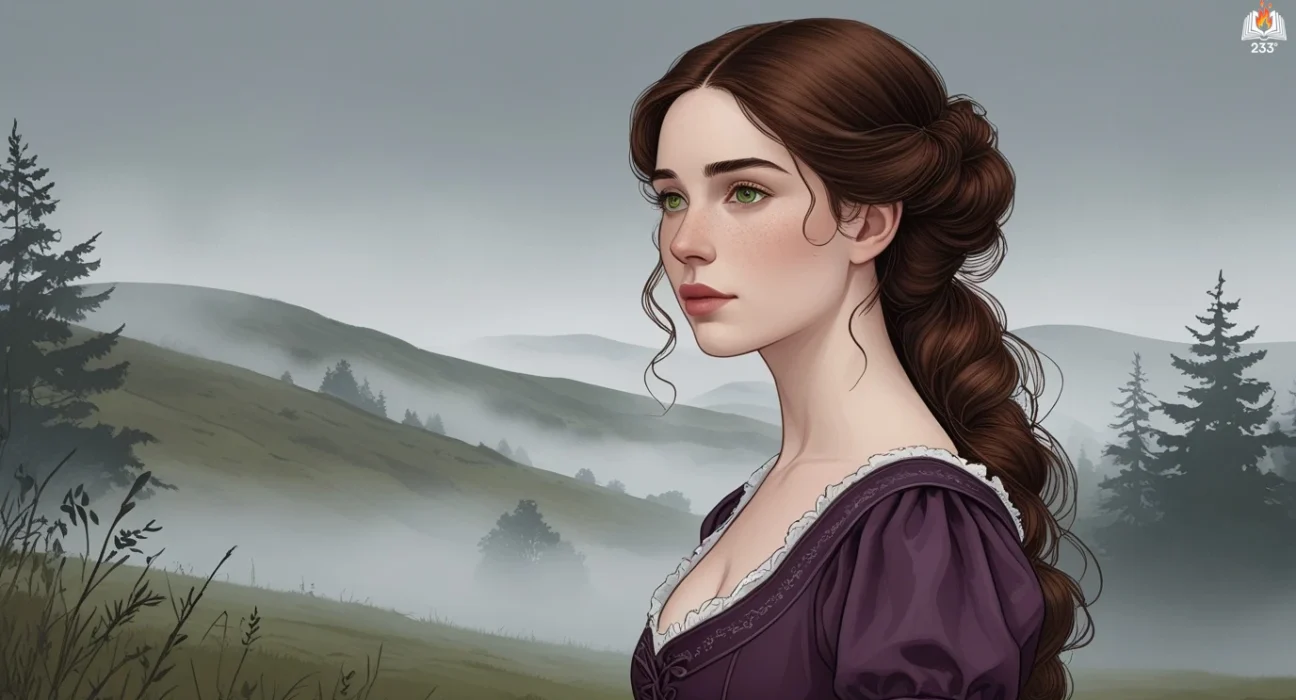
When He Was Wicked by Julia Quinn, published in 2004, is a deeply emotional and sensual installment in the beloved Bridgerton series. Centered around Francesca Bridgerton, the sixth of the eight Bridgerton siblings, this novel delves into themes of grief, forbidden love, passion, and personal transformation. Set against the backdrop of Regency England, it unravels the complexity of love and loyalty through the lens of loss and the courage to love again. Unlike the lighthearted romances of its predecessors, this story ventures into the depths of heartache and longing, offering a rich, layered narrative.
Plot Summary
In the quiet hush of a Mayfair church, Michael Stirling stood watching as Francesca Bridgerton became his cousin John’s wife. For Michael, the moment marked the beginning of a long torment – a love he’d never dared confess, forged in silence and shadow. Francesca, radiant and graceful, had never known the depths of his devotion, nor the storm of guilt that brewed beneath his charming exterior. Michael laughed with the ton, danced at every ball, and played the perfect gentleman. But behind every smile was a man longing for what could never be his.
John and Francesca’s marriage was one of quiet affection and growing companionship. They understood each other, moved with an ease that made their union enviable. Francesca, strong yet reserved, flourished under John’s love, unaware of the eyes that watched her too closely, the heart that beat too fast when she entered the room. Michael buried his longing in India, where he fled soon after John’s sudden death – a death that shattered Francesca’s world and left her reeling in a widow’s fog.
Two years passed. Francesca remained at Kilmartin, grieving with a grace that bewildered her family and left society unsure how to receive her. Michael returned to England, now the Earl of Kilmartin, heir to the title he’d never wanted, from a man he’d loved like a brother. Guilt clung to him like a second skin. With John gone, the bounds of propriety had changed, but the shame of his desire for Francesca had not. Still, the ache of distance and time could not erase his love. He returned not only to assume his duties, but to be near the woman he could no longer avoid.
Francesca welcomed him back with the warmth of an old friend. She saw in him a tether to John, a reminder of what had been. But she also saw a man transformed – darker at the edges, his laughter slower to come, his gaze a touch more intense. As they settled into a rhythm of shared estate responsibilities, quiet dinners, and walks beneath Scottish skies, something shifted. It was not a thunderclap of passion, but a slow awakening – a glance that lingered too long, a touch that held too much meaning.
Michael, desperate to keep himself in check, planned to propose to another. He sought a simple, manageable marriage, one that would cleanse him of the desire he could no longer deny. But Francesca, unaware of his torment, watched with a growing unease. Her heart, once firmly buried with John, stirred in Michael’s presence. She hated herself for it, mourned the betrayal she felt growing in her chest, but could not deny the pull between them.
When she learned of Michael’s courtship, a sharpness pierced through her sorrow. She felt abandoned, though she had no right to claim him. That night, in the quiet of her chamber, she wept for John, for herself, and for the man she now knew she could not lose.
A storm brought them together. Not one of wind and rain, but of emotion, of years of restraint bursting open in the space of a heartbeat. Francesca found herself in Michael’s arms, caught in a kiss that unraveled all the rules she had lived by. It was fire and grief, memory and hunger. And it frightened her.
They tried to step back, both of them. Francesca retreated into silence, and Michael into distance. But the air between them remained heavy with unspoken truths. When Francesca finally confronted him, it was not with words but with vulnerability. She wanted him. Not as a memory of John, not as a shadow, but as a man she had come to love in his own right.
They married quietly, retreating to Scotland where the ghosts of the past faded into the highland mist. Yet joy was tempered by an emptiness that neither could name aloud. Francesca, who had once conceived with John only to lose the child in miscarriage, found her womb silent year after year. She counted the days, each cycle a reminder of what she lacked. Michael, watching her sorrow deepen, grieved not only for her pain but for his helplessness.
They filled their home with love and laughter, with nieces and nephews who brought warmth but also reminded Francesca of what might never be. Still, she smiled, held babies not her own, and told herself it was enough. And most days, it was.
A visit to the family home in Kent brought unexpected healing. Francesca, surrounded by her boisterous siblings and their children, found herself drawn into the whirl of family life. She danced with her young niece in the garden, played games with her nephews, and laughed with a freedom she had nearly forgotten. A tender moment with her mother, Violet, cracked open a space in her heart – one that had long been sealed by grief and fear. For the first time in years, she spoke of her barrenness. And something shifted.
Michael joined her days later, his presence steady and warm. He watched her shine beneath the English sun and knew she was finally at peace. They spoke less of sorrow, more of today, of what joy could be taken from the present. They lingered in kisses, found comfort in touches that spoke of healing, not hunger. And in a quiet, windswept field, Francesca took him to the ground, laughter in her throat, desire in her heart. Something new was born in her then – not just love, but hope.
Weeks passed. The morning air felt different. Francesca forgot to count. When Michael asked about her time, she blinked, surprised. It had not come. She touched her belly, still flat, and whispered to him what she could not prove – she knew. This time, it was different. This time, she believed.
They told no one, choosing to cradle the secret between them. Months turned to seasons. At last, they returned to Aubrey Hall, carriage rolling up the long drive, hearts pounding with anticipation. Violet, waiting in the doorway, saw her daughter descend with a smile that held all the light of the world. And then, Francesca turned, took a bundle from the maid’s arms, and offered it to her mother.
His name was John.
And nine months later, another child was born – Janet Helen, with her father’s eyes and her mother’s quiet strength.
Francesca, once broken by loss, now stood whole. In the arms of the man who had loved her in silence, through years and oceans, she had found more than love. She had found a new beginning.
Main Characters
Francesca Bridgerton Stirling – Intelligent, introspective, and quietly passionate, Francesca is a woman who has already endured profound loss by the time the novel begins. After the sudden death of her first husband, John, she retreats emotionally, channeling her grief into duty and silence. Over time, she confronts both her yearning for motherhood and her unexpected, intense love for Michael, John’s cousin. Her arc is one of healing, courage, and embracing vulnerability in the face of societal and emotional constraints.
Michael Stirling – Devastatingly charming and deeply conflicted, Michael is a man who has loved Francesca from afar since the day she married his cousin. After inheriting the title of Earl of Kilmartin, he is haunted by guilt and desire. Michael’s journey is one of patience, self-restraint, and ultimately, self-acceptance. His fierce devotion and internal torment add depth and passion to the narrative.
Violet Bridgerton – As the matriarch of the Bridgerton family, Violet offers emotional grounding. Her sensitive understanding of Francesca’s struggle with infertility and loss speaks to her wisdom and compassion. Though a secondary character, her presence is profound, embodying maternal grace and resilience.
Eloise Bridgerton – Francesca’s sister and emotional counterpart, Eloise provides comic relief and insight. Their bond, particularly in moments of quiet sisterhood and shared pain, highlights the strength of familial love in the face of private sorrow.
Theme
Grief and Healing – At the heart of the novel lies an exploration of grief’s aftermath. Francesca’s mourning of John is sincere and prolonged, but it never negates her ability to love again. Julia Quinn portrays grief as a process, not a barrier – a path through which Francesca reclaims her future.
Forbidden Love and Guilt – Michael’s love for Francesca borders on torment, rooted in his reverence for the memory of his cousin. The ethical and emotional boundaries he wrestles with heighten the stakes, as the novel contemplates whether passion born of guilt can still be pure and redemptive.
Infertility and Motherhood – One of the most poignant themes, Francesca’s struggle with infertility adds a layer of emotional realism. Her longing for a child shapes many of her interactions and becomes a silent ache beneath her composed exterior. The eventual pregnancy serves as a powerful metaphor for hope and renewal.
Transformation and Rebirth – Both protagonists undergo significant personal evolution. Francesca must redefine herself beyond widowhood, and Michael must overcome the fear that his love is wrong or misplaced. Their union is not just romantic but symbolic of rebirth and reclaimed joy.
Writing Style and Tone
Julia Quinn’s writing in When He Was Wicked is more introspective and emotionally layered than many of her earlier Bridgerton novels. While still rich with her signature wit and banter, the tone here is notably more somber and sensual. She lingers longer in the emotional landscapes of her characters, especially in Francesca’s grief and Michael’s internal war between desire and decency.
Her prose carries a rhythmic elegance, alternating between lyrical introspection and dynamic dialogue. Through deeply personal moments—like Francesca counting the days of her cycle, or Michael silently yearning for something he believes he can never have—Quinn explores the intimate crevices of longing. The romantic scenes are handled with a delicate sensuality, elevating the emotional stakes rather than serving as mere escapism.
Julia Quinn employs rich internal monologues, especially from Francesca and Michael, which foster an intense sense of closeness with the reader. The slow-burn pacing, coupled with tenderly rendered memories and emotionally charged reunions, creates an immersive, heartfelt reading experience. The humor, when it arises, acts as a salve for the heaviness of the narrative, never undercutting its depth but enhancing its humanity.
Quotes
When He Was Wicked – Julia Quinn (2004) Quotes
“Tell me something wicked.”
“Why? It’s because I love you, damn me to hell. Because I’ve always loved you. Because I loved you when you were with John, and I loved you when I was in India, and God only knows I don’t deserve you, but I love you, anyway.”
“This thing between them, this bond—it wasn’t just passion, and it wasn’t wicked. It was love, and it was divine.”
“Francesca: It's still a bit cold yet. Michael: Never stopped John and me. Francesca: Yes, well, you're Scottish. Your blood circulates quite well half frozen.”
“And I hope you will not think me foolish when I also extend my thanks. Thank you, Michael, for letting my son love her first. —from Janet Stirling, dowager Countess of Kilmartin, to Michael Stirling, Earl of Kilmartin”
“No man of any intelligence would pretend to know a female mind.”
“It was the one dream he'd never permitted himself to consider.”
“There were only so many ways a man_s heart could break, and he had a feeling his couldn_t survive another puncture.”
“Thou Shalt Not Covet Thy Cousin_s Wife. Moses must have forgotten to write that one down”
“I'm not a gentle pony... I promise you, you will have to work to keep your seat.”
“It was one of those things that had to be experienced to be understood”
“And she never knew that he laid awake the whole time, his lips at her temple, his hand against her hair. Whispering her name. Whispering other words as well.”
“There were a lot of things in life to be afraid of, but strangeness ought not be among them.”
“You do realize, Kilmartin,' Colin said, his voice so soft it was almost chilling, 'that there is no reason you can't marry her. None at all. Except, of course,' he added, almost as an afterthought, 'the reasons you manufacture for yourself.”
“I have to go out,” she said, her words oddly curt and abrupt. “There_s something I need to do.” “At half eight in the morning?” “I_ll be back soon,” she said, hurrying toward the door. “Don_t go anywhere.” “Well, damn,” he tried to joke, “there go my plans to visit the King.”
“A lot of women want children.” “Right,” he said, coughing on the word. “Of course. But... don_t you think you might want a husband first?” “Of course.”
“Every time he thought he knew everything about her, had unwillingly memorized every last detail, something inside her flickered and changed, and he felt himself falling anew.”
“Michael wondered what the legal ramifications were for strangling a knight of the realm. Surely nothing he couldn_t live with.”
We hope this summary has sparked your interest and would appreciate you following Celsius 233 on social media:
There’s a treasure trove of other fascinating book summaries waiting for you. Check out our collection of stories that inspire, thrill, and provoke thought, just like this one by checking out the Book Shelf or the Library
Remember, while our summaries capture the essence, they can never replace the full experience of reading the book. If this summary intrigued you, consider diving into the complete story – buy the book and immerse yourself in the author’s original work.
If you want to request a book summary, click here.
When Saurabh is not working/watching football/reading books/traveling, you can reach him via Twitter/X, LinkedIn, or Threads
Restart reading!