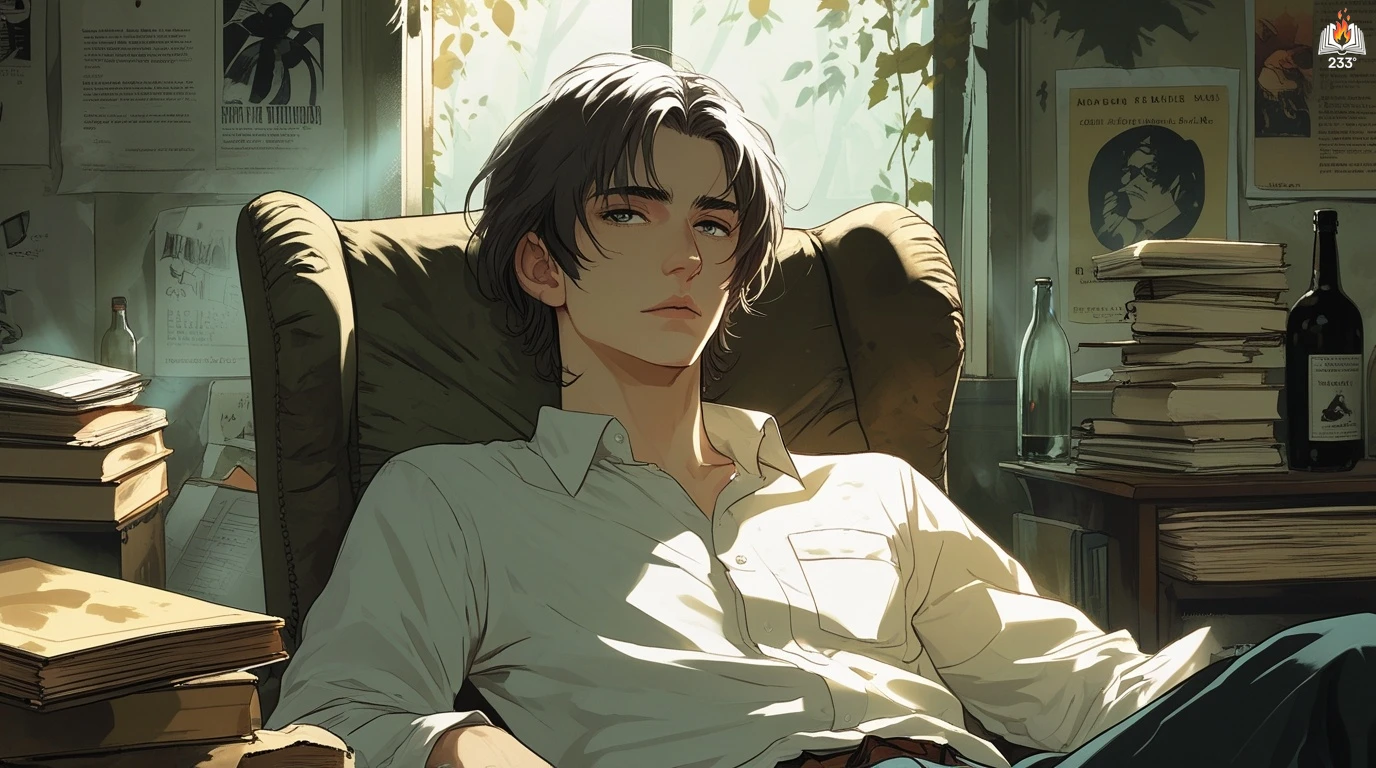
Colorless Tsukuru Tazaki and His Years of Pilgrimage by Haruki Murakami was originally published in 2013. Set against the backdrop of modern Japan, the novel tells the story of Tsukuru Tazaki, a quiet, introspective man haunted by a mysterious rupture in his past. A deeply reflective narrative, it follows Tsukuru’s emotional and psychological journey as he confronts the pain of abandonment by his closest friends and searches for meaning and healing in its aftermath.
Plot Summary
In Tokyo, Tsukuru Tazaki lives a life carefully ordered and muted, like the train stations he designs. His days follow a rhythm of solitude, efficient and colorless, just as he has always felt himself to be – an ordinary man with no distinct feature, shadowed by a deep void carved years earlier when four close friends severed ties without warning. The silence of their rejection has echoed in him ever since, consuming five months of his young life in a darkness so complete he thought only death could make sense of it.
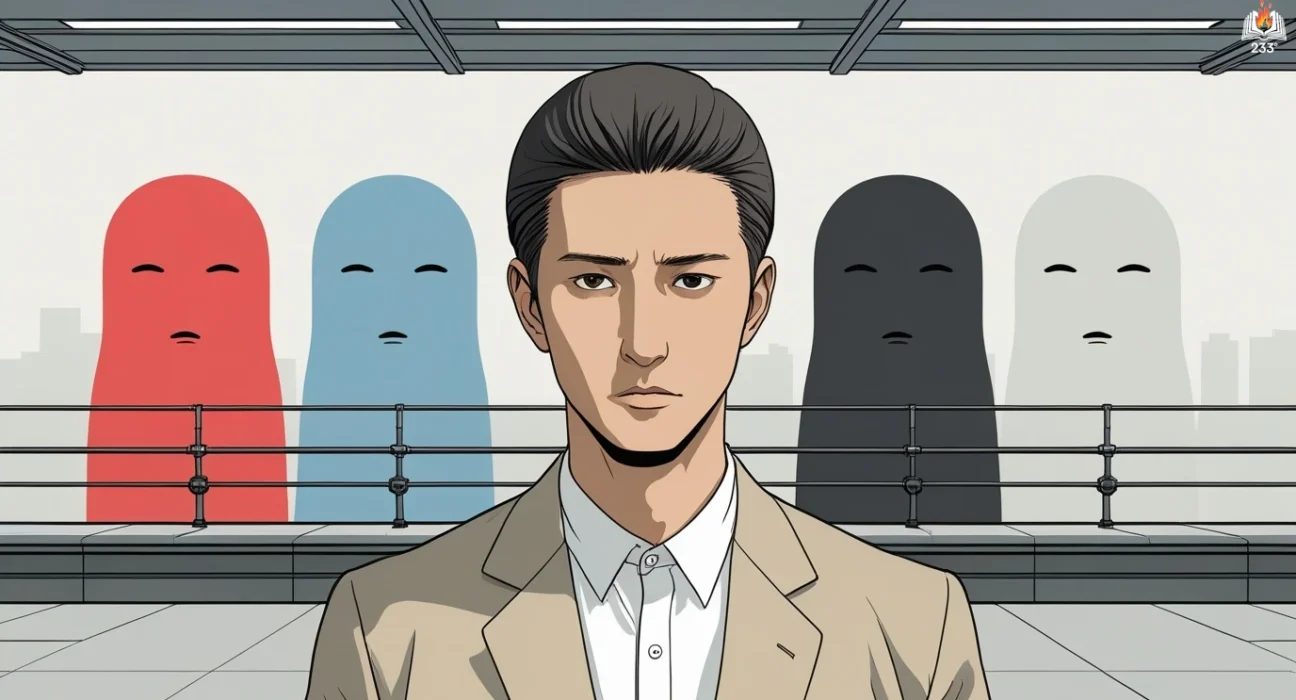
He had once been part of a perfect five – three boys and two girls – who shared a harmony so rare it felt like a gift. They called each other by nicknames drawn from colors in their surnames: Aka, Ao, Shiro, and Kuro. Only Tsukuru, whose name lacked a color, remained simply himself. Yet in their company, he felt whole. Bound by volunteer work, conversation, and a mutual affection that defied romance, they believed themselves inseparable. Then, during his second year in college, Tsukuru returned home for the summer and was met with silence. One by one, calls were unanswered. The air shifted, and he knew, with absolute certainty, that something was over.
A single call finally arrived. Ao, once full of warmth and camaraderie, now flat and mechanical, told him never to contact them again. No explanation followed. Just a door quietly closed.
Years passed. Tsukuru aged into the quiet precision of adulthood, built stations with clean lines, studied the flow of people, but never reached back. His life became a series of habits – swimming in the mornings, eating alone, sketching designs. He drifted through relationships, never quite reaching intimacy, until he met Sara. Older than him, with quiet confidence and a face that stirred something deep within him, she touched the place in him that still ached with unanswered questions.
Sara, patient and perceptive, urged him to seek out the truth he had buried. The past, she said, cannot be erased, only understood. Her conviction stirred something dormant. With her encouragement, Tsukuru sets off on a journey not of distance, but of return – to Nagoya, to the friends who had once meant everything, and to the mystery of their betrayal.
He begins with Ao, now a Lexus dealer, grounded and a little worn. Ao tells him of Shiro’s death – she had been murdered six years earlier, strangled in her apartment, her killer never found. Her life had grown unsteady after they cut off Tsukuru, plagued by depression, unable to hold a job. Ao admits that it was Shiro who accused Tsukuru of a terrible act – assault – and that her words were taken as truth. No one questioned her. The rest agreed to protect her, even if it meant abandoning him.
Aka is next. The clever, principled leader of their old group has become a cynical motivational speaker, selling abstract ideals to unmoored businessmen. He is bitter, disillusioned, and admits he regrets what they did. They had acted on instinct, he says, protecting their fragile unity. He too heard of Shiro’s struggles, saw how she was unraveling, but felt powerless. In Aka, Tsukuru sees how far people can fall from the ideals they once held sacred.
Tsukuru travels to Finland in search of Kuro, now Eri, a ceramic artist with two daughters and a gentle husband. Her life is serene, far from the storm they left behind. She greets him with warmth, and sorrow. It was Shiro’s lie, she confirms, born from a place of deep confusion and pain. Shiro had been abused – not by Tsukuru, but by someone else – and projected her trauma onto him. The others had trusted her, unable or unwilling to look deeper. Kuro carries guilt, but also peace, having finally built a life that holds her.
The revelation strikes Tsukuru not with rage, but with stillness. A false accusation shattered the world he knew, and he had borne the weight of it in silence, not knowing the name of the crime he had never committed. And yet, the knowledge does not free him. It merely clarifies the shape of the loss.
Back in Tokyo, Tsukuru shares the truth with Sara, hoping for closeness, perhaps even love. But she remains at a distance. There is someone else, she admits – someone she might choose. Her decision hangs in the air, uncertain. She needs time.
Tsukuru walks away, not desolate, but calm. For the first time in years, he has faced what once destroyed him. He has seen the lives of those who turned away from him, seen their fractures and their regrets. The past, once sealed in silence, is now known. He can carry it.
Standing in the Tokyo morning, amidst the rhythm of trains and the pulse of people, Tsukuru begins again. There is no grand transformation, no dramatic closure. Just the quiet clarity of one who has walked through shadow and come out able, finally, to see the light.
Main Characters
Tsukuru Tazaki – The protagonist, Tsukuru is an ordinary, emotionally restrained man whose life is upended when his four best friends abruptly sever ties with him. As a designer of railway stations, his profession metaphorically mirrors his psychological state – a facilitator of connections who feels fundamentally disconnected. His introspection, emotional numbness, and lingering trauma are central to the novel’s journey.
Akamatsu (Aka) – Once the intellectual leader of Tsukuru’s high school group, Aka is small in stature but firm in conviction. A top student with exacting standards, he becomes a cynical corporate trainer. His transformation later in life reveals the disillusionment behind his once orderly worldview.
Oumi (Ao) – The athletic and extroverted member of the group, Ao was a rugby player known for his cheerful and dependable nature. He eventually becomes a Lexus car salesman, embodying stability and a certain resignation in adult life, though tinged with regret.
Shirane (Shiro) – Elegant and musically gifted, Shiro was the most delicate of the group. Her beauty and piano talent were offset by a profound inner fragility. Her tragic fate becomes the haunting heart of the story, her absence looming large in Tsukuru’s quest.
Kurono (Kuro) – Bold, sharp-witted, and emotionally honest, Kuro had a warm intellect and a love of literature. She eventually moves to Finland, becoming a potter. Her confrontation with Tsukuru brings painful truths and essential closure.
Sara Kimoto – Tsukuru’s mature and perceptive romantic interest. Sara plays a catalytic role in urging him to seek out the truth of his past, serving as both confidante and mirror to his inner world.
Theme
Alienation and Belonging – At its core, the novel explores the devastation of being cast out of a tightly-knit community and the psychological toll it takes. Tsukuru’s longing for reconnection underscores the human need for inclusion.
The Search for Identity – Tsukuru’s perception of himself as “colorless” becomes a symbol of his perceived lack of identity and self-worth. His journey is one of redefining himself beyond how others see him.
Memory and Time – The novel shows how the past refuses to remain buried, and how memory is both unreliable and vital. Time softens but does not erase the pain of the past; reckoning with it becomes necessary for healing.
Death and Rebirth – Tsukuru experiences an existential death in his early twenties, retreating into depression. His later journey represents a rebirth – a confrontation with darkness that leads to emotional renewal.
Music as Metaphor – Liszt’s Years of Pilgrimage recurs throughout the novel as a motif of emotional journeying, inner landscapes, and transformation. Music becomes both balm and symbol of Tsukuru’s pilgrimage.
Writing Style and Tone
Haruki Murakami’s prose in Colorless Tsukuru Tazaki is characteristically smooth, introspective, and poetic. Translated by Philip Gabriel, the language remains quiet and restrained, yet layered with emotional intensity. Murakami uses clean, lucid sentences to navigate deep emotional terrain, often allowing silence and ambiguity to express what words cannot. His metaphors – such as train stations, color, or dreams – serve as thematic anchors that elevate the personal into the philosophical.
The tone of the novel is melancholic and contemplative. It flows with a gentle sadness and undercurrent of existential unease. Murakami’s tone never sensationalizes; instead, it maintains a meditative distance, inviting readers to experience the protagonist’s loneliness and internal struggle intimately. As the narrative progresses, it gains a fragile hopefulness – not in the form of resolution, but in the courage to face ambiguity and move forward.
Quotes
Colorless Tsukuru Tazaki – Haruki Murakami (2013) Quotes
“You can hide memories, but you can't erase the history that produced them.”
“As we go through life we gradually discover who we are, but the more we discover, the more we lose ourselves.”
“Some things in life are too complicated to explain in any language.”
“Still, being able to feel pain was good, he thought. It's when you can't even feel pain anymore that you're in real trouble.”
“No matter how honestly you open up to someone, there are still things you cannot reveal.”
“Never let fear and stupid pride make you lose someone who's precious to you.”
“We survived. You and I. And those who survive have a duty. Our duty is to do our best to keep on living. Even if our lives are not perfect.”
“No matter how quiet and conformist a person’s life seems, there’s always a time in the past when they reached an impasse. A time when they went a little crazy. I guess people need that sort of stage in their lives.”
“Everything has boundaries. The same holds true with thought. You shouldn't fear boundaries, but you should not be afraid of destroying them. That's what is most important if you want to be free: respect for and exasperation with boundaries.”
“People whose freedom is taken away always end up hating somebody.”
“Aren't you afraid of dying? Not really. I've watched lots of good-for-nothing, worthless people die, and if people like that can do it, then I should be able to handle it.”
“The right words always seemed to come too late.”
“The human heart is like a night bird. Silently waiting for something, and when the time comes, it flies straight toward it.”
“We truly believed in something back then, and we knew we were the kind of people capable of believing in something - with all our hearts. And that kind of hope will never simply vanish.”
“Life is long, and sometimes cruel. Sometimes victims are needed. Someone has to take on that role. And human bodies are fragile, easily damaged. Cut them, and they bleed.”
“The fresh smell of coffee soon wafted through the apartment, the smell that separates night from day.”
“Cell phones are so convenient that they're an inconvenience.”
“We live in a pretty apathetic age, yet we’re surrounded by an enormous amount of information about other people. If you feel like it, you can easily gather that information about them. Having said that, we still hardly know anything about people.”
“The world isn’t that easily turned upside down, Haida replied. It’s people who are turned upside down.”
“The heart apparently doesn’t stop that easily.”
“And you’ll return to real life. You need to live it to the fullest. No matter how shallow and dull things might get, this life is worth living. I guarantee it.”
“History cannot be erased or altered.Because that would mean killing yourself.”
“The truth sometimes reminds me of a city buried in sand. As time passes, the sand piles up even thicker, and occasionally it's blown away and what's below is revealed.”
“I've been clinging to this world like a discarded shell of an insect stuck to a branch, about to be blown off forever by a gust of wind.”
We hope this summary has sparked your interest and would appreciate you following Celsius 233 on social media:
There’s a treasure trove of other fascinating book summaries waiting for you. Check out our collection of stories that inspire, thrill, and provoke thought, just like this one by checking out the Book Shelf or the Library
Remember, while our summaries capture the essence, they can never replace the full experience of reading the book. If this summary intrigued you, consider diving into the complete story – buy the book and immerse yourself in the author’s original work.
If you want to request a book summary, click here.
When Saurabh is not working/watching football/reading books/traveling, you can reach him via Twitter/X, LinkedIn, or Threads
Restart reading!