
Gregor and the Code of Claw by Suzanne Collins, published in 2007, is the final installment in the critically acclaimed Underland Chronicles series. This epic conclusion follows Gregor, the twelve-year-old Overlander, as he confronts the dire prophecy that foretells his death and the ultimate battle between humans and rats in the mysterious, war-ravaged world beneath New York City. With the “Prophecy of Time” hanging over him, Gregor must decipher the cryptic “Code of Claw” and confront the monstrous Bane in a war that will determine the fate of the Underland.
Plot Summary
In the depths of the Underland, Gregor lay on a stone floor, his skin still burning from volcanic ash, his mind reeling from a prophecy etched into the ceiling above him – a prophecy that ended with a chilling certainty: when the warrior has been killed. The words echoed relentlessly in his mind. There would be no escaping it. Gregor was the warrior. And time was running out.
War had come. The rats, led by the monstrous white Bane, were on the move, and the Code of Claw – a mysterious cipher tied to the fate of the Underland – had to be broken. Boots, Gregor’s little sister, affectionately called the princess, was somehow part of its solution. As Gregor reeled from the prophecy that foretold his death, he made a silent promise: to protect Boots and their mother, now recovering from a deadly plague, no matter the cost.
But the humans of Regalia had other plans. Solovet, once stripped of command for orchestrating the plague as a weapon, was reinstated as leader of the army. Under her control, strategy reigned, and compassion was a liability. When Gregor expressed a desire to return to the Firelands to help Luxa, Ripred, and the others rescue the surviving mice, Solovet placed guards on him – Horatio and Marcus – not to defend him from rats, but to keep him from leaving.
He escaped anyway.
With help from Ares, his loyal bat bond, Gregor slipped through a hidden passage known only to a few, vanishing into the shadows beneath Regalia. Onward they flew, crossing ash-choked skies, returning to the site where the rats had slaughtered the mice. Nothing remained but silence and smoke. Then, ahead, the sounds of war – steel clashing, bats screaming, rats snarling. They had found the battlefield.
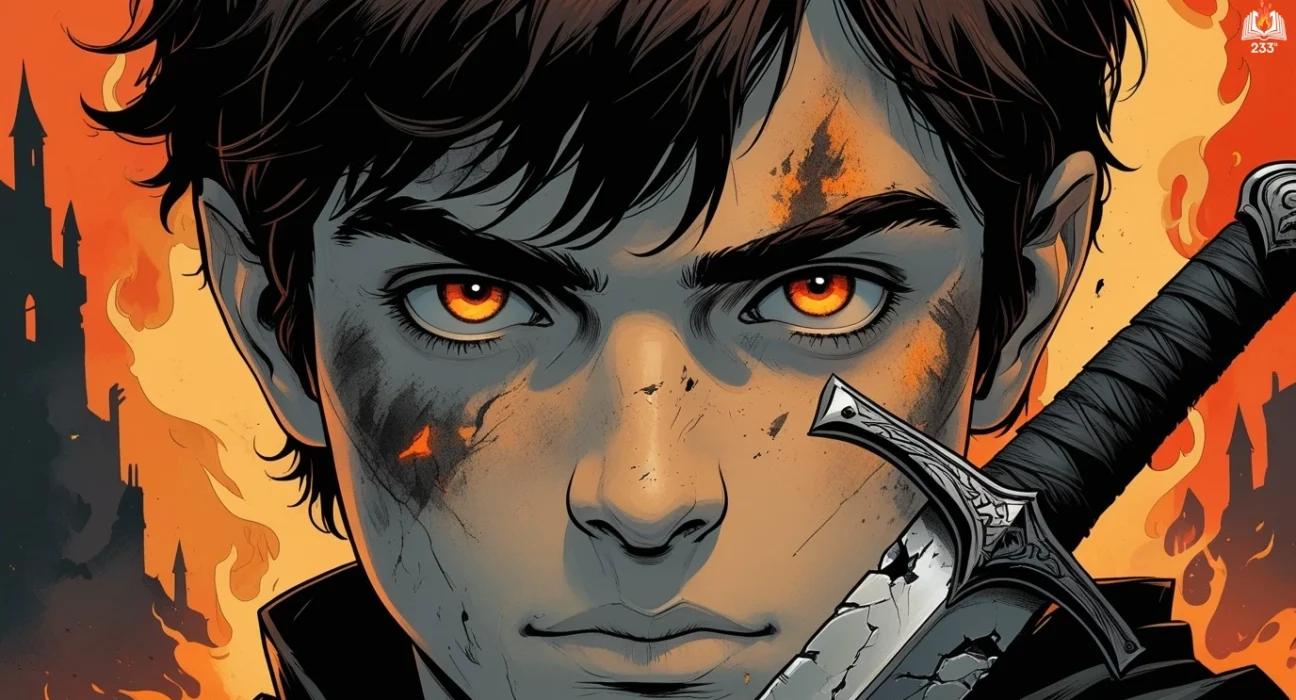
Dust swirled in the cavern where torches clung to the walls, illuminating the chaos below. Ares and Gregor plunged into the fray. The rats attacked from every side, but the warrior had come. His sword – once Sandwich’s, now his – gleamed with deadly grace. Ares, massive and swift, wheeled through the air, dodging fangs and claws. Together they fought as one. The prophecy had foretold his death, but not today.
Luxa was there, fierce and radiant, leading her troops into the heart of the battle. Hazard, her young cousin, helped tend to the wounded, while their bonds – Nike and Aurora – carried messages through falling ash and fire. Ripred, the battle-scarred rat, had plans of his own. He and Gregor’s three-year-old sister, Boots, were solving the Code of Claw, a code written in the language of gnawers and scribbled by scratching feet. Boots, with her simple innocence, could see what adults could not – patterns, rhythms, meaning. Slowly, the code began to unravel.
While Gregor fought on the front lines, Regalia trembled with secrets. Solovet kept his mother prisoner, claiming her health was too fragile for travel. But Gregor knew the truth – she was a hostage, a chain around his neck to ensure he obeyed. When he confronted Vikus, the old man only confirmed it with silence.
Back at the front, the war twisted into nightmare. The Bane, maddened by loss and consumed by fury, led his army with single-minded cruelty. He sought Gregor above all, hungry to kill the warrior who had once spared him as a pup. Gregor’s guilt over that mercy gnawed at him. Had he unleashed a monster by choosing compassion?
As the war reached its bloodied height, Gregor and Ares were caught in a brutal ambush. Amid the melee, Gregor’s sword struck the Bane, but not deeply enough. The white rat escaped, and Ares, wounded protecting his bond, spiraled toward death. The bat who had carried Gregor through every battle was broken. Gregor begged the healers, but the damage was too great. Ares died quietly, and something inside Gregor cracked.
Time, the prophecy warned, was turning back.
The Code of Claw, finally broken, revealed a horrifying truth – a plot so treacherous it had been hidden in language itself. The Bane’s war was not just for power. It was the manifestation of an ideology – one that sought to erase every species not born of ratkind. Genocide, planned and encrypted. The humans, with Ripred’s guidance, understood too late the scale of the threat.
Luxa led the final assault. Gregor, now deeply in touch with his rager nature, wielded his blade like a force of nature. But the prophecy still waited. When the warrior has been killed. There was no outrunning it.
In the final confrontation, Gregor and the Bane faced each other amidst flame and ruin. The rat was a giant, his strength fueled by madness. But Gregor, scarred and grieving, moved with purpose. They fought, not for dominance, but for the soul of the Underland. In the end, Gregor prevailed – his sword finding the place prophecy had marked long ago. The Bane collapsed, his reign of terror extinguished.
But Gregor did not die.
Ripred, cunning as ever, had foreseen a way around the prophecy. The warrior, they realized, did not need to be killed literally. He needed to cease to be the warrior. Gregor dropped his sword. Refused to kill a surrendering enemy. He turned his back on prophecy and walked away.
Regalia celebrated. The war had ended, but the cost was immeasurable. Many were dead. Ares was gone. The Bane’s ideology had scarred the Underland. Yet there was hope – in Luxa’s leadership, in the code now broken, and in a boy who chose mercy even in his darkest hour.
Gregor returned to the Overland. With his mother and Boots, he rose through the tunnels, leaving the Underland behind. But the memories remained – of blood and fire, of stone tombs and ancient prophecies, of battles fought and peace earned. He would never be the same. The warrior had been killed. And in his place stood a boy who had learned what it meant to truly fight – and what it meant to finally lay down his sword.
Main Characters
Gregor – The central protagonist, Gregor is a young Overlander with the heart of a warrior and the soul of a protector. Known in the Underland as “the warrior,” Gregor wrestles with the heavy burden of a prophecy predicting his death. He’s fiercely loyal to his family, haunted by the necessity of violence, and increasingly aware of the emotional and moral cost of war. His journey in this final book becomes as much internal as it is external – a reckoning with identity, mortality, and love.
Boots – Gregor’s three-year-old sister, affectionately known as “the princess” among the cockroaches. Innocent and endearing, Boots continues to serve as Gregor’s emotional anchor. Her childlike joy, trust in others, and gentle influence provide moments of levity and purity amid the chaos of war. Her role becomes surprisingly pivotal to breaking the mysterious Code of Claw.
Luxa – The twelve-year-old Queen of Regalia, Luxa is fierce, intelligent, and burdened with the responsibilities of leadership in wartime. Her complex relationship with Gregor evolves in subtle, poignant ways as they navigate the deep bonds of friendship, budding affection, and shared grief. Luxa is decisive and unapologetic in her actions, willing to take up arms and declare war when diplomacy fails.
Ares – Gregor’s bond and the powerful black bat who has shared every major conflict with him. Ares is steadfast, noble, and surprisingly introspective. His loyalty to Gregor is unbreakable, and their bond is tested by peril and sacrifice in this installment. His quiet strength and moments of rare humor reveal a creature deeply affected by suffering and committed to justice.
Ripred – A giant, battle-hardened rat with unmatched cunning and dry wit, Ripred is a reluctant mentor and fierce ally. His presence is vital in unraveling the Code of Claw. Sarcastic and guarded, Ripred hides layers of grief and idealism behind his acerbic tongue. His complex relationship with both humans and rats makes him one of the most morally intricate characters.
Solovet – Head of the Regalian army and Luxa’s grandmother, Solovet is a formidable strategist, willing to compromise ethical boundaries for victory. Her past experiments with biological warfare and her manipulative tactics cast a long shadow over the council. Her reappointment during the war raises questions about power, morality, and the costs of leadership.
The Bane – The monstrous white rat and Gregor’s prophesied enemy. Once a helpless pup Gregor chose to spare, the Bane has grown into a brutal tyrant consumed by vengeance and hatred. As a twisted product of both nature and nurture, he symbolizes the darkest consequences of mercy gone awry.
Theme
Prophecy and Destiny – The burden of prophecy looms large, particularly the line “when the warrior has been killed.” The tension between fate and choice is at the heart of Gregor’s internal conflict, as he must decide whether to submit to his foretold end or carve his own path. This theme interrogates how knowledge of one’s supposed future can shape, inspire, or devastate a person.
The Morality of War – Suzanne Collins does not flinch from portraying war’s brutality and ambiguity. Characters like Solovet and Ripred force readers to confront the ethics of sacrifice, collateral damage, and whether the end truly justifies the means. The line between heroism and monstrosity blurs in the desperation for victory.
Love and Loyalty – The relationships between characters – familial, platonic, and romantic – are central to the emotional core of the story. Gregor’s love for his family drives his every decision. His growing connection with Luxa provides a fragile hope. Loyalty is both a virtue and a vulnerability, especially in a world where betrayal has been so common.
Coming of Age Through Suffering – Gregor’s journey is a painful and poignant exploration of growing up in the face of overwhelming responsibility. The Underland has forced him to mature rapidly. He grapples with trauma, self-doubt, and an overwhelming fear of death, reflecting a universal fear of youth lost to violence.
Language and Code – The titular “Code of Claw” is a literal puzzle, but it also symbolizes the complexity of truth, secrecy, and communication in wartime. Boots’s unexpected ability to help decode it is a reminder that insight can come from the unlikeliest sources, and that clarity often lies in innocence.
Writing Style and Tone
Suzanne Collins employs a clear, emotionally resonant narrative voice that balances intense action with psychological depth. Her third-person limited narration keeps the focus intimately on Gregor’s perspective, allowing readers to feel his every doubt, fear, and moment of resolve. Collins seamlessly integrates cryptic prophecies and layered world-building without compromising the story’s pace or clarity.
The tone of Gregor and the Code of Claw is somber and tense, laced with moments of tenderness and wry humor. As the final book in the series, it carries a sense of urgency and looming finality. Collins does not shy away from the horror of battle or the internal fracturing it causes. Her unflinching depiction of loss and sacrifice gives the story emotional gravity, while the glimmers of hope, love, and loyalty keep the reader grounded in what makes life – and the fight for it – worthwhile.
Quotes
Gregor and the Code of Claw – Suzanne Collins (2007) Quotes
“Never," said Gregor. "I'll never get rid of you, no matter how hard I try." It was no longer an effort to say the words. "I love you." "I love you, too," said Luxa. After that there was nothing left to say.”
“Remember that even in war there is a time for restraint. A time to hold back your sword.”
“If you hit bottom, there's a whole lot of people here to help you up”
“Even in war there should be lines you didn't cross.”
“If you had hope, maybe you could find a way to make things change,. Because if you thought about it, there were so many reasons to try.”
“And don't you let your guard down for a second because you think anything's inevitable.”
“It's just me and the Bane. And I'm fighting him because he killed all of those innocent mice and people, and I have to stop him. Not because Sandwich says so but because I say so.”
“He wanted to stay there forever, letting her soothe him, pretending he was just a kid and his mom could make everything okay.”
“Ripred held up his paws in mock surprise. “Oh, dear. Is this where we fight to the death? I didn’t expect it so soon.”
“Four can be as stupid as ten. No need to crowd the room.”
“Suddenly Gregor smiled. “Hey, Boots,” he said. “Hey. You can finally say my name.”
“There was nothing to do but keep moving forward and make the moments count.”
“Lost them all. All gone. No chance to even say goodbye." There was a long pause, then the rat continued. "I went off alone for months. I wanted to die. I tried to. But it takes a lot to kill me.”
“They will come up with a plan. No one will like it. Everyone will feel they have been treated unfairly, but will be happy that their neighbors feel the same. And that is the nature of compromise.”
“What did I tell you?” said the rat, and stuffed a clawful of shrimp into his stupid mouth.”
“And he would put his arms around her and hold her, but he had no idea what to tell her. In his mind, Gregor knew how to kill things, not bring them back ti life.”
“That explained it. The beautiful, blue light wasn’t from another world; it was from Photos Glow-Glow’s butt.”
“Move. Now.” Ripred held up his paws in mock surprise. “Oh, dear. Is this where we fight to the death? I didn’t expect it so soon.”
“Maybe it was impossible. But maybe it wasn't. Like Vikus said, nothing would happen unless you hoped it could. If you had hope, maybe you could find the way to make things change. Because if you thought about it, there were so many reasons to try.”
“Hey, Boots,” he said. “Hey. You can finally say my name.”
We hope this summary has sparked your interest and would appreciate you following Celsius 233 on social media:
There’s a treasure trove of other fascinating book summaries waiting for you. Check out our collection of stories that inspire, thrill, and provoke thought, just like this one by checking out the Book Shelf or the Library
Remember, while our summaries capture the essence, they can never replace the full experience of reading the book. If this summary intrigued you, consider diving into the complete story – buy the book and immerse yourself in the author’s original work.
If you want to request a book summary, click here.
When Saurabh is not working/watching football/reading books/traveling, you can reach him via Twitter/X, LinkedIn, or Threads
Restart reading!