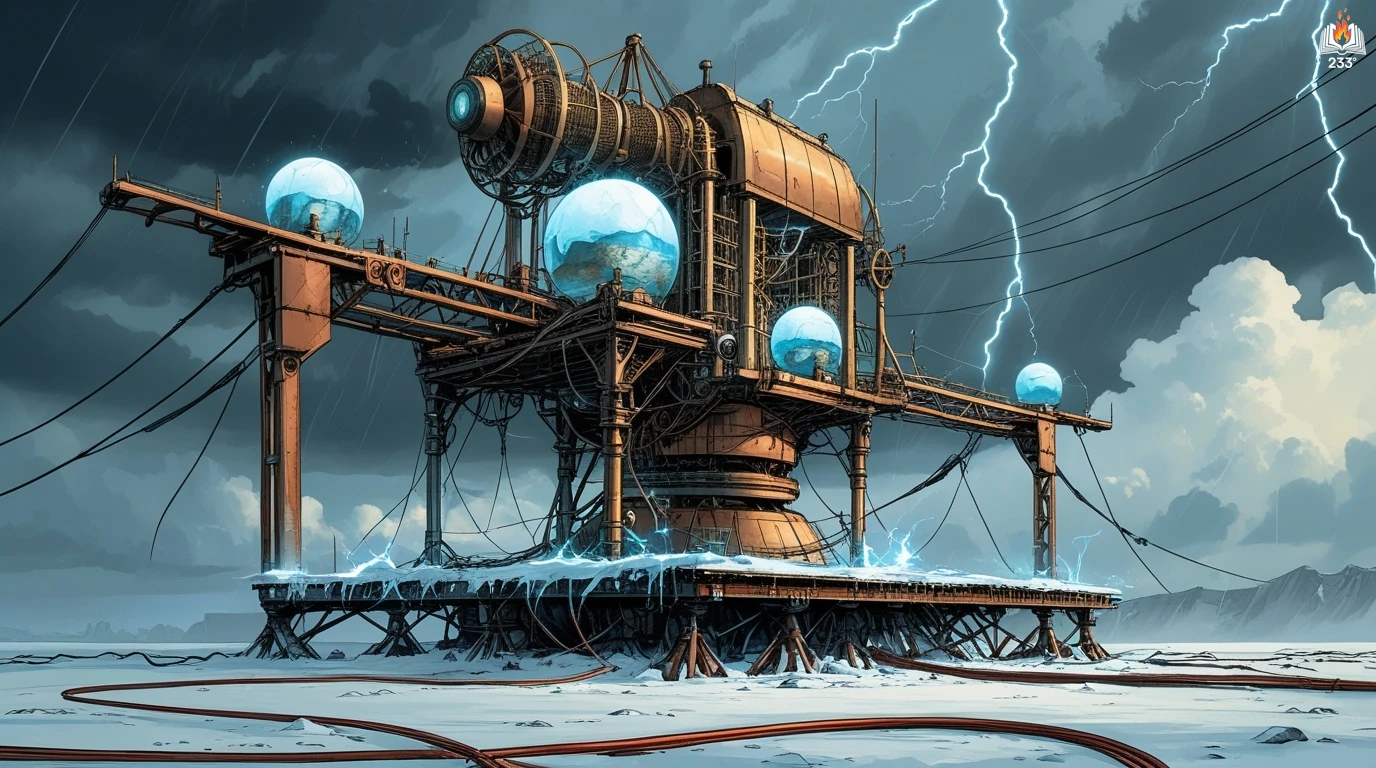
Leviathan by Scott Westerfeld, first published in 2009, is the opening volume of the acclaimed Leviathan Trilogy, a steampunk-infused alternate history of World War I. Set in a richly reimagined 1914 Europe, the novel explores a continent divided not only by political tensions but by ideology and technology – the “Clankers,” who favor mechanical war machines, and the “Darwinists,” who genetically engineer living creatures as warships and tools. Through a dual narrative, Westerfeld intertwines the fates of two teenagers – a fugitive Austro-Hungarian prince and a daring British girl disguised as a boy to join the military – against the grand backdrop of impending global conflict.
Plot Summary
In an alternate Europe bracing for war in 1914, two young lives spiral toward a collision shaped by fate, secrecy, and invention. Prince Aleksandar of the Austro-Hungarian Empire wakes one night to a commotion beyond his chamber doors. His loyal fencing master Count Volger and his mechaniks tutor Master Otto Klopp are not merely disturbing his sleep for a midnight lesson – they are spiriting him away under the shadow of treason. With his parents murdered in Sarajevo, Alek – the illegitimate heir to a fragile empire – is suddenly a hunted fugitive. Thrust into a stolen Cyklop Stormwalker, a towering war machine striding on metal legs, he flees his own homeland, his name wiped from official record, his life now bound to secrecy and survival.
Far across the Channel, in damp, horse-scented London lodgings, Deryn Sharp binds her chest, pulls on her brother’s old uniform, and sheds her name. Now Dylan, she prepares to defy the rules of the British Air Service. The sky calls to her more than any propriety ever could, and no corset or auntie could ever tether her feet to the ground. With a forged recommendation and her brother Jaspert’s backing, she bluffs her way through examinations and wins the chance to prove herself. The Darwinist fleet breathes life – literally – into war. Their crafts are living things, bred and shaped through fabricated evolution. When Deryn’s test flight aboard a Huxley medusa is caught in a gale, she must act with desperate cunning to save herself and the airbeast. The chaos earns her reluctant praise and a fast-track to assignment on a grand vessel of legend – the Leviathan.
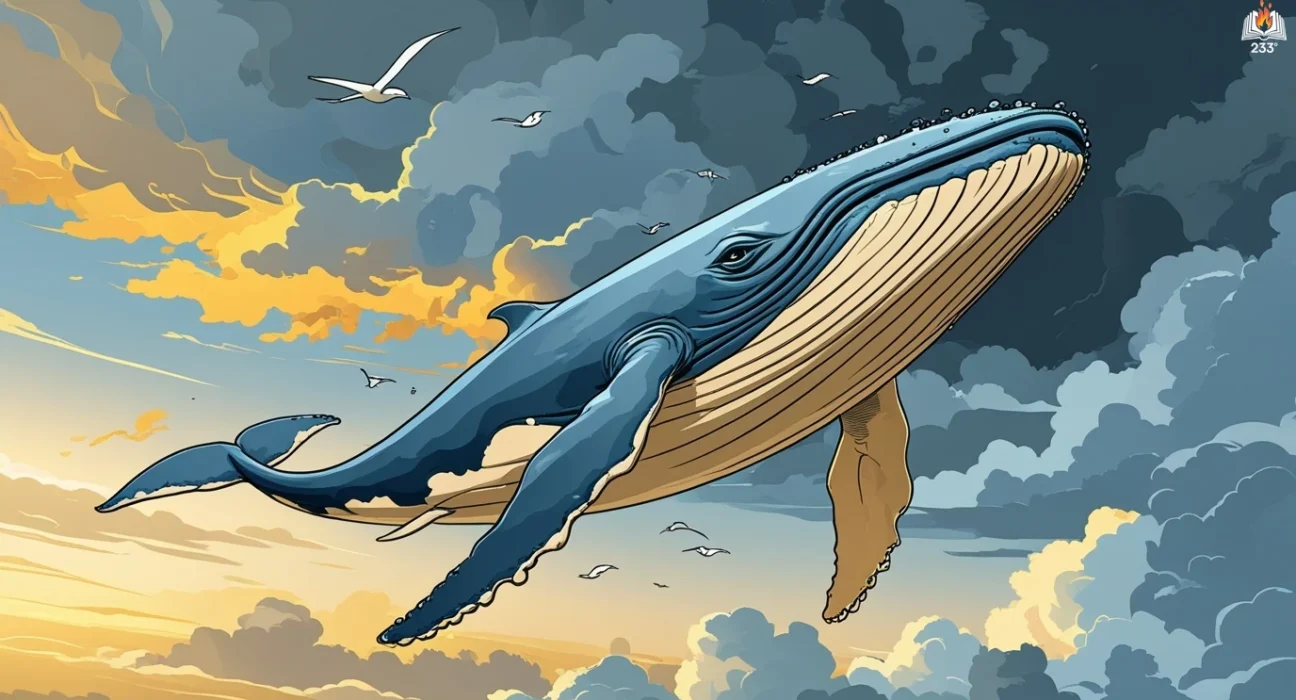
The Leviathan is no ordinary airship. A floating ecosystem of hundreds of creatures – part whale, part dirigible, part hive – it sails above Europe as a Darwinist marvel, crewed by scientists, airmen, and beasts alike. Deryn, still hiding in her boyish guise, quickly adapts, her sharp instincts and air sense proving her worth. Her secret is heavy, but lighter than the joy of flying.
Meanwhile, Alek, hiding in the Swiss Alps, learns the truth of his exile. His father, Archduke Ferdinand, had enemies beyond assassins – empires crave war, and Alek’s existence is a threat to those schemes. With Volger and Klopp, and a pair of loyal soldiers, Alek struggles to pilot and maintain the Stormwalker. He stumbles through bitter snows, trains in the mechanics of war, and begins to shed his arrogance like an old skin. Yet the isolation of the mountains presses close, and so does the reach of those who wish him gone.
Fate stirs as the Leviathan, en route to Constantinople on a mysterious diplomatic mission, is attacked by German Clanker forces. Shot down and bleeding hydrogen, the beast-ship limps into the Alps. Deryn is among those sent on a perilous mission into the snow – a rescue, a recon, a necessity. And that is how she meets the boy in the walker.
Their encounter is brittle at first. Alek hides his name, and Deryn her identity. One is a runaway prince, the other a girl disguised as a boy. Neither knows the truth about the other, and neither dares to ask. But in the swirl of danger, frost, and necessity, trust begins to form. Alek offers food, shelter, and mechanical help. Deryn offers the Leviathan’s wounded crew a chance at survival.
With German forces approaching and the airship too damaged to flee, the walkers and the Darwinists form an uneasy alliance. Suspicion crackles between Clanker and Darwinist minds – one fueled by metal, the other by muscle and gene. But war leaves little time for purity of belief. Together, the crew and their odd new allies work to repair the Leviathan.
Secrets remain, though. Alek’s identity hovers just beneath the surface, his princely bearing hard to mask. And Deryn’s secret hangs even closer, made all the more dangerous by her growing friendship – perhaps something more – with the boy she can’t stop thinking about.
Before long, the true nature of the Leviathan’s mission reveals itself. Hidden within the beast’s belly is a precious cargo – Dr. Nora Barlow, granddaughter of Charles Darwin himself, and two eggs bearing new fabricated species meant to sway the Ottoman Empire to the British side of the conflict. But spies and Clanker saboteurs follow in the Leviathan’s shadow. A daring escape is needed, one that requires Alek’s walker, Deryn’s quick thinking, and a reckless amount of courage.
Alek pilots his walker in defense of the Leviathan. Deryn rappels through the sky to battle saboteurs. In the storm of action, truths are peeled back. Alek learns who she really is – not Dylan, but Deryn. And though he is stunned, it is admiration that colors his gaze, not scorn.
As the Leviathan rises again, repaired and resupplied, Alek’s fate changes course. He and his protectors are granted sanctuary aboard the beast-ship. Dr. Barlow, ever observant, hints that she knows more than she lets on. Deryn’s secret, for now, remains safe in the silent understanding between two unlikely allies.
The airship sails on toward Constantinople, its passengers now bound by more than coincidence. Alek is no longer a boy prince hiding from war – he is part of something larger, a tide no throne can command. And Deryn, girl in disguise, now soars in the heart of the sky, her dream no longer a secret kept between stitches and shadows.
The Leviathan breathes on, aloft and alive, bearing its crew into the turbulence of a world breaking apart, and perhaps being remade.
Main Characters
Prince Aleksandar of Hohenberg – A fictionalized son of Archduke Franz Ferdinand, Alek is a young aristocrat thrust into chaos after his parents are assassinated. Naive but intelligent, he begins the novel with a rigid sense of duty and entitlement, shaped by his mixed royal-commoner heritage. As he flees his homeland in a mechanical walker, Alek must confront not only political enemies but personal insecurities, gradually transforming into a more empathetic, capable leader.
Deryn Sharp (alias Dylan) – A courageous and clever fifteen-year-old girl from Scotland, Deryn adopts a male identity to enter the British Air Service. Resourceful and quick-witted, she excels in navigating both aerial technology and social deception. Her love for flying and the natural beauty of Darwinist creations drives her ambition, but she constantly risks exposure in a military world not meant for girls.
Count Volger – Alek’s strict and enigmatic fencing master, Volger is a wildcount loyal to Alek’s father. Though often condescending and rigid, his wisdom and tactical skills make him indispensable during Alek’s escape. His relationship with Alek is tense but complex, evolving from cold authority to something more paternal.
Master Otto Klopp – A mechanic devoted to Alek’s family, Klopp provides both technical expertise and emotional support. Kind-hearted and humble, he helps Alek learn to pilot the Stormwalker and encourages him to embrace responsibility without arrogance.
Jaspert Sharp – Deryn’s older brother and a lower-ranking airman in the British military. He supports her dream to fly and helps fabricate her male identity, though he often masks concern with teasing. His involvement is pivotal in launching Deryn into her new life.
Theme
Identity and Disguise – Central to both protagonists’ arcs, the novel probes how identity is shaped by gender, class, and lineage. Deryn must constantly conceal her true self in a male-dominated world, while Alek must hide his royal status. Their disguises reflect internal conflicts and external pressures.
War and Technology – Westerfeld explores the dual nature of technological advancement through the stark contrast between Clanker machinery and Darwinist living fabrications. The novel questions the cost of progress and how innovation can both empower and destroy.
Coming of Age – Both Alek and Deryn undergo formative journeys marked by danger, responsibility, and the shedding of youthful illusions. Their decisions reflect their growing maturity as they begin to define their own roles in a world at war.
Loyalty and Betrayal – As alliances shift and secrets abound, characters grapple with whom to trust. Alek’s escape is laced with suspicion and half-truths, while Deryn constantly risks betrayal through discovery. The theme reinforces the fragility of trust in turbulent times.
Nature vs. Machine – The ideological war between Darwinists and Clankers serves as a metaphor for larger cultural clashes. Westerfeld does not favor one side over the other but instead highlights the beauty and horror of both worlds.
Writing Style and Tone
Scott Westerfeld’s writing in Leviathan is brisk, immersive, and rich with imaginative detail. He utilizes a third-person limited perspective that alternates between Alek and Deryn, allowing readers to experience contrasting worldviews while maintaining narrative momentum. His prose is accessible yet sophisticated, peppered with invented slang (“clart,” “squick,” “bum-rag”) that adds cultural texture to the world without slowing comprehension. Dialogue is sharp and character-driven, capturing the youthful bravado and uncertainty of his protagonists. Descriptions of settings – from thundering war machines to majestic flying creatures – are vivid and cinematic, immersing readers in the tactile and visual splendor of this steampunk warzone.
The tone oscillates between tension, wonder, and humor. Westerfeld balances the weight of political intrigue and global war with the spirited resilience of youth. There’s an undercurrent of awe running throughout the narrative – whether in Deryn’s exhilaration as she soars through the sky or Alek’s tentative steps toward independence. While darker themes loom beneath the surface, the tone remains buoyant and adventurous, in keeping with the protagonists’ youthful vigor and the novel’s genre roots in speculative fiction.
Quotes
Leviathan – Scott Westerfeld (2009) Quotes
“Maybe this was how you stayed sane in wartime: a handful of noble deeds amid the chaos. ”
“And a special thanks for not burning up the whole ship. Including yourself, you daft bum-rag.”
“Barking hard work, being a boy.”
“Most men's awareness doesn't extend past their dinner plates.”
“The man was allergic to sleep.”
“Suddenly a pair of searchlights lanced out from the frigate. They swept across the dark expanse - bright knives slicing the night into pieces.”
“That was the trick- to keep punching, no matter what.”
“Boys had something else...a sort of swagger about them.”
“She was a soldier, not some girl twisting her skirts at a village dance.”
“And what can we conclude from this lesson, Your Highness?" Alek glared at the man. "We can conclude, Count Volger, that discussing politics while fencing is idiotic.”
“Alek coughed politely, "If I promise to avoid funny business, could you perhaps remove this knife from my throat?”
“There was a long pause. "Um, I'm afraid I don't know the word in English." "The word for what?" "I just said I don't know it!”
“Deryn put her own arms around herself, but it didn't feel the same. "Barking spiders," she muttered softly,”
“Do you promise?" He demanded again. "I can't let you go, Alek." She said softly. "You...what?”
“And Deryn didn’t mind the constant practice in useful skills like knife throwing, swearing, and not showing pain when punched. But how did boys keep this up their whole barking lives?”
“That was the trick - to keep punching, no matter what.”
“Don't. Shoot. The air is full of hydrogen!”
“He took his own saber by the blade and handed it to Alek, pommel first, as if offering it to a victor.”
“The dangers of life are infinite, and among them is safety.”
“My compliments," Alek said slowly and evenly. "Your contempt was most convincing." "I am your servant.”
“And barking famous, these friends are”
We hope this summary has sparked your interest and would appreciate you following Celsius 233 on social media:
There’s a treasure trove of other fascinating book summaries waiting for you. Check out our collection of stories that inspire, thrill, and provoke thought, just like this one by checking out the Book Shelf or the Library
Remember, while our summaries capture the essence, they can never replace the full experience of reading the book. If this summary intrigued you, consider diving into the complete story – buy the book and immerse yourself in the author’s original work.
If you want to request a book summary, click here.
When Saurabh is not working/watching football/reading books/traveling, you can reach him via Twitter/X, LinkedIn, or Threads
Restart reading!