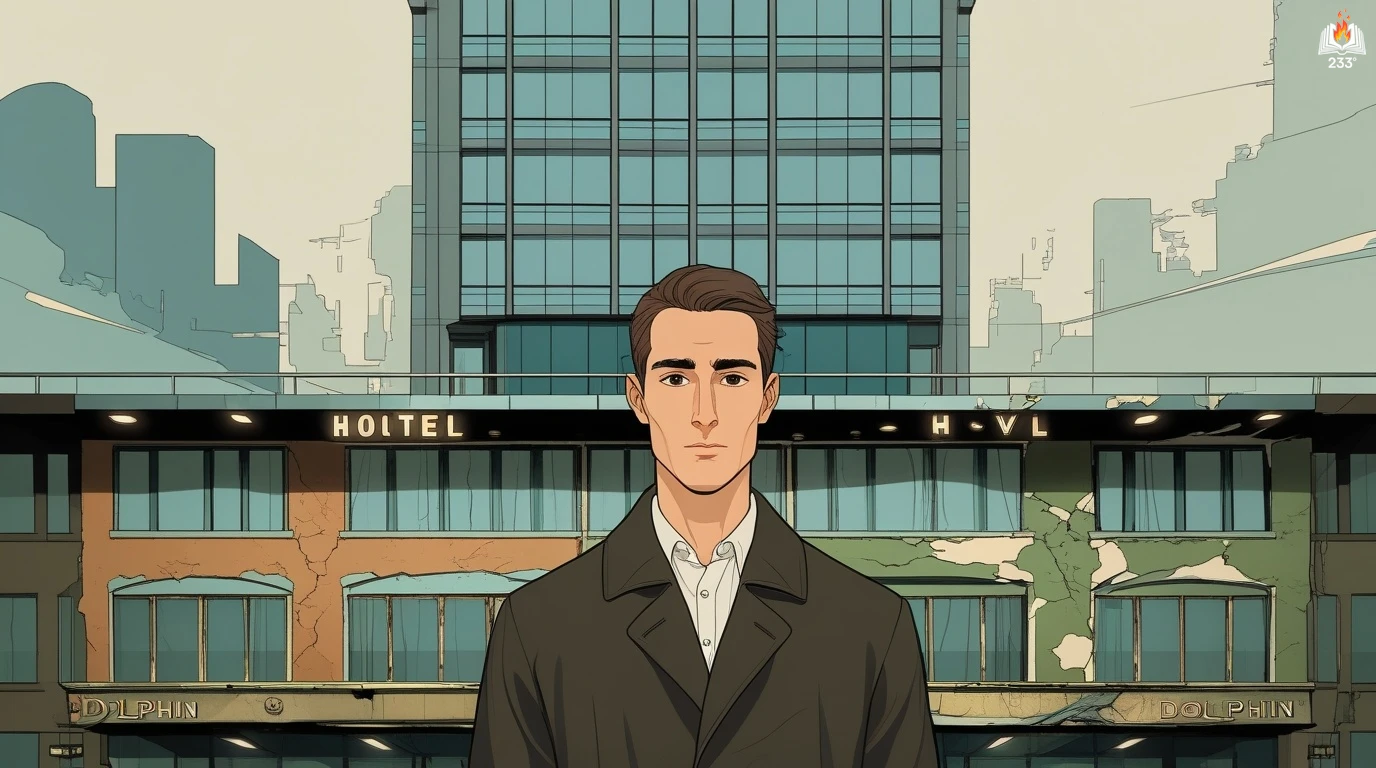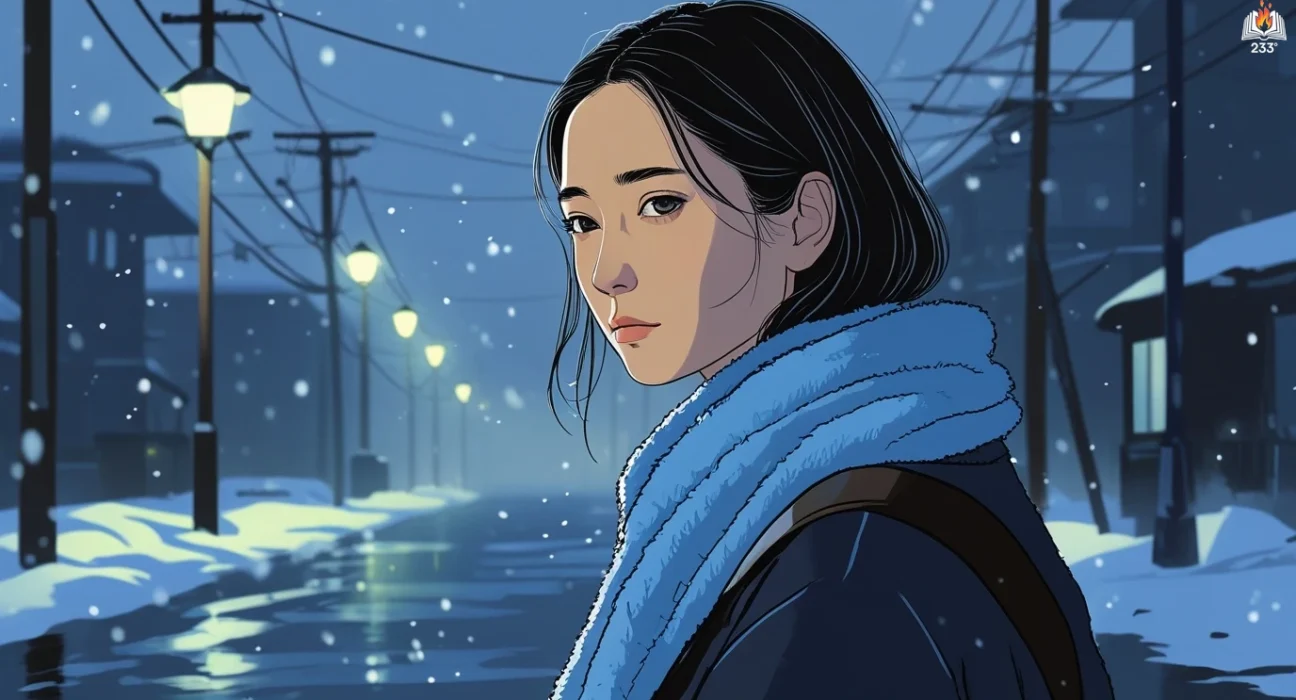
South of the Border, West of the Sun by Haruki Murakami was first published in 1992 and is a haunting meditation on memory, longing, and the fragility of happiness. Set in post-war Japan, the novel follows Hajime, a man drifting through adulthood despite apparent success, whose life is upended when a woman from his childhood, Shimamoto, reappears. Drawing on the themes of existential searching and elusive connection, Murakami weaves a melancholic tale that explores the tension between past and present, desire and duty.
Plot Summary
Hajime was born in 1951, an only child in a quiet post-war Japanese suburb where pine trees whispered in neatly kept gardens and most families had two or three children. But not his. With no siblings to echo his thoughts or absorb his solitude, he grew up feeling marked, incomplete. That sense of being singular – and somehow broken – clung to him through childhood, forming the quiet ache that shaped his life.
In elementary school, he met Shimamoto, another only child, who bore the burden of a limp from polio and a poise far beyond her years. They were drawn to each other, two outliers orbiting the center of normalcy. She was taller than most girls, quiet, self-contained, with a mysterious depth that made even adults uneasy. Together they listened to Nat King Cole and Rossini on her father’s pristine stereo, treating the records with reverence, as if each groove carried a soul. Their conversations drifted through music, books, loneliness, and dreams. Sometimes they walked home together, slowly, silently, until words weren’t necessary. She once took his hand – a fleeting moment that carved itself deep inside him, the warmth of it echoing for years. But then she vanished, whisked away by circumstance and distance, and Hajime was left only with the memory of her blue sweaters, the sound of classical music, and the feel of her hand.
Time passed, and adolescence swept Hajime forward. In high school, he met Izumi, an earnest girl who admired him deeply. She was gentle, trusting, and eager to listen. With her, Hajime discovered the thrill and confusion of desire, the physical closeness that excited and unsettled him. She loved him with quiet persistence, offering warmth and devotion, even when he drifted. But he couldn’t shake the sense of absence. Despite her tenderness, something essential was missing – something he couldn’t name but remembered from Shimamoto’s smile.
As their relationship deepened, Hajime found himself caught in a dangerous current. He met Izumi’s cousin, a woman older, bolder, and exuding the kind of electric pull he couldn’t resist. With her, there were no words – only heat and need and the crashing waves of lust. They met in secret, again and again, until the affair unraveled his life. Izumi discovered the betrayal, and the wound it left in her was irreparable. She withdrew into silence, and when Hajime finally faced her, she looked at him with sadness that accused more than any word could. He had destroyed something pure, and though he tried to explain, nothing he said could bridge the ruin he had caused.
Hajime left for Tokyo and college, trying once again to become someone new. But reinvention only deepened the hollowness. He drifted through political protests and passing girlfriends, unable to find anything lasting. Relationships faded. Classes blurred. Even love, when it came again, felt like water through his fingers.
After graduation, Hajime married Yukiko, the daughter of a wealthy publisher. With her came security – a family, a life mapped in steady lines. They had two daughters and a comfortable house on a hill. Yukiko was patient and perceptive, strong in ways Hajime did not always understand. He opened a jazz bar, a space of low light and slow music, and for a while, he convinced himself he had found peace. But beneath the surface, he remained untethered, sleepwalking through days that felt borrowed, chasing the ghost of a feeling he could not forget.
One rainy evening, Shimamoto walked back into his life. She appeared in the doorway of his bar, elegant and poised, unchanged in essence but touched by the years. Hajime was stunned. She moved like a whisper from the past, her limp still slight, her presence still magnetic. Their conversation flowed easily, as if no time had passed. She didn’t speak of herself much – where she lived, what she did – but she asked about his daughters, listened to the music, and then disappeared again into the night.
She returned sporadically, always unannounced. Each time, Hajime was consumed by her presence, the sense of familiarity and mystery wound into one. She revealed little – no details, no history – only fragments of thought and occasional memories. To him, she was a symbol of purity and longing, of the world that might have been. Slowly, obsession stirred within him. His marriage began to fade in his periphery. Yukiko noticed, quietly, and waited.
Shimamoto’s visits grew more intimate, and one snowy night, she took him to a hotel room. They did not make love, but they lay beside each other, touching, speaking little. Hajime was overcome with the sense that this was the culmination of something sacred, that his whole life had spiraled toward this moment. And yet, it was laced with unease. Shimamoto asked what he would do if she asked him to abandon everything and go with her. He said he would.
Then she vanished.
No messages. No contact. No answers. Hajime waited days, then weeks. He searched, called, but nothing. It was as if she had dissolved into the snow. The silence gnawed at him, and eventually he returned to his family – shaken, uncertain, but changed.
Yukiko, who had always known more than she let on, asked him if the phase was over. Hajime had no clear answer, only the truth of what he had felt, and what had slipped through his fingers again. She forgave him, not out of weakness but because she believed in the slow strength of their life together. Hajime resumed his quiet routines, fatherhood, the bar, but the shadow of Shimamoto lingered like an unfinished chord.
In the stillness of night, he often imagined her – in a train car, on a beach, maybe nowhere at all – carrying the same ache he carried. Somewhere between the music and the silence, between the memory and the moment, was the shape of something he had never truly grasped. Not love, not loss – something quieter, more permanent.
And in that quiet, Hajime lived.
Main Characters
Hajime: The narrator and protagonist, Hajime is an introspective, often melancholic man who grows from a lonely only child to a seemingly successful adult. Though he marries, has children, and runs a jazz bar, he remains emotionally adrift, haunted by memories of youth and unresolved desires. Hajime’s journey is one of searching – for meaning, for love, for redemption – but he is also a man prone to selfishness, capable of inflicting hurt as he tries to reconcile his inner world with reality.
Shimamoto: Hajime’s childhood friend and early soulmate, Shimamoto is enigmatic and elegant, marked by her childhood polio and limp. Her mysterious reappearance in Hajime’s life years later rekindles old emotions and disrupts his carefully built adult life. She embodies nostalgia and the unknowable, serving as a symbol of the past’s grip on the present, and perhaps, the unattainable perfection of first love.
Yukiko: Hajime’s wife, who provides him with stability, support, and a family. While she is less vivid in his emotional landscape than Shimamoto, Yukiko represents the grounded, real-life commitment Hajime has made. She is intuitive and perceptive, and though often relegated to the periphery of his romantic musings, her quiet strength and dignity ultimately serve as a contrast to Hajime’s indecision.
Izumi: Hajime’s high school girlfriend, whose deep emotional investment in their relationship ends in betrayal. Her heartbreak is a turning point in Hajime’s youth, underscoring the damage his selfishness can cause. Izumi becomes a painful emblem of innocence lost and guilt unatoned.
Theme
Nostalgia and Lost Time: The novel is saturated with longing for a past that can never be recaptured. Shimamoto’s return symbolizes both the seductive pull of memory and the impossibility of reliving youth. Hajime’s fixation on their shared past shapes the choices he makes, even as he understands he is chasing an illusion.
Desire and Incompleteness: Desire in Murakami’s novel is both physical and metaphysical – it reflects not just lust, but a yearning for a sense of wholeness. Hajime’s affairs, his obsession with Shimamoto, and his dissatisfaction with his life all point to a fundamental sense of something missing that he can neither name nor attain.
Moral Ambiguity and Emotional Damage: One of the novel’s most poignant insights is its exploration of how people hurt each other – not out of malice, but from weakness, confusion, or selfish need. Hajime recognizes that he has damaged others, sometimes beyond repair, and yet this awareness does not always change his behavior. Murakami examines this human fallibility with empathy but without absolution.
Music and Memory: Classical music and jazz function as emotional triggers and spiritual backdrops throughout the story. Shared listening sessions in youth become sacred moments, and later, music becomes both an escape and a bridge to what is emotionally unspeakable.
Writing Style and Tone
Haruki Murakami’s prose in South of the Border, West of the Sun is understated and lyrical, marked by a sparse, fluid quality that captures the quiet introspection of the narrator. His language is clean, almost minimalist, yet it possesses a dreamy resonance that lingers. The first-person narrative invites the reader into Hajime’s interiority, where time feels porous and the boundary between memory and present is blurred. Murakami’s use of symbolism – from Shimamoto’s limp to the recurring motifs of rain, music, and old photographs – deepens the emotional landscape without becoming overtly metaphorical.
The tone is meditative, melancholic, and deeply human. There is a calm sadness that pervades the novel, a sense of suspended emotion and unresolved longing. Murakami does not moralize, nor does he dramatize events; rather, he lets the silences speak. The emotional weight of the story emerges from what is left unsaid, from the flickering between hope and regret, intimacy and alienation. His handling of time, especially the way past and present echo and fold into each other, lends the novel a timeless quality, like a jazz composition built on repetition, improvisation, and aching space.
Quotes
South of the Border, West of the Sun – Haruki Murakami (1992) Quotes
“Sometimes when I look at you, I feel I'm gazing at a distant star. It's dazzling, but the light is from tens of thousands of years ago. Maybe the star doesn't even exist any more. Yet sometimes that light seems more real to me than anything.”
“here she is, all mine, trying her best to give me all she can. How could I ever hurt her? But I didn’t understand then. That I could hurt somebody so badly she would never recover. That a person can, just by living, damage another human being beyond repair.”
“For a while" is a phrase whose length can't be measured.At least by the person who's waiting.”
“For a long time, she held a special place in my heart. I kept this special place just for her, like a "Reserved" sign on a quiet corner table in a restaurant. Despite the fact that I was sure I'd never see her again.”
“The sad truth is that certain types of things can't go backward. Once they start going forward, no matter what you do, they can't go back the way they were. If even one little thing goes awry, then that's how it will stay forever.”
“If I stayed here, something inside me would be lost forever—something I couldn't afford to lose. It was like a vague dream, a burning, unfulfilled desire. The kind of dream people have only when they're seventeen.”
“Lots of different ways to live and lots of different ways to die. But in the end that doesn't make a bit of difference. All that remains is a desert.”
“But you know Hajime, some feelings cause us pain because they remain.”
“Look at the rain long enough, with no thoughts in your head, and you gradually feel your body falling loose, shaking free of the world of reality. Rain has the power to hypnotize.”
“Autumn finally arrived. And when it did, I came to a decision. Something had to give: I couldn't keep on living like this.”
“Even castles in the sky can do with a fresh coat of paint.”
“Everyone just keeps on disappearing. Some things vanish, like they were cut away. Others fade slowly into the mist. And all that remains is a desert.”
“I didn't feel like I was in my own body; my body was just a lonely, temporary container I happened to be borrowing.”
“Inside that darkness, i saw rain falling on the sea. Rain softly falling on a vast sea, with no one there to see it. The rain strikes the surface of the sea, yet even the fish don't know it is raining.”
“Once thing goes wrong, then the whole house of cards collapses. And there's no way you can extricate yourself. Until someone comes along to drag you out.”
“She was, if anything, on the plain side, at least not the type to attract men wherever she went. But there was something in her face that was meant for me alone. Everytime we met, I took a good look at her. And loved what I saw.”
“I would never see her again, except in memory. She was here, and now she's gone. There is no middle ground. Probably is a word that you may find south of the border. But never, ever west of the sun.”
“No one could say how long that life would last. Whatever has form can disappear in an instant.”
“Once she was out of the car and gone, my world was suddenly hollow and meaningless.”
“We were, the two of us, still fragmentary beings, just beginning to sense the presence of an unexpected, to be-aquired reality that would fill us and make us whole.”
We hope this summary has sparked your interest and would appreciate you following Celsius 233 on social media:
There’s a treasure trove of other fascinating book summaries waiting for you. Check out our collection of stories that inspire, thrill, and provoke thought, just like this one by checking out the Book Shelf or the Library
Remember, while our summaries capture the essence, they can never replace the full experience of reading the book. If this summary intrigued you, consider diving into the complete story – buy the book and immerse yourself in the author’s original work.
If you want to request a book summary, click here.
When Saurabh is not working/watching football/reading books/traveling, you can reach him via Twitter/X, LinkedIn, or Threads
Restart reading!