East of Eden by John Steinbeck, published in 1952, is a monumental exploration of good and evil, generational conflict, and the complex nature of human relationships. Set in California’s Salinas Valley, the novel intertwines the lives of two families, the Trasks and the Hamiltons, against a backdrop of biblical allegory, primarily the story of Cain and Abel.
Plot Summary
The Salinas Valley lay nestled between the light-drenched Gabilan Mountains and the brooding Santa Lucias. Its fertile soil held stories of settlers, dreamers, and wanderers. Among those drawn to its promise of life and hardship were the Trasks and the Hamiltons, two families whose fates would intertwine in a saga of betrayal, redemption, and the eternal struggle between good and evil.
Samuel Hamilton, an Irish immigrant with a soul as warm as his hands were skilled, settled in the valley’s unforgiving hills. Though his land was barren, Samuel filled it with laughter, invention, and the love of his wife, Liza, and their many children. He was a man of wisdom and compassion, and the Salinas Valley knew him as its heart. But far from Samuel’s homestead, on the richer soil below, another life began to take shape—that of Adam Trask.
Adam’s life began far away in Connecticut, where he and his brother Charles were raised by their stern father, Cyrus, a man consumed by ambition. Charles, strong and driven, envied the quiet kindness in Adam’s nature and harbored a fierce jealousy. This rivalry erupted violently when Cyrus seemed to favor Adam, gifting him love that Charles coveted. Though their father’s death left them both with a fortune, the shadows of their upbringing lingered, shaping their paths.
Adam, weary of violence and longing for peace, wandered west to California. In the valley, he sought a new beginning, bringing with him his enigmatic and beautiful wife, Cathy Ames. But Cathy’s beauty masked a darkness. Devoid of empathy and driven by a cold, manipulative cunning, she had fled her past, leaving a trail of destruction. Adam saw her as a symbol of hope and rebirth, but Cathy saw him as a tool, a means to escape and survive.
The idyll Adam imagined crumbled when Cathy revealed her true nature. After giving birth to twin sons, she shot Adam and abandoned the family, vanishing into the shadows of a brothel where her manipulations would give her power over others. Broken and disillusioned, Adam retreated into himself, leaving his sons, Caleb and Aron, to be raised with the help of Samuel Hamilton and Lee, Adam’s Chinese-American servant.
Lee, a figure of quiet strength and wisdom, became more than a servant; he was a guide and a father figure to the boys, offering insights into life’s complexities. He introduced Adam to the Hebrew word “timshel,” which means “thou mayest,” suggesting that humans have the power to choose between good and evil. This idea became a touchstone for Adam as he grappled with his grief and sought to reclaim his life.
The twins, Caleb and Aron, grew up in stark contrast to one another. Aron was a gentle soul, drawn to purity and idealism. Caleb, or Cal, was darker, wrestling with a sense of inherited sin and an intense desire to earn his father’s love. Their bond was deep, yet fraught with tension, as Cal often felt overshadowed by Aron’s perceived goodness.
As the boys grew, Cal discovered the truth about their mother’s abandonment and her life as a madam in Salinas. While Aron clung to an idealized image of her, Cal grappled with the weight of her choices and what they might mean for his own nature. The knowledge planted a seed of resentment and conflict between the brothers.
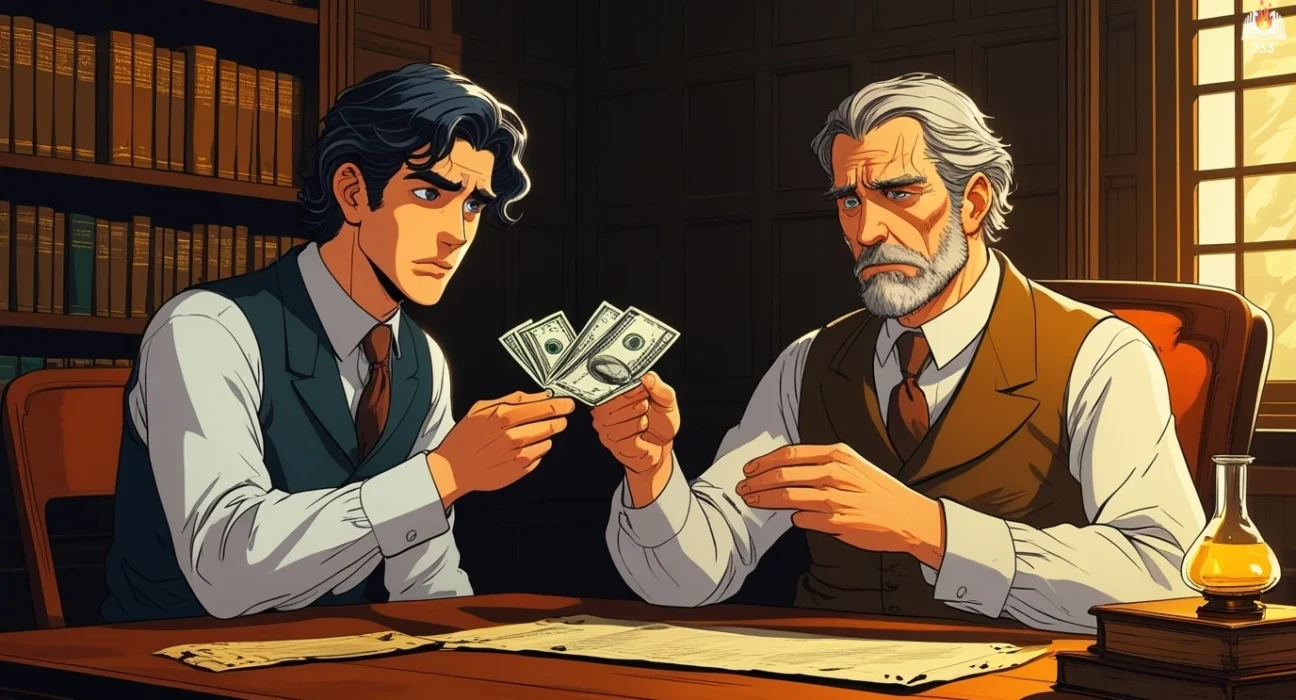
In time, Cal sought to win his father’s approval by entering the world of business. He invested in wartime bean speculation, earning a small fortune. He offered the money to Adam, believing it would mend the rift between them. But Adam, whose moral compass rejected profiteering from war, refused the gift, inadvertently deepening Cal’s feelings of inadequacy and rejection.
Aron, meanwhile, fell in love with Abra, a girl whose warmth and intelligence made her a comforting presence. Yet Aron’s idealism cast her in a light she could never fully embody, creating a gulf between the reality of who she was and the image he adored. Abra, drawn to the grounded honesty of Cal, began to sense the fragility of her relationship with Aron.
Cal’s inner turmoil reached its peak one fateful night. Consumed by jealousy and anger, he revealed the truth about their mother to Aron. The revelation shattered Aron’s world, driving him to enlist in the army during World War I, a decision that would lead to his death overseas. The weight of Aron’s demise fell heavily on Adam, whose health rapidly declined, and on Cal, who was consumed by guilt.
As Adam lay dying, he confronted Cal with a simple but profound word: “Timshel.” It was a benediction, a reminder that despite his mistakes and the darkness he carried, Cal still had the power to choose his path. This acknowledgment lifted some of the burden from Cal’s shoulders, offering him the chance for redemption.
Abra, too, found solace in this moment of reckoning. Having been drawn to Cal’s complexity and depth, she became a source of comfort and hope for him. Together, they began to envision a future shaped not by the sins of the past but by the choices they would make moving forward.
The Salinas Valley, with its golden hills and shadowed canyons, stood as a silent witness to the triumphs and tragedies of the Trasks and Hamiltons. In its earth was the promise of renewal, a reflection of the timeless struggle within the human soul—the battle between good and evil, love and hate, choice and destiny.
Main Characters
Adam Trask: Adam is a deeply idealistic man who struggles to reconcile his desire for good with the darker truths of the world. His journey from innocence to disillusionment mirrors the novel’s exploration of human nature.
Cathy Ames (Kate): A manipulative and malevolent character, Cathy embodies pure evil. Her actions, from betrayal to murder, showcase her lack of morality and serve as a counterpoint to other characters’ struggles with goodness.
Caleb Trask (Cal): Adam’s son, Cal, is tormented by feelings of inadequacy and an inherent darkness he believes he has inherited. His longing for acceptance and love underpins his complex arc.
Aron Trask: Aron, Cal’s twin, is an idealistic and naive character whose worldview is shattered by the harsh realities of life. His innocence contrasts sharply with Cal’s awareness of moral ambiguity.
Samuel Hamilton: A warm and wise patriarch, Samuel is a symbol of hope and moral integrity. He acts as a mentor to Adam and offers profound insights about life and human nature.
Lee: Adam’s Chinese-American servant, Lee, is both pragmatic and philosophical. He serves as a moral compass and provides deep reflections on the novel’s central themes.
Theme
Good vs. Evil: The novel explores the timeless struggle between good and evil within individuals. Through characters like Cal and Cathy, Steinbeck examines the choices people make and their moral consequences.
Free Will and Timshel: The Hebrew word “timshel,” meaning “thou mayest,” encapsulates the novel’s central idea: humans have the freedom to choose between good and evil.
Inheritance and Legacy: The narrative delves into how the sins and virtues of one generation are passed down to the next, particularly through the Cain and Abel allegory.
Identity and Acceptance: Many characters wrestle with their sense of self and seek validation from others, particularly within familial relationships.
Biblical Allusions: Drawing heavily on the story of Cain and Abel, the novel uses religious symbolism to add depth to its characters and their moral dilemmas.
Writing Style and Tone
Steinbeck’s prose is richly descriptive, vividly capturing the beauty and harshness of the Salinas Valley. His detailed characterizations bring both the setting and the people to life, making their struggles and triumphs deeply relatable.
The narrative employs a mixture of realism and allegory, weaving the everyday with the profound. Steinbeck uses philosophical musings and historical digressions to provide a broader context, often addressing the reader directly. The tone alternates between reflective, melancholic, and hopeful, underscoring the novel’s exploration of humanity’s potential for both greatness and destruction.
Quotes
East of Eden – John Steinbeck (1952) Quotes
“And now that you don't have to be perfect, you can be good.”
“All great and precious things are lonely.”
“I believe a strong woman may be stronger than a man, particularly if she happens to have love in her heart. I guess a loving woman is indestructible.”
“But the Hebrew word, the word timshel—‘Thou mayest’
“There's more beauty in truth, even if it is dreadful beauty.”
“Do you take pride in your hurt? Does it make you seem large and tragic? ...Well, think about it. Maybe you're playing a part on a great stage with only yourself as audience.”
“My imagination will get me a passport to hell one day.”
“Sometimes a man wants to be stupid if it lets him do a thing his cleverness forbids.”
“It seems to me that if you or I must choose between two courses of thought or action, we should remember our dying and try so to live that our death brings no pleasure to the world.”
“A kind of light spread out from her. And everything changed color. And the world opened out. And a day was good to awaken to. And there were no limits to anything. And the people of the world were good and handsome. And I was not afraid any more.”
“People like you to be something, preferably what they are.”
“It would be absurd if we did not understand both angels and devils, since we invented them.”
“A man so painfully in love is capable of self-torture beyond belief.”
“But I have a new love for that glittering instrument, the human soul. It is a lovely and unique thing in the universe. It is always attacked and never destroyed - because 'Thou mayest.”
“When a man says he does not want to speak of something he usually means he can think of nothing else.”
“An unbelieved truth can hurt a man much more than a lie. It takes great courage to back truth unacceptable to our times. There's a punishment for it, and it's usually crucifixion.”
“A man without words is a man without thought.”
“Perhaps the less we have, the more we are required to brag.”
“..it's awful not to be loved. It's the worst thing in the world...It makes you mean, and violent, and cruel.”
“It’s a hard thing to leave any deeply routine life, even if you hate it.”
“Perhaps it takes courage to raise children..”
“No one who is young is ever going to be old.”
“And this I believe: that the free, exploring mind of the individual human is the most valuable thing in the world. And this I would fight for: the freedom of the mind to take any direction it wishes, undirected.”
“Maybe-- maybe love makes you suspicious and doubting. Is it true that when you love a woman you are never sure-- never sure of her because you aren't sure of yourself? ”
We hope this summary has sparked your interest and would appreciate you following Celsius 233 on social media:
There’s a treasure trove of other fascinating book summaries waiting for you. Check out our collection of stories that inspire, thrill, and provoke thought, just like this one by checking out the Book Shelf or the Library
Remember, while our summaries capture the essence, they can never replace the full experience of reading the book. If this summary intrigued you, consider diving into the complete story – buy the book and immerse yourself in the author’s original work.
If you want to request a book summary, click here.
When Saurabh is not working/watching football/reading books/traveling, you can reach him via Twitter/X, LinkedIn, or Threads
Restart reading!