Jamaica Inn, written by Daphne du Maurier and published in 1936, is a gothic mystery novel set in the bleak, wind-swept moors of Cornwall during the early 19th century. The story follows Mary Yellan, a strong-willed young woman who moves to the eerie and ominous Jamaica Inn after the death of her mother. There, she uncovers the dark secrets of her uncle’s smuggling enterprise and finds herself entangled in a web of deceit, danger, and moral reckoning. This work by du Maurier, known also for Rebecca and My Cousin Rachel, exemplifies her mastery of suspense and atmosphere.
Plot Summary
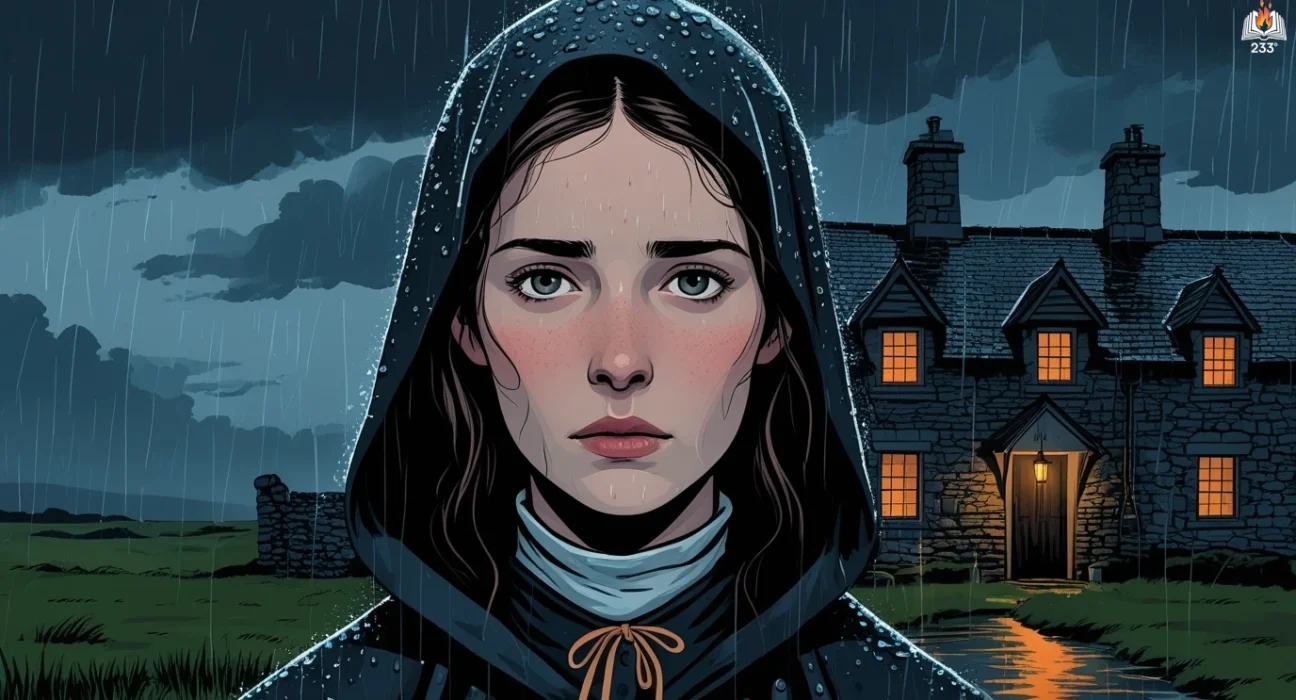
The coach rolled through the rain-soaked moors of Cornwall, a lone figure huddled within its rocking walls. Mary Yellan, newly orphaned and bound by promise, journeyed from the familiar fields of Helford to an uncertain future at Jamaica Inn, where her aunt Patience lived with a husband Mary had never met. The wind howled across the desolate land, and the driver’s uneasy glance when she mentioned her destination did nothing to calm her fears. Jamaica Inn had a reputation. People whispered of things best left in the dark.
Jamaica Inn rose from the moors like a curse – grey, crouched low under the weight of secrets, lashed by wind and rain. Inside, the shadows stretched long and cold. Mary’s uncle, Joss Merlyn, stood like a giant cut from granite, his eyes wild, his voice booming through the narrow corridors. Patience, once remembered for her laughter and fine ribbons, was now pale and thin, her smile trembling and false, worn to the bone by years of fear.
Joss welcomed Mary with a sneer and a warning. There were rules in this house, rules that must be obeyed. Patience cowered in his presence, fluttering like a bird caught in a snare. Mary, with fire in her blood, felt the tension knot in her chest. She had left grief behind, only to meet a new enemy: dread.
Days passed beneath heavy clouds. Mary explored the inn – its creaking floors, its boarded windows, its locked doors. She saw no guests. The bar remained silent by day, yet come night, whispers rose like smoke. Footsteps echoed in the yard. Wheels ground to a halt, voices murmured under her window, and the inn came alive with men who brought no warmth with them.
Joss drank deep and raged louder. The brandy made him boastful. He confessed to Mary in broken drunken words – of power, of smuggling, of secrets too dangerous to name. He warned her not to ask questions and not to wake when the wagons came. Mary listened. And watched.
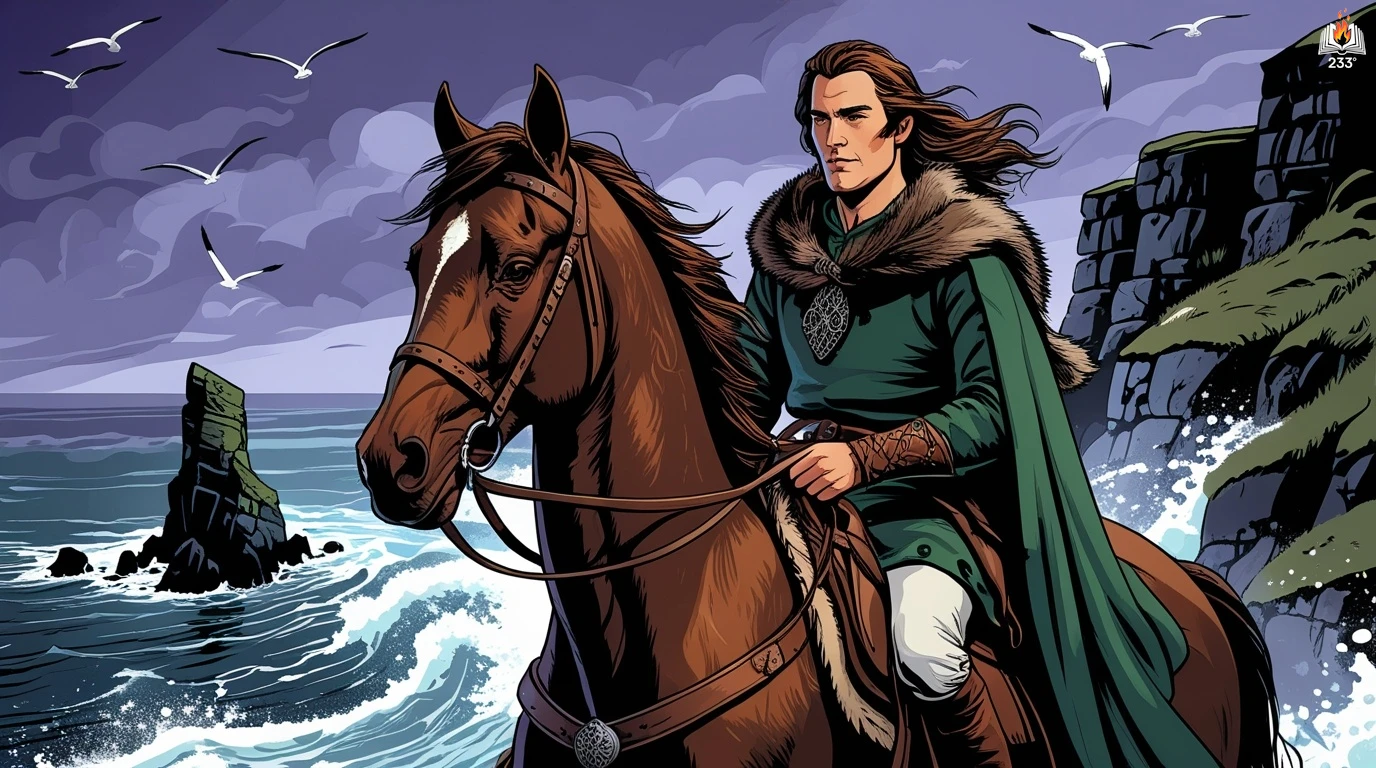
She met Jem Merlyn on the moor, Joss’s younger brother, a rogue with a quick tongue and a horse thief’s charm. He laughed easily, taunted the law, and stirred something in Mary she didn’t expect – a flicker of desire, tangled with distrust. Jem was dangerous, perhaps more dangerous than Joss, because he wore his wickedness with a grin.
One day, desperate to escape the stifling dread of the inn, Mary rode with Jem to the fair. For a few hours, the world seemed lighter. They laughed, flirted, bartered for stolen ponies. But Jem disappeared without warning, leaving Mary to return alone. On her way back, caught in a rising storm, she was taken prisoner by men she did not see, gagged and bound in a wagon filled with bales of illicit goods. She became a witness to the darkest truth of all.
At a secret cove, she saw wreckers at work – Joss at their head. Men, wild-eyed and soaked with blood, looted the dead and dying after driving a ship to ruin on the rocks. Mary, sickened and helpless, lay hidden in the cart until the horror ended. When she was finally released, Joss warned her again. She could leave if she liked, but she would not live long enough to speak.
Torn between fear and justice, Mary fled to Altarnun and sought help from the vicar, Francis Davey – a pale, mild man with calm eyes and an offer of safety. He listened, took notes, and promised to help. Yet something in his serenity unnerved her, like a candle burning in a house of the dead. She returned to Jamaica Inn, uncertain of whom she could trust.
That night, Joss confessed again. He spoke of murder and betrayal. He had been ordered to kill his own men, to silence them. But he was tired now, hunted, unraveling. He drank until he collapsed, and Mary feared the end was close. She tried to flee with her aunt, but it was too late.
Blood spilled at Jamaica Inn. Joss Merlyn lay stabbed in his own house, his body sprawled across the cold stone floor. Patience, faithful even in death, was found beside him. Mary stood among the ruins of their lives, cold to the bone, waiting for justice that came too late.
But justice wore a mask. Francis Davey, the vicar, was no savior. Behind the gentle voice and scholarly gaze lay the mind of a traitor. It was he who orchestrated the wrecks. He who used Joss as a tool. He who sought power beneath a cloak of sanctity. When Mary confronted him, he smiled and spoke of philosophy, of fate, of cold reason. He kidnapped her, took her to the cliffs, and laid bare his twisted vision of the world.
Yet Mary did not falter. She escaped him, as the moor turned wild around them, and Francis Davey fled into the night like a ghost vanishing into mist. He was found days later, dead on the rocks, the sea having claimed the last of his delusions.
The wreckage of Jamaica Inn stood silent. No more wagons came by night. No voices murmured in the yard. Mary buried her aunt in quiet sorrow, then turned to the road once more. Jem Merlyn returned, laughing still, but something in him had changed. He offered her a choice – to ride with him into an unknown future, lawless and free, or to return to the grey security of the towns.
Mary did not answer at once. She looked to the moor, to the wide, unforgiving land that had tested her and marked her. Then she followed him, leaving behind the inn and the ghosts it harbored, not for love, but for life.
Main Characters
Mary Yellan: Mary is the protagonist, a resolute and brave young woman from Helford. After her mother’s death, she promises to live with her Aunt Patience at Jamaica Inn. Fiercely independent and morally upright, Mary confronts the dangers of her new environment head-on. Her arc involves a loss of innocence, grappling with trust and betrayal, and finding strength in a hostile world.
Joss Merlyn: Mary’s uncle, the brooding and violent landlord of Jamaica Inn. A towering and menacing figure, Joss is a man ravaged by alcohol and guilt, deeply involved in smuggling and darker crimes. His unpredictable moods and dominance over his wife create a suffocating and abusive atmosphere in the inn.
Aunt Patience Merlyn: Once lively and full of charm, Patience is now a broken woman, cowed by years of emotional and physical abuse. Her descent into subservience is one of the most tragic elements of the story, and her relationship with Mary is tinged with sorrow, loyalty, and fear.
Jem Merlyn: Joss’s younger brother, a horse thief with charm and mystery. Jem is morally ambiguous, drawing Mary’s interest despite his dubious nature. Their dynamic adds romantic tension and challenges Mary’s black-and-white view of morality.
Francis Davey: The albino vicar of Altarnun, intelligent and initially sympathetic, but later revealed to be a central figure in the web of crime. His duality – outward piety masking inner darkness – plays into the novel’s themes of deception and hidden evil.
Theme
Isolation and Entrapment: The inn’s remote setting heightens the characters’ sense of isolation, mirroring their emotional confinement. Mary is trapped both physically by the moor and socially by her obligations, while Patience is emotionally imprisoned by her marriage.
Moral Ambiguity and Corruption: The novel blurs moral lines. Characters who seem virtuous may be villains, and those who commit crimes may do so out of necessity. Mary’s struggle is not only external but also internal – trying to maintain her values in a corrupt world.
Violence and Control: Power dynamics, especially between men and women, are central. Joss’s physical dominance over Patience and Mary reflects a wider commentary on societal and domestic oppression. The theme explores the psychological toll of sustained fear and submission.
Gothic Atmosphere and Nature: The moor becomes almost a character itself – wild, desolate, and menacing. Its ever-changing nature reflects Mary’s tumultuous journey. The inn, too, is soaked in dread and secrecy, serving as the archetypal gothic setting.
Identity and Deception: Throughout the novel, appearances deceive. Characters are not who they seem; Francis Davey hides evil behind his clerical mask. The motif of disguise and hidden truth recurs as Mary uncovers layers of deceit.
Writing Style and Tone
Daphne du Maurier’s prose in Jamaica Inn is richly atmospheric, evoking a sense of unease from the very first page. Her descriptions of the moorland – grey, storm-ridden, and vast – create an ever-present feeling of dread. She blends poetic language with precise detail, immersing the reader in a world that is as vivid as it is forbidding. The landscape is not merely a backdrop but a reflection of the characters’ turmoil and the narrative’s gothic undercurrents.
The tone is somber, suspenseful, and at times deeply claustrophobic. Du Maurier carefully crafts a slow-burning tension, unspooling mysteries at a deliberate pace. Her use of internal monologue gives voice to Mary’s doubts and fears, allowing readers to engage deeply with her moral and emotional dilemmas. The dialogue, particularly from Joss and Patience, is laden with menace and despair, highlighting their psychological states. While the novel ventures into romance, du Maurier never allows sentiment to overpower the looming sense of danger that defines the story.
Quotes
Jamaica Inn – Daphne du Maurier (1936) Quotes
“Because I want to; because I must; because now and forever more this is where I belong to be.”
“Dead men tell no tales, Mary.”
“He stole horses' you'll say to yourself, 'and he didn't care for women; and but for my pride I'd have been with him now.”
“No, Mary had no illusions about romance. Falling in love was a pretty name for it, that was all.”
“And, though there should be a world of difference between the smile of a man and the bared fangs of a wolf, with Joss Merlyn they were one and the same.”
“She realized for the first time that aversion and attraction ran side by side; that the boundary-line was thin between them.”
“If there’s one thing that makes a man sick, it’s to have his ale poured out of an ugly hand.”
“I don't want to love like a woman or feel like a woman, Mr Davey; there's pain that way, and suffering, and misery that can last a lifetime. I didn't bargain for this; I don't want it.”
“Why are you sitting here beside me, then?' 'Because I want to; because I must; because now and forever more this is where I belong to be.”
“Roads? Who spoke of roads? We go by the moor and the hills, and tread granite and heather as the Druids did before us.”
“She laughed because she must, and because he made her;”
“If death came now, he would be an ally; existence was not a thing she welcomed anymore. Life had been crushed from her anyway, and the body lying on the bed did not belong to her. She had no wish to live”
“There's a home for you here at North Hill, you know that, and my wife joins me in begging you to stay. Plenty to do, you know, plenty to do. There are flowers to be cut for the house, and letters to write, and the children to scold.”
“existence itself is a long enough journey, without adding to the burden”
“I like the look of you and the feel of you, and that's enough for any man. It ought to be enough for a woman too.”
“I thought to find it in the Christian Church, but the dogma sickened me, and the whole foundation is built upon a fairy-tale. Christ Himself is a figurehead, a puppet thing created by man himself.”
“I will tell you how I sought refuge from myself in Christianity and found it to be built upon hatred and jealousy, and greed—all the man-made attributes of civilization, while the old pagan barbarism was naked and clean.”
“For the sake of your bright eyes, Jem Merlyn.”
We hope this summary has sparked your interest and would appreciate you following Celsius 233 on social media:
There’s a treasure trove of other fascinating book summaries waiting for you. Check out our collection of stories that inspire, thrill, and provoke thought, just like this one by checking out the Book Shelf or the Library
Remember, while our summaries capture the essence, they can never replace the full experience of reading the book. If this summary intrigued you, consider diving into the complete story – buy the book and immerse yourself in the author’s original work.
If you want to request a book summary, click here.
When Saurabh is not working/watching football/reading books/traveling, you can reach him via Twitter/X, LinkedIn, or Threads
Restart reading!