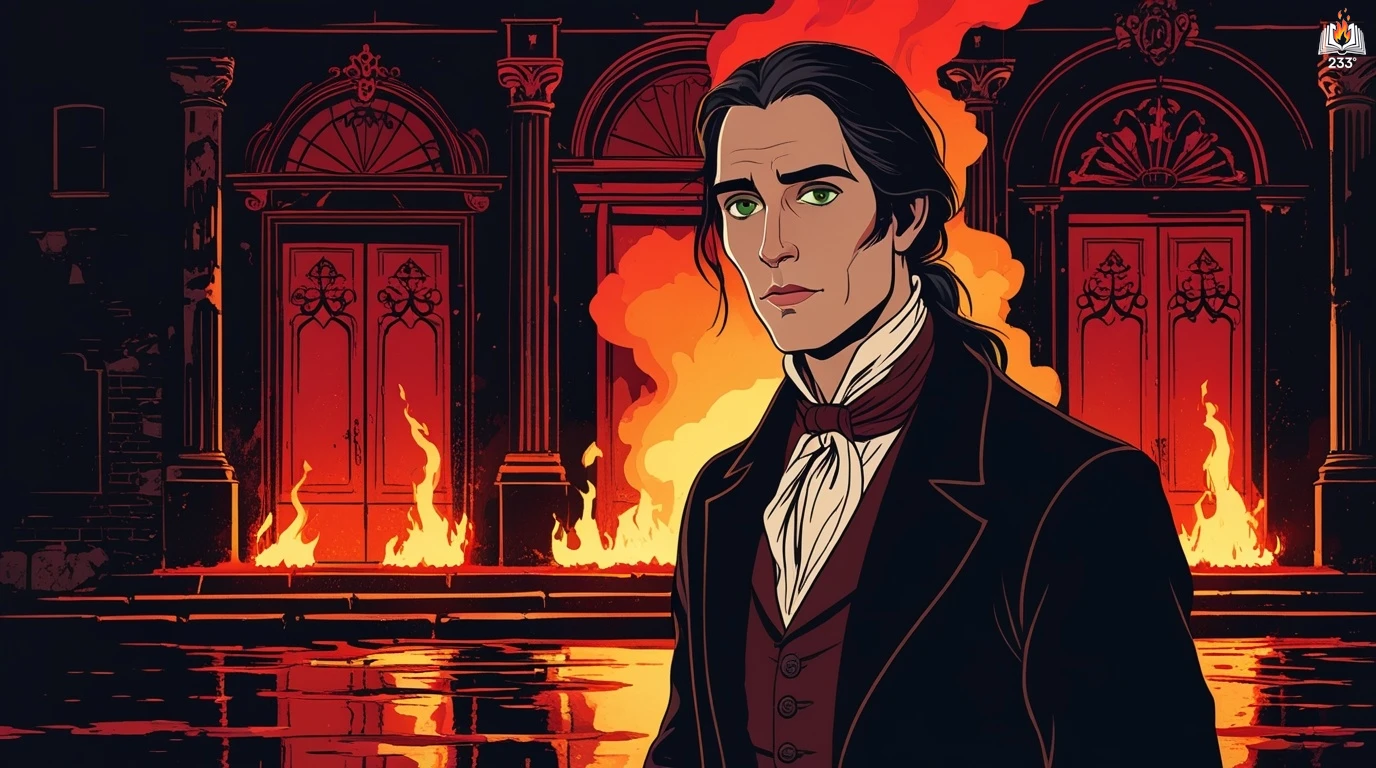

Blackwood Farm, published in 2002 by Anne Rice, is the eighth installment in her celebrated The Vampire Chronicles series. In this gothic tale, Rice entwines two of her most iconic mythologies – the immortal vampires and the mystical Mayfair witches – creating a richly layered saga that stretches from the eerie swamps of Louisiana to the ancient ruins of Pompeii. At the heart of the novel is Tarquin “Quinn” Blackwood, a newly made vampire haunted since childhood by a spectral twin known only as Goblin. As Quinn seeks aid from the legendary Vampire Lestat to sever this parasitic bond, he unearths ancestral secrets and confronts a legacy steeped in blood, guilt, and yearning.
Plot Summary
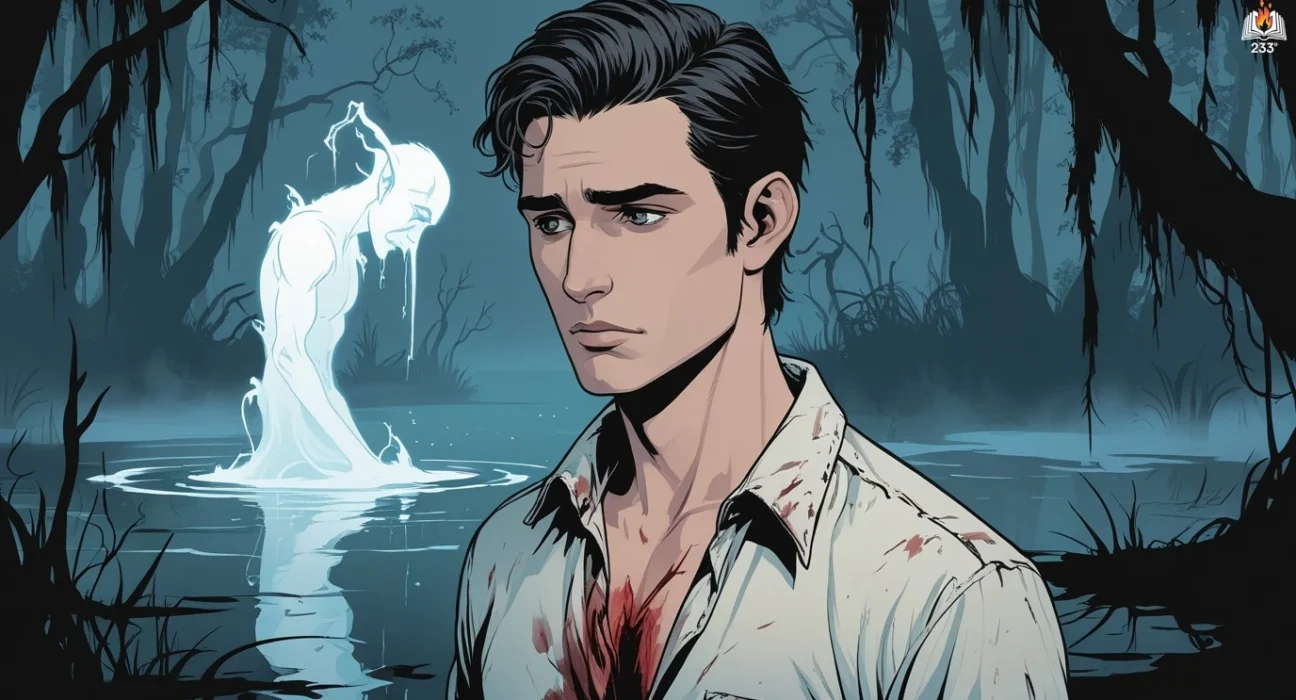
At Blackwood Farm, hidden deep within the lush, tangled thickets of Louisiana’s Sugar Devil Swamp, a boy named Tarquin Blackwood was born to privilege and haunted bloodlines. From his earliest days, Quinn, as everyone called him, was never alone. His constant companion, Goblin, mirrored his every move – a spirit-child double, a pale twin seen only by him, who grew as Quinn did, who laughed when he laughed and wept when he wept. But Goblin was not a figment. He was something older, something darker, and in the stillness of the manor halls and the whispered histories of the Blackwood family, Goblin’s presence was as real as the polished wood beneath their feet.
Quinn was a child of light, a piano-playing prodigy raised with old Southern charm by his regal Aunt Queen. His world was scented with magnolia, echoing with jazz, touched by European travels and his devotion to the family estate. But that world began to warp when Goblin’s shadow lengthened, his hunger growing insatiable. In Quinn’s blood, Goblin found a tether to the living world, and when Quinn was made into a vampire – dragged unwillingly into immortality by the Blood Hunter Petronia – the spirit changed. No longer an innocent companion, Goblin became a predator, feeding on Quinn’s own vampiric essence, drinking from his veins, gaining strength with every drop.
Lost in this new existence, burdened by Goblin and cast from his mortal comforts, Quinn sought out the one being whispered of in vampire lore as both rebel and savior – Lestat de Lioncourt. He penned a plea and carried it to Lestat’s townhouse in New Orleans, trespassing into the fabled haunt of the Brat Prince himself. But there, instead of Lestat, Quinn stumbled upon Stirling Oliver, a member of the secretive Talamasca who had once helped him as a boy. Stirling, too, had come searching, driven by the same restless need to peer behind the veil. Their reunion was drenched in tension – one a man of knowledge, the other now a creature of night. Hunger surged in Quinn. He attacked.
But before Quinn could spill blood, Lestat arrived. Radiant and terrifying, he pulled Quinn back from the edge and delivered judgment not with violence, but with command. Stirling lived, and Quinn, trembling and ashamed, was taken into Lestat’s care. The Brat Prince read Quinn’s letter and listened to his tale. He heard of Goblin, of the pull between spirit and flesh, of a boy made vampire without consent, of an ancient evil perhaps reborn through the spectral twin.
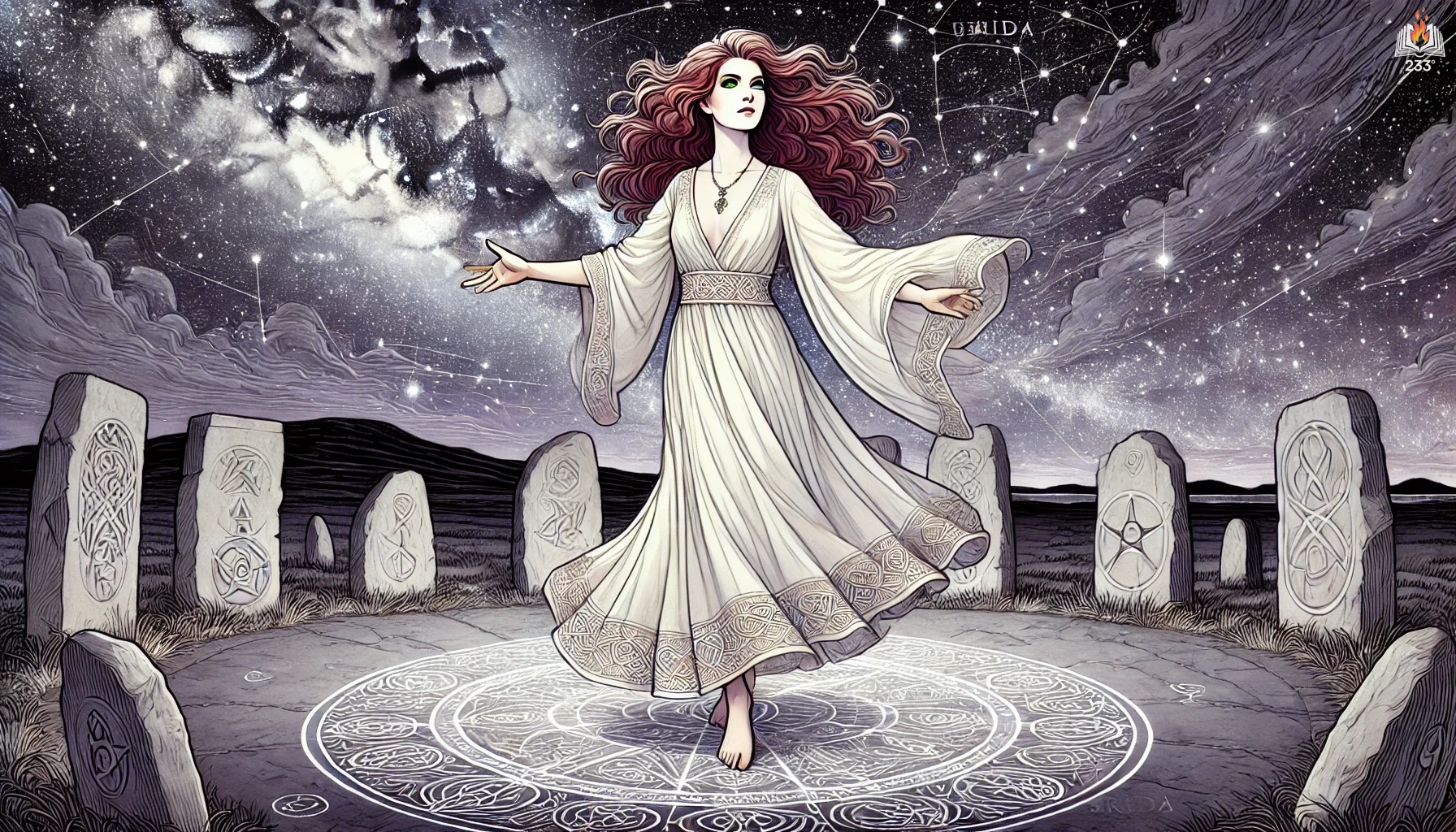
Lestat did not destroy him. Instead, he took Quinn under his wing, urging him to tell his story – all of it. What followed was a winding confession that spanned continents and centuries. Quinn recounted his mortal life, his lineage traced through generations of Blackwoods – a tangle of scandal, wealth, and Southern superstition. He spoke of his bond with Mona Mayfair, the green-eyed witch from New Orleans with whom he had shared forbidden love. She, too, had seen Goblin. She had touched the spirit realm. But fearing for her safety, Quinn had left her behind, disappearing into the night without a word.
To unravel the truth of Goblin, Lestat brought in Merrick Mayfair – a vampire witch with ties to both bloodlines, someone who understood the dark intersections of spirits and the undead. With Merrick’s help, and that of ancient blood drinkers like Maharet and Marius, Quinn began to piece together the nature of Goblin’s existence. Goblin, it seemed, was not merely a ghost. He was something born of Quinn’s own soul – a parasitic twin, made stronger by Quinn’s gifts as a spirit medium and solidified by his transformation into a vampire.
Haunted by visions and guided by Merrick’s sorcery, Quinn returned to Blackwood Farm. The manor pulsed with memories – ancestral secrets whispered from gilded frames and moss-covered gravestones. There, in the cradle of his bloodline, he confronted Goblin fully. The spirit had become more than a shadow – he was a being with form and force, a creature who craved dominion over Quinn’s body, longing to consume him entirely.
But Goblin’s strength was tied to memory, to longing, to a childhood that could never return. In a harrowing ritual, with Merrick’s power channeled and Lestat watching, Goblin was summoned and faced. Quinn pleaded, not with hate but with love – acknowledging their bond, mourning the brother who had never truly lived. As the air thickened with incantation and sorrow, Goblin flickered, resisting the pull to oblivion. Yet, in that final moment, something shifted. Perhaps it was Merrick’s magic, or perhaps Goblin’s own weariness. The spirit faded. Not in rage, but in silence.
The swamp grew still again.
Merrick, weakened by her own power, returned to her rest. Lestat, ever enigmatic, vanished once more into the mist of vampire mystery. And Quinn remained – not free, but changed. He returned to his beloved Aunt Queen, her cameos spread across her table, her voice calling him home. He no longer feared the night, but walked through it with purpose. Blackwood Farm stood tall, its white columns gleaming beneath the moon, its halls no longer echoing with footsteps that were not his own.
Yet in his heart, he carried the memory of Goblin – not as a monster, but as a piece of himself that once cried for love. And in that remembrance, Quinn found a strange, aching peace.
Main Characters
Tarquin “Quinn” Blackwood – The protagonist, Quinn is a young aristocrat from Louisiana’s Blackwood Farm, whose life is tormented by Goblin, a supernatural double who feeds on his vitality. Sensitive, artistic, and deeply loyal, Quinn is transformed into a vampire against his will. His quest to rid himself of Goblin leads him to confront ancient evils and personal demons, revealing layers of strength and vulnerability as he seeks Lestat’s guidance.
Goblin – A spectral doppelgänger who mirrors Quinn in appearance and development, Goblin begins as a childhood companion and becomes increasingly possessive and dangerous after Quinn’s transformation. Feeding on Quinn’s vampiric blood, Goblin grows stronger, blurring the boundaries between spirit and monster.
Lestat de Lioncourt – The infamous antihero of The Vampire Chronicles, Lestat assumes the role of reluctant mentor and protector. Charismatic, cunning, and fiercely principled in his own unruly way, Lestat serves as both judge and savior for Quinn, weighing his plea for mercy against the threat Goblin represents.
Aunt Queen – Quinn’s beloved great-aunt and moral compass. Regal, wise, and indulgent, she embodies the decaying grandeur of the Southern aristocracy and represents all that Quinn loves in his human life.
Stirling Oliver – A compassionate and intelligent scholar from the Talamasca, Stirling once helped Quinn understand his psychic gifts. Their reunion, charged with danger and unspoken affection, tests Quinn’s self-control and loyalty.
Mona Mayfair – A gifted young witch and member of the powerful Mayfair family, Mona once shared a psychic connection and romantic bond with Quinn. Though he avoids her now out of fear for her safety, her presence looms over the story, symbolizing both lost innocence and enduring love.
Theme
Duality and Identity: The relationship between Quinn and Goblin serves as a metaphor for the dual nature of self – light and shadow, innocence and monstrosity. This theme permeates the novel, as Quinn struggles with his new vampiric identity and the remnants of his human soul.
Legacy and Ancestral Burden: The novel draws heavily on Southern Gothic tropes, especially the haunting weight of familial legacy. Blackwood Manor and the Sugar Devil Swamp are more than settings – they are repositories of guilt, secrets, and unresolved trauma passed through generations.
The Price of Immortality: Rice continues her philosophical examination of eternal life, emphasizing its isolating, often tragic consequences. Through Quinn’s longing for human connection and his torment over Goblin’s growing power, the story explores what is sacrificed when one becomes a creature of the night.
Forbidden Knowledge and Power: The novel probes the cost of seeking forbidden truths. Whether it’s the Talamasca’s dangerous curiosity, Quinn’s thirst for help from Lestat, or Goblin’s unnatural evolution, the pursuit of power and understanding invariably leads to peril and transformation.
Writing Style and Tone
Anne Rice’s prose in Blackwood Farm is lush, lyrical, and deeply immersive. Her language is steeped in sensual detail, painting vivid pictures of the decadent Deep South, haunted estates, and lavish interiors. Long, flowing sentences filled with introspection and rich sensory imagery create an atmosphere both intimate and baroque. Rice masterfully captures the internal worlds of her characters, especially Quinn, whose voice is both youthful and tormented, imbued with gothic romanticism and Southern melancholy.
The tone of the novel is elegiac and emotionally intense, tinged with longing, dread, and a haunting sense of nostalgia. As with earlier entries in The Vampire Chronicles, Rice blends horror with tenderness, creating a gothic tapestry where the supernatural is always intertwined with deeply human emotions – love, loss, guilt, and hope. The narrative swings between the poetic and the terrifying, maintaining a constant tension between beauty and darkness that defines the essence of Rice’s storytelling.
Quotes
Blackwood Farm – Anne Rice (2002) Quotes
“And books, they offer one hope -- that a whole universe might open up from between the covers, and falling into that universe, one is saved.”
“No, but one can feel desperate at any age, don’t you think? The young are eternally desperate,” he said frankly. “And books, they offer hope
“Don’t regret it when you don’t come to see me. I think I’m timeless. You’re here now and you’ve remembered me. That’s what counts.”
“And do stop trying to determine if I am a man or a woman. The fact is I'm a good part both and therefore neither one. I was just explaining to your Aunt Queen. I was born endowed with the finest traits of both sexes and I drift this way and that as I choose.”
“I’m in love with you,” I responded. He laughed the most beguiling and gentle laugh. “Of course you are,” he replied. “I understand perfectly because I’m in love with myself. The fact that I’m not transfixed in front of the nearest mirror takes a great deal of self-control.”
“I’m theatrical and incorrigible. A regular beast when it comes to the exaggerated and the eccentric.”
“Right before my eyes he was seemingly as solid as I was; and then I felt the tingling all through my limbs as he merged with me, and the tiny stabs on my hands and my neck and my face. I struggled as if I were caught in a perfect net.”
“No, but one can feel desperate at any age, don’t you think? The young are eternally desperate,” he said frankly. “And books, they offer one hope –that a whole universe might open up from between the covers, and falling into that new universe, one is saved.”
“It's always the young ones who end it. The ones for whom mortality holds magic. As we grow older it's eternity that is our boon.”
“But I did love Blackwood Manor, with the irrational and possessive love that only great houses can draw from us—houses that say, “I was here before you were born and I’ll be here after you”; houses that seem a responsibility as much as a haven of dreams.”
“ ‘Quinn,’ she said, ‘we live in houses that were built by people’s dreams, and we have to accept that. We have to revere the dream and realize that someday the house will go to others after us. These houses are personalities in our lives. They have their roles to play.”
“Things don’t really go in a straight line the way living people think. Everything is always happening all the time.”
“I don’t think you can feel sheer panic continuously. Your mental system breaks down. It comes in waves, and you have to tell yourself, well, this will end.”
“Let perpetual light shine upon them, O Lord, and may their souls and the souls of all the faithful departed rest in peace.”
“I’m in love with you,” I responded. He laughed the most beguiling and gentle laugh. “Of course you are,” he replied. “I understand perfectly because I’m in love with myself. The fact that I’m not transfixed in front of the nearest mirror takes a great deal of self-control”
“I’m in love with you,” I responded. He laughed the most beguiling and gentle laugh. “Of course you are,” he replied. “I understand perfectly because I’m in love with myself. The fact that I’m not transfixed in front of the nearest mirror takes a great deal of self-”
“and falling into that new universe, one is saved.”
“No, but one can feel desperate at any age, don’t you think? The young are eternally desperate,” he said frankly. “And books, they offer one hope—that a whole universe might open up from between the covers,”
“and sometimes I can’t reach for any knowledge that I ought to possess. I feel desolate, but then knowledge returns or I seek it out in a new source.”
“Knowledge drifts in and out of my mind,” said Lestat with a little look of honest distress and a shake of his head. “I devour it and then I lose it”
“I have wrestled with angels and dragons to be with you!”
“something that looks human but it’s a ghost,”
“And books, they offer one hope—that a whole universe might open up from between the covers, and falling into that new universe, one is saved.”
We hope this summary has sparked your interest and would appreciate you following Celsius 233 on social media:
There’s a treasure trove of other fascinating book summaries waiting for you. Check out our collection of stories that inspire, thrill, and provoke thought, just like this one by checking out the Book Shelf or the Library
Remember, while our summaries capture the essence, they can never replace the full experience of reading the book. If this summary intrigued you, consider diving into the complete story – buy the book and immerse yourself in the author’s original work.
If you want to request a book summary, click here.
When Saurabh is not working/watching football/reading books/traveling, you can reach him via Twitter/X, LinkedIn, or Threads
Restart reading!