
Portrait of an Artist, as an Old Man by Joseph Heller was published posthumously in 2000 and stands as his final literary work. Known for his acclaimed anti-war satire Catch-22, Heller shifts his focus in this novel to explore the struggles of aging, waning creativity, and the burden of legacy through the lens of Eugene Pota, an aging novelist attempting to pen one last masterpiece. With layers of meta-fictional commentary, parody, and introspection, this book offers a bittersweet, humorous, and poignant meditation on what it means to be a writer in decline.
Plot Summary
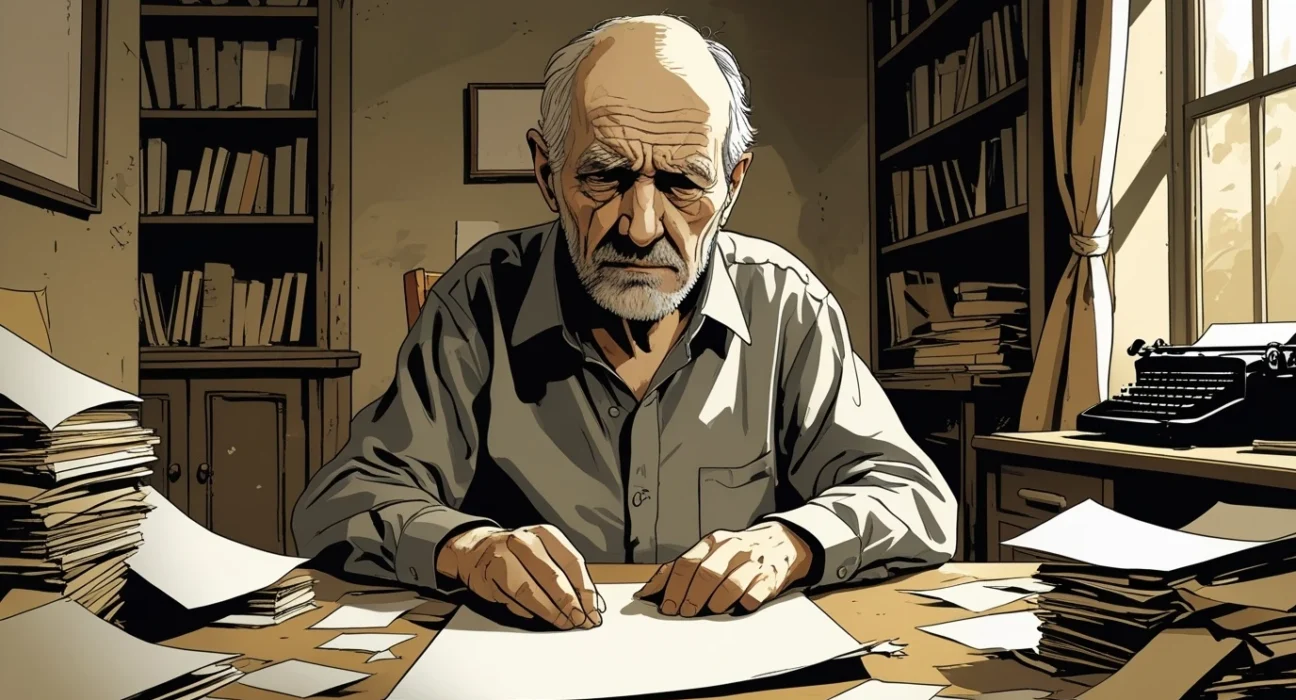
Eugene Pota, a once-lauded author now drifting toward the distant shoreline of old age, sits surrounded by the silence of his seaside home, attempting to ignite one final spark of brilliance. The typewriter no longer hums with confidence. His pen wanders across yellow pads, only to pause, circle, and then stop. Pages are crumpled, ideas abandoned. Time, once his ally, has become a shrewd reminder of decline. He has written what he could, shaped sentences that once dazzled, but now his words betray him. Each morning begins with hopeful resolve and each afternoon collapses into nap-heavy surrender. His only true companion through this quiet undoing is Polly, his third wife, who hovers patiently between affection and quiet disappointment.
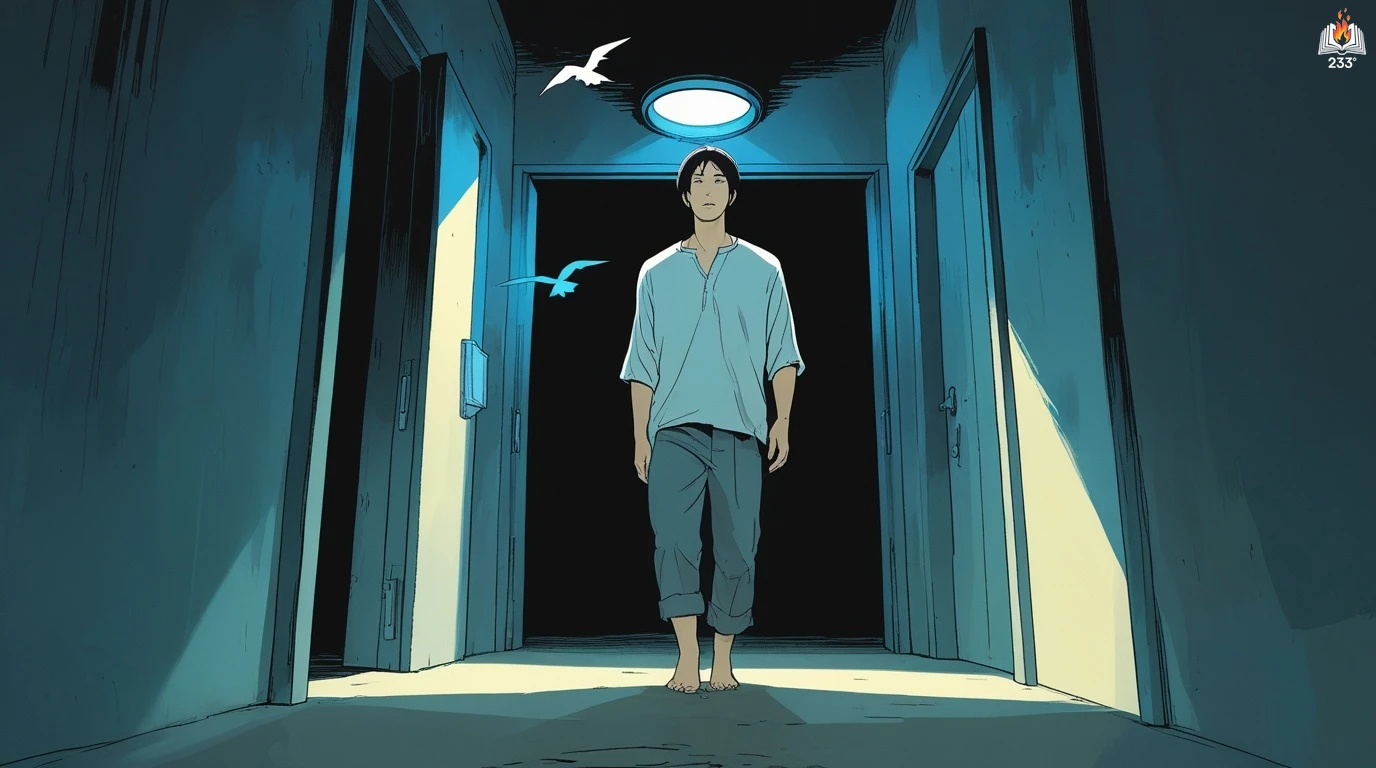
Polly gardens, she smiles dutifully, and she watches him with a gaze that sometimes softens into sympathy, sometimes hardens with restraint. She knows he’s trying – not just to write, but to remain who he was. He waves at her from the driveway, returns from long, slow walks to the beach, thinking the tide or sky might deliver a revelation. But the birds don’t bring ideas anymore. Instead, they remind him how freely they fly while he remains anchored by self-doubt and memories.
Pota rummages through ideas like old coats – some too worn, others never fitting. A modern Tom Sawyer wearing Armani, conning Wall Street types instead of fence-painting rubes. A canary, freed from its cage by a curious boy, crashes into a mirror and dies – a metaphor too plain, too obvious. The boy becomes a politician, a president even, navigating impeachment and infamy with misplaced poetry and laughable dignity. The idea fizzles. Another wasted sketch.
Each notion that flickers to life dies under scrutiny. A novel narrated by a novel – clever, maybe, but fleeting. Tales of gods and myths, planets with personalities – too far, too much, too tedious. Even sex, the last territory of the brave and ridiculous, tempts him. A sexual biography of his wife – a title so sharp, it draws laughter wherever he shares it. Friends chuckle. Critics would nod knowingly. The tabloids would drool. But beneath the titillation lies a wall he cannot climb: the blank first sentence. He envies those who have written the great first lines. He chases them, muttering them to himself as if incantations could open creative floodgates.
He tells Polly the idea isn’t about her. She doesn’t believe him. Nor does she ask him to stop. Embarrassed, she smiles when guests raise their brows. She’s too seasoned to blush, too pragmatic to fight. It’s just another joke of his, she decides. Maybe he means it, maybe not. Even he can’t tell anymore.
Pota watches Polly with curiosity – not as a muse, but as a woman aging alongside him. She limps slightly now, her hands no longer as quick. But she’s handy with tools, better at repairs than many men he’s known. She fills the quiet with conversation he no longer hears. Sometimes he shouts, not out of anger, but out of weariness. He hears less these days. Or pretends to. Either way, she grows quieter. They argue about little things, which are easier to forgive than large ones.
He remembers lovers from long ago – women who drank brewer’s yeast, read tarot cards, and danced in the nude. He imagines seeing them again, imagines being seen again. But even in fantasy, the knees ache, the back twinges. Desire has become nostalgia, and sex is now something scheduled and soft, with unspoken gratitude that neither of them tries too hard. He has the blue pill tucked away. She’s seen it. Neither mentions it.
Each morning, Pota sits at his desk, the pad fresh, the pen hopeful. Each afternoon, he walks the beach. He returns, sometimes a little faster, sometimes a little sweatier, always with the flicker of an idea that dims before ink can catch it. He plays with stories of gods. He toys with Hera, bitter and noble, married to her philandering brother Zeus. But Hera becomes just another scorned wife, and he has written her already, in too many disguises. He sighs and moves on.
Time, he realizes, is a poor editor. It takes more than it improves. The friends he once outshone now have their obituaries pinned to cork boards. The new writers seem younger each year, cleverer, and less reverent. The awards he coveted have gone to others. His books, once met with applause, are now received with polite nods and respectful decline. Familiarity has dulled his mystique.
Still, he cannot stop. Writing is not a choice, not anymore. It is habit, ritual, and curse. He has nothing better to do. His lectures on despair bring students to polite applause. He quotes Beckett. He quotes Tennyson. He hopes someone quotes him. He wants his final work to shine, to shimmer against the gray wall of mediocrity threatening to swallow him.
His friends tell him the sex book will sell. Maybe it will. But it has to be written. The first line remains a void. The best one he can think of belongs to someone else. He jots down parodies, fragments, gods arguing, presidents rambling, books begging to be read. None last. Polly passes him his tea, kisses him on the cheek, and goes about her day. He smiles back, grateful for her patience, her ordinariness, her ability to hammer nails straighter than he ever could.
In the quiet of his study, he listens to the radio, classical as always. A Haydn concerto lifts briefly through the speakers. He hums along. The pad is there. The pen is still capped. He stares at the paper as if it might write itself. Outside, the gulls glide in lazy arcs. A breeze pushes the curtain just slightly. He hears Polly’s voice in another room, muffled but kind. He thinks again about his next sentence.
He sighs.
And he picks up the pen.
Main Characters
Eugene Pota – The central figure, Pota is an aging and once-celebrated novelist whose creative spark has faded. Deeply introspective and self-deprecating, Pota spends much of the novel cycling through failed literary ideas and agonizing over his inability to write anything original or impactful. His internal conflict is both comic and tragic, as he grapples with feelings of irrelevance, mortality, and the desire to end his career with a significant work.
Polly – Pota’s third wife, Polly is supportive but weary. She often endures his moods and frustrations with patience, though she is quietly haunted by the possibility of being the subject of his next book. Polly represents the quiet strain of a long relationship weathering creative and personal droughts, offering both solace and subtle criticism to Pota’s struggle.
Pota’s Literary Peers and Social Circle – While mostly peripheral, friends, critics, and dinner companions form a chorus around Pota, reflecting various societal views on art, aging, sex, and success. Their reactions, gossip, and opinions often influence or mock Pota’s musings, accentuating his sense of being outdated or misunderstood.
Theme
Creative Decline and the Fear of Obsolescence – At the heart of the novel is the fear that with age comes a loss not just of strength or vitality but of artistic relevance. Pota’s struggle to produce meaningful work in his twilight years encapsulates this anxiety, examining what happens when a writer’s imagination no longer flows as it once did.
The Meta-Fictional Nature of Writing – The book frequently blurs the line between fiction and reality, with Pota often reflecting on his own past works, imagining absurd literary concepts, and even considering a novel narrated by a novel. This theme underscores Heller’s playful yet probing examination of the act of writing itself.
Sexuality and Aging – Pota’s considerations of sex—through his proposed “sexual biography of his wife” and other satirical digressions—illustrate not just his waning libido but society’s fixation on youth, sexual prowess, and the absurd expectations placed on the elderly. The topic is handled with biting wit and ironic detachment.
Legacy and Mortality – The specter of death looms behind every joke, every crumpled page, every forgotten idea. Pota is not just trying to write a good novel—he’s trying to ensure he will be remembered. This gives the narrative its melancholic gravity, balanced against its comedic façade.
Writing Style and Tone
Joseph Heller’s writing in Portrait of an Artist, as an Old Man is intensely self-referential, often fragmented, and richly ironic. The novel adopts a looping, free-associative style that reflects the scattershot, anxious mind of a writer out of ideas. Heller’s sentences are layered with wit and self-mockery, often slipping into fictional sketches or parodies that abruptly shift tone or abandon themselves mid-thought—mirroring Pota’s own creative frustrations. This layered structure forms a kind of literary collage rather than a linear narrative, inviting the reader to wander through Pota’s mind rather than follow a traditional plot.
The tone is both satirical and mournful, with Heller striking a precarious balance between humor and despair. He captures the absurdity of the literary world, the egoism of authors, and the farcical nature of fame and success, while never losing sight of the deep existential unease at the novel’s core. Despite the comedy, the novel is steeped in quiet sorrow—about the passage of time, the fear of irrelevance, and the ultimate futility of artistic ambition. Heller writes with a voice both resigned and defiant, offering a final, unvarnished reflection on what it means to create.
We hope this summary has sparked your interest and would appreciate you following Celsius 233 on social media:
There’s a treasure trove of other fascinating book summaries waiting for you. Check out our collection of stories that inspire, thrill, and provoke thought, just like this one by checking out the Book Shelf or the Library
Remember, while our summaries capture the essence, they can never replace the full experience of reading the book. If this summary intrigued you, consider diving into the complete story – buy the book and immerse yourself in the author’s original work.
If you want to request a book summary, click here.
When Saurabh is not working/watching football/reading books/traveling, you can reach him via Twitter/X, LinkedIn, or Threads
Restart reading!