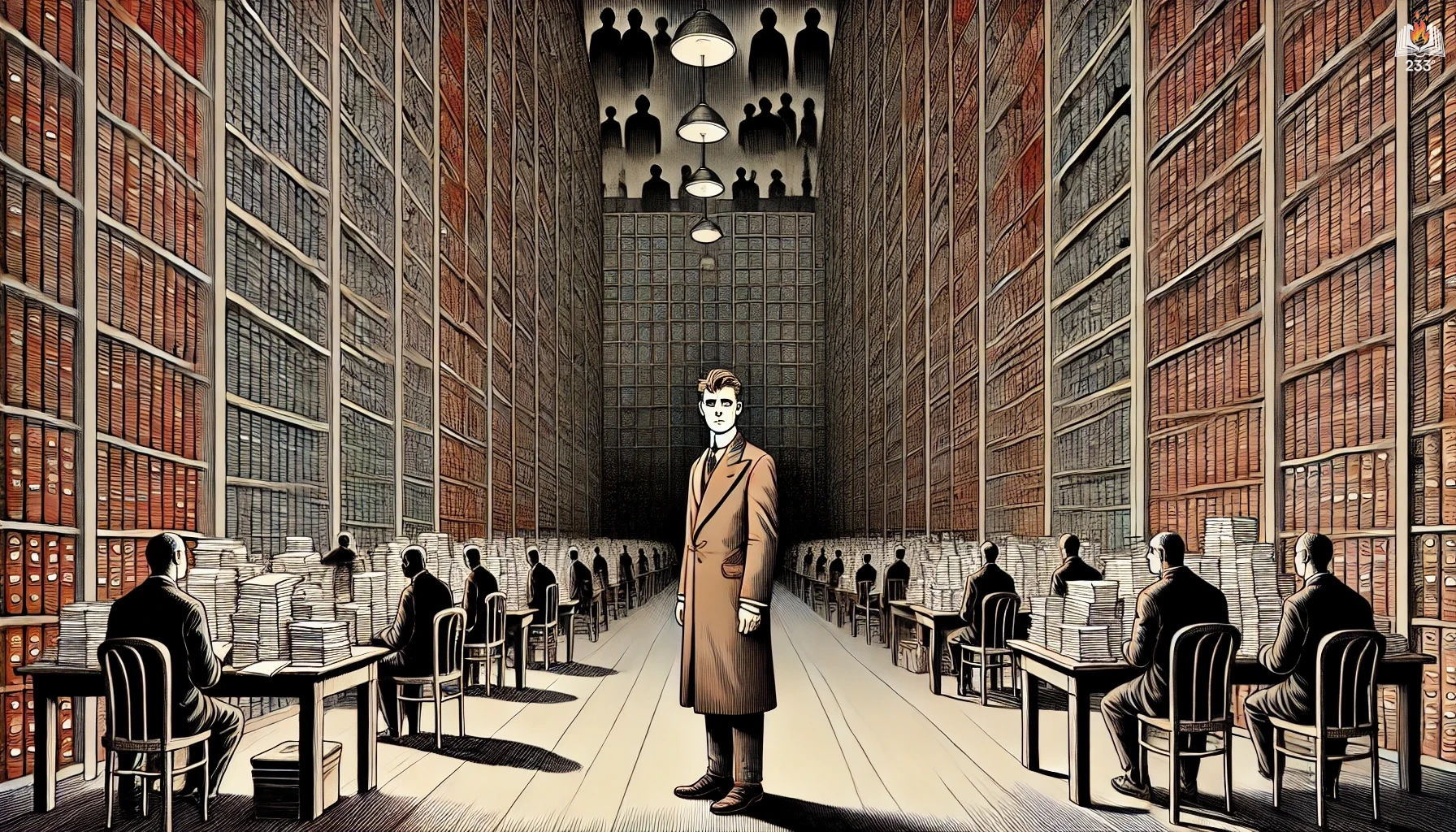
Third Girl by Agatha Christie, published in 1966, is one of the later Hercule Poirot mysteries and part of the renowned Poirot series. The novel dives into the world of swinging London, where a troubled young woman, Norma Restarick, visits Poirot claiming she “might have committed a murder” — but flees before explaining. Poirot, aided by his friend, the eccentric detective novelist Ariadne Oliver, untangles a web of deceit, identity, and psychological intrigue as he investigates.
Plot Summary
Norma Restarick arrives one morning at Hercule Poirot’s apartment, a frightened young woman with wide eyes and trembling hands. She says she might have committed a murder, but before Poirot can ask a single question, she flees, leaving only mystery in her wake. Poirot, though stung by her remark that he is too old to help, feels his curiosity ignite. He calls upon his friend, the sharp-witted and slightly chaotic Ariadne Oliver, to help uncover what has driven this young woman to his door.
Norma lives in a London flat at Borodene Mansions, sharing space with two other young women – the poised Claudia Reece-Holland and the flamboyant Frances Cary. Claudia is the sensible one, a reliable secretary, while Frances moves in artistic circles, full of drama and impulsive charm. Among them, Norma is the fragile third girl, slipping into moods, forgetfulness, and a growing sense of dread. The building’s gossip hints at strange events: the sound of a gunshot one night, the sight of Norma standing in the courtyard, dazed and holding a revolver, bloodstains on the ground, and hurried reassurances from Claudia that all is well. But beneath these whispered stories lies something darker.
Poirot begins his inquiries with precision. He learns that Norma is the daughter of Andrew Restarick, a wealthy businessman who vanished abroad years ago, leaving his wife and daughter behind. Now Andrew has returned to London, newly remarried to the glamorous Mary, determined to rebuild his relationship with Norma. But the reunion has been anything but smooth. Norma resents Mary, suspects foul play in her sudden illnesses, and senses betrayal from the father she barely knows. Into this troubled household steps Poirot, weaving quietly through the lives entangled in Norma’s unravelling mind.
Mrs. Oliver, meanwhile, is not one to sit still. She shadows the young women at Borodene Mansions, eavesdrops in kitchens, and prowls the streets near the Restarick offices. It is Mrs. Oliver who stumbles upon Norma in a cafe with David Baker, a striking young artist with flowing hair and a magnetic, dangerous charm. Norma clings to David like a lifeline, whispering her fears, her hatred of Mary, her suspicion that she has harmed her stepmother, and worse – that she cannot remember entire hours of her life. David dismisses her worries with a careless charm, but Mrs. Oliver senses the darker currents beneath his velvet exterior.
Poirot peels back the layers of the Restarick family, finding cracks in every corner. Andrew Restarick, though outwardly successful, carries the guilt of a man who abandoned his family. Mary, the new wife, nurses her own secrets, including a suspicious illness that worsens whenever Norma is near. Sir Roderick Horsfield, an elderly relative, circles the edges of the drama with vague observations and uneasy recollections. Norma’s au pair, Sonia, keeps a careful distance, her eyes always watchful, her presence always quiet.
As Poirot listens and observes, a pattern emerges. Norma is being gaslit, her perception of reality deliberately twisted. Items appear and disappear from her room – a knife with blood on it, a bottle of poison, a revolver. Conversations shift as if rearranged overnight. Her memory is not failing from within; it is being chipped away from the outside. Poirot’s little grey cells sharpen their focus on the flatmates, the lovers, and the family, tracing the line between what Norma fears and what has been made to appear.
Frances Cary’s role becomes more sinister. Her artistic chaos masks a calculating mind, one that understands how to manipulate, distract, and charm. Frances is no mere flatmate; she is a key player in a long-planned scheme. Claudia, for all her composure, harbors divided loyalties, caught between protecting Norma and managing her own ambitions. David, the flamboyant painter, is not just a lover but a dangerous influence, one who knows how to stir Norma’s insecurities and push her further from the truth.
Poirot’s investigation takes him into the heart of the inheritance that binds them all. Andrew Restarick’s fortune is considerable, his will recently updated, and his marriage to Mary Restarick shifts the balance of power. But in this world of wealth and resentment, appearances deceive. Poirot begins to suspect that the man who claims to be Andrew Restarick is not Andrew at all. A careful study of photographs, mannerisms, and histories points to an audacious impersonation, one designed to seize a fortune and remove all obstacles – including Norma.
Mrs. Oliver, in one of her typically clumsy yet brilliant maneuvers, stumbles upon the final clues. A visit to the flat, a conversation overheard, and a reckless decision lead her dangerously close to the heart of the plot. But it is Poirot who assembles the pieces, summoning the players to face the truth. Before them, he unmasks not just a murderer but an entire web of deceit, revealing that Frances Cary is no ordinary flatmate but a woman working alongside the impostor Andrew, their goal to remove Norma through a staged breakdown and secure the inheritance. Claudia’s role, though less malicious, is tainted by complicity and silence.
In a confrontation that is quiet yet charged, Poirot exposes the impersonation, the poisonings, the manipulation, and the carefully staged episodes meant to unhinge Norma. He restores the young woman’s sense of self, lifting from her the crushing weight of guilt that was never hers to carry. Norma, though shaken, begins to recover, her mind clearing as the fog of deception lifts.
As the culprits are taken away, Poirot reflects not on the brilliance of his deduction but on the fragility of youth and the aching loneliness that drives people into the arms of danger. He considers his own age, his own fears of obsolescence, and finds comfort in the quiet satisfaction of having, once again, untangled a human knot with patience and care. Mrs. Oliver, still brimming with restless energy, vows to transform the case into her next book, a blend of misdirection, murder, and just enough absurdity to keep the reader guessing.
And as the quiet returns to Borodene Mansions, the third girl finds herself no longer the shadow at the edge of her own life, but someone seen, understood, and perhaps, at last, free.
Main Characters
Hercule Poirot: The meticulous and methodical Belgian detective, known for his “little grey cells,” who must confront his own doubts about aging as he unravels the complex mystery Norma presents. Though initially dismissed as “too old,” Poirot’s insight proves invaluable.
Norma Restarick: The titular “third girl,” a young woman plagued by confusion, memory lapses, and paranoia. Living in a shared London flat, Norma fears she has committed murder and struggles with the trauma of her family’s tangled past and her own fragile mental state.
Ariadne Oliver: Poirot’s old friend, a famous detective novelist with a sharp but chaotic mind. She offers both comic relief and genuine insight, providing key observations and pushing Poirot to reconsider details he might otherwise dismiss.
Claudia Reece-Holland: Norma’s flatmate, a composed and competent young woman with a prestigious background and a cool demeanor. Claudia appears helpful but harbors secrets central to the mystery.
Frances Cary / Mary Restarick: An art gallery worker and Norma’s other flatmate, Frances is flamboyant and dramatic. Beneath her theatrical exterior lies a critical connection to the larger deception and dual identities at play.
Andrew Restarick: Norma’s father, a wealthy businessman recently returned from South Africa. His reappearance in Norma’s life raises suspicions, especially as questions of inheritance and imposture surface.
Sir Roderick Horsfield: An elderly astronomer connected to the Restarick family, who provides an atmospheric backdrop to the mystery and hints at lingering secrets from the past.
Theme
Identity and Deception: A central theme, the novel explores characters adopting false identities, both for survival and manipulation. The “third girl” motif itself refers to the anonymous presence in modern urban life, and the tangled web of who people claim to be versus who they truly are.
Mental Health and Gaslighting: Norma’s unraveling psyche raises questions of mental illness, drug use, and the possibility of being gaslit by those around her. Christie explores how vulnerable minds can be shaped, twisted, and controlled by others’ agendas.
Youth versus Age: Poirot’s anxiety about his own relevance in a youthful, rapidly changing world plays against Norma’s youthful confusion. The novel contrasts the experience and patience of age with the impulsiveness and vulnerability of youth.
Family and Inheritance: As in many Christie novels, issues of family ties, money, and inheritance drive the characters’ motives. Here, the complex Restarick family history creates the fertile ground for murder and deceit.
Writing Style and Tone
Agatha Christie’s prose in Third Girl is brisk and efficient, blending sharp dialogue with tight plotting. Her signature misdirection keeps readers off-balance, while the conversations between Poirot and Ariadne Oliver add charm and humor. Christie’s ability to capture the swinging London scene without losing her classic detective framework gives the novel a fresh, contemporary edge for its time.
The tone swings between playful banter and darker psychological exploration. Christie balances the comic eccentricity of characters like Mrs. Oliver with the more somber and suspenseful unraveling of Norma’s psychological state. Poirot’s own reflections on aging lend the story a bittersweet undercurrent, adding emotional depth to what might otherwise be a straightforward whodunit.
Quotes
Third Girl – Agatha Christie (1966) Quotes
“... people are never like what you remember them. You make them, as the years go by, more and more the way you wish them to be, and as you think you remember them. If you want to remember them as agreeable and gay and handsome, you make them far more so than they actually were.”
“They have a genius, young ladies, for getting into various kinds of trouble and difficulty.”
“Eh bien, then, you are crazy, or appear crazy or you think you are crazy, and possibly you may be crazy.”
“Where there is murder, anything can happen.”
“Is she a very clever little actress, acting a part? Or is she a genuine semi-moronic suicidal victim?”
“To have known, at close quarters, what absolute evil means, is to be armoured against what life can do to you.”
“Reflection had never been Mrs Oliver's strong point.”
“Blood in the courtyard,” said Poirot. “Really!” said Mrs. Oliver. “That’s just like the title of an old-fashioned detective story. The Stain on the Staircase. I mean nowadays you say something more like She Asked for Death.”
“Mr Goby turned over another leaf of his notebook and selected his confidante: he chose an electric radiator...”
“He was a small shrunken little man, so nondescript as to be practically nonexistent.”
“Hate isn't creative." - Stillingfleet”
“You should never believe anything anyone said without first checking it. Suspect everybody, had been for many years, if not his whole life, one of his first axioms.”
“I will give you my valuable advice. You needn't take it. People seldom do take advice, but you might as well have it.”
“For some reason, Poirot had always been a person it was easy to talk to.”
“The old, you must remember, though considered incapable of action, have nevertheless a good fund of experience on which to draw.”
“Poirot had the capacity to attract confidences. It was as though when people were talking to him they hardly realised who it was they were talking to.”
“The well-known detective story writer and Hercule Poirot were on friendly terms.”
We hope this summary has sparked your interest and would appreciate you following Celsius 233 on social media:
There’s a treasure trove of other fascinating book summaries waiting for you. Check out our collection of stories that inspire, thrill, and provoke thought, just like this one by checking out the Book Shelf or the Library
Remember, while our summaries capture the essence, they can never replace the full experience of reading the book. If this summary intrigued you, consider diving into the complete story – buy the book and immerse yourself in the author’s original work.
If you want to request a book summary, click here.
When Saurabh is not working/watching football/reading books/traveling, you can reach him via Twitter/X, LinkedIn, or Threads
Restart reading!