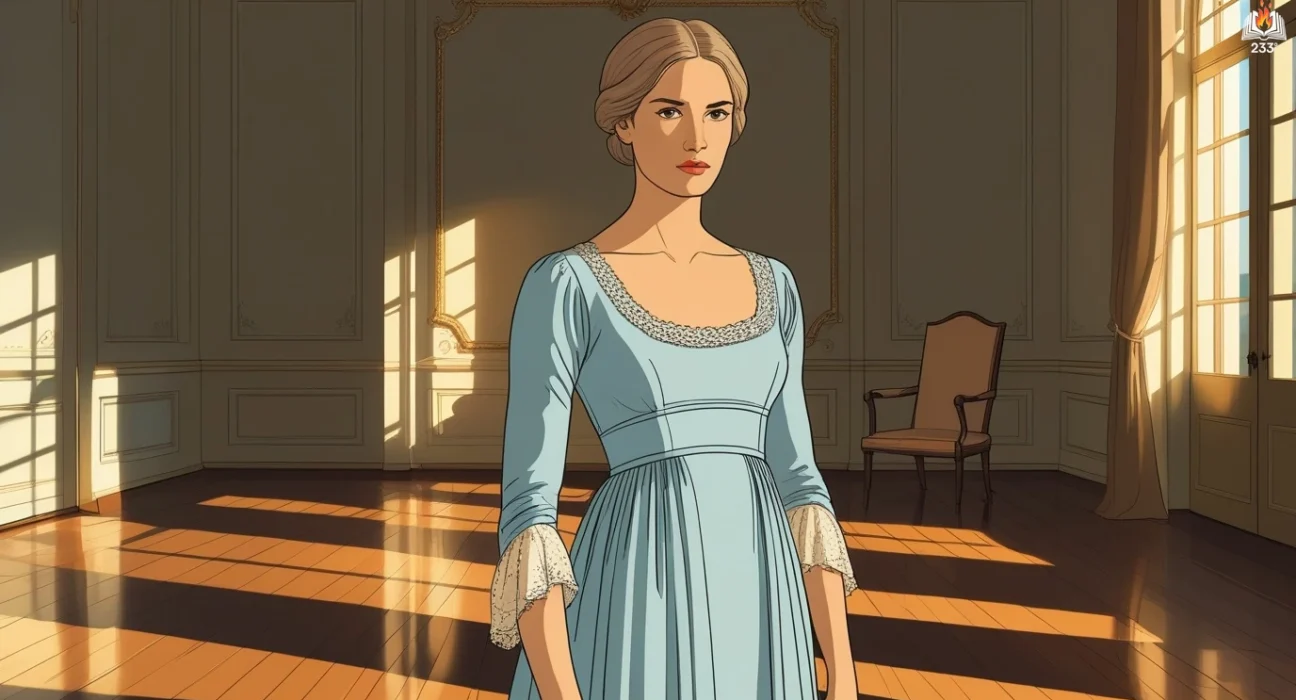
First Comes Scandal by Julia Quinn, published in 2020, is the fourth installment in the beloved Rokesby series – a prequel to her internationally renowned Bridgerton series. Set in late 18th-century England, this Regency romance revolves around Georgiana Bridgerton and Nicholas Rokesby, two childhood acquaintances thrust into an unexpected marriage of convenience. With sharp wit, endearing characters, and social commentary wrapped in warmth and humor, Quinn crafts a tale of unexpected love, resilience, and the defiance of societal norms.
Plot Summary
In the spring of 1791, Nicholas Rokesby rode through the muddy countryside of Kent, summoned from his medical studies in Edinburgh with only a cryptic note from his father. Upon reaching Crake, his family estate, he was met not with a joyful reunion, but with a command – he was to marry Georgiana Bridgerton, his childhood acquaintance and godfather’s daughter. The reason: Georgiana had been abducted by a fortune hunter, Frederick Oakes, and though rescued unharmed, her reputation was in tatters. Society, in its merciless judgment, had already decided she was ruined. For her sake, and perhaps also for family pride, Nicholas was expected to make it right.
Nicholas, who valued logic over passion and had carefully mapped out a future rooted in science and service, found the demand both unreasonable and galling. Georgiana was like family. Not quite a sister, but close enough to make the idea of marriage feel deeply unnatural. Yet his objections, and his protests about exams and rented Edinburgh rooms without valets, were brushed aside. His father had made up his mind. Georgie needed saving, and Nicholas was to be her savior.
Georgiana, meanwhile, was locked in a quiet war with the world. She had done nothing wrong – a carriage ride to a bookshop, with a chaperone, had turned into a scandal because Freddie Oakes had decided to seize an opportunity. The betrayal burned deep. Georgie had never courted drama. She had turned down proposals, skipped the London Season, and chosen the quiet life. She had believed that a woman might live with dignity without a husband. But society thought otherwise. No one cared that she hadn’t encouraged Oakes, that she’d fought him, tied him up, and climbed out a window to escape. She was still, according to every wagging tongue, soiled goods.
Dinner at Aubrey Hall, meant to be a gathering of family and comfort, became instead a stage for tension. Georgie was forced to paste on a smile as her mother gently insisted she rejoin society. Nicholas arrived, awkward and tired, knowing he was being paraded as a solution. Georgie hadn’t asked for rescue, and certainly not from Nicholas Rokesby, who had always felt more like a debate partner than a potential husband. Yet the path forward narrowed with every passing day.
Nicholas, in truth, didn’t want to leave Georgie to the wolves. The more he reflected, the more he realized how unfair it was that her life could be upended by a man’s crime. And there was affection between them – a familiarity born of childhood races, family dinners, and easy banter. It wasn’t love, but it wasn’t nothing. He could offer her protection. Respect. Perhaps, in time, something more.
Their wedding was quiet and swift. No grand declarations, no passionate embraces. Just a promise, signed and sealed, and two people embarking on a journey neither had planned. They set off for Edinburgh, Nicholas eager to return to his studies, Georgie relieved to leave the whispers of Kent behind. The journey was filled with bumps and bickering, their shared carriage becoming both battleground and sanctuary. Georgie challenged him, teased him, and occasionally exasperated him. He admired her cleverness, her stubborn refusal to wilt, and her unwavering sense of self. She admired his calm logic, his dedication, and the way he saw through the nonsense that others often let pass.
In Edinburgh, they began to find a rhythm. Their rented house became a shared space of tentative companionship. Nicholas respected Georgie’s need for independence; Georgie gave him the space he needed to work. She found purpose in the city – in its libraries, its streets, its unexpected friendships. He discovered that having her near didn’t distract him – it steadied him. Slowly, the marriage of convenience began to look less like an arrangement and more like a partnership.
There were awkward moments, of course. Times when a shared glance lingered too long, or when the silence between them felt heavier than the air around it. They slept in separate rooms, but the space between them grew warmer with each passing day. One evening, an illness swept through Nicholas’s patients, and Georgie stayed up with him, helping to sort supplies, clean instruments, and read medical texts aloud when his eyes blurred with exhaustion. She had always been capable, but he saw now that she was formidable. And she saw, in his tired devotion, a man whose heart beat with a quiet but unshakable strength.
When Georgie finally kissed him – or perhaps when he kissed her – it was neither dramatic nor impulsive. It simply happened, a natural progression of shared laughter, quiet understanding, and months of soft-spoken trust. Love, it turned out, did not always arrive with fireworks. Sometimes, it crept in like dawn, gentle and certain.
Back in Kent, the scandal faded. Oakes was disgraced and fled to the continent. The ton moved on to new gossip. Letters arrived from family, some warm and congratulatory, others still wrapped in veiled judgment. But Georgie no longer cared. She had built something real, away from the drawing rooms and shallow dances. Her husband was no longer a stranger she had married out of necessity – he was her partner, her equal, her friend.
Nicholas, who had once balked at the idea of marriage as an interruption to his life, found that Georgie had not interrupted it at all. She had expanded it. Their lives intertwined not because they had to, but because they wanted to. And in that quiet house in Edinburgh, filled with medical texts and half-finished knitting, they found contentment. Not the stuff of fairy tales, perhaps. But the kind of happiness that lingers – the kind that endures.
Main Characters
Georgiana “Georgie” Bridgerton: At twenty-six, Georgie is spirited, intelligent, and fiercely independent. When scandal threatens her reputation due to an attempted elopement by a fortune hunter, Georgie is faced with societal ruin. Though wounded by society’s double standards, she refuses to be a passive victim. Her arc sees her wrestle with duty and desire, ultimately growing into her own strength as she opens herself to unexpected love.
Nicholas Rokesby: The youngest Rokesby son and a dedicated medical student in Edinburgh, Nicholas is rational, principled, and sharply intelligent. When summoned to marry Georgiana to save her reputation, he resists the idea, valuing autonomy and fearing the implications on his studies. Yet through his evolving bond with Georgie, Nicholas discovers that love can be found in the most surprising places and that duty and heart can sometimes walk the same path.
Lord and Lady Manston: Nicholas’s parents, who play a pivotal role in catalyzing the marriage, driven by loyalty and a deep bond with the Bridgertons. They represent the older generation’s perspective, where honor and alliances often supersede personal desires.
Lady Bridgerton: Georgie’s supportive but concerned mother, navigating the heartbreak of her daughter’s scandal while trying to preserve her future. Her interactions with Georgie highlight the complexities of mother-daughter relationships during societal crises.
Freddie Oakes: The charming yet duplicitous fortune hunter whose desperate actions set the entire plot in motion. A classic foil, he embodies the hypocrisy and entitlement of upper-class men protected by gendered privilege.
Theme
Honor and Reputation: The novel scrutinizes the fragility of a woman’s reputation in Regency society. Georgie’s kidnapping, though through no fault of her own, leaves her “ruined,” spotlighting the unjust societal expectations placed on women.
Marriage of Convenience: A central theme, this trope is used to explore how love can bloom from obligation. Nicholas and Georgie, once acquaintances, evolve into equals and partners, suggesting that true connection can arise from unlikely beginnings.
Autonomy vs. Duty: Both Georgie and Nicholas grapple with their personal desires in conflict with familial expectations. Their journey highlights the tension between living for oneself and fulfilling obligations to loved ones and society.
Female Agency: Georgie’s character arc champions resilience and self-determination. Her inner monologue and decisions demonstrate a quiet but firm reclaiming of power in a world stacked against her.
Wit and Wordplay: As with much of Quinn’s work, banter and sarcasm serve as a motif for connection. Humor not only adds levity but acts as a tool for emotional intimacy and social critique.
Writing Style and Tone
Julia Quinn’s signature style shines through with effervescent charm, clever dialogue, and emotional depth balanced by buoyant humor. Her narrative voice effortlessly alternates between Georgie’s quiet indignation and Nicholas’s bewildered sense of duty, painting both perspectives with empathy and insight. Through third-person limited narration, Quinn immerses readers in the protagonists’ internal worlds, revealing vulnerabilities and small triumphs with tenderness.
The tone is delightfully conversational, often breaking the fourth wall with sly commentary, particularly through Georgie’s internal musings. This stylistic choice lends the story a modern, self-aware sensibility while remaining true to the historical setting. Moments of levity are juxtaposed with poignant reflections on gender roles, societal expectations, and emotional intimacy. Quinn’s prose never rushes; instead, it meanders with a comfortable rhythm that allows characters the space to grow, reflect, and ultimately fall in love not out of obligation, but choice.
Quotes
First Comes Scandal – Julia Quinn (2020) Quotes
“He was comfortable with her. He could make the sort of stupid comments that were only a little bit funny and made no sense. The kind one made when one didn’t have to weigh every word and worry about judgment or scorn.”
“You make yourself sound like a girl.” “I rather feel like one right now, and I have to tell you, I don’t like it.” He shook his head. “I have new respect for all of them, putting up with us telling them what to do.”
“That seemed to cover a lot of life, he'd come to realize. Proving something right wasn't the same as proving the opposite wrong.”
“if it wasn’t good for the goose, the gander could damn well do without too.”
“Proving something right wasn’t the same as proving the opposite wrong.”
“tiny movements that spoke volumes and seemed to envelop them in a fine mist of Pretty.”
We hope this summary has sparked your interest and would appreciate you following Celsius 233 on social media:
There’s a treasure trove of other fascinating book summaries waiting for you. Check out our collection of stories that inspire, thrill, and provoke thought, just like this one by checking out the Book Shelf or the Library
Remember, while our summaries capture the essence, they can never replace the full experience of reading the book. If this summary intrigued you, consider diving into the complete story – buy the book and immerse yourself in the author’s original work.
If you want to request a book summary, click here.
When Saurabh is not working/watching football/reading books/traveling, you can reach him via Twitter/X, LinkedIn, or Threads
Restart reading!